Introduction
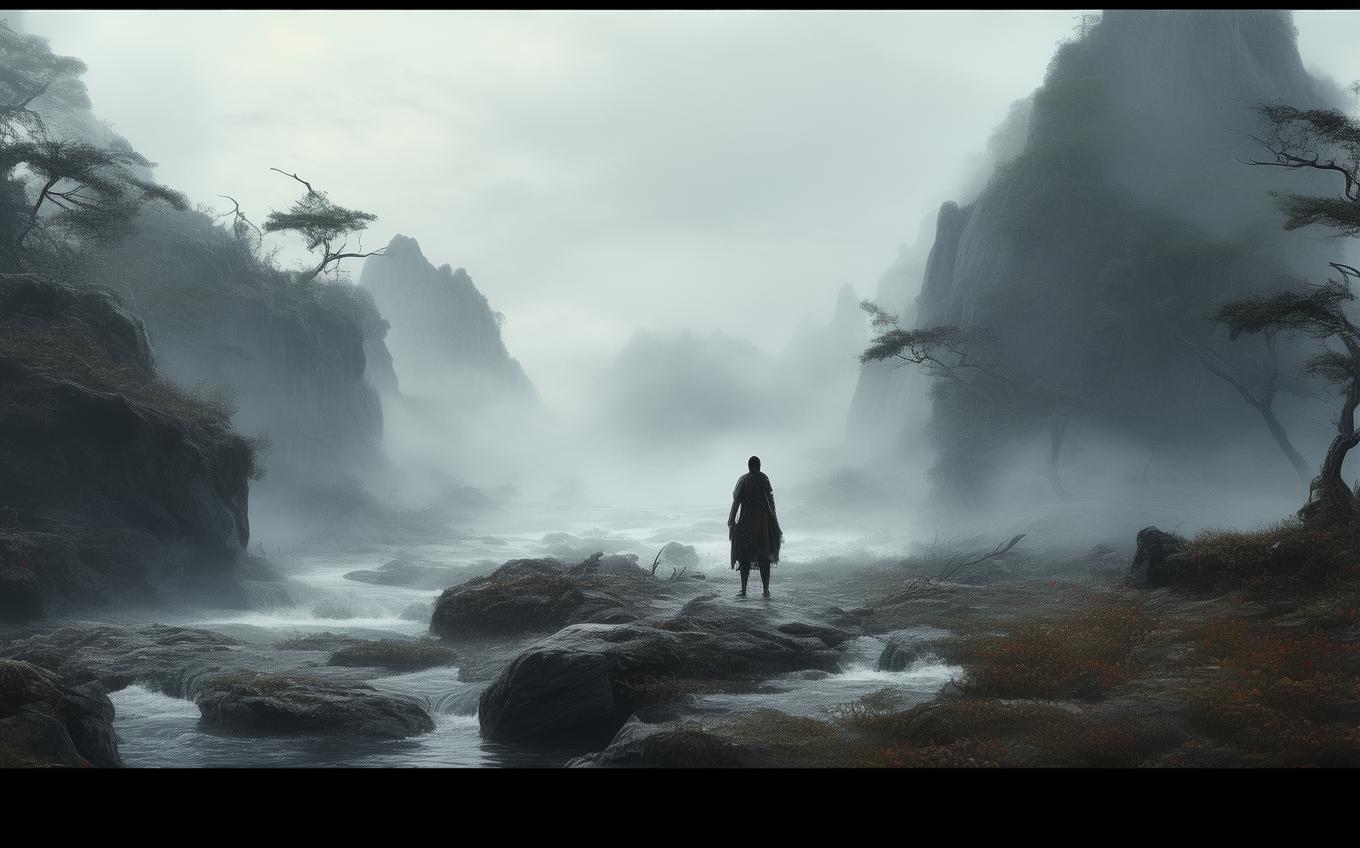
In the long and illustrious history of Chinese poetry, few works carry the weight of an emperor’s personal grief. 《伤辽东战亡》 (Shāng Liáodōng Zhànwáng, "Lament for the War Dead in Liaodong") is a poignant five-character regulated poem written by Emperor Taizong of Tang (唐太宗, personal name Li Shimin), one of the most revered rulers in Chinese history. Composed after his arduous and ultimately unsuccessful military campaign against the Korean kingdom of Goguryeo in 645 AD, the poem mourns the soldiers who perished on the frozen battlefields of Liaodong. It is a rare window into the emperor’s inner world—not as an invincible conqueror, but as a weary leader burdened by the cost of imperial ambition.
The Poem: Full Text and Translation
凿门初奉律
Záo mén chū fèng lǜ
Digging through the gate, we at first received the military law;仗战始临戎
Zhàng zhàn shǐ lín róng
Relying on battle, we first confronted the war.振鳞方跃浪
Zhèn lín fāng yuè làng
Like a dragon shaking scales, just about to leap through waves;骋翼正凌风
Chěng yì zhèng líng fēng
Like a bird spreading wings, just about to soar upon the wind.未展六奇术
Wèi zhǎn liù qí shù
Before the Six Marvelous Strategies could be fully deployed,先亏一篑功
Xiān kuī yī kuì gōng
An achievement of a thousand baskets fell short by one last load.防身岂乏智
Fáng shēn qǐ fá zhì
Was there any lack of wisdom to protect one’s life?殉命有余忠
Xùn mìng yǒu yú zhōng
But in sacrificing life, there was abundant loyalty.悲凉嘶白马
Bēi liáng sī bái mǎ
Mournfully and chill, the white horses neigh;凄怆起青骢
Qī chuàng qǐ qīng cōng
In grief and sorrow, the blue-gray steeds rise.今日流泉路
Jīn rì liú quán lù
Today, on the road by flowing springs (the underworld stream),谁识大明宫
Shéi shí Dàmíng Gōng
Who will recognize the resplendent Daming Palace?
Line-by-Line Analysis
The poem opens with a martial solemnity. “凿门初奉律,仗战始临戎” evokes the moment the campaign began—the army breaking through city gates and formally receiving the emperor’s military ordinances. “律” (law/regulation) carries a double meaning: secular military discipline, but also a cosmic order that the emperor, as Son of Heaven, must uphold. From the very start, the tone is not one of glory but of duty-bound inevitability.
The next couplet, “振鳞方跃浪,骋翼正凌风”, uses powerful zoomorphic imagery. The soldiers are likened to a dragon shaking its scales and a great bird spreading its wings—both symbols of soaring ambition and imminent success. The phrases “方” (just about to) and “正” (just at the point of) capture a sense of potential on the verge of fulfillment—a momentum tragically about to break.
That break arrives starkly in lines five and six: “未展六奇术,先亏一篑功”. The “Six Marvelous Strategies” (六奇术) is an allusion to the stratagems of Chen Ping, a brilliant advisor of the Han dynasty founder. By invoking this, the emperor suggests that even with masterful planning, the campaign faltered. The second half uses the idiom “功亏一篑” (lacking only one basket of earth to raise a high mound, i.e., falling short at the final step). Here, Tang Taizong does not merely state defeat; he frames it as a painfully close failure, amplifying the sense of regret.
The central ethical tension emerges in lines seven and eight: “防身岂乏智,殉命有余忠”. The emperor asks a rhetorical question: Was there not enough intelligence to preserve life? The answer is left hanging, but the assertion follows that in dying for duty, there was excessive loyalty. This couplet balances the Confucian virtue of wisdom (智) with the paramount value of loyalty (忠). The soldiers are not blamed for recklessness; they are honored for choosing death in service of the state.
The emotional climax comes in “悲凉嘶白马,凄怆起青骢”. The white horse and the blue-gray steed are no ordinary animals—they are the mounts of fallen heroes, now riderless and crying out in the cold. The color contrast between pure white and deep blue-gray enhances the visual desolation. The neighing horses become vessels of unspoken grief, their cries filling the silence of a land strewn with corpses.
Finally, the closing couplet “今日流泉路,谁识大明宫” delivers a devastating contrast. “Flowing springs” is a metaphor for the Yellow Springs (黄泉), the underworld in Chinese cosmology. The dead journey into that dark realm, while far away stands the Daming Palace, the magnificent imperial residence in Chang’an from which the emperor launched the campaign. The question “Who will recognize it?” suggests that no amount of earthly splendor can follow the fallen into death. It also expresses the emperor’s own guilt: the palace, a symbol of his power, has become alien to the spirits he sent to die. This is a rare moment in classical poetry where an emperor reveals his fragility before the finality of death.
Themes and Symbolism
Patriotism and Sacrifice
The poem is fundamentally about the cost of empire. The soldiers’ “abundant loyalty” is celebrated, yet the overall mood is one of mourning, not triumph. Tang Taizong does not glorify war; he silently questions the worth of victory when so many lights have been extinguished.
The Fragility of Human Ambition
The dragon and bird imagery represents lofty imperial aspirations, but the phrase “功亏一篑” transforms them into emblems of how easily grand plans can shatter. Even an emperor who had unified much of China is humbled by the limits of power.
The Emperor’s Isolation
The horses’ neighs and the underworld stream create a landscape of sorrow that isolates the ruler from his subjects. The Daming Palace, a center of glory, becomes a hollow symbol when set against the anonymous “flowing springs road.” Tang Taizong seems to ask whether his own palace is worthy of the blood spilled in its name.
Key Symbols:
- White horse (白马) and blue-gray steed (青骢): Traditional warhorses, now ghostly remnants of fallen soldiers; they embody loyalty and lamentation.
- Six Marvelous Strategies (六奇术): A literary device linking the campaign to Han dynasty brilliance, hinting that even the wisest plans can fail.
- One basket of earth (一篑): A near-success that makes the loss more poignant.
- Flowing springs (流泉) / Yellow Springs: The realm of the dead, emphasizing the irrevocability of the sacrifice.
- Daming Palace (大明宫): The seat of imperial power, rendered remote and irrelevant to the dead.
Cultural Context
The campaign against Goguryeo in 645 was one of Tang Taizong’s few military setbacks. Despite initial successes, the harsh winter and strong resistance forced a retreat with enormous casualties. The emperor himself fell ill during the expedition. Upon returning, deeply shaken, he reportedly wept bitterly for his fallen soldiers and ordered that their bodies be properly buried. The poem 《伤辽东战亡》 was likely written during this period of personal and political reflection.
In traditional Chinese culture, an emperor was expected to embody the “Mandate of Heaven” and possess both martial valor and Confucian benevolence. By publicly mourning the dead, Tang Taizong performed an essential moral duty: to acknowledge that his decisions had caused suffering, and to honor the loyalty of his subjects. This act of imperial grief aligned with the Confucian ideal of a “ruler who cherishes his people.” Moreover, the poem’s sophisticated literary allusions—such as the “Six Marvelous Strategies” and the “one basket” idiom—show the emperor’s deep cultural cultivation, reinforcing his image as both a warrior and a sage.
The Liaodong campaigns also left a deep mark on Tang poetry. Poets like Li Qi and Wang Changling later wrote frontier poems that similarly lamented the human cost of far-flung wars. Tang Taizong’s poem, however, remained unique because it voiced the lament from the very top of power, turning the emperor into a fellow mourner rather than a distant commander.
Conclusion
《伤辽东战亡》 stands as a remarkable fusion of imperial authority and raw vulnerability. It reminds us that even the mightiest rulers are not immune to the grief produced by their own ambitions. The poem’s enduring appeal lies in its masterful balance: it celebrates loyalty without glorifying slaughter, and it mourns the dead without descending into self-pity. For modern readers, it offers a timeless reflection on leadership, responsibility, and the eternal cost of conflict expressed by a hand that once held absolute power but, in this moment, could only write a lament.

Comments (0)
No comments yet. Be the first to comment!