Introduction
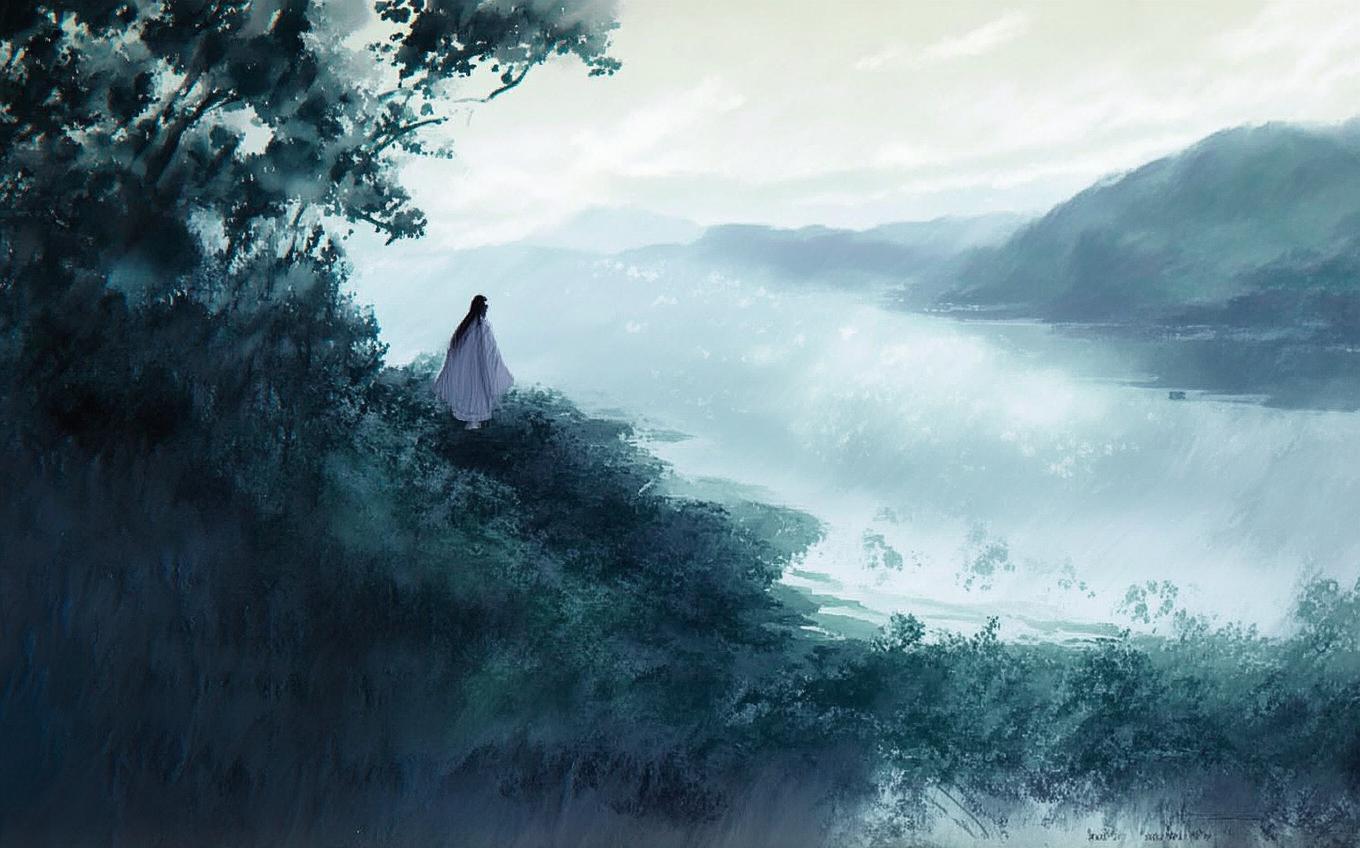
Few figures in Chinese history embody the ideal relationship between ruler and minister as profoundly as Emperor Taizong of Tang (Li Shimin, 598–649) and his forthright chancellor Wei Zheng (580–643). Wei Zheng was renowned for his unflinching honesty, often criticizing the emperor to his face, yet Taizong famously regarded him as a mirror that reflected his own faults. When Wei Zheng died in 643, the emperor was overwhelmed with grief and composed the poem "望送魏征葬" (Wàng sòng Wèi Zhēng zàng) — “Watching from Afar as Wei Zheng Is Buried.” The title alone conveys the poignant distance: the emperor could not attend the funeral in person but stood gazing from afar, his emotions pouring into verse. This poem is a rare gem of personal lament from a monarch who shaped a golden age, offering English readers a window into the depth of feeling that underlay the political brilliance of the Tang dynasty.
The Poem: Full Text and Translation
阊阖总金鞍,
Chāng hé zǒng jīn ān,
At the celestial gate, all the golden saddles are assembled,
上林移玉辇。
Shàng lín yí yù niǎn.
From the Shanglin Park the jade carriage moves.
野郊怆新别,
Yě jiāo chuàng xīn bié,
In the wild outskirts, I grieve over this new parting,
河桥非旧饯。
Hé qiáo fēi jiù jiàn.
By the river bridge, it is no feast of farewell as before.
惨日映峰沉,
Cǎn rì yìng fēng chén,
The dismal sun reflects off the peaks and sinks,
愁云随盖转。
Chóu yún suí gài zhuǎn.
Gloomy clouds trail after the carriage canopy.
哀笳时断续,
Āi jiā shí duàn xù,
The mournful reed whistle now breaks off, now resumes,
悲旌乍舒卷。
Bēi jīng zhà shū juǎn.
The sorrowful banners suddenly furl and unfurl.
望望情何极,
Wàng wàng qíng hé jí,
Gazing and gazing — where can these feelings end?
浪浪泪空泫。
Làng làng lèi kōng xuàn.
In streaming floods, my tears fall vainly.
无复昔时人,
Wú fù xī shí rén,
Never again will the man of former days be here;
芳春共谁遣。
Fāng chūn gòng shuí qiǎn.
With whom shall I pass this fragrant spring?
Line-by-Line Analysis
Opening Scene: Royal Departure
The first couplet sets the stage with grand imperial imagery. “阊阖” (chānghé) originally referred to the legendary gate of heaven; here it symbolizes the palace gate from which the funeral procession departs. “Golden saddles” and “jade carriage” indicate the solemn, stately nature of the occasion — this is a state funeral for the highest official. “Shanglin Park,” the vast imperial hunting ground, becomes the point of departure. The emperor is not described as present physically among the cortege; rather, he is an observer, watching the magnificent yet mournful train move toward the distant burial site. The juxtaposition of celestial terms with human ritual immediately elevates Wei Zheng’s passing to a cosmic event.
The Pain of a New Farewell
In the third and fourth lines, personal emotion breaks through. “New parting” emphasizes the finality of death — this is not a temporary separation, but a permanent farewell. The phrase “no feast of farewell as before” alludes to earlier occasions when Wei Zheng was sent off on official journeys with banquets and good cheer. Now, at the same river bridge, there is only silence and sorrow. The contrast between the lively “old feast” and the present desolation sharpens the sense of irretrievable loss.
A Grief-Stricken Landscape
The next four lines project despair onto the natural world. The sun itself is called “dismal” (cǎn), its reflection on mountain peaks appearing to sink — a metaphor for the decline of a bright era or the extinguishing of a wise counselor’s light. “Gloomy clouds” cling to the carriage canopy, as if nature itself refuses to let go. The reed whistle (a military instrument used in processions) sobs intermittently, its broken rhythm mimicking uncontrollable weeping. Banners, symbols of authority and dignity, flutter erratically, “suddenly furling and unfurling,” as though even the official regalia cannot maintain composure. These lines masterfully externalize internal grief, painting a landscape where every object mourns.
The Climax of Sorrow
The couplet “望望情何极,浪浪泪空泫” marks the emotional peak. The reduplicated “望望” (wàng wàng) — “gazing and gazing” — stretches the act of looking into an infinite, helpless longing. The question “where can these feelings end?” has no answer, only the physical manifestation of streaming tears. “空泫” (kōng xuàn), “tears fall vainly,” acknowledges the futility of weeping: tears cannot bring the dead back, yet they flow uncontrollably. The repetition of words throughout the poem (望望, 浪浪) mirrors the throbbing, inescapable rhythm of grief.
The Empty Spring
The closing lines move from the immediate scene to a future devoid of companionship. “昔时人” — the person of former times — is Wei Zheng, the steadfast advisor who once shared the responsibilities of governance and the beauty of peaceful springs. “芳春” (fāng chūn), the fragrant season of renewal, traditionally a time for outings and poetic gatherings, now becomes an unbearable reminder of absence. The final question, “With whom shall I pass it?” is left hanging, underscoring the loneliness of a ruler who has lost his most trusted mirror.
Themes and Symbolism
Loss and Impermanence
At its core, the poem is an elegy confronting the irreversibility of death. Despite all imperial power, the emperor cannot restore his minister. The “new parting” versus “old farewell” motif highlights the stark line between life and death, a theme deeply rooted in Chinese literary tradition.
Mirror of the Heart
Wei Zheng was often called Taizong’s “mirror,” and the poem subtly reflects this metaphor. The act of gazing into the distance becomes an act of self-reflection; seeing the funeral cortege, the emperor sees his own diminished state. The natural world — the sinking sun, drifting clouds, faltering banners — mirrors his inner turmoil, as though the cosmos itself has lost its balance.
The Loneliness of Rule
The poem also touches on the isolation of the sovereign. “芳春共谁遣” is not merely the lament of a friend, but of a ruler who must now face state affairs without his most candid adviser. The fragrance of spring, symbolizing peace and prosperity that the two men built together, turns hollow without a companion to share the achievement.
Symbolic Landscape
Every natural element carries symbolic weight. The sun represents the emperor’s virtue and the vitality of the realm; its sinking portends the dimming of wise counsel. Clouds and banners traditionally signify the connection between heaven and earth; here they are in disarray, reflecting a disrupted cosmic order. The river bridge is a liminal space, a transition point between the living capital and the distant graveyard — a boundary the emperor cannot bring himself to cross.
Cultural Context
Tang Taizong’s reign (626–649) is remembered as the zenith of Chinese imperial power, a period of military expansion, economic prosperity, and cultural flowering. Central to this success was his willingness to surround himself with capable ministers and, crucially, to accept criticism. Wei Zheng, a former advisor to a rival prince, became the symbol of this virtue. Anecdotes abound of Wei Zheng publicly contradicting the emperor, and Taizong’s famous remark upon his death: “Using copper as a mirror, one can straighten one’s clothes; using history as a mirror, one can discern rise and fall; using a person as a mirror, one can perceive gain and loss. Wei Zheng has died — I have lost a mirror.”
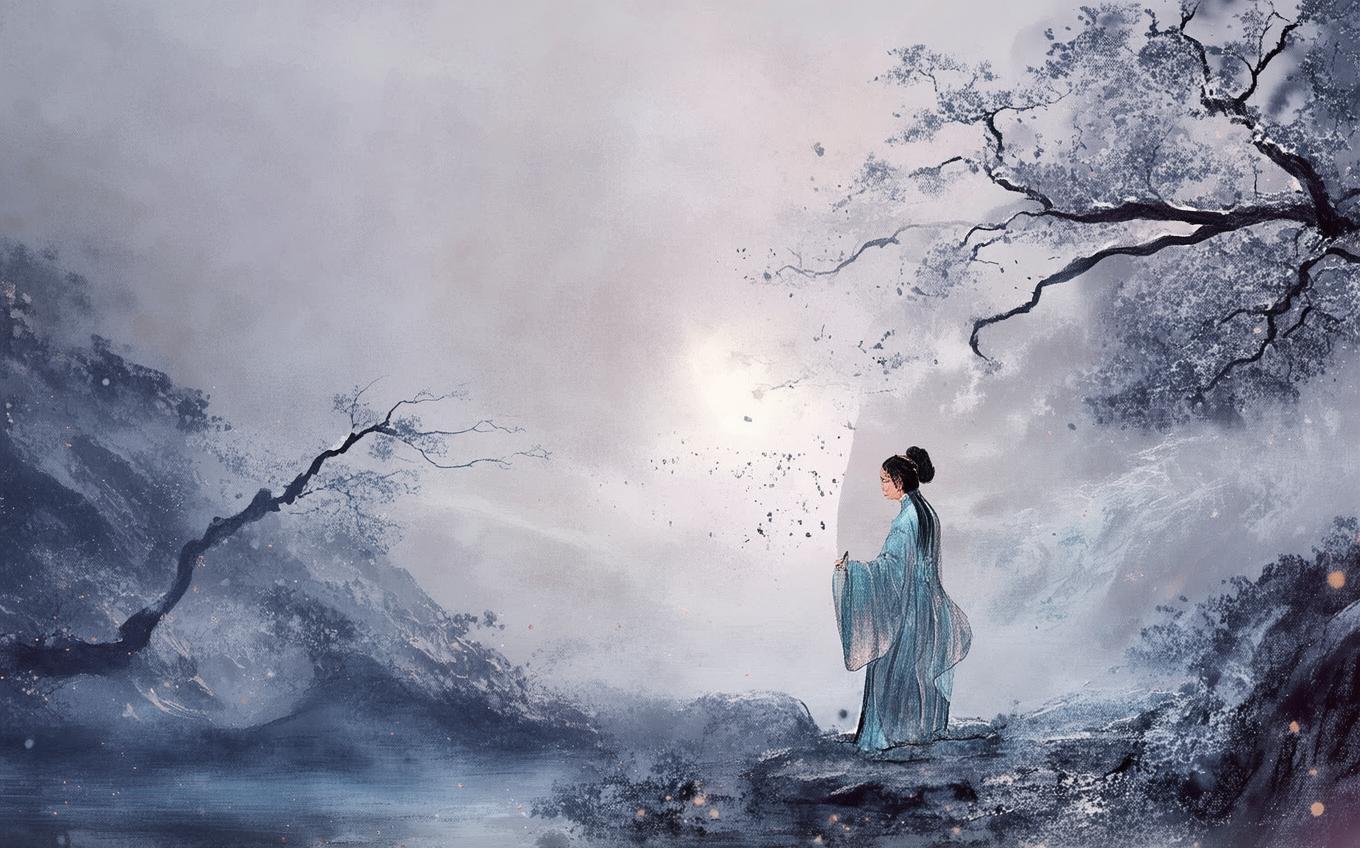
The funeral of such a high minister was a state event, yet historical records note that Taizong, overwhelmed with emotion, climbed the palace tower to watch the procession go by, unable to attend the interment itself. “望送魏征葬” is thus a deeply personal, almost spontaneous poetic record of that moment. In the Confucian tradition, the proper relationship between ruler and minister was likened to that between heaven and earth — mutually supportive. The poem fulfills the ritual of mourning not with stiff eulogy but with raw human sorrow, bridging the formal and the intimate.
Conclusion
"望送魏征葬" is much more than an emperor’s lament for a lost official; it is a timeless meditation on grief, the fragility of human bonds, and the lonely weight of power. Through exquisitely chosen imagery — golden saddles, sinking suns, erratic banners, streaming tears — Tang Taizong transforms a private moment of sorrow into a shared reflection on mortality. For English-speaking readers, this poem shatters the stereotype of the remote, aloof Chinese emperor, revealing instead a man who loved deeply, mourned openly, and, in doing so, exemplified the very humanity that made his rule great. Its enduring appeal lies in its honesty: even a son of heaven cannot command the return of spring’s companion, and must simply stand, gaze, and weep.

Comments (0)
No comments yet. Be the first to comment!