Introduction
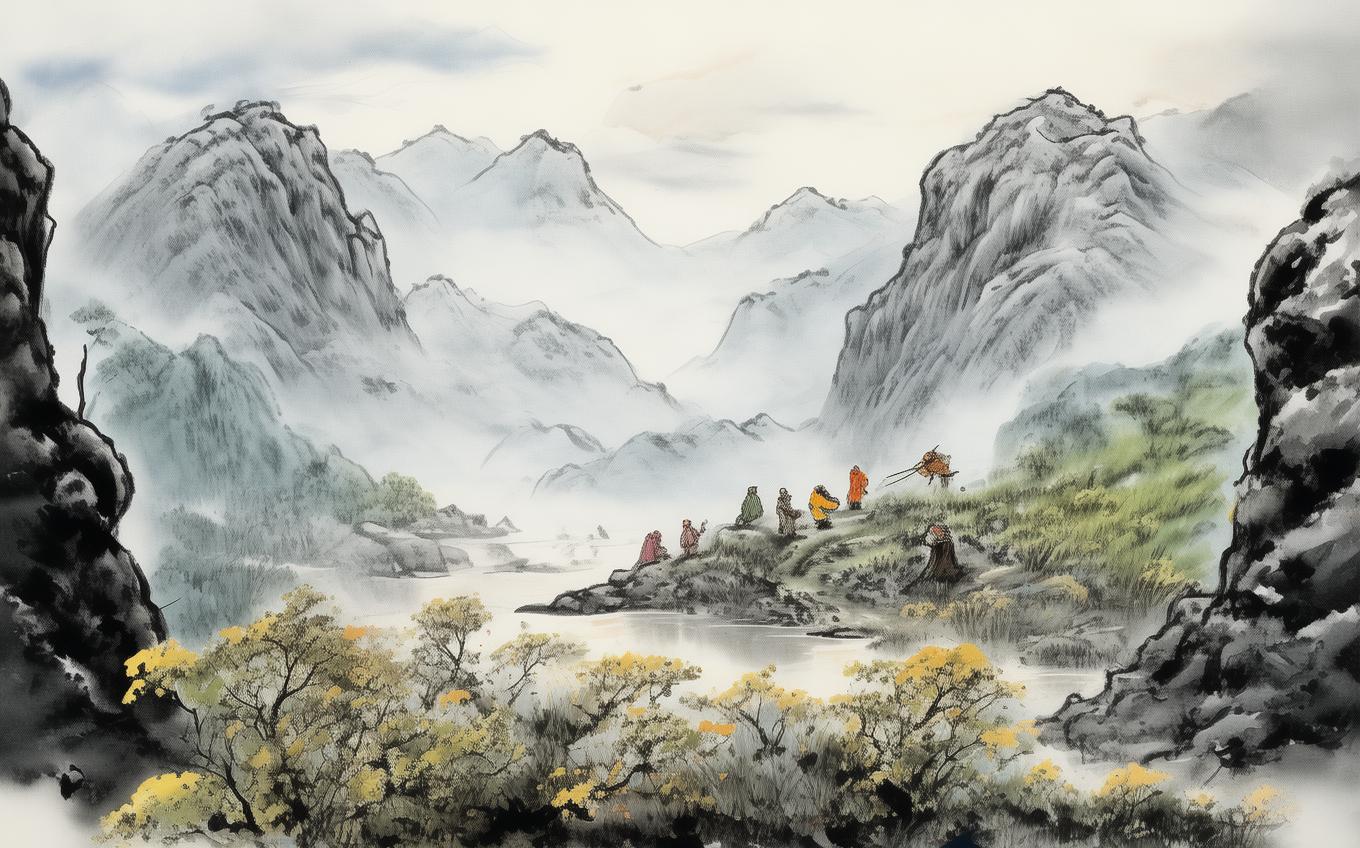
Su Shi (苏轼, 1037–1101), also known as Su Dongpo, is one of the most celebrated figures in Chinese literary history—a master of poetry, prose, calligraphy, and statesmanship during the Song Dynasty. Written in 1075 while he served as the prefect of Mizhou (in present-day Shandong), his poem “江城子·密州出猎” (Jiangchengzi: Hunting at Mizhou) is a vibrant and impassioned hunting lyric. Though the poem describes a grand hunt, it is far more than a sporting scene: it is a veiled political appeal and a declaration of patriotic ambition clothed in the imagery of the chase. For English-speaking readers, this poem opens a window into the intertwined worlds of personal emotion, nature, and statecraft in classical Chinese verse.
The Poem: Full Text and Translation
老夫聊发少年狂
lǎo fū liáo fā shào nián kuáng
This old man, stirred by a youthful frenzy,左牵黄
zuǒ qiān huáng
Leash in left hand a yellow hound,右擎苍
yòu qíng cāng
Right arm outstretched with a goshawk keen,锦帽貂裘
jǐn mào diāo qiú
In brocade hat and sable coat,千骑卷平冈
qiān jì juǎn píng gāng
A thousand horsemen sweep the level hill.为报倾城随太守
wèi bào qīng chéng suí tài shǒu
To repay the whole town that follows their magistrate,亲射虎
qīn shè hǔ
I’ll shoot the tiger myself,看孙郎
kàn sūn láng
And show them a youthful Sun Quan.酒酣胸胆尚开张
jiǔ hān xiōng dǎn shàng kāi zhāng
Drunk with wine, my heart and valor still expand,鬓微霜
bìn wēi shuāng
Though my temples bear a touch of frost,又何妨
yòu hé fáng
What does it matter?持节云中
chí jié yún zhōng
Bearing the imperial tally to Yunzhong,何日遣冯唐
hé rì qiǎn féng táng
When will they send a Feng Tang for me?会挽雕弓如满月
huì wǎn diāo gōng rú mǎn yuè
I would draw my carved bow full like a moon,西北望
xī běi wàng
Gazing northwest,射天狼
shè tiān láng
And shoot down the Celestial Wolf.
Line-by-Line Analysis
“This old man, stirred by a youthful frenzy”
The poem opens with a striking self-portrait. Su Shi was only thirty-eight at the time, yet he calls himself “old man” (lǎofū), a conventional poetic pose that also reflects the weight of political setbacks. The “youthful frenzy” (shàonián kuáng) immediately sets a tone of unbridled energy, deliberately breaking from the restraint expected of an official. It signals that what follows is not just a hunt but a release of suppressed passion.
“Leash in left hand a yellow hound, / Right arm outstretched with a goshawk keen”
These two parallel lines paint the quintessential image of a noble hunter. The yellow dog and the goshawk are traditional companions for falconry, each phrase as compact and vivid as a brushstroke in a Chinese painting. The careful balance of left and right shows the hunter in perfect control, merging human skill with animal prowess.
“In brocade hat and sable coat, / A thousand horsemen sweep the level hill”
Now the poet zooms out from personal detail to a panoramic view. The luxurious attire underscores his rank, while “a thousand horsemen” transforms the hunt into a military spectacle. The verb “卷” (juǎn – “sweep” or “roll up”) suggests an overwhelming, gust-like force, as if the hunting party is a storm scouring the landscape.
“To repay the whole town that follows their magistrate, / I’ll shoot the tiger myself, / And show them a youthful Sun Quan.”
Su Shi boasts that the entire city has turned out to watch, and he pledges to give them a worthy show by slaying a tiger. The historical reference is crucial: Sun Quan, a young ruler of the Three Kingdoms era, famously hunted a tiger to prove his daring. By likening himself to Sun Quan, the poet claims both youthful vigor and heroic capability, even as he calls himself “old.”
“Drunk with wine, my heart and valor still expand, / Though my temples bear a touch of frost, / What does it matter?”
The banquet after the hunt feeds a second kind of intoxication—one that swells the spirit. The “touch of frost” on his temples acknowledges middle age and accumulated disappointments, but the rhetorical question “what does it matter?” dismisses age as irrelevant. This defiant note is the emotional core of the poem: physical decline cannot quench inner fire.
“Bearing the imperial tally to Yunzhong, / When will they send a Feng Tang for me?”
Here the poem pivots from spectacle to deep personal longing. Yunzhong was a frontier commandery, and Feng Tang was an aged Han dynasty official who persuaded the emperor to reinstate a wrongly demoted general. Su Shi, himself exiled from the capital to provincial posts, asks when someone like Feng Tang will speak for him and restore him to a position where he can truly serve the empire. The hunting scene becomes a coded application for a frontier assignment.
“I would draw my carved bow full like a moon, / Gazing northwest, / And shoot down the Celestial Wolf.”
The closing lines transform the hunt into an act of national defense. The “carved bow” drawn into a perfect circle like the full moon is an image of poised power. The northwest was the direction of the Western Xia threat, and the Celestial Wolf (Tiānláng, Sirius) traditionally symbolizes invasion and aggression in Chinese star lore. To shoot the Celestial Wolf is to defend the realm itself. The hunter’s arrow thus becomes a patriot’s weapon, and the poem ends on a note of heroic resolve.
Themes and Symbolism
The central theme is patriotic ambition veiled as a hunting excursion. The hunt functions as an elaborate metaphor: the hound, the goshawk, the tiger, and the bow all externalize Su Shi’s desire to protect the state. Apparent bravado masks a poignant plea—the poet feels sidelined by political misfortune and yearns to be deployed against real enemies.
Age and vitality form a counterpoint throughout. Su Shi deliberately calls himself “old,” yet every line burns with youthful fire. The frost at the temples is a symbol of time’s passage, but the drawn bow, as round as the moon, suggests wholeness and ongoing potential. The moon, often a symbol of reunion and completeness in Chinese poetry, here becomes an emblem of strength fully realized.
Historical and astral symbols deepen the message. Sun Quan represents leadership and personal courage. Feng Tang and Yunzhong evoke the proper relationship between a sovereign and loyal talent. The Celestial Wolf/Sirius was a traditional omen of border troubles, giving the final line a cosmic scale—the poet is not merely shooting a target but restoring cosmic order.
Cultural Context
Su Shi wrote this poem in a period of intense frustration. After opposing Wang Anshi’s radical reforms, he had been pushed out of the capital and into a series of provincial prefectures. Mizhou, in the relatively exposed north, made the frontier feel near. The Song Dynasty constantly faced threats from the Western Xia and the Khitan Liao, and many scholar-officials thirsted for a more assertive defense. Su Shi’s poem channels this mood, using the hunt as a socially acceptable vehicle for expressing martial fervor and political dissent.
The poem is also shaped by the ci (词) genre, originally sung to popular melodies, which allowed a more personal and colloquial voice than the highly regulated shi (诗). The informal “old man” persona and the rhetorical questions were fresh and direct, breaking from earlier courtly decorum. This boldness contributed to the poem’s lasting popularity and its influence on later patriotic ci writing—most notably in the works of Xin Qiji.
Confucian ideals of service blend with Daoist-flavored vitality: the righteous official must engage with the world, yet the Daoist emphasis on inner spirit allows Su Shi to shrug off literal age. In this sense, the poem reflects the syncretic Song intellectual climate, where personal cultivation and public duty were inseparable.
Conclusion
“江城子·密州出猎” endures because it is at once a thrilling painting of the hunt and a deeply human cry for purpose. Su Shi’s genius lies in making a political plea feel like an epic adventure—dogs, hawks, galloping horsemen, and the moon-shaped bow all pulse with a vitality that transcends his own time. For modern readers, the poem is a reminder that frustration and limitation can be forged into creative energy, and that a single, well-drawn bow can aim at both a beast and a better world. Its music, carried in the tight rhythms of ci and the bold strokes of its imagery, continues to stir any heart that has ever longed to break free and make a mark.
Comments (0)
No comments yet. Be the first to comment!