Introduction
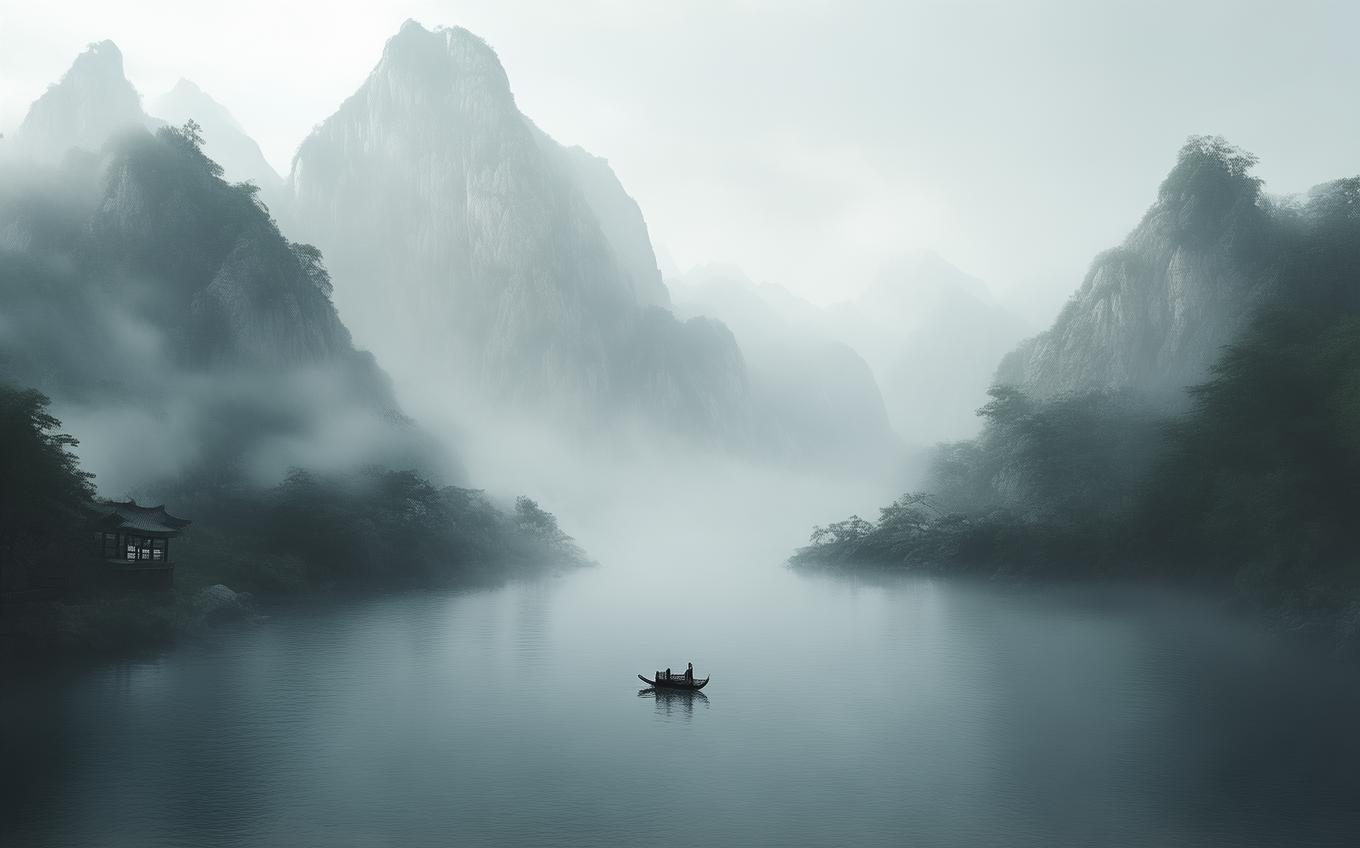
Emperor Taizong of Tang (598–649), personal name Li Shimin, is revered not only as one of China’s greatest rulers but also as an accomplished poet. His reign marked the consolidation of the Tang dynasty and the beginning of a golden age of cultural flourishing. The poem “临洛水” (Lín Luò Shuǐ, “Approaching the Luo River”) was composed during a spring imperial hunt near the Luo River, a waterway rich in historical and literary resonance. As both a political leader and a man of letters, Taizong used poetry to express his vision of harmony between human governance and the natural world. This poem masterfully blends vivid landscape description with subtle cultural allusions, revealing the emperor’s aesthetic sensibility and his confident engagement with the legacy of past dynasties. For English readers exploring Chinese classical poetry, “临洛水” offers a fascinating window into the Tang court’s refined relationship with nature and history.
The Poem: Full Text and Translation
春蒐驰骏骨
chūn sōu chí jùn gǔ
In the spring hunt, I urge on my steed’s sturdy frame;
总辔俯长河
zǒng pèi fǔ cháng hé
Drawing the reins, I overlook the long river below.
霞处流萦锦
xiá chù liú yíng jǐn
Where rosy clouds gather, the current winds like brocade;
风前瀁卷罗
fēng qián yàng juǎn luó
Before the breeze, ripples roll up like gossamer silk.
水花翻照树
shuǐ huā fān zhào shù
Spray from the water mirrors the trees’ reflections;
堤兰倒插波
dī lán dào chā bō
Orchids on the bank grow upside down in the waves.
岂必汾阴曲
qǐ bì fén yīn qǔ
Why must we have the songs of Fenyin?
秋云发棹歌
qiū yún fā zhào gē
The autumn clouds themselves inspire a boating song.
Line-by-Line Analysis
Lines 1–2: Setting the Scene
The opening couplet establishes the poem’s occasion and perspective. “春蒐” (chūn sōu) refers to a royal spring hunt, a ritual activity that combined martial training with political display. Taizong rides a fine horse (“骏骨”), a symbol of vigor and imperial authority. By “gathering the reins and looking down upon the long river,” he shifts from hunter to observer, pausing to appreciate the landscape. This transition from action to contemplation is typical of Tang landscape poetry, where the poet’s gaze frames the scenery that follows. The Luo River, an artery of central China, becomes the focal point of the emperor’s reflection.
Lines 3–4: The River’s Dynamism
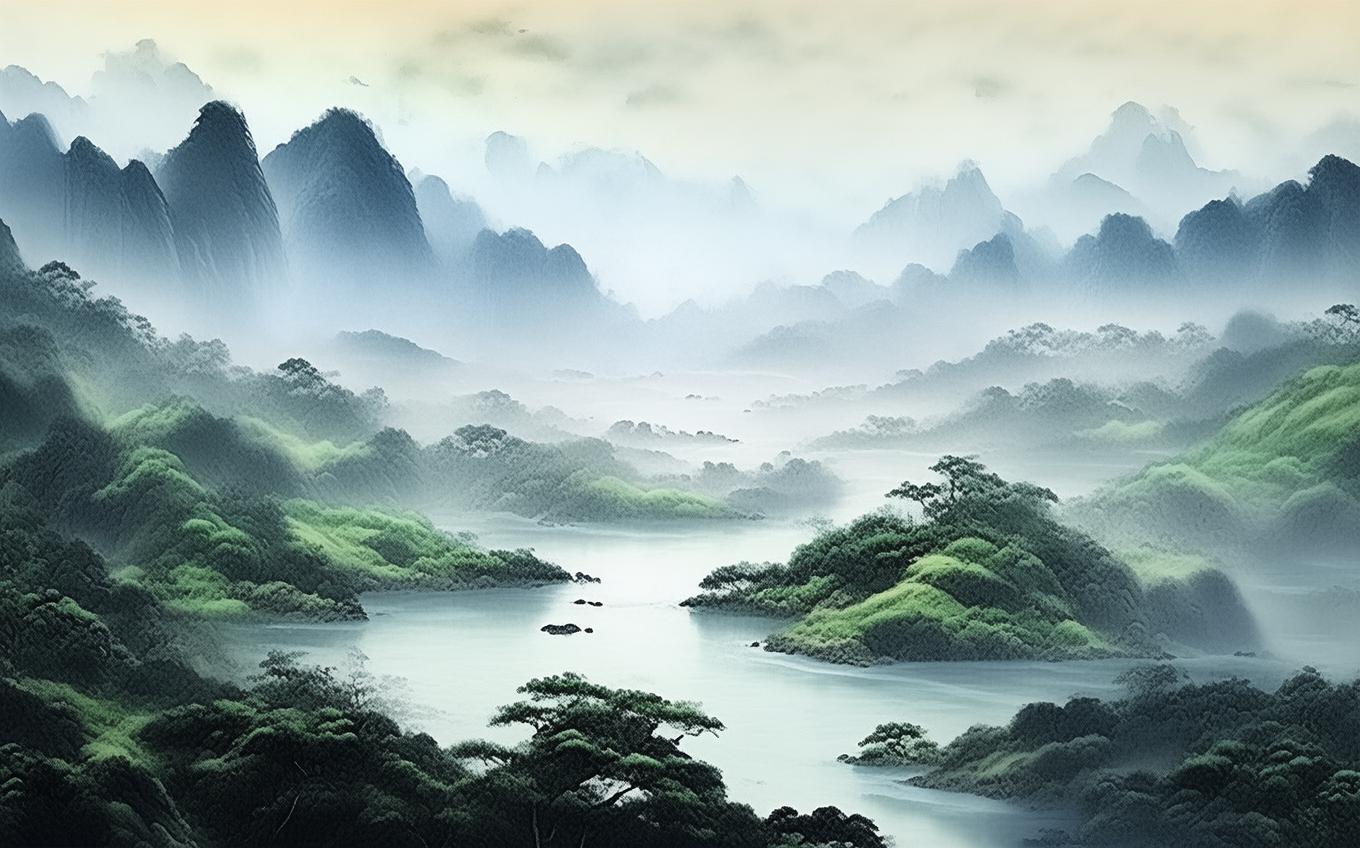
These lines use textile imagery to capture the river’s shimmering surface. “霞” (xiá), rosy clouds, suggests the glow of early morning or late afternoon. The water “flows, entwined like brocade,” while before the wind it “surges and rolls like gauze” (“瀁卷罗”). The juxtaposition of “锦” (jin, brocade) and “罗” (luo, thin silk) reveals the poet’s keen eye for subtle shifts in light and texture. Rather than simply stating that the river is beautiful, Taizong animates it as an ever‑changing fabric woven by nature’s loom, an effect that would have delighted Tang readers accustomed to such elegant metaphors.
Lines 5–6: Reflections and Reversals
Here the focus narrows to a single, striking optical illusion. “Water flowers” — splashes or foam — “flip over to mirror the trees,” while orchids growing on the embankment appear “upside‑down, inserted into the waves.” This playful inversion dissolves the boundary between solid and liquid, above and below. It reveals a Taoist‑influenced perception of reality as fluid and interdependent. At the same time, the “堤兰” (orchids on the dyke) function as a subtle symbol of moral refinement: orchids were associated with virtuous scholars, and their reflection in the imperial river hints at the ideal of a ruler who surrounds himself with such integrity.
Lines 7–8: A Poetic Declaration
The closing couplet swerves from description to historical meditation. “汾阴曲” (Fényīn songs) refers to the grand sacrificial hymns composed when Emperor Wu of the Han dynasty performed ceremonies at Fenyin, a site on the Yellow River. By asking “Why must we have the songs of Fenyin?” Taizong asserts the sufficiency of the present moment. “秋云” (autumn clouds) are real, not legendary; they alone can “send forth a boating song.” Although the poem is set in spring, the mention of autumn clouds links the present scene to the broader cycle of seasons, suggesting that true poetic inspiration arises from direct engagement with nature rather than from imitation of ancient glories. It is a confident, almost casual claim of cultural independence, characteristic of the early Tang’s self‑conscious break from the preceding Six Dynasties’ obsession with the past.
Themes and Symbolism
Nature as a Realm of Governance and Enjoyment
The poem fuses the imperial hunt — a display of political power — with an intimate enjoyment of landscape. Taizong demonstrates that a wise ruler is both a protector of the realm and a connoisseur of its beauty. The Luo River, flowing through the heart of the empire, becomes a mirror of cosmic order.
The Interplay of Illusion and Reality
Through images of reflections and inverted orchids, the poem gently questions what is “real.” This echoes Chinese philosophical traditions, especially Buddhism and Taoism, which see the material world as a web of interdependent illusions. The emperor’s ability to perceive this interplay marks his superior sensibility.
Cultural Self‑Confidence
By rejecting the need for Han‑dynasty “Fenyin songs,” Taizong asserts the Tang dynasty’s own cultural achievements. Nature itself, properly observed, supplies all the inspiration a poet requires. This theme of literary renewal — wén as an expression of the present rather than a fetishization of antiquity — was central to the early Tang literary reform.
Cultural Context
The Luo River has deep roots in Chinese civilization. It was near the Luo that the mythical “Luoshu” diagram was said to have emerged on the back of a turtle, inspiring the Yijing trigrams. Later, the Cao Wei poet Cao Zhi immortalized the river in his “Rhapsody of the Luo River Goddess” (Luò Shén Fù), creating an alluring female deity from its waters. By Taizong’s time, the Luo was a layered symbol of imperial legitimacy, artistic refinement, and mystical revelation.
The poem’s reference to “汾阴曲” recalls Emperor Wu of Han (156–87 BCE), who conducted sacrifices at Fenyin and wrote poems of his own, most famously the “Autumn Wind Song” (Qiūfēng Cí). Taizong’s direct rhetorical question places him in a lineage of great rulers, but also shows him moving beyond emulation: the Tang emperor finds his own voice in the immediacy of the landscape. This attitude aligns with the early Tang intellectual climate, which prized direct perception over stale quotation.
Conclusion
“临洛水” may not be the most famous poem in the Chinese canon, but it encapsulates the grace, authority, and cultural ambition of Tang court poetry. Emperor Taizong uses deceptively simple images — a galloping horse, shimmering water, upside‑down orchids — to articulate a vision of enlightened rule grounded in aesthetic attunement to the world. For modern readers, the poem offers a serene moment of reflection: it asks us to pause above the river of our own busy lives, observe the interplay of light and shadow, and recognize that the clouds drifting by are themselves a song. In an age of constant noise, Taizong’s quiet confidence in the sufficiency of the present moment is a message both timeless and deeply Chinese.
Comments (0)
No comments yet. Be the first to comment!