Introduction
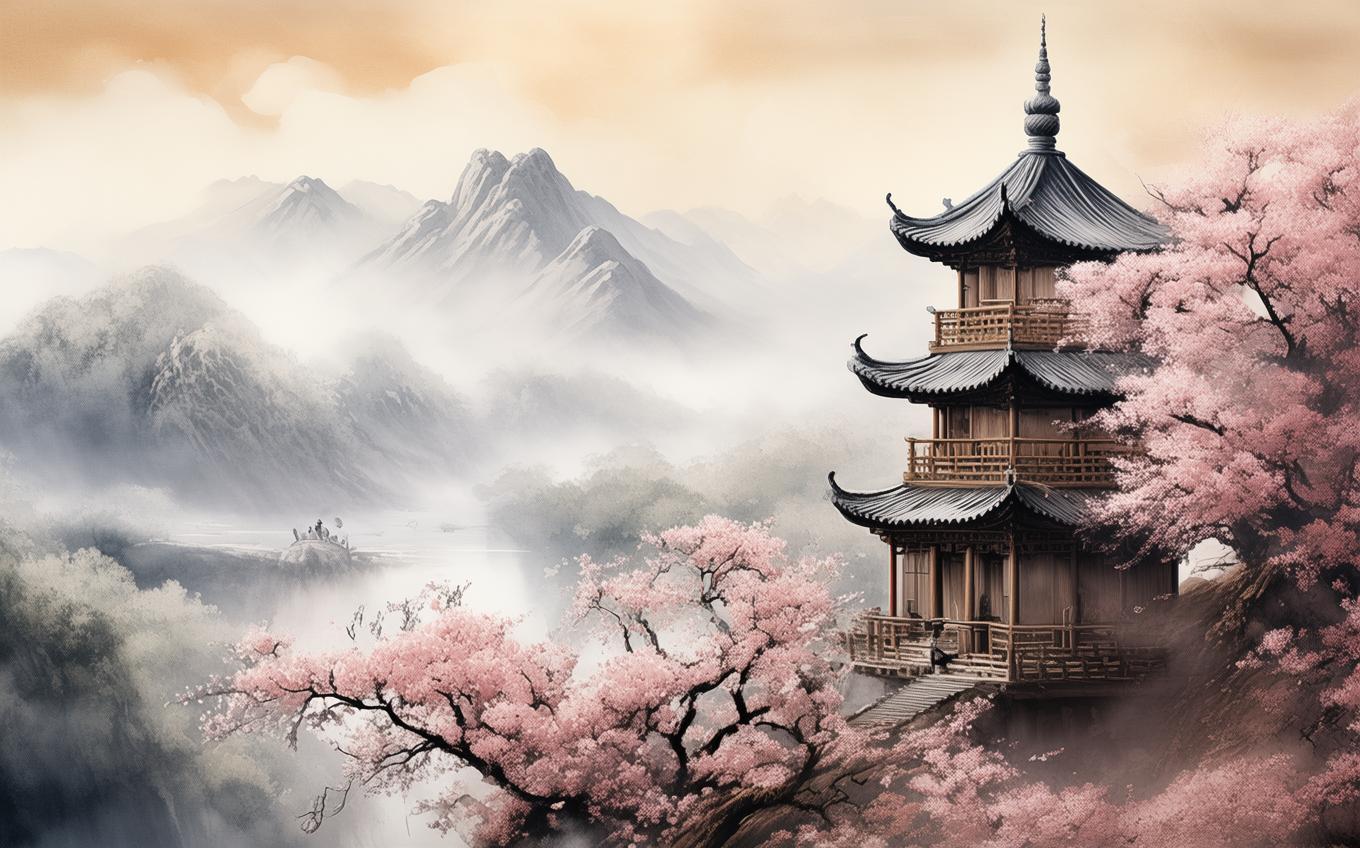
Emperor Taizong of Tang (Li Shimin, 598–649) is remembered not only as one of China’s greatest rulers but also as a refined poet. His reign ushered in the “Reign of Zhenguan,” a golden age of prosperity and cultural flowering. Among his surviving poems, 初春登楼即目观作述怀 (“Climbing a Tower in Early Spring, Recording What I See and Expressing My Feelings”) stands out as a perfect blend of imperial vision and lyrical delicacy. Written from a high vantage point, it captures the fresh beauty of the early spring landscape while hinting at the emperor’s ideals of governance. The title itself weaves together three acts: climbing, observing, and reflecting. For English-speaking readers, this poem offers a window into how a Chinese ruler saw the world and expressed his innermost thoughts through nature.
The Poem: Full Text and Translation
凭轩俯兰阁,眺瞩散灵襟。
Píng xuān fǔ lán gé, tiào zhǔ sàn líng jīn.
Leaning on the railing, I look down upon the orchid pavilion; gazing far and wide, my spirit expands and loosens.绮峰含翠雾,照日吐红鳞。
Qǐ fēng hán cuì wù, zhào rì tǔ hóng lín.
Gorgeous peaks enfold emerald mist; struck by sunlight, they spit out scales of rosy red.镂丹霞锦岫,残素雪斑岑。
Lòu dān xiá jǐn xiù, cán sù xuě bān cén.
Caverns are carved with cinnabar clouds like brocade; on the summits, leftover pure snow still flecks the crags.拂浪堤垂柳,娇花鸟续吟。
Fú làng dī chuí liǔ, jiāo huā niǎo xù yín.
Drooping willows sweep the waves along the embankment; tender flowers—and birds continue their songs.川明分渭水,树暗辨秦川。
Chuān míng fēn Wèi shuǐ, shù àn biàn Qín chuān.
The gleaming river clearly marks the Wei waters; through dark trees, I discern the plains of Qin.舞蝶迷幽径,歌莺识旧邻。
Wǔ dié mí yōu jìng, gē yīng shí jiù lín.
Dancing butterflies lose their way on secluded paths; singing orioles know and greet old neighbors.方欣济时具,讵复羡鱼心。
Fāng xīn jì shí jù, jù fù xiàn yú xīn.
Now I rejoice in having the means to assist the age; why should I still harbor a heart that merely envies the fish?
Line-by-Line Analysis
Lines 1–2: The Act of Viewing
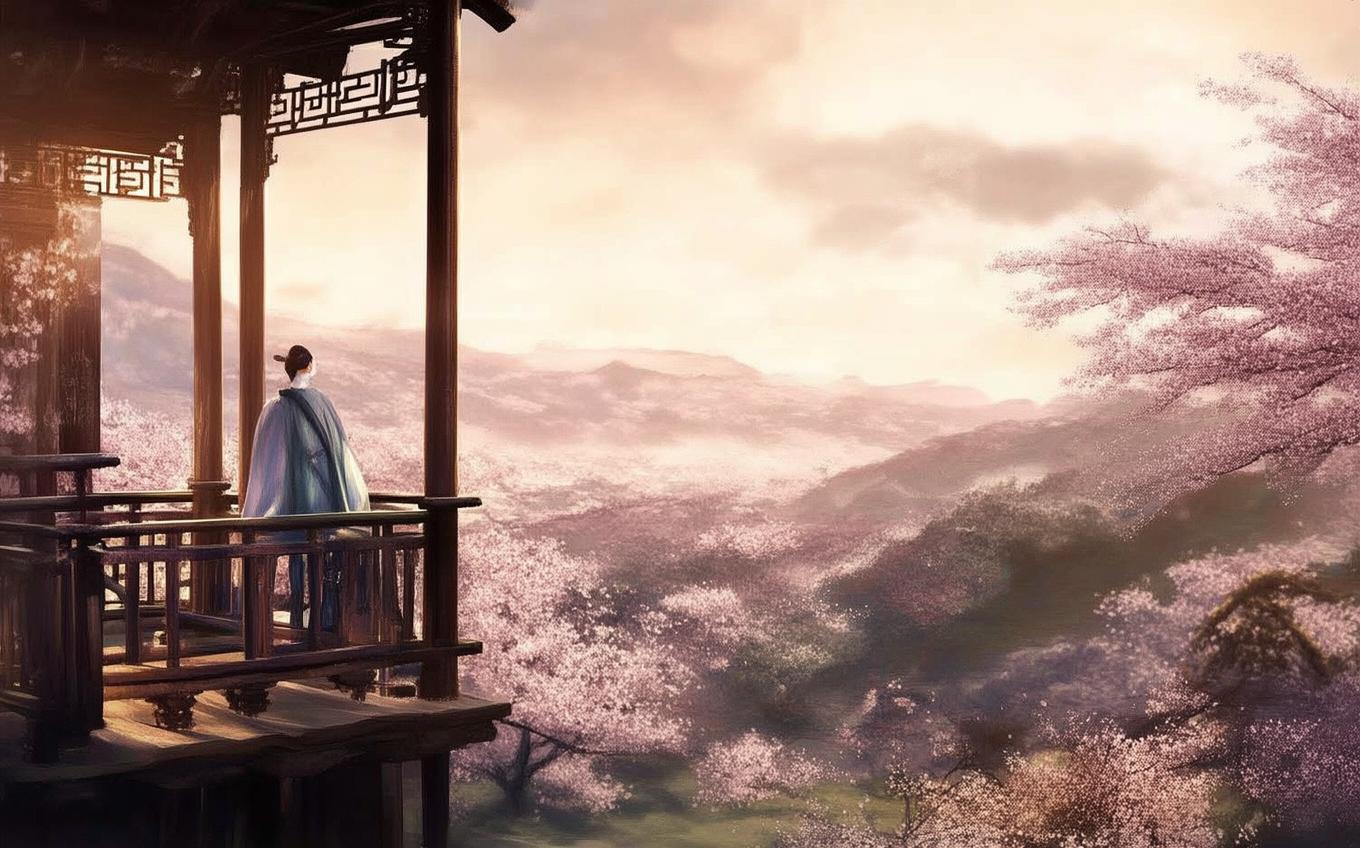
The poem opens with a physical posture—leaning on a railing and looking down. The “orchid pavilion” (lán gé) is not only a structure but a symbol of refined taste, echoing the Orchid Pavilion Gathering immortalized by Wang Xizhi. 眺瞩散灵襟—the soul is “scattered” in the sense of unburdened, released from the cares of state. Here the emperor presents himself as a man whose spirit opens when he communes with the landscape.
Lines 3–4: The Play of Light on Mountains
The imagery becomes dynamic and almost mythical. Peaks draped in green mist catch the morning or evening sun and appear to “spit out red scales,” comparing the glinting ridges to a giant fish or dragon. This creature-like animation hints at a lively, auspicious cosmos. The emperor’s eye catches both distance and detail—stillness and motion in a single glance.
Lines 5–6: Snow and Stone as Art
The mountains are described like crafted treasures. “Carved with cinnabar clouds” (镂丹霞) and “brocaded grottoes” (锦岫) turn geology into embroidery. The “residual white snow” that patches the summits adds contrast—last traces of winter amid rising spring. These couplets display an aesthetic that prizes contrast and texture, a hallmark of Tang landscape verse.
Lines 7–8: Water and Song
Moving from mountain to water, the poet notes willows brushing the waves. The line 娇花鸟续吟 could be read as “delicate flowers, and birds that continue their trilling,” merging bloom and birdsong into one sensual stream. Spring is not only seen but heard—the air itself is alive with music.
Lines 9–10: Naming the River and Plains
Geography turns personal and political. The Wei River and Qin Plains are the heartland of the Tang Empire, the cradle of Chinese civilization. “Bright river clearly divides the Wei waters” may allude to clear boundaries and good governance. “Dark trees faintly discern the Qin plains” suggests a depth that requires careful observation, much like statecraft. The emperor’s survey is both literal and symbolic: he reads the land as a map of his rule.
Lines 11–12: Creatures at Home
Butterflies “lose their way” on hidden paths—a charming image of innocent confusion, perhaps a metaphor for the freedom of the subject in a tranquil realm. Conversely, the oriole “recognizes old neighbors,” suggesting harmony and lasting bonds in nature. Together, these lines paint a world both spontaneous and orderly, exactly the Confucian ideal of a well-governed state.
Lines 13–14: The Emperor’s Reflection
The poem ends with a philosophical turn. The phrase 济时具 (means to assist the times) refers to the emperor’s political and moral capabilities. 羡鱼心 (a heart that envies the fish) alludes to the ancient proverb “Standing by a pond envying the fish is not as good as going back and weaving a net.” To merely envy the fish is to have idle wishes without action. Taizong declares that he no longer has that passive longing—he possesses the tools and the will to govern actively. Spring renewal mirrors his commitment to a new and vigorous rule.
Themes and Symbolism
The Ruler’s Gaze and the Landscape of Power
Climbing a tower to survey the realm is a time-honored gesture in Chinese poetry. For an emperor, this act merges aesthetic appreciation with political oversight. The poem’s movement from distant peaks to intimate flowers and finally to the statement of capability traces the path of a sage ruler: observe, understand, and act.
Spring as Renewal of Governance
Early spring symbolizes new beginnings, growth after winter’s stillness. Just as nature awakens, the sovereign renews his duty to “assist the age.” The lingering snow and budding blossoms form a dual image: old burdens recede while vitality emerges.
Nature’s Order and Contentment
The precise geography—Wei River, Qin Plains—grounds the poem in the real Tang heartland. Creatures like butterflies and orioles live in effortless harmony, mirroring the ideal state where people dwell in peace. The “lost” butterfly and the “neighbor-recognizing” oriole together suggest that even confusion has a place in a benevolent order.
The Net and the Fish
The closing allusion to “envying the fish” critiques passive desire. By saying he has “the means to assist the times,” the emperor positions himself as a ruler who weaves the net—who creates conditions for abundance rather than simply wistfully looking at what could be.
Cultural Context
Li Shimin composed this poem in the early part of his reign
Comments (0)
No comments yet. Be the first to comment!