Introduction
The poem “秋暮言志” (Autumn Evening, Expressing My Aspirations) comes from a remarkable figure in Chinese history: Emperor Taizong of the Tang Dynasty, Li Shimin (598–649). Renowned as one of China’s greatest rulers, Li Shimin was also a skilled poet and calligrapher. His reign marked the beginning of the Tang golden age, a period of military expansion, cultural flourishing, and stable governance. While many Tang poems were written by scholar-officials or recluses, this poem offers a rare glimpse into the mind of an emperor. Composed on a late autumn evening, the poem blends vivid seasonal imagery with subtle political ambition. It stands as a classic example of how Chinese poets used nature to “言志” (yán zhì) — to articulate their innermost aspirations.
The Poem: Full Text and Translation
朝光浮燒野,
Cháo guāng fú shāo yě,
Morning light drifts over the burnt fields;
霜華淨碧空。
Shuāng huá jìng bì kōng.
Frost-bloom purifies the azure sky.
結浪冰初鏡,
Jié làng bīng chū jìng,
Frozen waves: ice begins to mirror;
在徑菊方叢。
Zài jìng jú fāng cóng.
Along the path, chrysanthemums now cluster thick.
約嶺煙深翠,
Yuē lǐng yān shēn cuì,
Wrapped ridges, misted in deep emerald;
分旗霞散紅。
Fēn qí xiá sàn hóng.
Parting banners — rosy clouds scatter red.
抽思滋泉側,
Chōu sī zī quán cè,
I draw forth thoughts beside the brimming spring;
飛想傅岩中。
Fēi xiǎng Fù Yán zhōng.
My imagination soars into Fu Yan.
Line-by-Line Analysis
The poem follows the regulated verse form (lüshi) with eight five-character lines, moving from outward observation to inward reflection — a typical arc in classical Chinese poetry.
Couplet 1 (Lines 1–2):
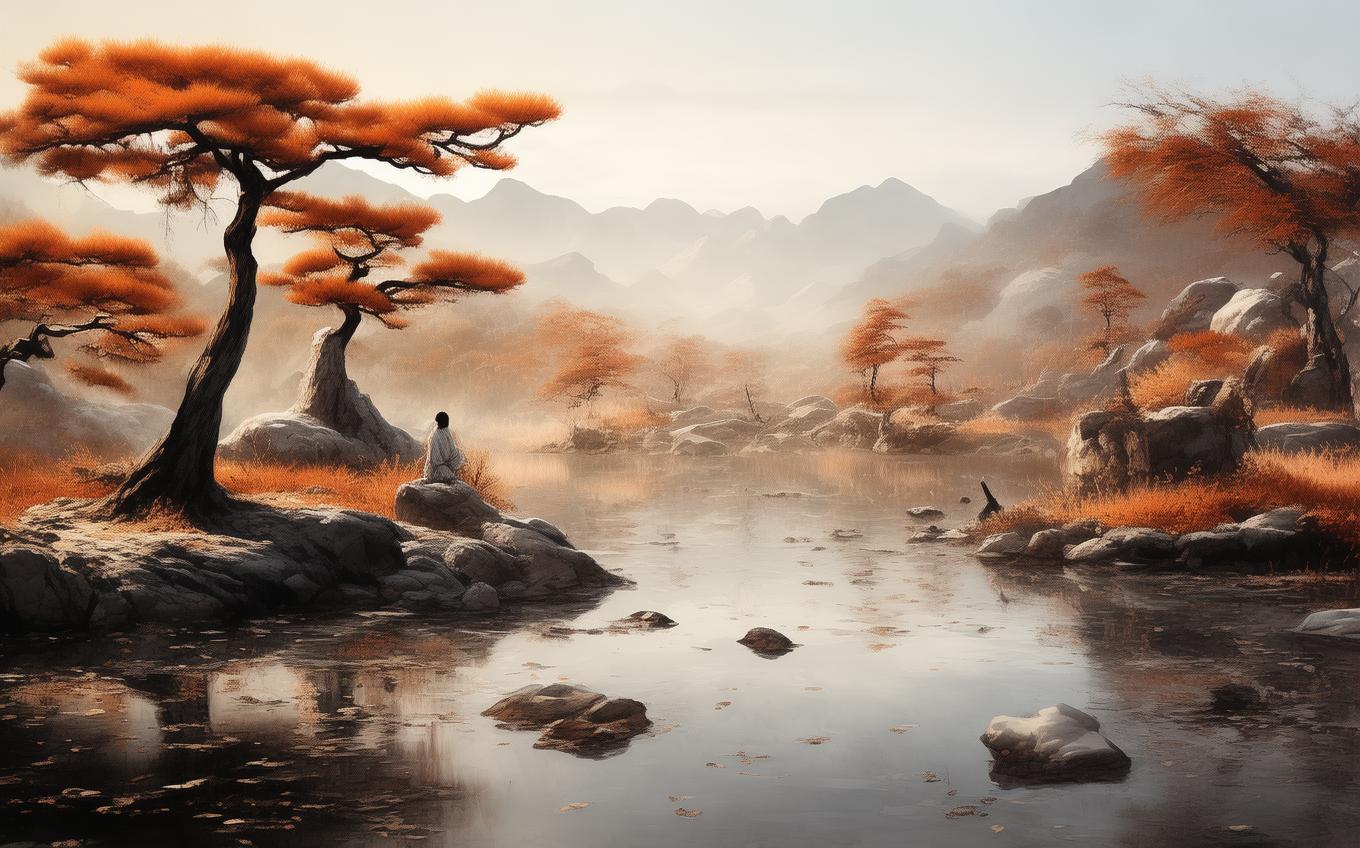
The opening sets a crisp, late-autumn scene. “Morning light over burnt fields” (shāo yě) evokes the agricultural practice of burning stubble after harvest, a sign of the season’s end. “Frost-bloom” (shuāng huá) is a poetic name for frost, imagined here as a blossoming that cleanses the heavens. Together the lines contrast the earthly, human-altered landscape with the pure, untouched sky — hinting at the emperor’s double role as active ruler and contemplative observer.
Couplet 2 (Lines 3–4):
Images tighten and cool. Ice just beginning to freeze on rippling water acts like a new mirror, a symbol of clarity and self-examination. On land, chrysanthemums cluster beside the path. In Chinese culture, the chrysanthemum represents resilience and nobility, blooming precisely when other flowers wither. The poet notices these things not by chance — they mirror his own wish to remain clear-headed and virtuous through changing times.
Couplet 3 (Lines 5–6):
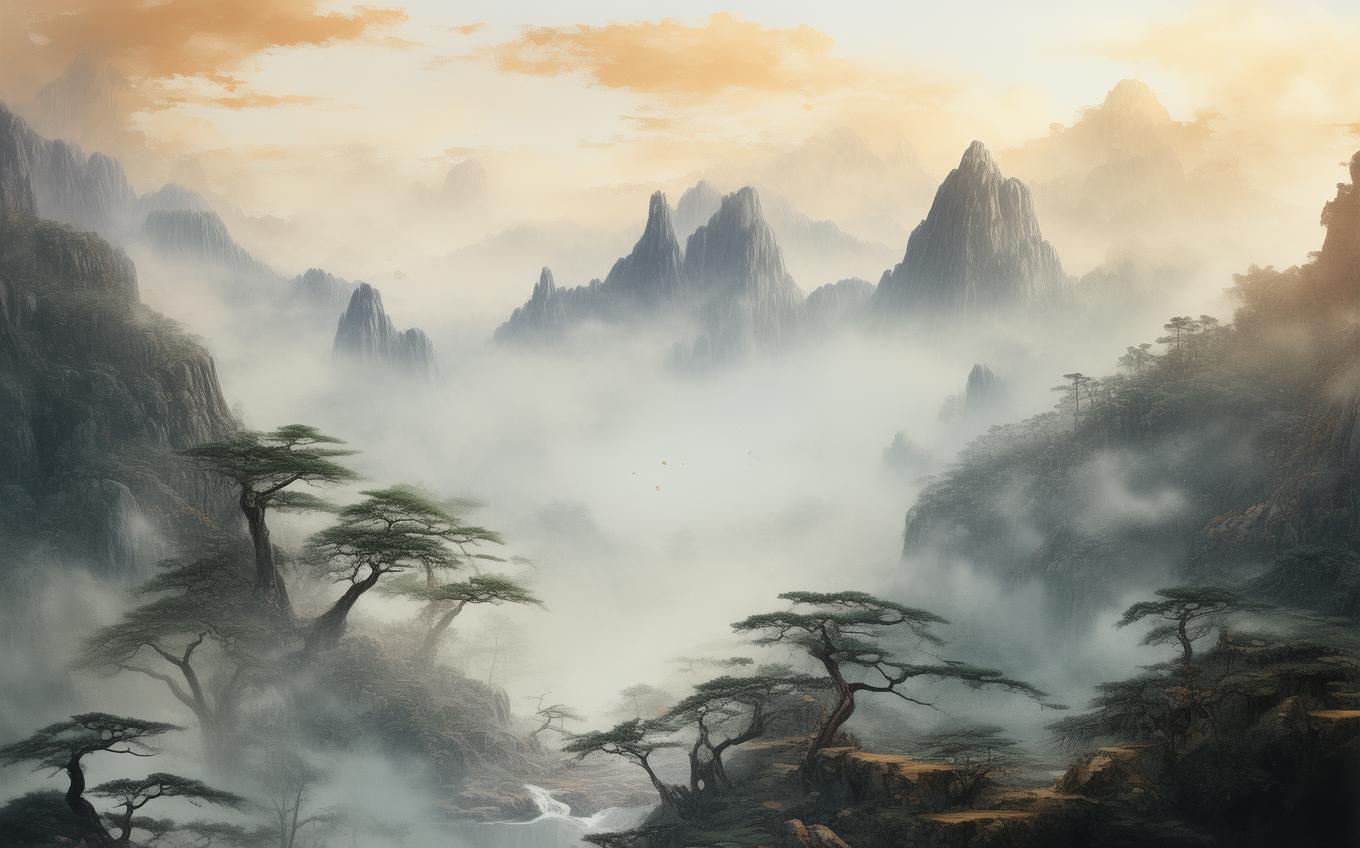
The gaze expands outward to hills and sky. “Wrapped ridges” veiled in deep green mist create a sense of mystery and depth. The unusual image of rosy clouds spreading like “parting banners” (fēn qí) introduces a martial or ceremonial note — fitting for a ruler. The colors (deep emerald, scattered red) infuse the landscape with the regal and the dramatic, reminding readers that this is no ordinary observer but one accustomed to command.
Couplet 4 (Lines 7–8):
The poem pivots inward. “Brimming spring” (zī quán) suggests a source of inspiration that is ever-flowing, a metaphor for the poet’s mental vitality. Finally, his thoughts “soar” into Fu Yan — a specific historical reference. Fu Yan was the place where the ancient Shang king Wu Ding discovered his legendary minister Fu Yue, a man who rose from lowly origins to help govern the kingdom. By directing his imagination there, the emperor reveals his deepest aspiration: to identify and attract wise, capable officials to serve the state.
Themes and Symbolism
Expressing Political Aspirations through Nature
The poem’s title explicitly states “言志” — expressing one’s will or ideals. Rather than making a direct political statement, the emperor uses nature as a veil. The autumn landscape becomes a mirror of his inner world: purification (frost), clarity (ice), steadfastness (chrysanthemums), and the order of banners (rosy clouds) all trace the outlines of a ruler’s mind.
The Quest for Worthy Men
The closing allusion to Fu Yan is the key to the poem’s “message.” Fu Yue from Fu Yan symbolized the archetypal hidden talent waiting to be discovered. By invoking this story, Li Shimin positions himself as an enlightened monarch constantly on the lookout for virtue and ability — an ideal central to Confucian governance.
Seasonal Reflection
Autumn in Chinese poetry often carries themes of maturity, transience, and introspection. The emperor’s choice of late autumn (“秋暮” means autumn evening or deep autumn) suggests a time of assessing the “harvest” of one’s life and reign. There is no melancholy here, only a serene, purposeful determination.
Cultural Context
Li Shimin ruled from 626 to 649, a period known as the “Reign of Zhenguan.” He was deeply involved in literary culture and frequently composed poetry alongside his court officials. His poems often celebrate the empire’s prosperity while subtly reinforcing political messages. This poem fits that pattern: displaying sensitivity to beauty while reminding his court that the emperor’s mind is ever on finding talent and upholding virtue.
The story of Fu Yue (傅說) was well known to educated Tang readers. According to legend, King Wu Ding of Shang dreamed of a sage and sent out a search, eventually finding a laborer named Fu Yue working at a place called Fu Yan. The laborer became a trusted minister. Li Shimin’s reference places himself in the role of Wu Ding, signaling his humility and his ambition to govern with the best minds available. It also underscores a cornerstone of Chinese political philosophy: that a ruler’s greatness is judged by the quality of the officials he gathers around him.
Conclusion
“秋暮言志” is a gem woven from delicate nature painting and bold political aspiration. For English readers, the poem opens a window onto how a Chinese emperor could be both a man of power and a poet of subtle expression. The autumnal clarity, the ice-mirrors, and the soaring thought back to a legendary meeting of lord and minister all speak to an enduring ideal: that good governance is rooted in self-reflection and in the patient search for wisdom. More than thirteen centuries later, Li Shimin’s quiet aspiration still gleams, like frost in a spotless sky.

Comments (0)
No comments yet. Be the first to comment!