Analysis of Yu Shinan's "咏风" - Classical Chinese Poetry
Introduction
Yu Shinan (558–638) was a distinguished scholar, calligrapher, and poet of the early Tang Dynasty. A trusted advisor to Emperor Taizong, he was celebrated for his moral integrity and refined artistry. His poem “咏风” (Yǒng Fēng — “Ode to the Wind”) is a miniature masterpiece of yongwu poetry, a genre in which poets depict an object or natural phenomenon by evoking its effects rather than naming it outright. This four-line verse, with its elegant brevity and sensory allure, has been cherished for centuries as a perfect example of how classical Chinese poetry captures the invisible through the visible.
The Poem: Full Text and Translation
逐舞飘轻袖,
zhú wǔ piāo qīng xiù,
It follows the dance, fluttering light sleeves;
传歌共绕梁。
chuán gē gòng rào liáng.
It carries songs, and together they hover around the beams;
动枝生乱影,
dòng zhī shēng luàn yǐng,
It stirs branches, giving birth to tangled shadows;
吹花送远香。
chuī huā sòng yuǎn xiāng.
It blows flowers, sending their fragrance far away.
Line-by-Line Analysis
Line 1: 逐舞飘轻袖 (zhú wǔ piāo qīng xiù)
The poem opens not with a definition but with motion. The wind “follows the dance,” animating the delicate sleeves of performers. The verb zhú (chase, follow) personifies the wind as a playful companion, while piāo (flutter, float) suggests a gentle, upward buoyancy. We see no wind—only the sleeves that lift and swirl, transforming an everyday breeze into a partner in human joy.
Line 2: 传歌共绕梁 (chuán gē gòng rào liáng)
Here the wind becomes a carrier of sound. It “transmits” songs, and together with the music it “circles around the beams.” The image alludes to a famous story of an ancient singer whose voice was so beautiful that it seemed to linger around the rafters for three days. By linking wind and melody, Yu Shinan blends two invisible forces—air and music—into a single, haunting presence. The wind does not merely blow; it participates in the very life of art.
Line 3: 动枝生乱影 (dòng zhī shēng luàn yǐng)
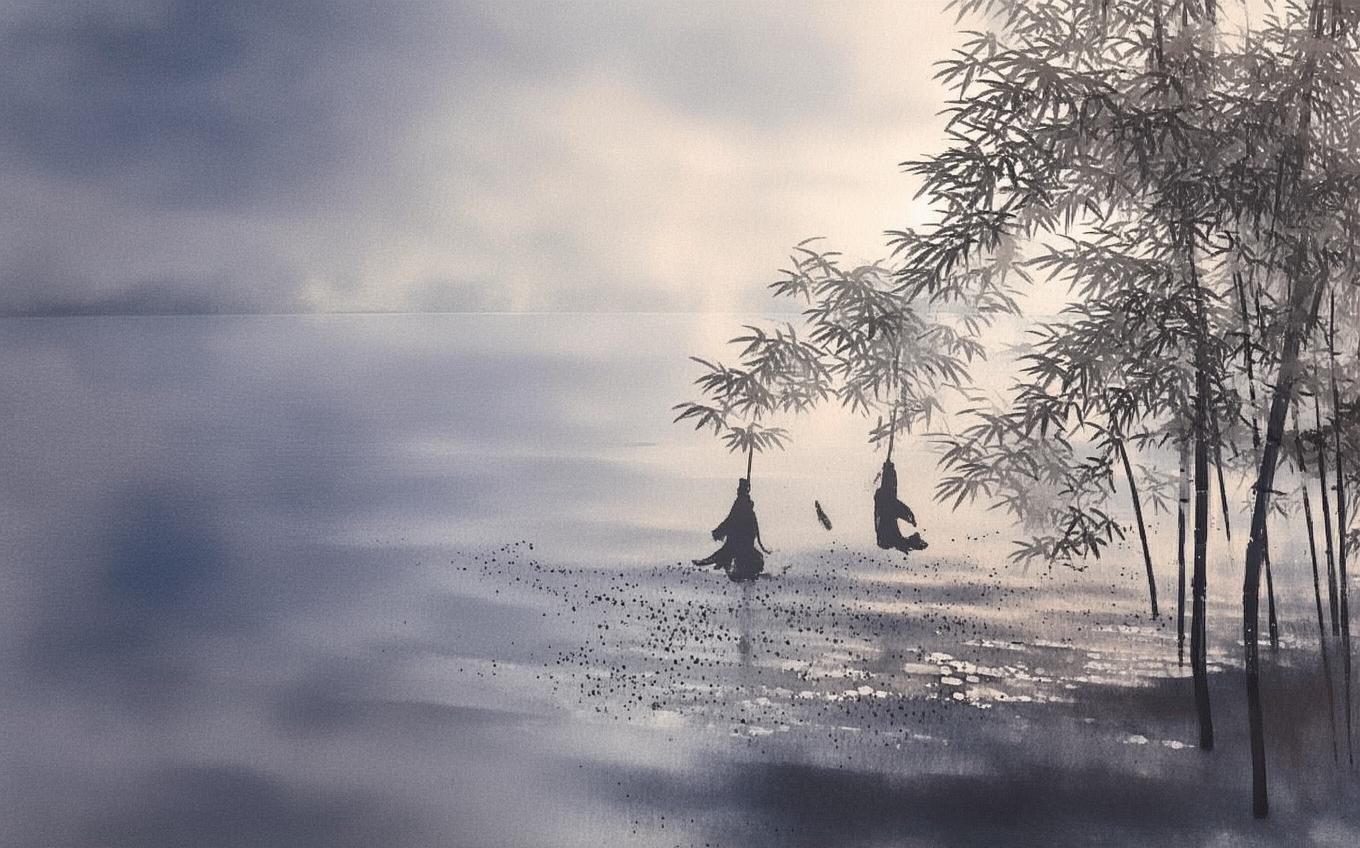
Now the focus shifts to vision. The wind “stirs branches,” and as they move, they cast “confused shadows” on the ground. The word luàn (chaotic, tangled) is deliberately chosen: it captures the unpredictable, yet beautiful patterns of dappled shade. This is the wind as painter, creating an ever-changing monochrome design on the earth, a reminder that the most ordinary scenes hold a hidden poetry.
Line 4: 吹花送远香 (chuī huā sòng yuǎn xiāng)
The final line brings fragrance. The wind “blows flowers,” and in doing so, it “escorts” their perfume into the distance. This is the wind as generous messenger, dispersing sweetness far beyond the garden. The progression is complete: the poem has moved from touch (fluttering sleeves), to hearing (echoing song), to sight (moving shadows), and now to smell. In just twenty characters, every sense except taste is awakened, all through the unseen agency of the wind.
Themes and Symbolism
The central theme is the beauty of the invisible made manifest. The poem never mentions the word “wind” except in the title—the body of the text lets the wind reveal itself solely through its effects. This technique embodies the Daoist appreciation for the unseen source of all movement and transformation.
Another theme is the unity of nature and art. The wind interacts with human dance and song, yet also with branches and flowers, blurring the boundary between human culture and the natural world. The poem suggests that the wind itself is an artist: it choreographs, orchestrates, paints, and perfumes.
Symbolically, the wind represents gentleness that yields great influence. In Chinese philosophy, róu (softness) often overcomes gāng (hardness). The poem’s breeze never forces; it nudges sleeves, carries tunes, tilts branches, and diffuses scent—achieving profound effects through quiet persistence.
Cultural Context
Yu Shinan lived during the Tang Dynasty’s golden age, when poetry was the heartbeat of courtly life. The yongwu genre was a favorite pastime among literati, who would compete to capture an object’s essence without naming it—a kind of poetic riddling. The ability to write about the wind in this way demonstrated both technical skill and refined perception.
The poem also reflects the Tang appreciation for yijing (意境), a fusion of idea and scene. Each couplet presents a miniature picture, yet the images are linked by a single, invisible subject. The technique resembles Chinese calligraphy, an art in which Yu Shinan excelled: the wind’s movement through the poem is like a brushstroke—fluid, continuous, and alive with energy. Moreover, the allusion to lingering song touches on Confucian ideals of music’s transformative power, while the natural imagery aligns with Daoist reverence for unforced harmony.
For centuries, “咏风” has been a favorite in Chinese education because it demonstrates how poetry can train the mind to perceive subtleties. It teaches that much of what matters in life—emotion, inspiration, connection—is, like the wind, felt rather than seen.
Conclusion
Yu Shinan’s “咏风” endures not only for its exquisite craftsmanship but for its gentle reminder that the most powerful forces are often invisible. In an age of noise and haste, this short poem invites us to pause and sense the wind’s quiet work: the sleeve stirred by a breath, a melody that lingers, the dance of shadows, a fragrance borne on air. It is an ode to the hidden threads that weave through all existence, and it remains as fresh as the breeze that inspired it more than a millennium ago. Through this poem, we learn that every rustle of leaves, every waft of scent, carries a silent poem—if only we have the stillness to notice.
Comments (0)
No comments yet. Be the first to comment!