Introduction
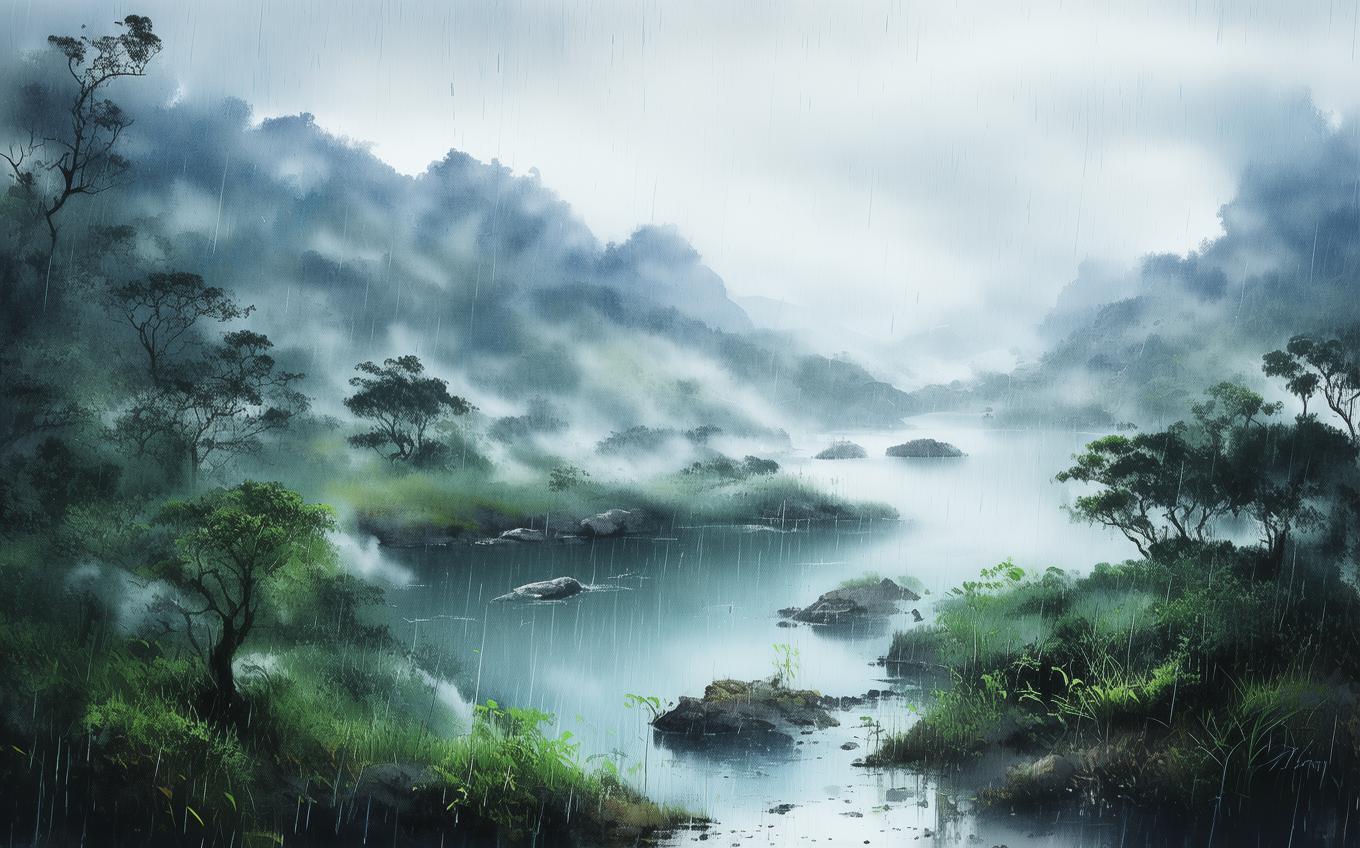
The phrase yǒng yǔ (咏雨) simply means “chanting about rain” – a poetic theme that has inspired countless Chinese poets over the centuries. Among them, the Tang dynasty master Du Fu (杜甫, 712–770) left one of the most cherished examples in the short regulated verse “春夜喜雨” (Chūn Yè Xǐ Yǔ) – Happy Rain on a Spring Night. Written during a period of relative calm after years of war and displacement, this poem captures not only the poet’s intimate observation of nature but also a deep, quiet joy in life’s simple blessings. For English readers, it offers a timeless window into the Chinese aesthetic of finding profound meaning in gentle, ordinary moments.
The Poem: Full Text and Translation
好雨知时节,
hǎo yǔ zhī shí jié,
Good rain knows its season,
当春乃发生。
dāng chūn nǎi fā shēng.
Arriving right when spring is due.
随风潜入夜,
suí fēng qián rù yè,
With wind it steals into the night,
润物细无声。
rùn wù xì wú shēng.
Moistening things, so fine, without a sound.
野径云俱黑,
yě jìng yún jù hēi,
Over country lanes, the clouds are all ink-black;
江船火独明。
jiāng chuán huǒ dú míng.
On the river, a boat’s lantern glows alone.
晓看红湿处,
xiǎo kàn hóng shī chù,
At dawn, look where wet crimson lies –
花重锦官城。
huā zhòng jǐn guān chéng.
Flowers heavy, the Brocade City blooms.
Line-by-Line Analysis
好雨知时节,当春乃发生。
The poem opens with a striking personification: the rain is not just a weather event but a mindful presence that “knows” its proper time. Hǎo yǔ (good rain) already carries an emotional judgment; this is rain that aligns with human hope and agricultural need. The phrase zhī shí jié (knows its season) suggests moral wisdom, as if the rain understands the right moment to act – a concept deeply rooted in the Confucian ideal of timeliness. Spring is the season of renewal, and the rain’s arrival nǎi fā shēng (then it comes into being / brings forth life) links the natural process directly to the flourishing of all living things.
随风潜入夜,润物细无声。
Here the imagery becomes soft and secretive. The rain “steals” (qián, 潜) into the night with the wind – the verb implies a quiet, almost invisible movement that does not seek attention. The second line is the poem’s heart: rùn wù xì wú shēng – moistening all things, so delicately that no sound is heard. This describes a perfectly nourishing rain, one that penetrates the soil without storm or violence. Culturally, it evokes a model of benevolent influence: the best teachers, rulers, or friends nurture us gently, without needing to be seen or heard. The contrast between the rain’s powerful effect and its utter silence creates a mood of serene humility.
野径云俱黑,江船火独明。
The scene shifts outward to the dark landscape. Over the winding country paths (yě jìng), the clouds form an unbroken blackness. This pervasive dark suggests a night so thick that the rain seems endless and fertile. Then a single point of light appears: a lamp on a river boat burning alone (huǒ dú míng). The lone fire becomes a visual anchor, a symbol of human presence and warmth in the vast wet darkness. The contrast is stark – all-enveloping nature versus one small, steady light – and it heightens the sense of a quiet, watchful joy. Du Fu himself, as a traveler or observer, may be that solitary light, awake and grateful while everyone else sleeps.
晓看红湿处,花重锦官城。
The final couplet leaps to the imagined morning. Xiǎo kàn (at dawn look) invites us to witness the rain’s beautiful aftermath. The “red wet places” (hóng shī chù) refer to blossoming flowers drenched in rainwater. The last line is a marvel of compression: huā zhòng Jǐn Guān Chéng – “flowers heavy, the Brocade City.” Chengdu, where Du Fu was living, was famous for its brocade industry and often called the “Brocade City” (Jǐn Guān Chéng). The weight of the rain-soaked blossoms conveys abundance, lush beauty, and a city transformed by the night’s gentle gift. The word zhòng (heavy) works on multiple levels: the physical weight of water in the petals, the visual heaviness of thick clusters of flowers, and the emotional weight of the poet’s contentment.
Themes and Symbolism
The dominant theme is the nourishing power of quiet benevolence. The rain embodies the ideal of a jūnzǐ (君子, “gentleman” or “exemplary person”), who acts at the right time, without ostentation, and brings benefit to all without expecting recognition. There is no storm, no thunder, no drama – only a silent, life-giving presence. This aligns with the Daoist appreciation of wú wéi (无为, effortless action), as well as Confucian moral cultivation.
Seasonal renewal is another key theme. Spring is the season of beginnings, and the rain’s perfect timing symbolizes the harmony between heaven and earth when the natural order is in balance. Du Fu’s delight is not just aesthetic but deeply agrarian: a good spring rain meant a good harvest, and for a poet who suffered through famine and war, this was a genuine source of joy.
The contrast between light and dark serves as a quiet symbol of hope. The single boat lantern burning in the immense night is a small but steady human spirit against the vast operations of nature. It reflects Du Fu’s own position – a displaced scholar finding solace in the smallest signs of order and kindness. The final image of heavy, blooming flowers in the Brocade City turns the whole poem into a celebration of hidden processes that yield spectacular results.
Cultural Context
Du Fu wrote “春夜喜雨” around 761, when he was living in a thatched cottage in Chengdu, Sichuan. The An Lushan Rebellion (755–763) had shattered the Tang dynasty, and Du Fu himself had fled the capital. Unlike his earlier poems full of national anguish, the Chengdu period allowed brief respites of personal contentment, and these poems often focus on intimate observations of nature. Yet even here, the moral vision remains: Du Fu sees in the rain a model of the good ruler, someone who brings blessing silently, without harshness.
In Chinese literary tradition, the poem is praised for its píng dàn (平淡, “plainness and balance”) – a style that uses simple language to convey deep feeling. The absence of flamboyant metaphors makes the quiet imagery all the more moving. The regulated verse form (eight lines of five characters each, with strict tonal patterns) also shows Du Fu’s technical mastery; the poem feels effortless but is intricately crafted. “Happy Rain on a Spring Night” is taught to schoolchildren, quoted in everyday conversation, and has become part of the cultural vocabulary for describing timely help or gentle influence.
Conclusion
Du Fu’s “Happy Rain on a Spring Night” endures because it speaks to something universal: the deep, quiet gladness we feel when the world provides exactly what is needed, without fanfare. The rain that “knows its season” and nurtures in silence becomes a metaphor for the kindness of nature, the wisdom of restraint, and the hope that even in dark times, small acts of goodness can renew a whole city. For English-speaking readers, this poem breaks down the stereotype that classical Chinese poetry is distant or elusive. Instead, it offers a clear, gentle voice – one that still whispers across centuries, reminding us to look for the heavy blossoms at dawn.
Comments (0)
No comments yet. Be the first to comment!