Analysis of "赋得夏首启节" - Classical Chinese Poetry
Introduction
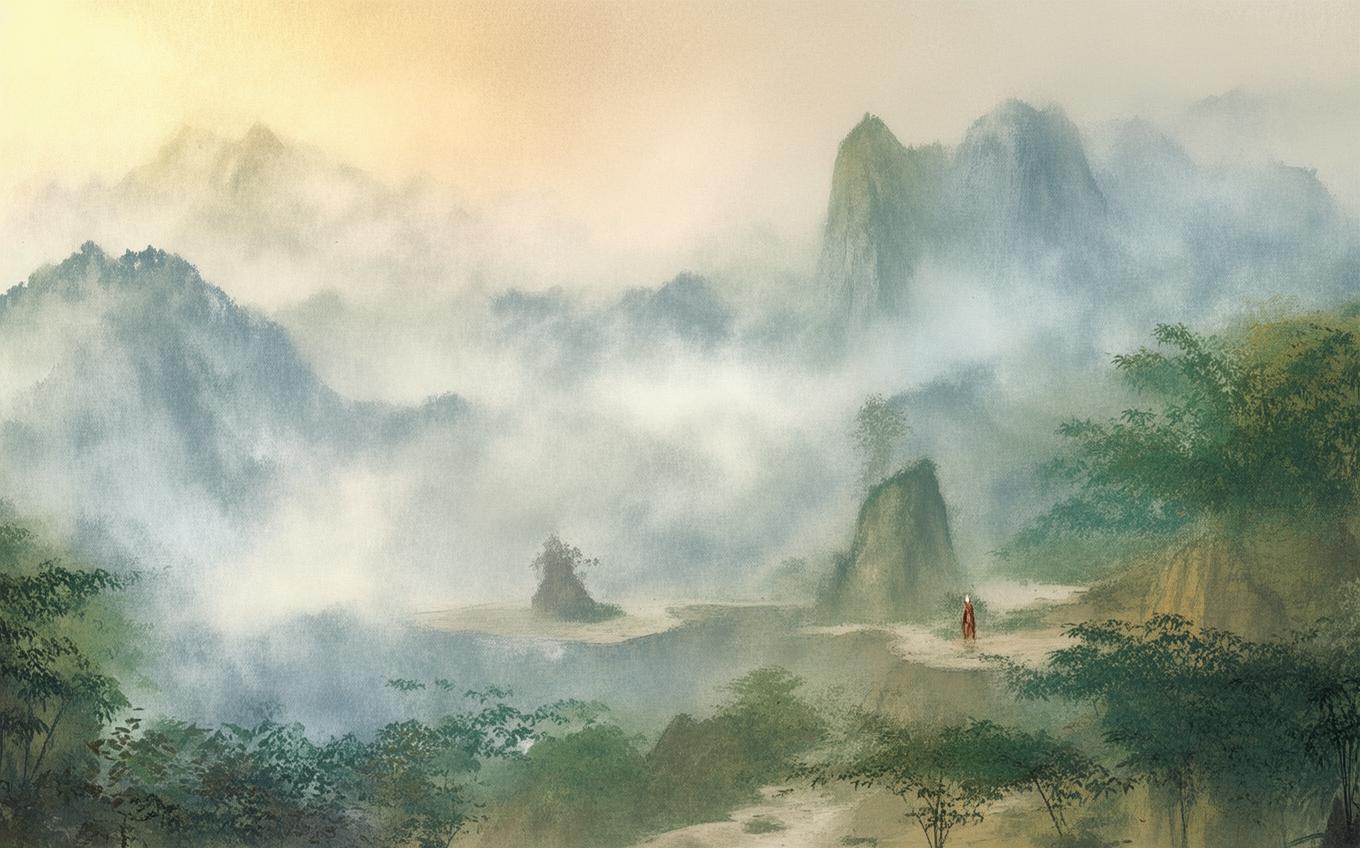
Nestled in the early Tang dynasty, a poem by Emperor Taizong (Li Shimin, 598–649) offers a delicate snapshot of the season’s turning. Titled 赋得夏首启节 (Composed on the Theme “Beginning of Summer Initiates the Season”), this work belongs to a tradition of court poetry where poets would extemporize on a given theme, often celebrating imperial grace and the rhythms of nature. Li Shimin, a formidable ruler who consolidated the Tang Empire and championed the arts, was himself an accomplished poet. This poem, while not his most politically charged, reveals a contemplative monarch attuned to the subtle beauty of seasonal change—a hallmark of classical Chinese lyricism. For English-speaking readers, it provides a window into how Chinese poetry blends personal feeling, imperial majesty, and a deep reverence for the natural world.
The Poem: Full Text and Translation
北阙三春晚
Běi què sān chūn wǎn
Northern towers, spring’s triple months grow late
南荣九夏初
Nán róng jiǔ xià chū
Southern eaves, the ninety days of summer just begin
黄莺弄渐变
Huáng yīng nòng jiàn biàn
Golden orioles frolic, change steals in gradually
翠林花落馀
Cuì lín huā luò yú
Emerald woods, flowers have fallen—a few linger on
瀑流还响谷
Pù liú huán xiǎng gǔ
The waterfall’s flow still echoes through the ravine
猿啼自应虚
Yuán tí zì yīng xū
Gibbons’ cries of themselves answer the void
早荷向心卷
Zǎo hé xiàng xīn juǎn
Early lotuses roll inward toward the heart
长杨就影舒
Cháng yáng jiù yǐng shū
Tall willows, chasing shade, stretch out in ease
此时欢不极
Cǐ shí huān bù jí
At this moment, joy does not reach its extreme
调轸坐相於
Tiáo zhěn zuò xiāng yú
We tune the zither’s pegs, sit side by side in harmony
Line-by-Line Analysis
The opening couplet establishes a grand spatial and temporal frame. “北阙” (northern watchtowers) evokes the imperial palace, suggesting the emperor’s vantage point, while “南荣” (southern eaves) points to a sun-warmed, more domestic space. “三春晚” tells us late spring is lingering; “九夏初” announces summer’s onset—九十天 of summer, a classical way to count the season. The transition is not abrupt but a gentle overlapping, mirroring the poem’s mood. The poet positions himself between power and intimacy, between fading spring and rising summer.
Next, the poet turns to closer natural details. Orioles “frolic” (弄), a verb often used for artful, playful movement—the birds seem to toy with the shifting light and warmth. “渐变” (gradual change) is the poem’s quiet heartbeat: nothing in nature leaps, everything unfolds. In the emerald woods, petals have mostly fallen, yet a few remain, a visual whisper of what lingers before full summer. The image is poignant without overt sadness, a characteristic restraint of Tang verse.
The third couplet deepens the landscape with sound. A waterfall’s voice still reverberates in the valley—the verb “还” (still) implies continuity, as if spring’s moisture carries forward into summer. Gibbons’ cries, a staple of Chinese wilderness poetry, “自应虚” (naturally answer the void). There is a Daoist resonance here: sound answering emptiness, presence calling to absence, creating an almost meditative atmosphere. The poet doesn’t just see the scene; he hears it, and in hearing, senses a larger cosmic echo.
The fourth couplet offers the poem’s most tender vegetable images. Early lotus leaves curl inward “向心” (toward the heart), a gesture of introversion and potential, while tall willows lean into the shade and stretch out comfortably. The lotus, still unopened, embodies concentration and purity; the willow, loose and flowing, embodies graceful submission to the season. Together they form a quiet yin-yang of nature’s responses to summer’s arrival.
The final couplet pivots from landscape to human emotion and communion. “欢不极” (joy not extreme) is a subtly profound phrase. The speaker feels happiness, but not overwhelming—a restrained, lasting contentment rather than wild ecstasy. Then we learn why: he is with a companion (likely a courtier, friend, or even the reader), tuning a zither, sitting together in amity. “调轸” involves adjusting the tuning pegs of the qin, a literati instrument symbolizing harmony both musical and moral. The act of making music together seals the poem’s philosophy: the best joy is quiet, shared, and attuned to nature’s rhythm.
Themes and Symbolism
Seasonal Transition and Impermanence
The poem’s core theme is the liminal moment between spring and summer. Unlike many Chinese poems that mourn spring’s departure, here the tone is serene acceptance. Late blossoms and lingering echoes remind us that change is not loss but transformation. The oriole’s “gradual change” becomes a model for human conduct—adapt gracefully.
Courtly Leisure and Harmony
As an emperor’s poem, it naturally reflects an ideal of cultured repose. Tuning the zither and sitting together suggest a world of ritual friendship and balanced governance. “Harmony” (和, hé) was a central Confucian and Daoist value; the image of “坐相於” (sitting in mutual intimacy) embodies a ruler at peace with himself and his court.
Symbolism of Specific Images
- Oriole (黄莺) – Symbol of spring’s vitality, often associated with music and fleeting beauty.
- Lotus (早荷) – In Buddhist and literati thought, the lotus represents purity rising from mud; here, its inward curl suggests potential and the inner heart.
- Willow (长杨) – Willows convey pliancy and resilience, their drooping branches mirroring surrender to the season.
- Gibbon’s cry (猿啼) – A classic melancholic note in Chinese poetry, here softened to a voicing of emptiness, connecting nature to the Daoist concept of the great void.
- Zither (轸/琴) – The act of tuning implies the search for moral and aesthetic pitch; the instrument is a vehicle for human connection and cosmic alignment.
Cultural Context
Emperor Taizong reigned from 626 to 649, a period often called the “Golden Age of Zhenguan.” He consolidated the empire, promoted Confucian learning, and patronized the arts. Court poetry flourished, with the emperor himself setting an example. Poems with the prefix “赋得” (literally “assigned to compose on”) originated in examination and banquet settings, where participants would create impromptu verses on a given topic. 赋得夏首启节 likely emerged from such an occasion, showcasing the emperor’s literary grace while subtly reinforcing ideals of harmony and measured joy.
This poem also reflects the Chinese cosmological view of the wu xing (Five Phases). Summer belongs to Fire, the color red, the south, and expansive energy. Li Shimin, by focusing on gradual transition and inwardness (the lotus curling), modulates that fiery energy with yin restraint. The poem thus enacts a ruler’s responsibility to maintain balance—between elements, between seasons, between inner calm and public duty. The phrase “欢不极” even suggests the Confucian virtue of moderation (中庸, zhōngyōng), the golden mean.
Conclusion
赋得夏首启节 may be a short occasional poem, but within its balanced couplets lies a world of quiet wisdom. Li Shimin captures the threshold of summer not with blaring heat but with a hush: falling petals, echoing waterfalls, a companionable tuning of strings. For modern readers, especially those far from the Tang court, its appeal is timeless. In a world that often demands extreme emotions and abrupt transitions, this poem invites us to sit still, listen to the gibbons, and let joy come gradually. It reminds us that the most profound moments of change are best met with an inward curl of the heart and the gentle strum of harmony.


Comments (0)
No comments yet. Be the first to comment!