
Introduction
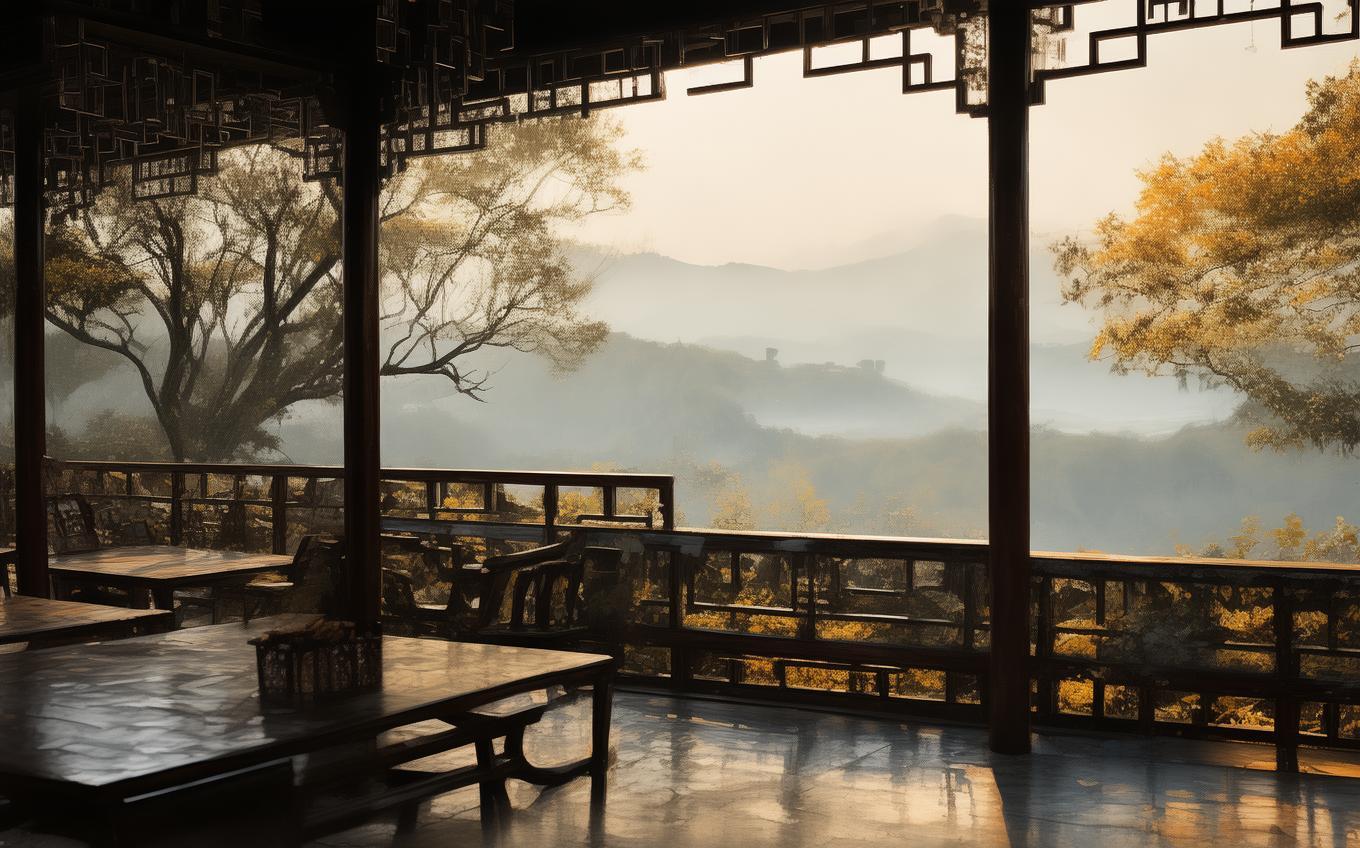
The poem "置酒坐飞阁" (Zhì jiǔ zuò fēi gé / Setting Wine in the Flying Pavilion) is a refined example of early medieval Chinese court poetry, attributed to Xiao Yan (梁武帝), Emperor Wu of the Liang dynasty (r. 502–549). A keen patron of literature and a talented poet himself, Xiao Yan presided over a cultural renaissance in Southern China, where poetry often depicted elegant gatherings, garden settings, and the delicate interplay between nature and human refinement. This eight-line poem captures a fleeting moment of exquisite leisure: wine is served in an airy pavilion, a sudden breeze stirs the lotus blooms, and moonlit figures move gracefully through the scene. While simple in language, the poem layers sensory detail with philosophical overtones, inviting readers to savor both the visual splendor and the gentle mystery of a world in harmony.
The Poem: Full Text and Translation
置酒坐飞阁
Zhì jiǔ zuò fēi gé
Setting wine, we sit in the flying pavilion,逍遥临华池
Xiāo yáo lín huá chí
Leisurely overlooking the ornate pond.神飙自远至
Shén biāo zì yuǎn zhì
A divine gust arrives from afar,左右芙蓉披
Zuǒ yòu fú róng pī
On both sides, lotus blossoms spread open.绿竹夹清水
Lǜ zhú jiā qīng shuǐ
Green bamboos flank the clear water,秋兰被幽崖
*Qi

Comments (0)
No comments yet. Be the first to comment!