Introduction
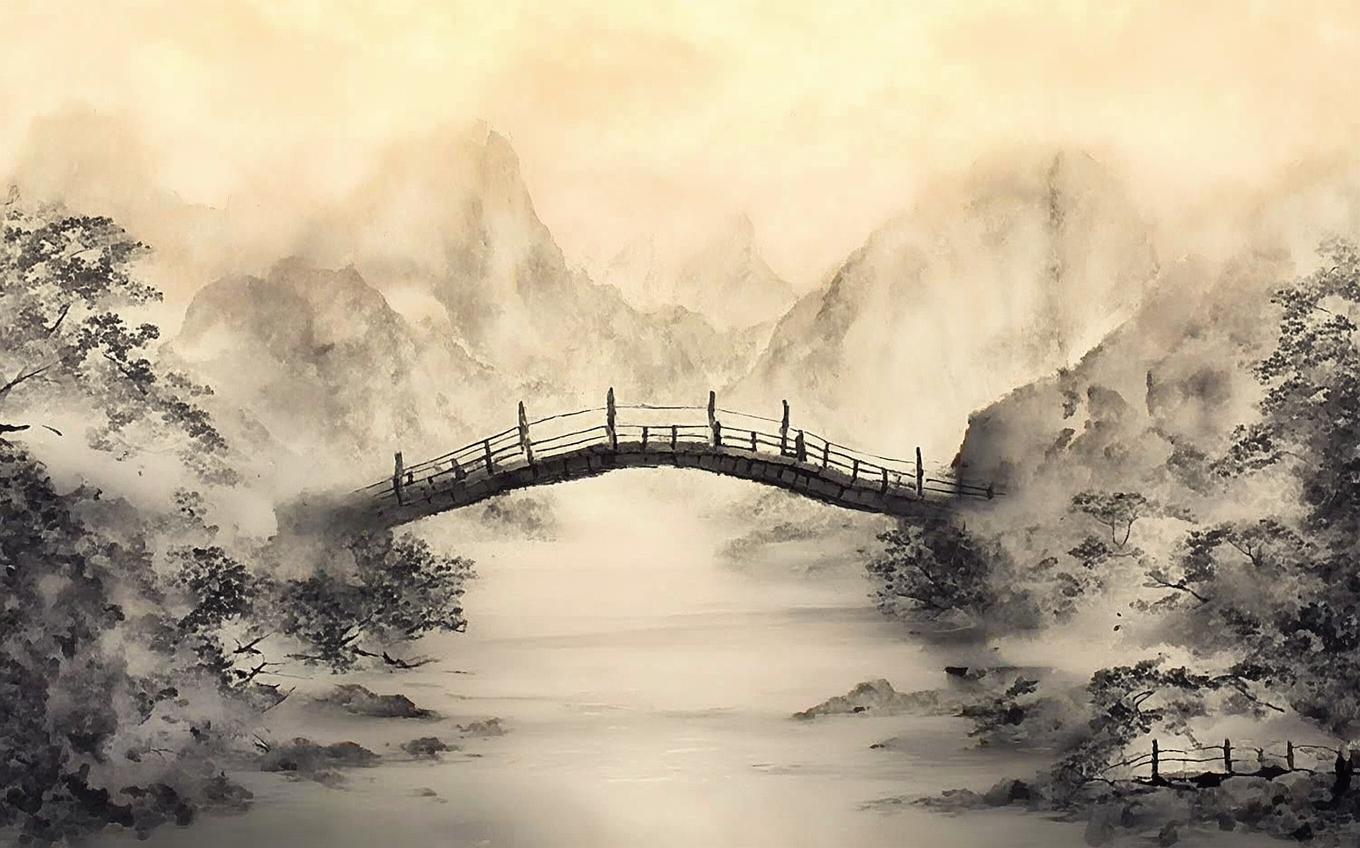
Few images in Chinese poetry fuse imperial grandeur with the fluid dynamics of nature as vividly as Emperor Taizong’s “赋得浮桥” (Fù dé fú qiáo — "Composed on the Theme of the Floating Bridge"). Li Shimin (598–649), the second emperor of the Tang dynasty, was not only a master of statecraft but also a gifted poet, calligrapher, and literary patron. His reign saw the consolidation of one of China’s golden ages, and his verse often merges heroic ambition with exquisite natural observation. Written as a poetic exercise on a set topic (fù dé), this eight-line regulated poem captures the ceaseless motion of a pontoon bridge—a military and ceremonial wonder—while reflecting the Tang ideal of harmonizing human engineering with the rhythms of the cosmos. The poem remains a jewel of early Tang court poetry, admired for its kinetic energy and inventive imagery.
The Poem: Full Text and Translation
曲岸非千里,桥斜异七星。
Qū àn fēi qiān lǐ, qiáo xié yì qī xīng.
The winding shores stretch on less than a thousand li, but this slanted bridge rivals the fabled Seven-Star Bridge.
暂低逢辇度,还高值浪惊。
Zàn dī féng niǎn dù, huán gāo zhí làng jīng.
It dips down when meeting the passage of an imperial carriage, then rises again as startling waves swell beneath.
水摇文鹢动,缆转锦花萦。
Shuǐ yáo wén yì dòng, lǎn zhuǎn jǐn huā yíng.
The rippling water sets painted bird-boats in motion; twisted cables twine like brocade blossoms.
远近随轮影,轻重应人行。
Yuǎn jìn suí lún yǐng, qīng zhòng yìng rén xíng.
Far and near it follows the reflections of carriage wheels; light or heavy, it answers every footstep of the wayfarers.
Line-by-Line Analysis
Couplet 1: “曲岸非千里,桥斜异七星。”
The poem opens with a double denial that playfully undercuts distance and mythological scale. “曲岸” (winding shores) suggests a river landscape that is intimate rather than vast; “非千里” (not a thousand li) tells us the setting is delimited, almost domestic. Then the floating bridge itself is introduced with the character “斜” (slanting/aslant), immediately conveying its unstable, adaptive posture on the water. The comparison “异七星” — “differs from / surpasses the Seven Stars” — alludes to a legendary bridge in Chinese lore. The “Seven-Star Bridge” was said to have been built by the First Emperor of Qin from a miraculous stone that spanned the sea; by claiming this common pontoon bridge is different or even superior, the emperor-poet elevates contemporary engineering to the level of myth.
Couplet 2: “暂低逢辇度,还高值浪惊。”
Here the bridge becomes a breathing entity. “暂低” (temporarily low) and “还高” (then high again) trace a mechanical yet organic pulse: the structure yields under the weight of the imperial carriage (niǎn), sinks, and then rebounds when hit by a sudden surge of waves (làng jīng). The juxtaposition of regal order — the emperor’s chariot crossing — and unpredictable natural force creates a miniature drama. The bridge is neither purely solid nor liquid; it mediates between the artificial and the elemental, absorbing shocks like a living backbone.
Couplet 3: “水摇文鹢动,缆转锦花萦。”
The gaze widens to the river surface. “文鹢” (painted water-birds) refers to boats whose prows are carved and decorated with bird designs, often used in Tang festivities and naval parades. As the water sways, these boats seem to move of their own accord. Simultaneously, the thick mooring cables twist in the current, their coils evoking the intricate pattern of “锦花” — brocade flowers. This couplet masterfully braids together movement and ornament: the bridge’s utilitarian ropes transform into a textile woven by the river, as if nature itself were embroidering the imperial waterway.
Couplet 4: “远近随轮影,轻重应人行。”
The closing lines return to human activity, this time focusing on ordinary travelers. The repeated parallelism “远近” (far and near) and “轻重” (light and heavy) is not merely rhetorical; it encodes a Tang fascination with proportional response. The floating platform, subject to Archimedean principles, dips more deeply under heavy loads and less under a child’s step — a fact the poem turns into a metaphor for benevolent rule. The bridge “follows” the reflection of wheels on the water’s surface, an ethereal doubling that merges vehicle and shadow. In its final image, the pontoon responds perfectly to every human gait, as if the emperor’s realm were a responsive, buoyant instrument attuned to each subject’s needs.
Themes and Symbolism
Harmony Between Human Artifice and Nature. From the start, the poem refuses to pit construction against water. The floating bridge does not conquer the river; it rides it, dips and rises in dialogue with currents and cargo. This embodies the Tang philosophical tenet of tiān rén hé yī — the unity of heaven and humanity — where engineering becomes a graceful extension of nature’s patterns.
The Bridge as Imperial Metaphor. A pontoon bridge was a feat of military logistics, often assembled for campaigns or ceremonial crossings. Taizong, a brilliant general before he became emperor, knew such structures intimately. By describing the bridge yielding to the imperial carriage yet springing back, he subtly images the ruler’s relation to the state: flexible yet resilient, responsive to both heavy burdens and light touches. The “跟随轮影” (following the wheel’s reflection) suggests an ideal government that mirrors the people’s movements without resistance.
The Poetry of Transience. A floating bridge is by definition temporary; it must be dismantled or adjusted with the seasons. The interplay of reflections, the painted birds, and the twining cables all evoke fleeting beauty. Tang aesthetics often cherished such transient moments, seeing in them the poignancy and brilliance of the impermanent.
Cultural Context
“赋得浮桥” belongs to the tradition of yǒngwù (poems on objects) and fù dé compositions, where poets would draw a topic by lot at social gatherings or examinations and compose extemporaneously. Emperor Taizong’s poem demonstrates his mastery in turning a technical subject into high art. During the early Tang, the court heavily patronized poetry, and the emperor’s own verses set stylistic fashions. The pontoon bridge itself was a strategic reality along China’s great rivers — the Yellow River and the Yangtze — used by armies and officials. By the Zhenguan era (627–649), Taizong’s confident rule allowed such infrastructure to be seen not merely as tool but as a symbol of enlightened power.
The reference to the legendary “Seven-Star Bridge” (Qīxīng qiáo) draws on a tale from the Shuijing zhu and Daoist mythology, where a stone bridge over the sea was paved with seven star-shaped stones. By positioning a functional, man-made bridge against this mythic wonder, Taizong asserts the glory of his own age over a fabled past — a hallmark of Tang cultural self-assurance.
Conclusion
Emperor Taizong’s “赋得浮桥” transforms a military pontoon into a luminous, almost sentient actor in a riverscape. Through eight tightly wrought lines, the poem balances imperial ceremony with the everyday, myth with mechanics, solidity with flux. Its enduring appeal lies in this kinetic vision: a bridge that breathes, bows, and responds to the world around it, embodying an ideal of governance as subtle as it is strong. For modern readers, the poem serves as a reminder that even the most utilitarian objects can be seen with a poet’s eye — and that the greatest bridges are those that connect not just shores, but human intention with the natural currents of life.
Comments (0)
No comments yet. Be the first to comment!