Introduction
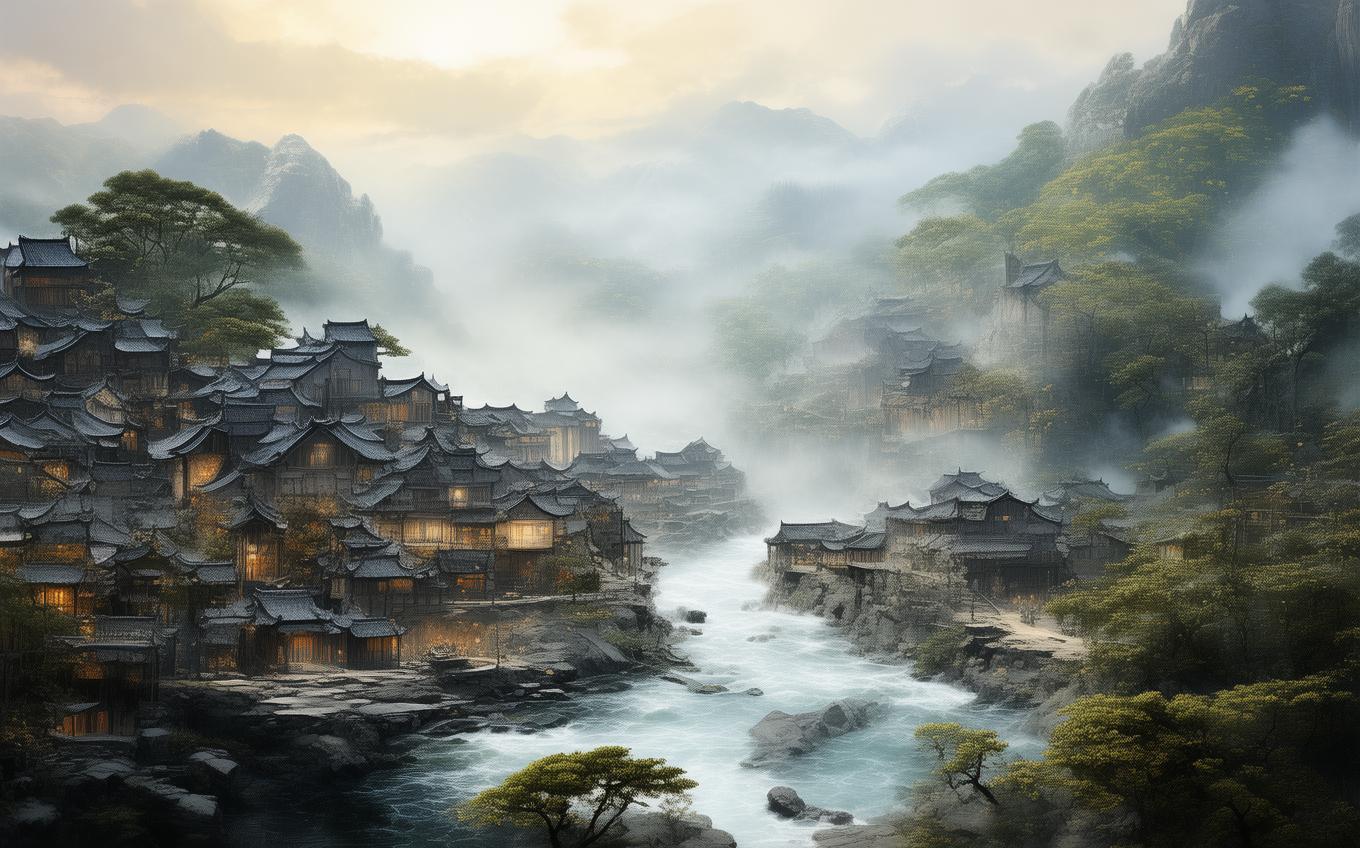
Li Bai (李白, Lǐ Bái), often hailed as the "Immortal Poet" of Tang China, needs little introduction to enthusiasts of classical Chinese verse. His poetry captures everything from drunken revelry under the moon to the solitary vastness of nature. Less known, yet equally masterful, are his occasional poems written while serving briefly at the imperial court. "过温汤" (Guò Wēn Tāng, "Passing by the Hot Springs") is one such piece—a refined, deceptively simple poem that records a royal excursion to the famous hot springs at the foot of Mount Li. It offers a glittering snapshot of Tang court life, but beneath its polished surface hum the quiet truths about time, favor, and the fleeting nature of pleasure. This post will guide you through the poem line by line, unpack its imagery, and explore the cultural world that gave it birth.
The Poem: Full Text and Translation
温谷媚新丰,
Wēn gǔ mèi Xīnfēng,
The warm valley charms the district of Xinfeng,
骊山横半空。
Líshān héng bàn kōng.
Mount Li stretches across half the sky.
汤池薰水殿,
Tāngchí xūn shuǐ diàn,
The hot spring pool perfumes the waterside palace,
翠木暖烟宫。
Cuì mù nuǎn yān gōng.
Green trees warm the mist‑wreathed halls.
幸陪鸾辇出,
Xìng péi luán niǎn chū,
Fortunate to accompany the phoenix carriage on this outing,
恩共玉阶同。
Ēn gòng yù jiē tóng.
Imperial grace, like the jade steps, is shared with me.
不知白日暮,
Bù zhī bái rì mù,
Unaware that the bright day fades into dusk,
欢赏夜方终。
Huān shǎng yè fāng zhōng.
Joyfully admiring the scene until the night finally ends.
Line‑by‑Line Analysis
The opening couplet sets the scene with the confident, sweeping gaze of a court poet.
- “温谷媚新丰” – The “warm valley” is not merely a geographical feature; it is personified. The verb mèi (媚) means to charm or beguile, as a beautiful woman might. The valley itself seems to flirt with the surrounding countryside, specifically Xinfeng, an area near the Tang capital Chang’an (modern Xi’an) known for its imperial hot springs. Right away, luxury is fused with nature’s allure.
- “骊山横半空” – Mount Li appears as a majestic, almost architectural presence. The verb héng (横) suggests something lying horizontally, spanning across the view, so massive it occupies half the heavens. This line instantly elevates the poem from a mere travel note to a grand landscape painting. It also hints at the mountain’s role as the stage for imperial power.
The second couplet moves from distant panorama to intimate, sensory details.
- “汤池薰水殿” – The hot spring pool (tāngchí) gently scents the palace built over the water. The verb xūn (薰) implies a fragrant steam rising, as if the very air is being perfumed. This line engages smell and touch, conjuring the exclusive, warm, aromatic atmosphere of the imperial bathhouse.
- “翠木暖烟宫” – Green trees enclose the mist‑shrouded halls, and the word nuǎn (暖), “to warm,” is used as a verb: the trees actively warm the palace with their living presence. The steam from the hot springs mingles with the verdant foliage, creating an enchanted, cloistered world where the boundaries between natural and man‑made dissolve.
The third couplet pivots from description to personal sentiment, revealing the poet’s role.
- “幸陪鸾辇出” – The luán niǎn (鸾辇) is the phoenix‑adorned carriage of the emperor. To “accompany” it is a mark of immense favor. Li Bai expresses his gratitude lightly: xìng (幸) means fortunate or honored. There is no boastfulness, only a courtier’s graceful acknowledgement of a rare privilege.
- “恩共玉阶同” – Here, the “jade steps” (yù jiē) are a synecdoche for the imperial palace and, by extension, the emperor’s grace. The line says that the favor shown to him is on the same level as those jade steps—solid, precious, and enduring. Yet by linking abstract grace to concrete stone, Li Bai quietly hints that even jade can be cold and that a poet’s position is always precarious.
The final couplet seals the poem with a meditation on time suspended.
- “不知白日暮” – So absorbed are they in the splendor of the outing that no one notices the sun setting. The loss of temporal awareness is the ultimate sign of perfect enjoyment. But there is a shadow here too: the day’s end is inevitable, and the obliviousness cannot last.
- “欢赏夜方终” – They continue their delighted viewing right into the night, until the revelry finally concludes. The word fāng (方) means “just then” or “only then,” stressing that the experience stretches to its absolute limit. The poem closes not with a bang but with the soft, melancholy exhale of a firework fading, reminding us that all imperial banquets must end.
Themes and Symbolism
Imperial Favor and Transience
The poem is drenched in the language of courtly gratitude—“fortunate to accompany,” “grace shared.” Yet alongside the glitter is the awareness that such moments are borrowed. The unnoticed sunset becomes a metaphor for the way pleasure blinds us to the passing of time and to the fragile nature of political fortune. Li Bai himself would soon leave the court, disillusioned; this poem quietly foreshadows that inevitable parting.
Nature and Cultivated Luxury
The hot spring, fragrant steam, green trees, and mist are natural elements, but they are framed by palaces and phoenix carriages. Tang aesthetics prized the blending of art and nature, and here the landscape itself is co‑opted into the imperial spectacle. The valley “charms,” the pool “perfumes,” the trees “warm”—nature serves the emperor’s pleasure.
Key Symbols
- Warm Valley & Hot Spring: Warmth, comfort, sensual delight, the nurturing yet potentially enervating life of the court.
- Mount Li: Permanence, imperial power, the silent witness to the rise and fall of dynasties.
- Phoenix Carriage: The emperor’s sacred, untouchable presence; the source of all favor.
- Jade Steps: Place of honor, but also cold formality—a reminder that the poet stands on them, not above them.
Cultural Context
The poem is set at the Huaqing Palace (华清宫) hot springs on Mount Li, a favorite retreat of Emperor Xuanzong (reigned 712–756). This palace became legendary as the setting of the emperor’s love affair with Yang Guifei, one of the four great beauties of ancient China. Though Li Bai’s poem may not explicitly mention her, the very mention of “hot springs” and “phoenix carriage” would have evoked, for contemporary readers, the opulence and sensuality of Xuanzong’s court.
Li Bai served briefly as a “poet in attendance” at the Hanlin Academy around 742–744 AD, a time when he was summoned to compose poetry for imperial occasions. “Passing by the Hot Springs” is a product of that role: a polished occasional piece meant to celebrate the outing. Yet even within these constraints, Li Bai’s genius shines. He transforms court flattery into art by embedding philosophical weight in seemingly straightforward lines.
The poem also reflects core Chinese values: the harmony between humanity and nature (tiān rén hé yī), respect for hierarchy (expressed through the language of grace and honor), and a Buddhist‑Daoist‑tinged sensitivity to impermanence. The hot spring, warm and life‑giving as it is, will cool; the day will turn to night; the poet will leave the jade steps behind. In this, the poem is a miniature of the Tang dynasty’s own golden afternoon before the An Lushan rebellion shattered the illusion.
Conclusion
“过温汤” is more than a courtly sketch; it is a shimmering artifact from one of the world’s most sophisticated literary cultures. With just forty characters, Li Bai paints a landscape, a mood, and a subtle meditation on time’s passage. For English readers, the poem offers a doorway into Tang aesthetics—where a hot spring is never just water, and a carriage ride with the emperor becomes an elegy for the moment. Its enduring appeal lies in the delicate balance: gratitude for present joy twined with the knowledge that no night of “happy admiration” can last forever. Perhaps that is what makes the poem so hauntingly beautiful, even now, as we too pass through our own warm valleys, unaware of the dusk.
Comments (0)
No comments yet. Be the first to comment!