Introduction
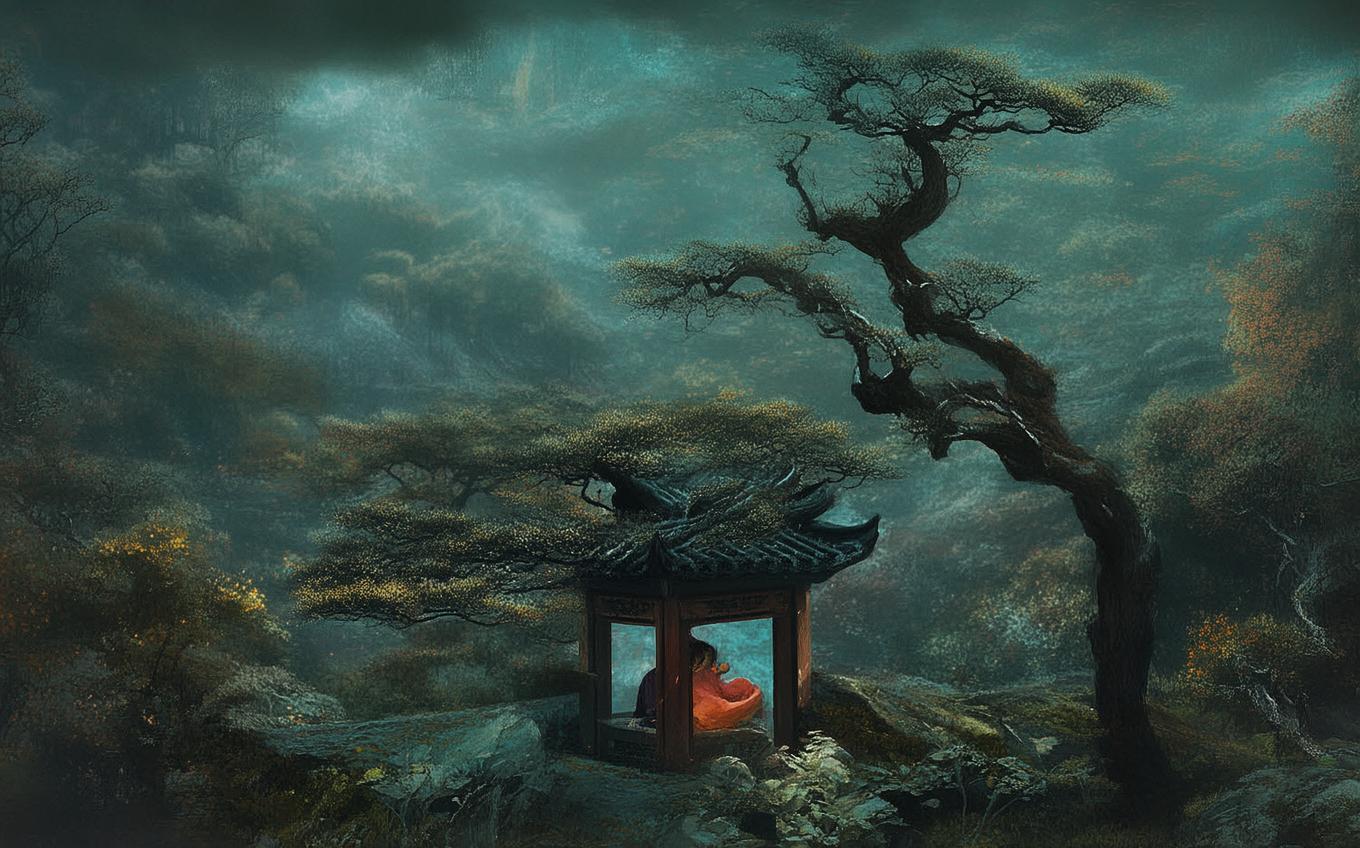
Composed by the Tang Dynasty poet Li Qi (李颀, c. 690–751), “送李邕之任滑台” (Seeing Li Yong Off to His Post in Huatai) is a classic farewell poem that captures the bittersweet essence of parting between friends. Li Yong (李邕) was a renowned calligrapher, scholar, and official whose integrity often brought him into conflict with the court, resulting in repeated exiles and appointments to distant posts. When he was assigned to the garrison town of Huatai (滑台, in modern-day Henan Province), Li Qi wrote this poem to bid him farewell. In the Chinese literary tradition, parting poems are a cherished genre, weaving personal emotion with natural imagery to express the depth of human connection. This poem, with its striking blend of bold imagination and serene landscape, exemplifies the power of Tang poetry to transcend time and culture.
The Poem: Full Text and Translation
洛阳为此别,
Luòyáng wèi cǐ bié,
In Luoyang we now part from each other,
携手更何时。
Xiéshǒu gèng hé shí.
When will we ever clasp hands again?
不复人间见,
Bú fù rénjiān jiàn,
On this earth we may meet no more,
唯应海上期。
Wéi yīng hǎishàng qī.
Only beyond the sea can we hope to reunite.
清洛云沙白,
Qīng Luò yún shā bái,
The clear Luo River, clouds and sand shining white,
长河烟树微。
Cháng hé yān shù wēi.
The long Yellow River, misty trees faint and far.
滑台门外见,
Huátái mén wài jiàn,
Outside the gates of Huatai, you will see
淇水日东归。
Qí shuǐ rì dōng guī.
The Qi River flowing eastward, day after day.
Line-by-Line Analysis
“洛阳为此别,携手更何时。” – The poem opens with a stark statement of place and action: in Luoyang, a city rich with history and culture, the two friends must part. The Chinese expression “携手” (hold hands) is a gentle, intimate gesture that conveys deep affection. The follow‑up question—“更何时” (again, when?)—is left unanswered, instantly casting a shadow of uncertainty and melancholy over the farewell.
“不复人间见,唯应海上期。” – These lines elevate the sorrow to a cosmic level. The poet suggests they may never encounter each other again in the human world. The “海上” (on/above the sea) is not a literal ocean but a metaphor for a distant, ethereal realm—perhaps the legendary island of immortals, Penglai, in Daoist mythology. By placing hope for reunion in a space beyond ordinary life, Li Qi acknowledges the severity of parting while offering a visionary form of consolation.
“清洛云沙白,长河烟树微。” – Shifting from intense emotion to landscape, the poet paints two iconic rivers of China. The Luo River is described as “清” (clear), with white clouds and sand reflecting a pure, luminous light. In contrast, the Yellow River is vast and hazy: its distant trees are almost lost in mist. The juxtaposition of clarity and obscurity mirrors the clarity of friendship against the uncertainty of the journey ahead. The white clouds and sand also imply a sense of desolation and silent grief.
“滑台门外见,淇水日东归。” – The final couplet turns to the destination. The poet imagines his friend arriving at Huatai and looking out beyond the city gate to see the Qi River flowing eastward without cease. The phrase “日东归” (daily flows east) suggests an eternal, cyclical motion. On one hand, it underscores the relentless passage of time and separation; on the other, the river becomes a symbol of constancy—like their friendship, it endures despite distance. The image leaves the reader with a quiet, resonant sadness tinged with hope.
Themes and Symbolism
Parting and Friendship – The core theme is the pain of farewell and the strength of fraternal bonds. The poem treats separation not as a mere physical event but as a potential loss across lifetimes, highlighting the depth of the relationship.
Transience and Eternity – The contrast between “不复人间见” (never again in the human realm) and the eternal flow of the Qi River reflects the tension between human mortality and the enduring cycles of nature. This aligns with Daoist and Buddhist sensibilities common in Tang poetry.
Rivers as Connective Threads – The Luo, Yellow, and Qi rivers are more than scenery. They are living threads that link past memories (Luoyang), the arduous journey (the Yellow River), and the solitary future (Huatai). The rivers mirror the emotional flow of the poem, from sorrow to a calm acceptance.
The Sea as Otherworldly Hope – The “sea” in line 4 is a classic symbol of the distant and the miraculous. In Chinese literature, it often represents the abode of immortals or a place where ordinary constraints dissolve. By fixing their hoped-for reunion there, Li Qi infuses the poem with a transcendent, almost mystical dimension.
Cultural Context
“送李邕之任滑台” was written during the High Tang period, a golden age of Chinese poetry when farewell poems were an essential social ritual. Officials, scholars, and poets constantly traveled for duty or exile, and parting was an occasion for composing verses that expressed loyalty, mutual encouragement, and emotional support. Li Yong, the recipient, was a figure of considerable talent and controversy—he had been demoted and exiled multiple times for his outspokenness. Li Qi’s poem thus carries an undercurrent of political sympathy and foreboding, mingled with personal affection.
The poem also reflects the Chinese philosophical embrace of nature as a companion to human emotion. Rather than simply stating “I am sad,” Li Qi externalizes the feeling through river and mist, a technique that unites the human spirit with the natural world—a hallmark of the Chinese aesthetic principle qíng jǐng jiāo róng (情景交融), the fusion of feeling and scene.
Conclusion
Li Qi’s “送李邕之任滑台” transforms a specific farewell into a universal meditation on friendship, loss, and the quiet beauty of the world that continues after we part. Through its bold leap from earthly parting to a mystical sea-reunion, and its serene river landscapes that speak without words, the poem transcends its historical moment. For English readers, it opens a window into a culture where a handclasp, a white cloud, and a flowing stream can hold the entirety of a farewell. Even now, over a millennium later, Li Qi’s lines remind us that true friendship defies distance and that, like the Qi River flowing eastward, our deepest connections return, day after day, in memory and hope.
Comments (0)
No comments yet. Be the first to comment!