Analysis of "端午三殿宴群臣探得神字" – Classical Chinese Poetry
Introduction
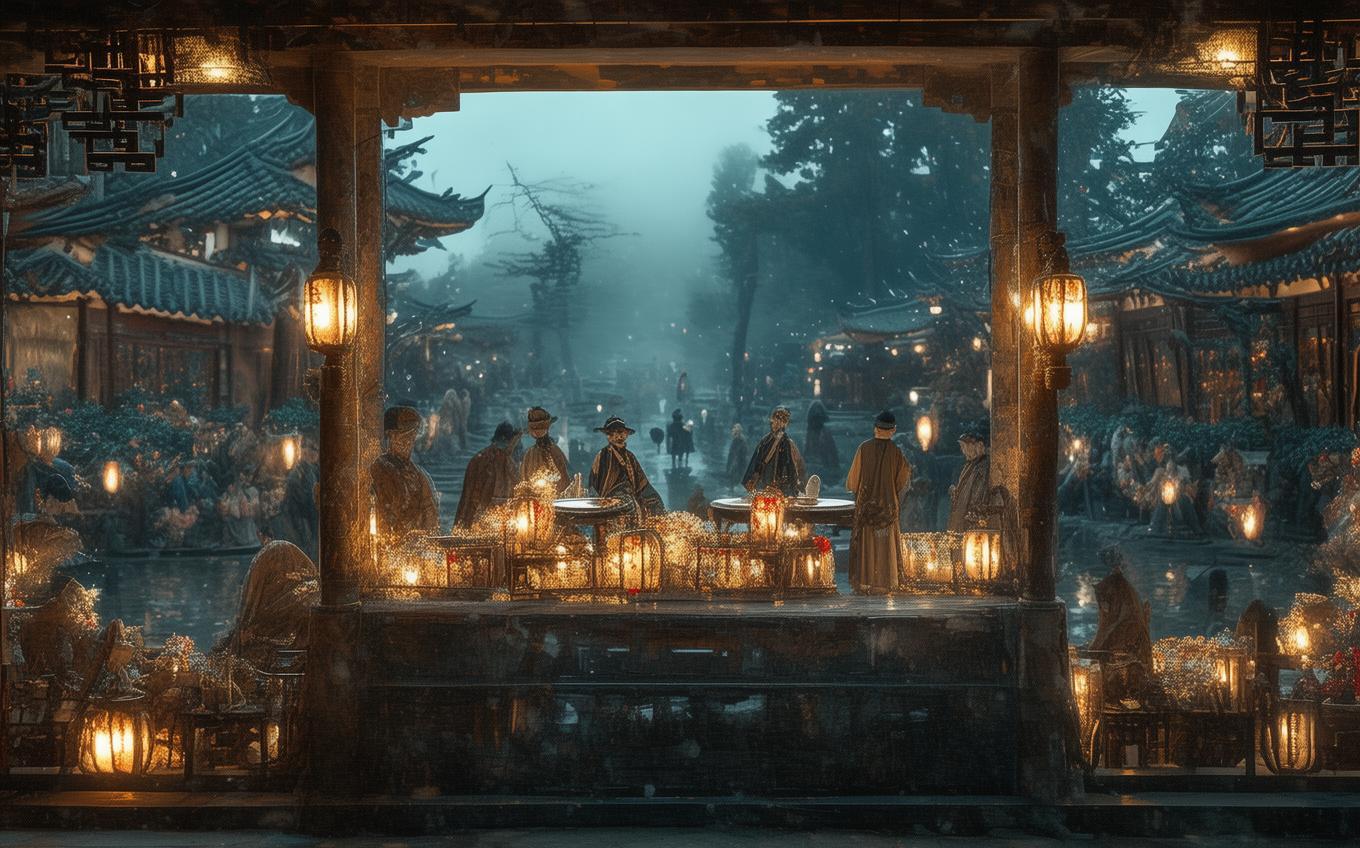
Amid the splendor of Tang Dynasty court life, Emperor Xuanzong (Li Longji, reigned 712–756) was not only a devoted patron of the arts but also an accomplished poet. His reign marked the zenith of Tang culture, when literature, music, and ritual merged into a brilliant imperial tapestry. The poem 端午三殿宴群臣探得神字 (“Dragon Boat Festival Banquet in Three Halls for Officials, Exploring the Rhyme Character ‘Spirit’”) belongs to a cherished court tradition: on festive occasions the emperor and his high ministers would each compose a poem around a randomly assigned rhyme character. Xuanzong drew the word 神 (shén, “spirit” or “divine”) and produced this luminous poem, weaving together the ancient customs of the Dragon Boat Festival, the aesthetic pleasures of the banquet, and a subtle political vision of harmony and moral renewal. For readers of Chinese literature, the poem offers a rare glimpse into how a Tang ruler performed the twin roles of host and sage, celebrating seasonal joy while quietly guiding his court toward Confucian virtue.
The Poem: Full Text and Translation
五月符天数
wǔ yuè fú tiān shù
The fifth month matches the number of Heaven五音调夏钧
wǔ yīn tiáo xià jūn
The five notes tune the summer’s standard pitch旧来传五日
jiù lái chuán wǔ rì
Since ancient times the fifth day has been passed down无事不称神
wú shì bù chēng shén
Nothing about it is not called divine穴枕通灵气
xué zhěn tōng líng qì
The perforated pillow connects to ethereal forces长丝续命人
cháng sī xù mìng rén
The long silk threads prolong human life四时花竞巧
sì shí huā jìng qiǎo
Flowers of all seasons vie in delicate skill九子粽争新
jiǔ zǐ zòng zhēng xīn
Nine-seed zongzi compete in novel taste方殿临华节
fāng diàn lín huá jié
The square halls overlook the splendid festival圆宫宴雅臣
yuán gōng yàn yǎ chén
The round palace feasts the elegant ministers进对一言重
jìn duì yī yán zhòng
In advancing counsel, a single word carries weight遒文六义陈
qiú wén liù yì chén
Vigorous writing displays the Six Principles股肱良足咏
gǔ gōng liáng zú yǒng
The limbs and arms are worthy of song风化可还淳
fēng huà kě huán chún
Through moral influence, simplicity may return
Line-by-Line Analysis
The poem unfolds in seven rhyming couplets, each shifting the gaze from cosmic order to intimate custom, then to the feast, and finally to the responsibilities of governance.
五月符天数,五音调夏钧 – The opening couplet establishes a numinous harmony. The fifth lunar month, marked by the Dragon Boat Festival on the fifth day, resonates with the number five that pervades Chinese cosmology (five elements, five directions, five notes of the pentatonic scale). By connecting the calendar to “the number of Heaven” and describing music as “tuning the summer’s standard pitch,” Xuanzong presents the festival not merely as a human event but as a moment when earthly rituals align with the cosmic rhythm. The tone is grand and orderly.
旧来传五日,无事不称神 – Here the poem steps from cosmic design to inherited custom. The “fifth day” is a cultural memory passed through generations, and its every detail—the herbs hung on doors, the boat races, the threaded bracelets—is infused with divine significance. The phrase “nothing is not called divine” collapses the boundary between the mundane and the sacred, a reminder that the festival’s power lies in its ability to make ordinary acts, like eating zongzi or wearing silk threads, vessels of spiritual protection.
穴枕通灵气,长丝续命人 – The third couplet zooms in on two specific traditions. “Perforated pillow” likely refers to porcelain or bamboo headrests with decorative holes, believed to keep the sleeper cool and facilitate communication with beneficial spirits. The “long silk threads” represent the five-colored longevity threads tied around the wrists during Duanwu, a custom still practiced today. These threads are thought to absorb misfortune and lengthen one’s allotted years. The emperor, by including them, roots his courtly poem in ordinary folk practice, endowing the imperial banquet with a touch of genuine seasonal warmth.
四时花竞巧,九子粽争新 – The visual and culinary splendors now come to the fore. “Flowers of all seasons” suggests that, weather notwithstanding, the palace could display blossoms artfully arranged to mimic all four seasons at once—a testament to human craftsmanship. “Nine-seed zongzi” is a special dumpling stuffed with multiple treasures (meats, nuts, bean paste), whose name “nine sons” alludes to fertility and abundance. The competition between flowers and the novelty of zongzi evoke a joyful, sensuous festival atmosphere, while also celebrating the court’s ability to concentrate the riches of the empire in a single hall.
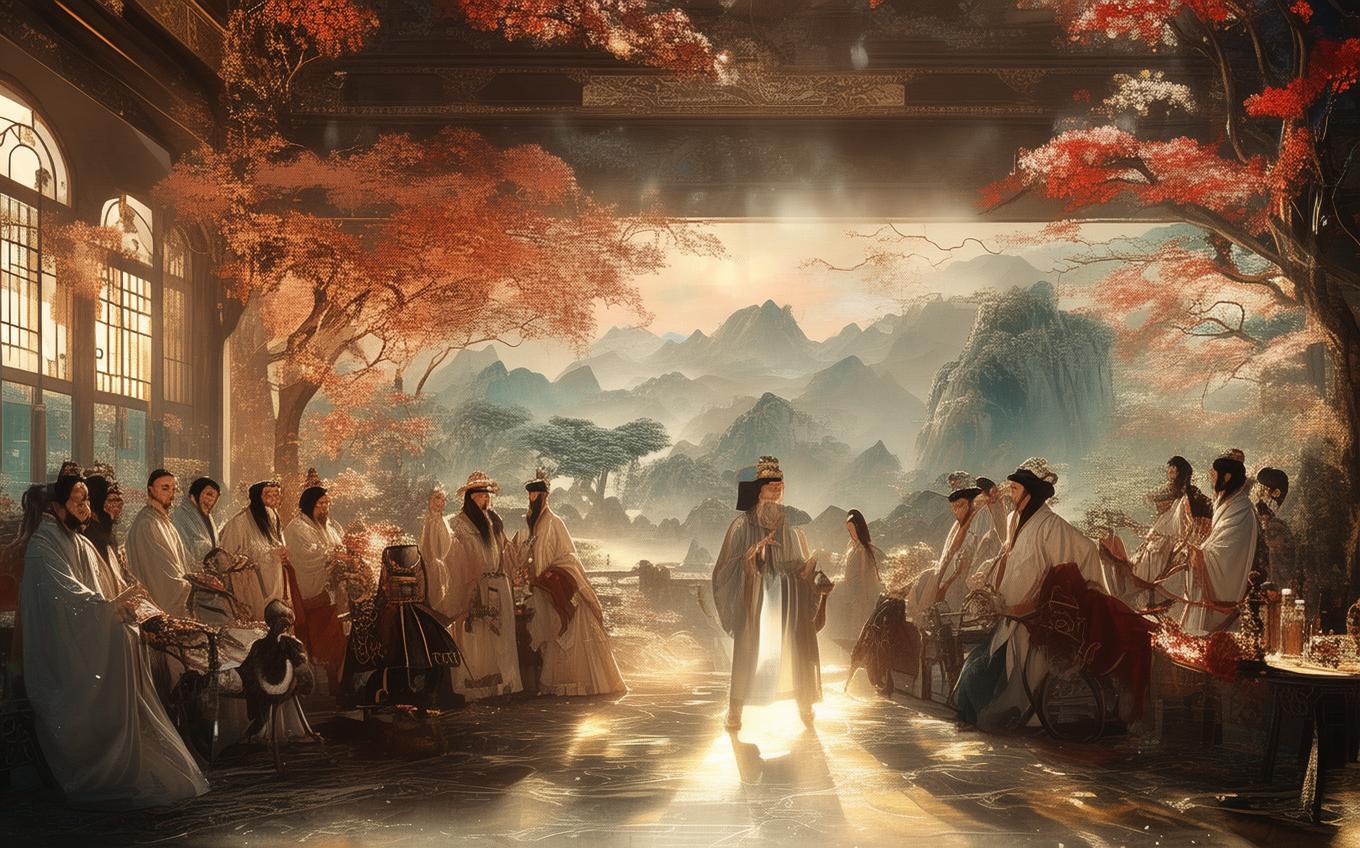
方殿临华节,圆宫宴雅臣 – Architecture becomes metaphor. The “square halls” and “round palace” mirror the ancient Chinese conception of the square earth and round heaven; placed together, they form a microcosm of the universe. The emperor presides in this cosmic setting, hosting the “elegant ministers”—officials who embody refinement and moral integrity. The word “overlook” (临) implies a benevolent gaze from above, while “feast” (宴) suggests not only physical food but also the nourishment of culture and shared ideals.
进对一言重,遒文六义陈 – The poem now pivots from celebration to statesmanship. When ministers present their counsel, even a “single word” carries profound weight, for the well-being of the realm may depend on it. The “Six Principles” (liù yì) refer to the classical classification of the Book of Songs’ poetic modes, a cornerstone of Confucian literary education. By invoking these principles, Xuanzong signals that the banquet is also an arena of moral and intellectual cultivation: the poetry composed there should be vigorous (qiú) and grounded in the ancient virtues.
股肱良足咏,风化可还淳 – In the final couplet, the emperor speaks directly to his officials. “Limbs and arms” (股肱) is a time-honored metaphor for loyal, capable ministers who support the sovereign as the body supports the head. They are “worthy of song”—deserving of poetic praise—because through their good governance, the moral influence (风化, literally “wind and transformation”) of the court can restore society to its original simplicity and purity (淳). The poem thus closes with a vision of political renewal, subtly urging the assembled “elegant ministers” to uphold their duty. The Dragon Boat Festival, with its purifying rites of cleansing and exorcism, becomes a perfect occasion for this aspiration.
Themes and Symbolism
Cosmic Harmony and the Sacred Calendar. The poem begins with the number five, a symbol of perfect balance in Chinese thought. By aligning the festival with heavenly patterns and musical tuning, Xuanzong presents Duanwu as a conduit through which cosmic order flows into human society.
Ritual and Renewal. Every object mentioned—the perforated pillow, the longevity threads, the nine-seed zongzi—functions as a ritual tool for averting evil and securing health. The poem is thus a compact encyclopedia of Duanwu customs, each symbolizing regeneration amidst the hot, pestilent summer season.
The Emperor as Host and Moral Center. The square hall and round palace do not merely describe a physical location; they construct an idealized image of the ruler at the center of a well-governed universe. The feast is a political act, affirming bonds between sovereign and ministers through shared culture, food, and poetic composition.
Literature and Virtue. The reference to the “Six Principles” elevates the act of writing verse into a moral exercise. Poetry, in this context, is not frivolous entertainment but a method of self-cultivation that can guide the state back to primitive goodness.
The Responsible Courtier. The closing image of “limbs and arms” grounds the entire celebration in political reality. No matter how splendid the festival, the true health of the empire rests on the quality of its officials—a gentle but firm reminder from an emperor who saw himself as both the patron and the steward of Tang’s golden age.
Cultural Context
The Dragon Boat Festival (Duanwu Jie) falls on the fifth day of the fifth lunar month, a time when ancient Chinese believed that yin forces and disease-causing spirits were at their peak. Customs such as hanging calamus and mugwort, tying five-colored silk threads, and eating zongzi all aimed at protection and purgation. The festival is also famously associated with Qu Yuan, the loyal minister of Chu who drowned himself in protest against corruption; dragon boat races reenact the search for his body. Xuanzong’s poem, however, focuses less on the tragic legend and more on the day’s numinous, life-affirming qualities.
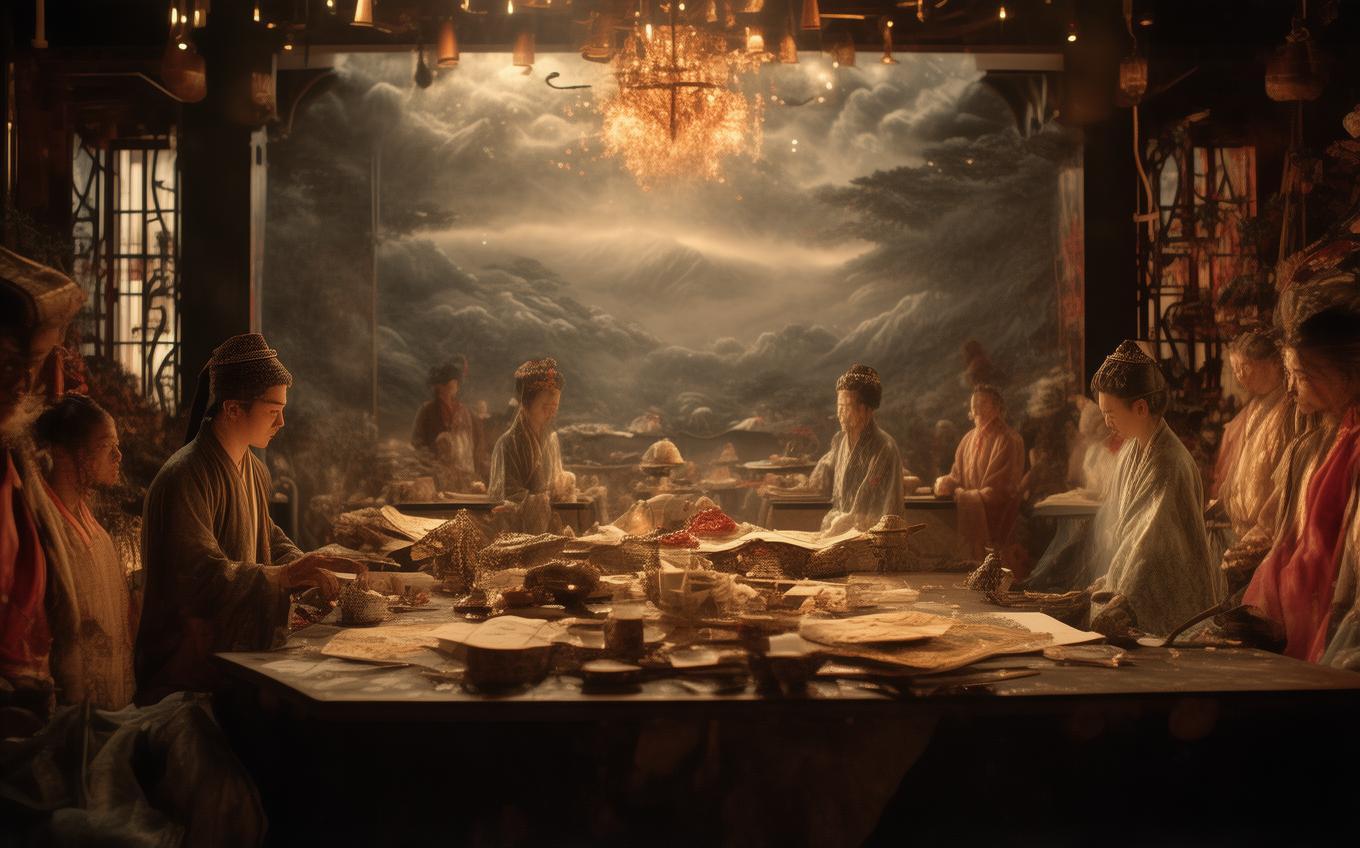
During the High Tang, imperial banquets were sophisticated affairs where poetry functioned as a form of social currency. The “rhyme exploration” (探得) game required participants to draw a character from a lot and compose an extemporaneous poem using it as the final rhyme of each couplet (or the last character of the whole poem—here the character 神 appears at the end of the second line of the first couplet and likely governs the overall rhyme scheme). Xuanzong’s choice of 神 was particularly apt, for it allowed him to weave together the sacred aura of the day, the spiritual efficacy of rituals, and the almost divine status of the emperor as the Son of Heaven.
Confucian political thought deeply informs the closing lines. The ideal ruler governs by moral example (feng hua) rather than force, and his ministers, as his “limbs and arms,” are indispensable agents of that gentle influence. The poem, therefore, is not merely a piece of festive verse but a miniature manifesto on good government, gracefully delivered over a plate of nine-seed zongzi.
Conclusion
Xuanzong’s 端午三殿宴群臣探得神字 distills an entire cultural universe into twelve deceptively simple lines: cosmic resonance, seasonal customs, courtly elegance, and a quiet plea for virtuous governance. For the English-speaking reader, it opens a window onto how Tang aristocrats intellectualized their pleasures and moralized their power, all without losing the sheer delight of exquisite food, fragrant flowers, and the company of talented friends. The poem endures not only as a historical artifact but as a reminder that a great festival, like a great poem, can unite the sacred and the secular, the ruler and the ruled
Comments (0)
No comments yet. Be the first to comment!