Introduction
The Tang dynasty (618–907) is often celebrated as the golden age of Chinese poetry, a period that produced some of the most profound meditations on nature, history, and the human condition. Among the era’s many brilliant voices, Li Qi (李颀, c. 690–751) stands out as a poet of quiet insight and sincere reverence for the recluse tradition. Though less widely known today than Li Bai or Du Fu, Li Qi excelled at poems that fuse landscape with spiritual longing. “经河上公庙” (“Passing by the Temple of He Shang Gong”) is a perfect example – a deceptively simple eight-line regulated verse that weaves together a legendary Daoist master, a ruined shrine, and the poet’s personal search for transcendence.
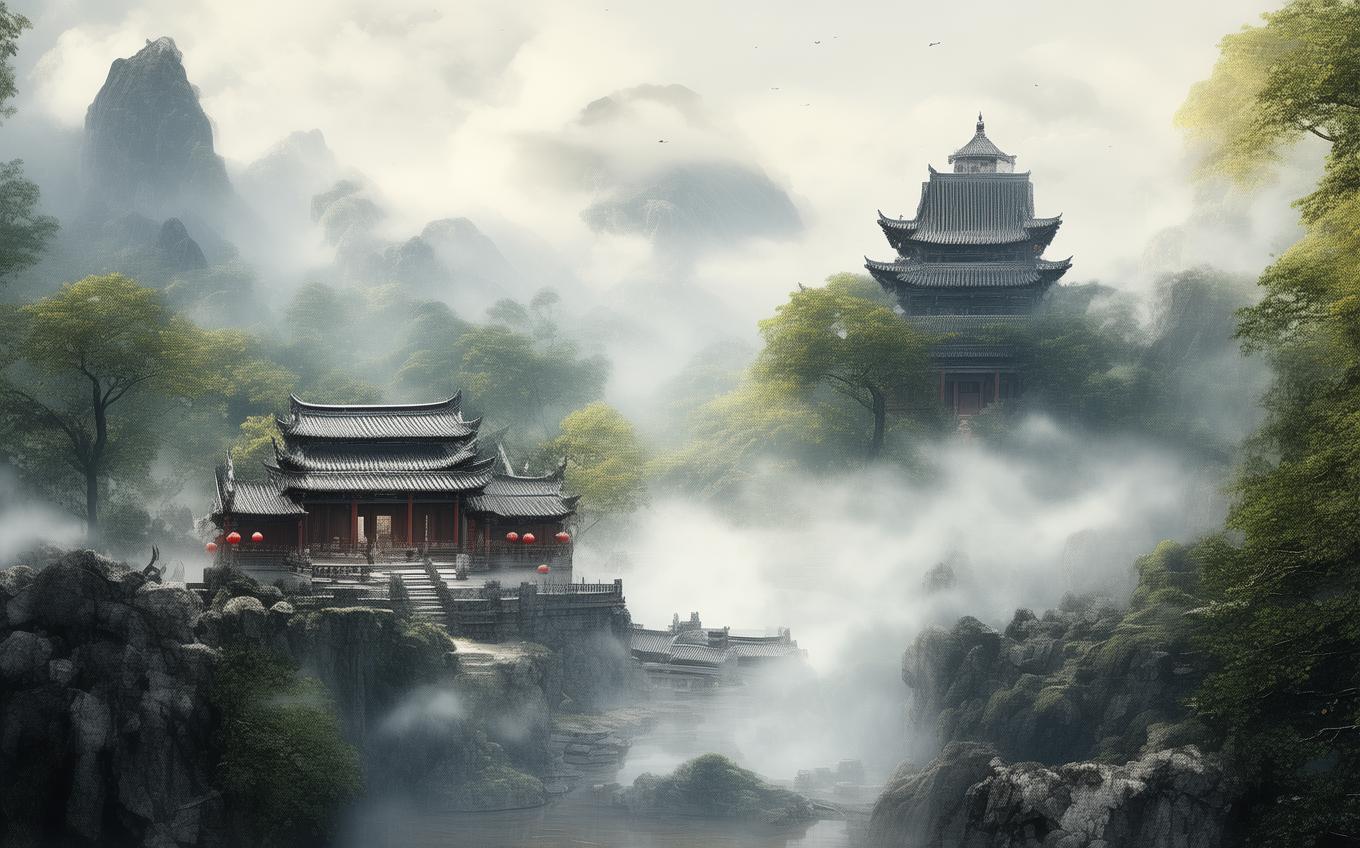
This poem takes us to a temple dedicated to He Shang Gong (河上公), the “Master of the Riverbank”, a mythical hermit who is said to have instructed Emperor Wen of Han in the Dao De Jing. By Li Qi’s time, the temple had already become a site of faded glory – a place where the traces of the immortal were barely visible. The poem is a gentle, melancholic reflection on the impossibility of recapturing that sacred encounter, and a subtle rejection of facile consolation.
The Poem: Full Text and Translation
河上公名迹,
Hé shàng gōng míng jì,
The famous traces of He Shang Gong —
何年此息机。
Hé nián cǐ xī jī.
in what year did he here rest his mind’s contrivance?
华表千年鹤,
Huá biǎo qiān nián hè,
The ornamental pillar’s thousand‑year crane —
归栖旧处非。
Guī qī jiù chù fēi.
returning to roost, its old place is no more.
孤烟生暮景,
Gū yān shēng mù jǐng,
A solitary smoke rises into the evening scene;
远岫带春晖。
Yuǎn xiù dài chūn huī.
distant peaks are girdled with spring sunlight.
不学陶渊明,
Bù xué Táo Yuānmíng,
I will not imitate Tao Yuanming —
空携漉酒归。
Kōng xié lù jiǔ guī.
returning empty‑handed, a wine‑strainer in tow.
Line-by-Line Analysis
“河上公名迹,何年此息机。”
The poem opens with a direct address to the legendary figure. The “famous traces” (名迹) are not just physical marks but the entire spiritual legacy of He Shang Gong – the stories, the temple, the very idea that a mortal could become one with the Dao. Then comes the question that sets the reflective tone for the entire poem: when exactly did he “息机” here? The phrase 息机 literally means “cease the mechanism” – it is a Daoist‑Buddhist term for stilling the restless mind, the artifice of worldly striving. By asking “何年” (in what year), Li Qi is not really seeking a date; he is voicing a wistful impossibility. The moment of enlightenment is untraceable, swallowed by time.
“华表千年鹤,归栖旧处非。”
This couplet draws on a well‑known motif in Chinese immortal lore. 华表 (huábiǎo) are ornamental pillars often erected in front of tombs or important buildings, and they were believed to serve as perches for cranes that returned every thousand years. The crane, of course, is a symbol of longevity and the transcendent spirit. Yet here the poet subverts expectation: the immortal crane comes back, but the place it once called home has changed – “旧处非”, the old spot is no longer what it was. This captures the essence of the temple visit: even the immortals’ traces are subject to erosion. The sacred is elusive; the gap between the temporal and the eternal cannot be bridged by simply visiting a shrine.
“孤烟生暮景,远岫带春晖。”
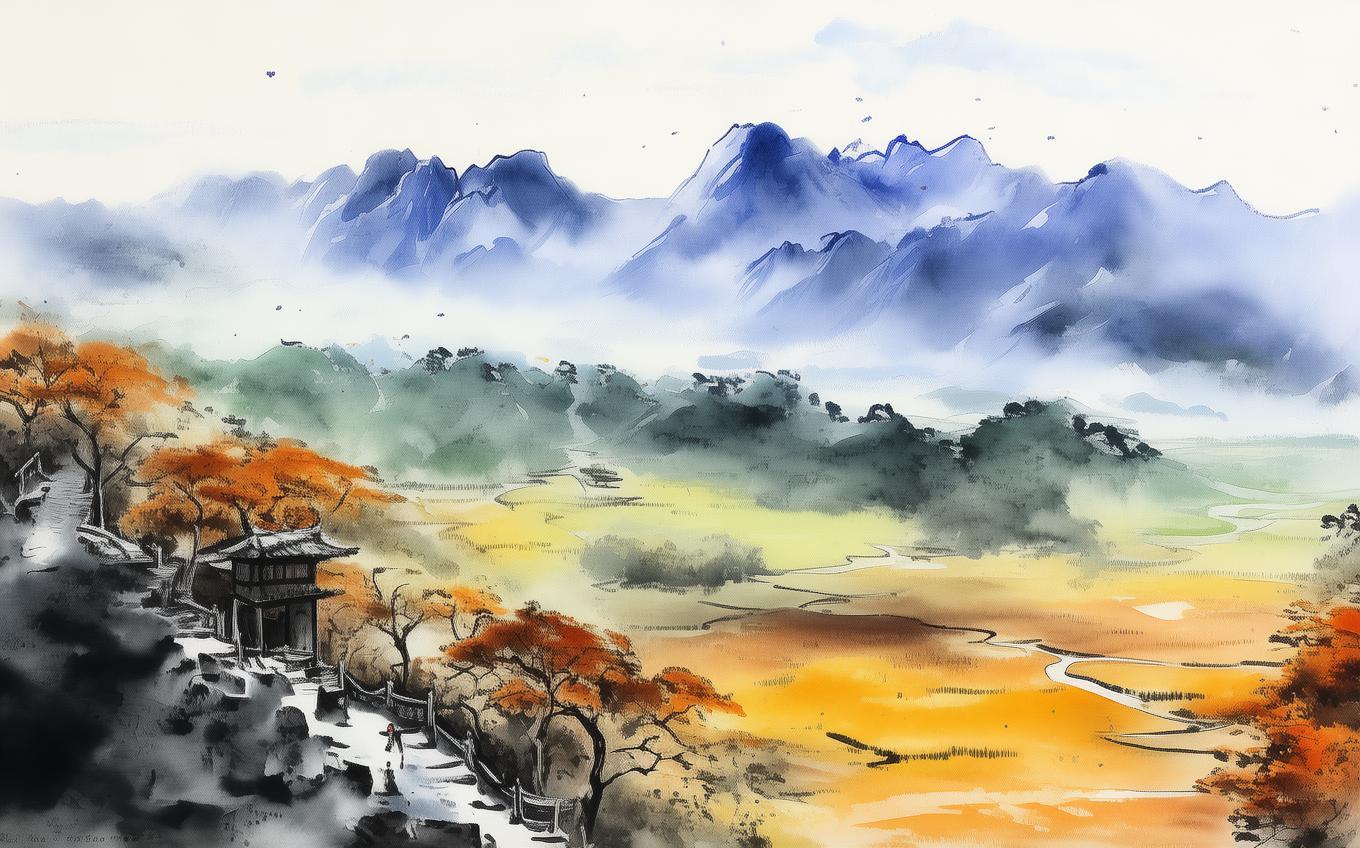
The third couplet shifts to the landscape seen from the temple. A single thread of smoke rises in the evening – an image of absolute quiet and solitude. In Chinese poetry, a wisp of smoke often signals a hermitage or a tiny human presence swallowed by vast nature. The second line balances this with a wider view: distant blue‑tinged peaks “girdled” (带) with the warm glow of spring sunlight. The contrast is striking: the lonely, transient smoke against the eternal sunshine cradling the mountains. It suggests that while human marks (like smoke, like a temple) are fleeting, the great rhythms of the natural world carry on indifferently. The beauty of the scene is inseparable from a sense of loss.
“不学陶渊明,空携漉酒归。”
The final couplet is both a tribute and a quiet rebuttal. Tao Yuanming (陶渊明, 365–427) is China’s most celebrated poet‑hermit, famous for abandoning officialdom to farm, write poetry, and drink wine. Legend says he would use his headscarf to strain home‑brewed liquor (漉酒, lù jiǔ). Li Qi declares: I will not imitate Tao Yuanming. Why? Because Tao’s retreat, however admirable, still rests on earthly consolations – the consolations of wine and rustic contentment. To “空携漉酒归” means to return with a wine‑strainer but nothing to strain, empty‑handed, no true meeting with the Dao. Li Qi’s aspiration is for something more absolute, a spiritual encounter like the one He Shang Gong granted Emperor Wen. Yet that encounter is impossible; the crane’s old perch is gone, and the poet is left in a state of longing, refusing even the comfort of a cup of wine.
Themes and Symbolism
Time and Impermanence. The entire poem breathes the elegiac awareness that all traces – even those of an immortal – are eroded by time. The thousand‑year crane returning to a changed place is a masterful symbol for the impossibility of recovering a sacred past. The temple exists, but the transformative presence it commemorates has vanished.
The Search for Spiritual Quietude. 息机 (stilling the mind) is the core spiritual value. The poem asks whether it can ever be achieved by imitation or pilgrimage. Li Qi’s refusal to “learn from Tao Yuanming” marks a profound restlessness: he will not settle for a substitute. This reflects the high Tang mystique that Daoist transcendence was a real, though supremely difficult, goal.
Nature as Mirror. The “solitary smoke” and the “distant peaks” are not decorative; they embody the poet’s emotional state. The smoke rises and vanishes, much like his own aspirations. The spring sunshine on the mountains is remote, beautiful, and utterly indifferent – the eternal Dao that remains beyond reach.
Cultural Context
The Tang dynasty saw the formal elevation of Daoism to almost state‑religion status; the imperial family claimed descent from Laozi, and temples to legendary Daoist figures flourished. He Shang Gong belonged to this pantheon – a hermit who, according to tradition, lived by the Yellow River during the Han dynasty and taught the Dao De Jing to Emperor Wen after the emperor humbly sought instruction. A shrine to him became a site where later visitors hoped to absorb a little of that ancient wisdom.
Li Qi,

Comments (0)
No comments yet. Be the first to comment!