Introduction
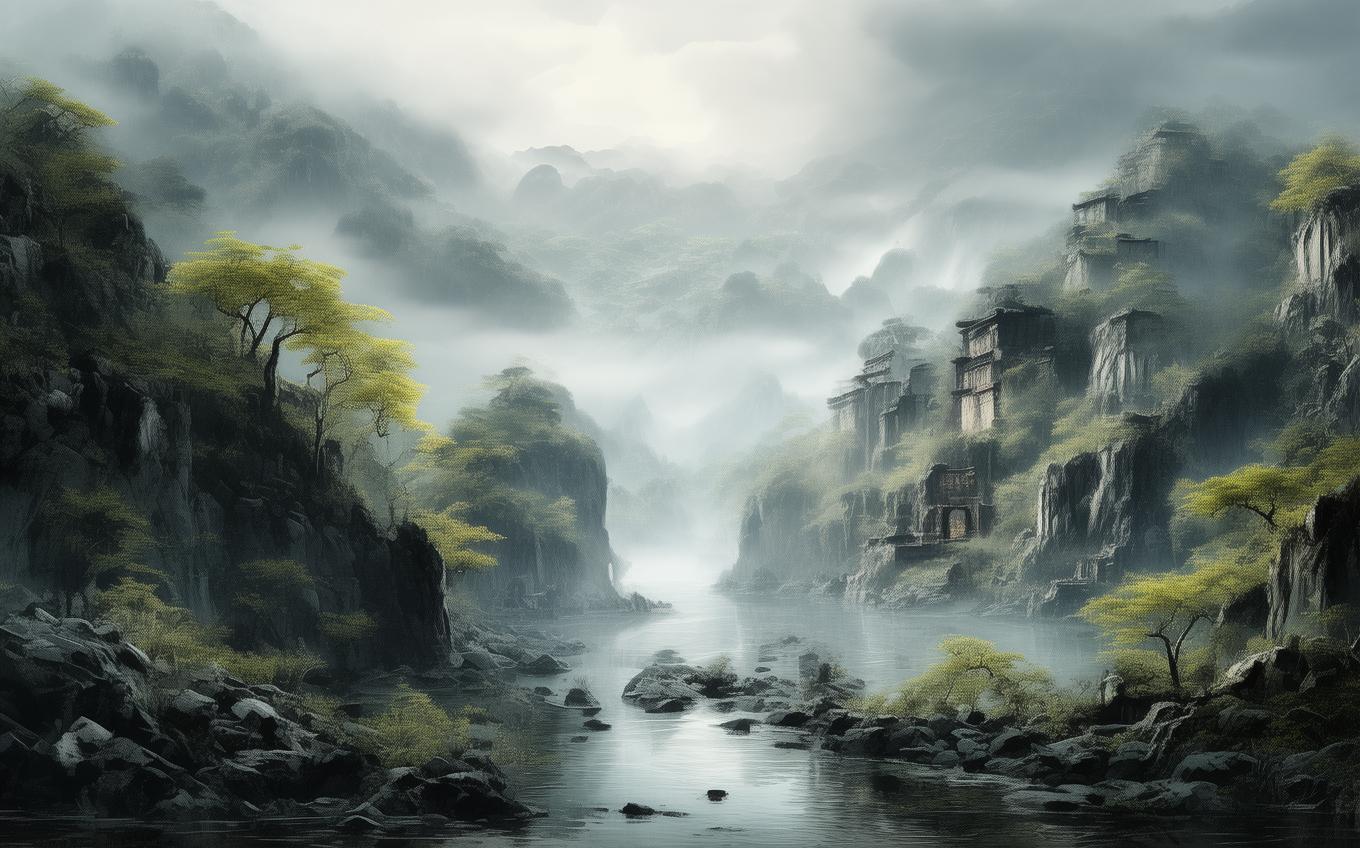
Few poems in Chinese literary history capture the tension between imperial grandeur and personal vulnerability as poignantly as "幸蜀西至剑门" (Xìng Shǔ xī zhì Jiàn Mén) — Reaching Sword Gate on a Journey West to Shu. Composed by Emperor Xuanzong of Tang (唐玄宗, Lǐ Lōngjī) in 756 AD, this poem emerges from one of the most dramatic moments of the Tang Dynasty: the An Lushan Rebellion. Fleeing the capital Chang'an with his court, the emperor sought safety in the mountainous refuge of Shu (modern Sichuan). The poem is not merely a travelogue; it is a meditation on landscape, kingship, and moral responsibility. For English-speaking readers, it offers a rare window into how a Chinese ruler used poetry to reconcile disaster with Confucian ideals of virtuous governance.
The Poem: Full Text and Translation
剑阁横云峻
Jiàn gé héng yún jùn
Sword Tower spans the clouds, lofty and sheer,
銮舆出狩回
Luán yú chū shòu huí
The imperial chariot returns from a hunting expedition.
翠屏千仞合
Cuì píng qiān rèn hé
Emerald screens of a thousand fathoms close in,
丹嶂五丁开
Dān zhàng wǔ dīng kāi
Crimson cliffs cleft open by the Five Mighty Men.
灌木萦旗转
Guàn mù yíng qí zhuǎn
Thick shrubs twine around the turning banners,
仙云拂马来
Xiān yún fú mǎ lái
Immortal clouds brush past the arriving horses.
乘时方在德
Chéng shí fāng zài dé
Grasping the times depends indeed on Virtue,
嗟尔勒铭才
Jiē ěr lè míng cái
Alas, you, talents worthy of carving inscriptions.
Line-by-Line Analysis
Line 1: “剑阁横云峻”
Sword Gate (Jianmen Pass) is depicted as a barrier piercing the clouds, with the character “横” (héng, spanning horizontally) emphasising its imposing, unbroken mass. The emperor begins not with the self, but with the terrain, revealing a mind awed by nature’s defensive power. The ruggedness becomes a mirror for his own precarious position.
Line 2: “銮舆出狩回”
A masterful euphemism: “出狩” (chū shòu) literally means “going out for a hunt,” but in fact it refers to the emperor’s flight from the rebels. By calling the retreat a hunting trip, Xuanzong cloaks humiliation in ritual language. This line hints at the Confucian doctrine that a ruler must never admit fault directly; the very wording maintains the face of the Son of Heaven even in defeat.
Line 3: “翠屏千仞合”
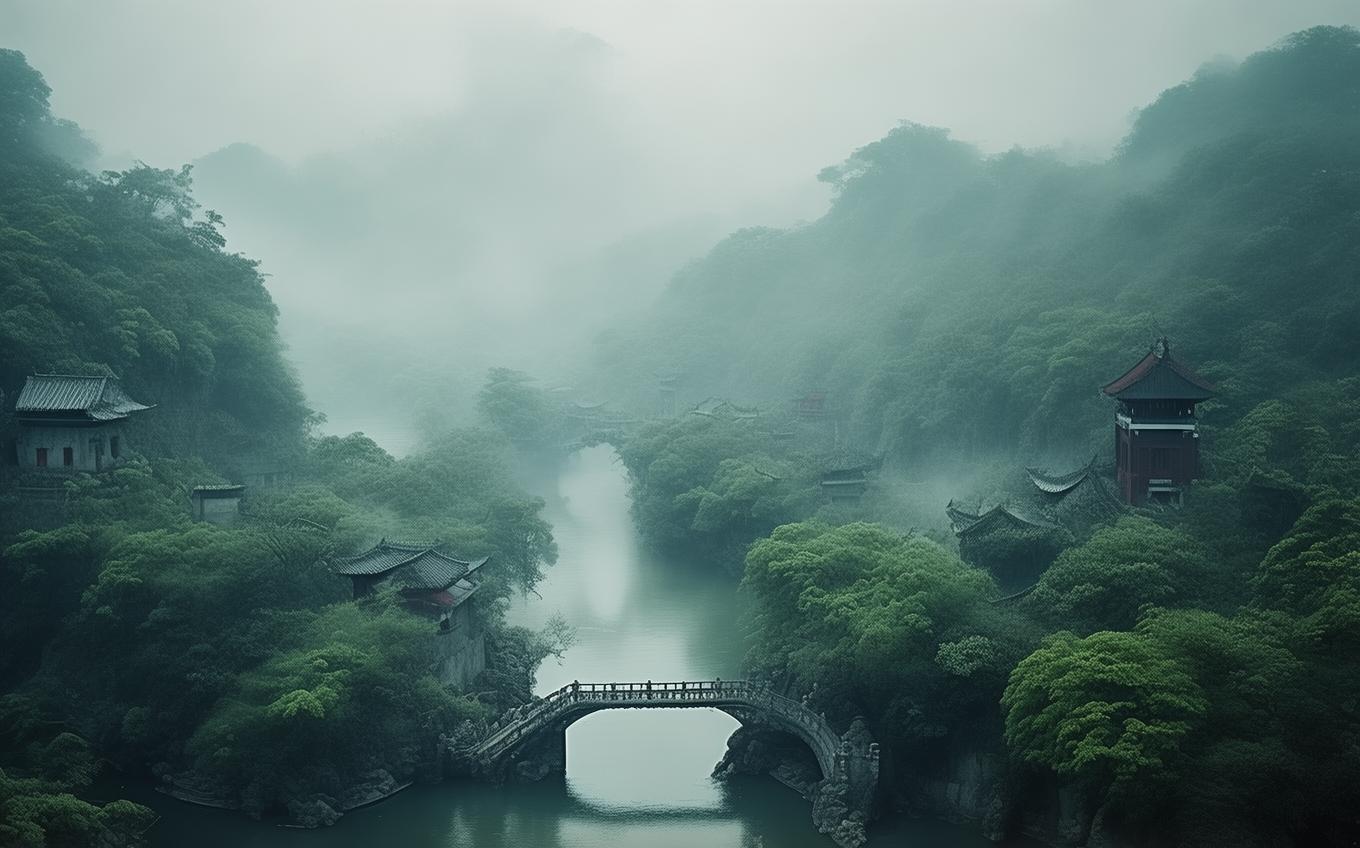
The green mountains rise like folding screens — “翠屏” (cuì píng) — on either side, a traditional Chinese metaphor for protective yet isolating barriers. The measurement “千仞” (qiān rèn, a thousand ancient length units) suggests infinite enclosure. Nature both shelters and entraps the imperial party, an ambivalence that permeates the poem.
Line 4: “丹嶂五丁开”
Here the poet introduces the myth of the “五丁” (Wǔ Dīng, Five Mighty Men), legendary strongmen who, according to local lore, forced open the mountain passes of Shu. By invoking this violent founding myth, Xuanzong aligns his own crossing with a heroic past, yet the crimson crags (“丹嶂”) also evoke bloodshed — a subtle nod to the war that drove him here.
Line 5: “灌木萦旗转”
The dense shrubbery tangles with the moving banners, binding symbols of imperial authority. The verb “萦” (yíng, entwine, coil) suggests nature snaring human emblems. It is a visual image of the emperor’s diminished control, the wilderness resisting ceremonial order.
Line 6: “仙云拂马来”
Clouds, described as “仙云” (xiān yún, immortal clouds), gently brush the horses — a scene of ethereal beauty. The image lifts the poem momentarily into the realm of Daoist transcendence, as if the journey were a divine procession, not a flight. This duality of the supernatural and the dismal reality is a hallmark of Tang imperial verse.
Line 7: “乘时方在德”
The crucial moral turn: “Riding the tide of fortune indeed rests on Virtue.” The character “德” (dé) carries heavy Confucian weight — it is the inner moral power by which a ruler legitimately holds the mandate of Heaven. After six lines of natural description, the emperor asserts that the only true safeguard is not mountain passes but personal righteousness.
Line 8: “嗟尔勒铭才”
The final line addresses worthy officials with a sigh — “嗟” (jiē) — and praises them as “勒铭才” (talent worthy of carving inscriptions in stone). It is both an expression of gratitude to loyal ministers and a melancholic self-admonishment. The emperor laments that his own virtue fell short, leaving others to commemorate events that should never have occurred.
Themes and Symbolism
Landscape as Moral Barometer
The poem turns geographical features into moral mirroring. Sword Gate’s stark cliffs represent the harsh judgment of history; the folding green screens suggest the introspective journey into the self. In Chinese poetics, the “mountain-pass poem” often signals a point of crisis, and here it is inseparable from the emperor’s internal reckoning.
Virtue as Supreme Defense
The central theme is the Confucian conviction that “德” (dé, virtue) is stronger than any fortification. The red cliffs opened by the Five Mighty Men may awe the viewer, but they pale before the moral foundation a ruler must cultivate. Xuanzong implicitly confesses that losing Chang'an was a failure of virtue, not of walls.
The Euphemism of Power
Calling the flight a “hunt” (“出狩”) is a symbolic strategy of survival. It preserves the imperial aura and reflects a deep cultural code: the Son of Heaven cannot be seen as a fugitive. This euphemism resonates through centuries of Chinese political poetry, where the unsaid often weighs more than what is written.
Cultural Context
In 755, General An Lushan rebelled, capturing the eastern capital Luoyang and soon threatening Chang'an. Emperor Xuanzong’s escape to Shu became a landmark of national trauma. The once-glorious emperor, whose reign saw the zenith of Tang culture, now trudged through mountain passes, his beloved consort Yang Guifei recently executed by mutinous guards. “幸蜀西至剑门” was written upon reaching Sword Gate, the natural border of the Shu region, a place long mythologized in Chinese geography as a refuge and a fortress.
The poem reflects the Tang ideal of the scholar-emperor, blending statecraft and literary art. Xuanzong, himself a patron and practitioner of poetry, uses the regulated verse form (lüshi) to discipline emotion into dignified introspection. The inclusion of mythological labor (the Five Mighty Men) and Daoist immortals (the clouds) amplifies the sense of an empire navigating between heaven’s will and human frailty.
Conclusion
“幸蜀西至剑门” endures because it refuses to be simply an exile’s lament. It transforms a military catastrophe into a philosophical exercise — an emperor examining his own “德” through the stark beauty of a mountain pass. For modern readers, the poem offers a lesson in how language can frame disaster with dignity, and how the natural world can become a stage for moral drama. The Sword Gate still stands in Sichuan, but the poem’s true gateway opens onto the enduring Chinese conviction that inner virtue is the only empire that cannot be conquered.
Comments (0)
No comments yet. Be the first to comment!