Introduction
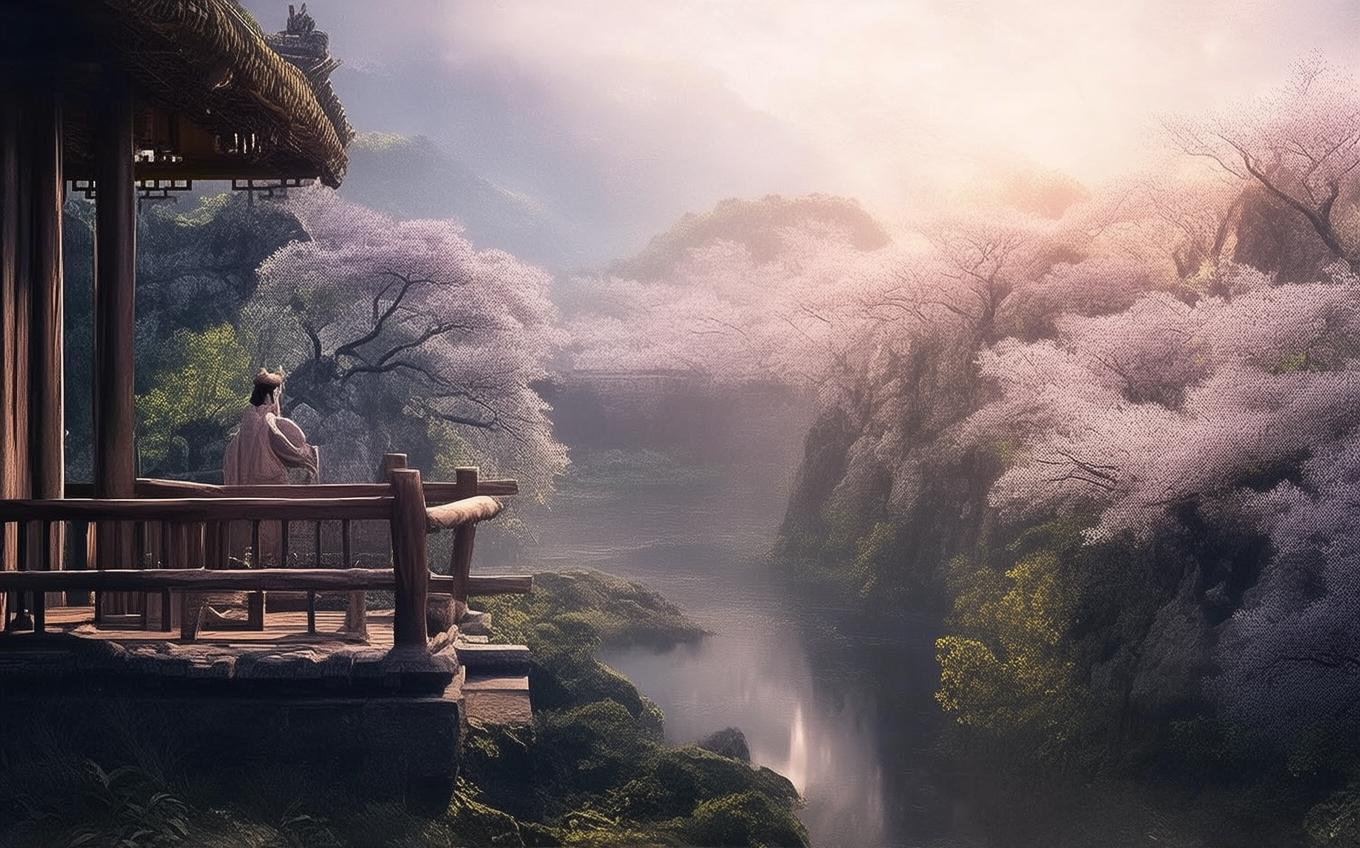
Emperor Xuanzong of Tang (唐玄宗, reigned 712–756 CE) is remembered not only as one of China’s most culturally brilliant monarchs, but also as a poet whose works capture the splendor and tragedy of his era. His poem “春台望” (“Gazing from the Spring Terrace”) is a brief yet powerful lyric that juxtaposes the timeless beauty of nature with the brutal reality of war. Written in the aftermath of the catastrophic An Lushan Rebellion (755–763), the poem reflects a ruler’s gaze turned from panoramic mountain peaks to the blood-soaked plains of his fallen capital. It stands as a poignant meditation on the fragility of empires and the sorrow that can lie beneath a radiant spring landscape.
The Poem: Full Text and Translation
暇景属三春,高台聊四望。
Xiá jǐng shǔ sān chūn, gāo tái liáo sì wàng.
Leisure and scenery belong to the third month of spring; from the high terrace I gaze idly in all four directions.目极千里际,山川一何壮。
Mù jí qiān lǐ jì, shān chuān yī hé zhuàng.
My eyes reach a thousand leagues into the distance — how majestic the mountains and rivers!太华见重岩,终南分叠嶂。
Tài Huá jiàn chóng yán, Zhōng Nán fēn dié zhàng.
Mount Taihua shows its layered crags; Mount Zhongnan spreads tiered, overlapping peaks.郊原纷绮错,参差多异状。
Jiāo yuán fēn qǐ cuò, cēn cī duō yì zhuàng.
The outlying plains are a brocade of confusion, irregular and full of strange shapes.佳气满通沟,迟步入绮楼。
Jiā qì mǎn tōng gōu, chí bù rù qǐ lóu.
Auspicious vapors fill the connecting gullies; with slow steps I enter the ornate tower.初莺一一鸣,归雁双双去。
Chū yīng yī yī míng, guī yàn shuāng shuāng qù.
The first orioles call one by one; returning wild geese depart pair by pair.俯视洛阳川,茫茫走胡虏。
Fǔ shì Luòyáng chuān, máng máng zǒu hú lǔ.
I look down upon the Luoyang plain — vast and indistinct, northern barbarians roam.流血涂野草,豺狼尽冠缨。
Liú xuè tú yě cǎo, chái láng jìn guān yīng.
Shed blood smears the wild grasses; jackals and wolves all wear official caps and tassels.
Line-by-Line Analysis
Couplet 1: Setting the scene
The poem opens with the leisurely mood of late spring (“三春”), traditionally the third month when nature is at its peak. The emperor ascends a high terrace (“高台”) not out of urgent duty but to “聊四望” — casually gaze in all directions. This relaxed tone is immediately undercut by the violence to come, making the contrast all the more shocking.
Couplet 2: The grand sweep of vision
“目极千里际” emphasizes the vastness of the view. The exclamation “一何壮” (how magnificent!) is genuine awe. Here the poet is still in a joyful, expansive state, admiring the sheer scale of the empire’s landscape — mountains and rivers that have witnessed centuries of civilization.
Couplet 3: The enduring mountains
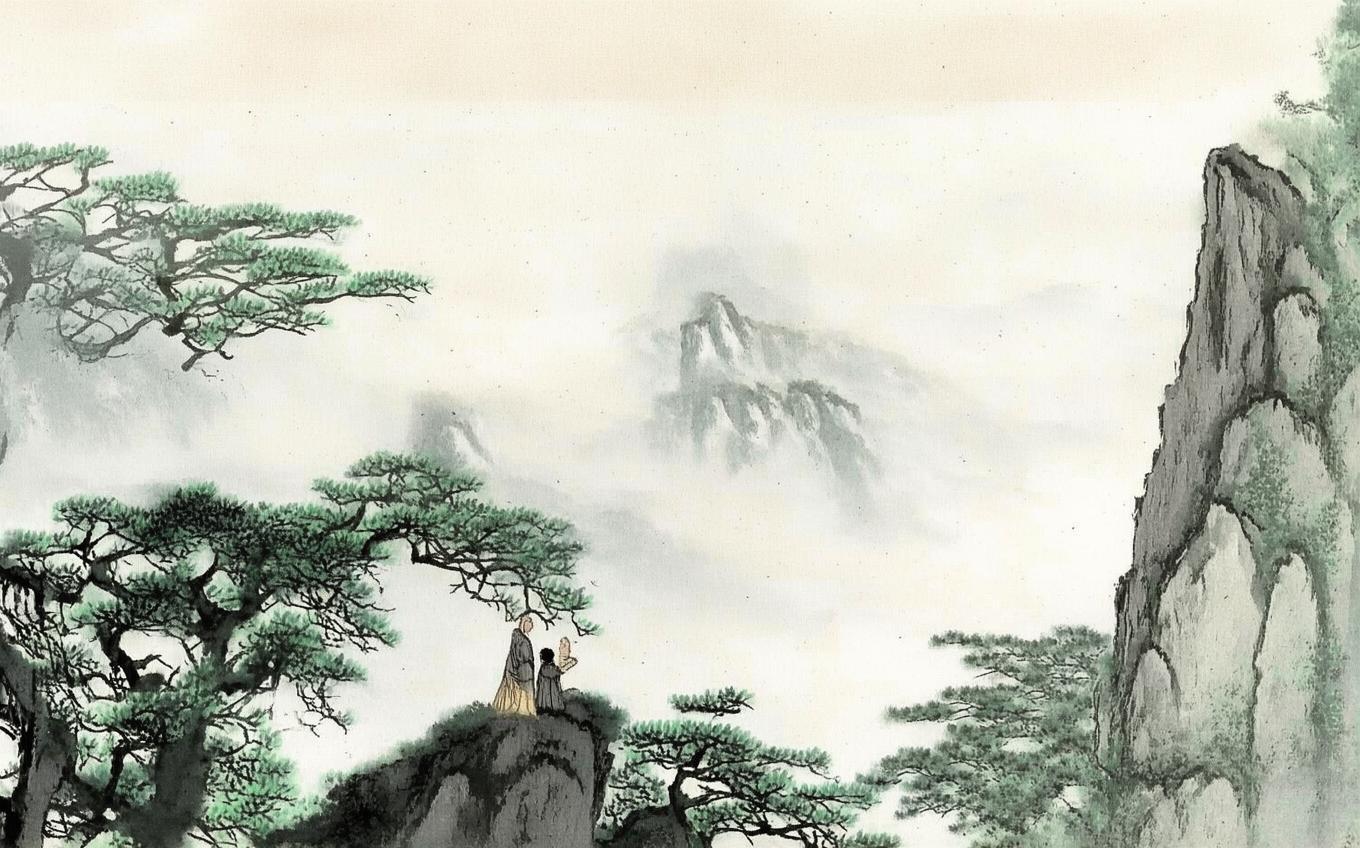
Mount Taihua (太华, the sacred Western Peak) and Mount Zhongnan (终南) are named specifically. They are not just geographical features; in Chinese culture, they are symbols of permanence and spiritual retreat. Their “重岩” and “叠嶂” suggest layer upon layer of rock — ageless, unmoved by human affairs. The emperor’s eye lingers on these immortal peaks as if seeking reassurance.
Couplet 4: The disordered plains
From the serene mountains, the gaze drops to the “郊原” (suburban plains). The word “绮错” (brocade-like confusion) is beautiful yet uneasy: the patchwork of fields looks intricate, but “参差多异状” suggests irregularity, maybe even ruin. Nature’s harmony is already cracking.
Couplet 5: A moment of respite
“佳气满通沟” — auspicious air fills the canals — offers a fleeting return to prosperity. The poet walks slowly into the “绮楼” (ornate tower), perhaps a pavilion atop the terrace. The mood is one of contemplation, the calm before a storm of emotion.
Couplet 6: The language of birds
Orioles (“初莺”) and wild geese (“归雁”) represent the arrival and departure of seasons. Orioles sing singly (“一一鸣”) while geese fly in pairs (“双双去”). This delicate natural imagery is profoundly Chinese: birds carry messages, migrations mirror human separations. The parallel structure hints at order and rhythm, but it also foreshadows loneliness and loss.
Couplet 7: The terrible plunge
Suddenly the perspective shifts downward: “俯视洛阳川” (I look down on the Luoyang plain). Luoyang was the eastern capital, a cultural heartland. Instead of bustling streets, he sees “茫茫” — a hazy, indistinct expanse — populated by “胡虏” (northern barbarians). This is the An Lushan rebel force that had overrun the city. The word “走” (run, roam freely) conveys the invaders’ unchecked movement. The emperor’s lofty vantage point now becomes a witness to disaster.
Couplet 8: The ghastly finale
The final couplet is brutally direct. “流血涂野草” — blood paints the wild grass, a stark image of slaughter. Even more cutting is “豺狼尽冠缨”: jackals and wolves all wear official caps. “冠缨” refers to the headgear of civil officials. The metaphor is clear: the rebels, like beasts, have usurped the government, and the rightful order has been replaced by chaos and cruelty. The poem ends on this note of grim disillusionment, the spring terrace no longer a place of pleasure but a perch above a wasteland.
Themes and Symbolism
Contrast between nature’s permanence and human fragility
The majestic mountains (Taihua, Zhongnan) stand forever, while the plains below are riven by war. This contrast underscores a central theme in Chinese poetry: nature as an indifferent witness to human suffering.
The broken mirror of spring
Spring is traditionally a time of renewal and joy. By filling his poem with “三春,” “佳气,” and bird songs, Xuanzong first constructs an idyllic scene — only to shatter it with “流血” (shed blood). The poem becomes an anti-pastoral, a lament that even the most lovely season cannot mask.
The gaze from the high platform
“望” (to gaze afar) is a recurrent motif in classical poetry, often tied to nostalgia, ambition, or lament. Here, the high platform gives the poet-emperor a godlike view, but that omniscience brings only pain. The platform thus symbolizes the burden of power: to see all is to suffer all.
Beasts in official robes
“豺狼尽冠缨” is a powerful symbol of moral inversion. The image of predators wearing the insignia of legitimate rule encapsulates the collapse of civilization. It echoes the Confucian fear of a world where names and realities no longer align.
Cultural Context
Emperor Xuanzong’s reign began with the “Kaiyuan Era,” a golden age of prosperity, artistic patronage, and territorial expansion. However, his infatuation with the consort Yang Guifei and the rise of her corrupt cousin Yang Guozhong eroded court integrity. In 755, the general An Lushan, of Sogdian and Turkic descent, launched a massive rebellion. The emperor fled the capital Chang’an, and Luoyang fell into rebel hands. The war lasted eight years and left millions dead.
“春台望” was likely composed in the later years of Xuanzong’s life, after he had abdicated to his son and returned to a devastated capital. The poem expresses not only personal sorrow but also a ruler’s guilt and helplessness. It reflects a core Chinese value — the belief that a monarch’s virtue maintains cosmic harmony, and that disaster is a sign of moral failure. By framing his lament in a spring vista, Xuanzong joins a long tradition of “gazing” poems (望诗) that use landscape to express inner turmoil, such as Du Fu’s “Spring View” (春望), written during the same rebellion.
Conclusion
“春台望” endures not because of elaborate rhetoric, but because of its raw, unadorned emotional arc. In fourteen short lines, Emperor Xuanzong moves from leisurely appreciation of spring to a harrowing vision of blood and betrayal. The poem captures the tragic irony of a ruler whose empire reached sublime heights only to crash into chaos. For modern readers, it offers a timeless reminder: nature can heal and dazzle, but it can also frame our deepest grief. Gazing from a spring terrace, we may see beauty or ruin — and often, both at once. That double vision is the poem’s lasting gift, an invitation to look closely and face what we find with unflinching honesty.
Comments (0)
No comments yet. Be the first to comment!