Introduction
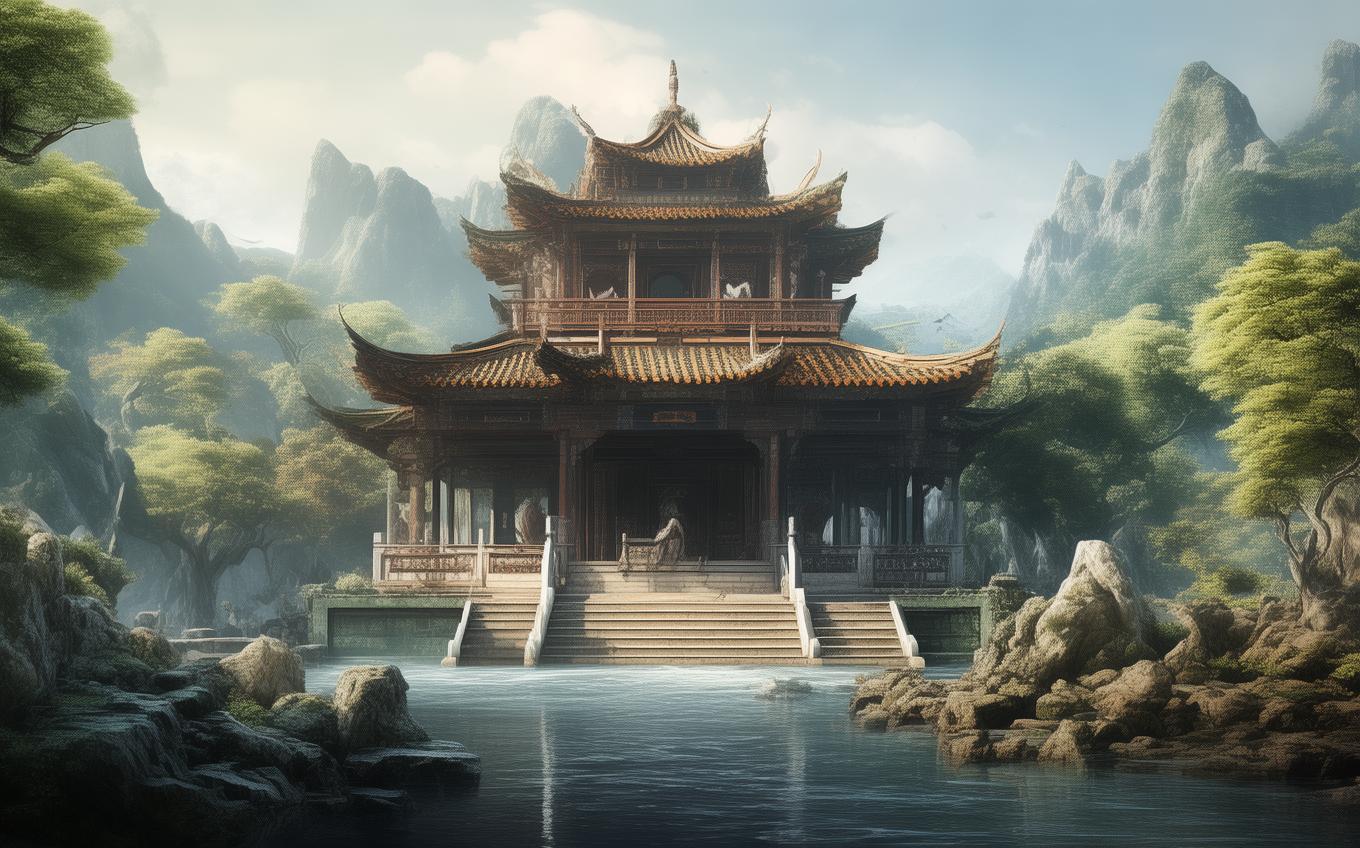
Among the thousands of rulers who wrote poetry in imperial China, Emperor Xuanzong of Tang (唐玄宗, 685–762) stands out for his sincere literary ambition and his personal promotion of Taoism. His poem “过老子庙” (Guò Lǎozi Miào – “Passing by Laozi’s Temple”) was composed during a visit to a temple dedicated to Laozi, the legendary philosopher and founder of Taoism. The Tang imperial house, surnamed Li (李), traced its ancestry back to Laozi (whose secular name was Li Er), so for Xuanzong this visit was more than a casual pilgrimage – it was a profoundly political and spiritual act. The poem reveals the ruler’s reverence for a sage ancestor, his melancholy at the gulf of time, and his yearning for the lost presence of the Way. In Chinese literary history, the poem is celebrated for its solemn imagery and for its fusion of imperial dignity with mystical longing.
The Poem: Full Text and Translation
仙居怀圣德,
Xiān jū huái shèng dé,
In the dwelling of immortals, I cherish his sage virtue;
灵庙肃神心。
Líng miào sù shén xīn.
The numinous temple awes and purifies the spirit.
草合人踪断,
Cǎo hé rén zōng duàn,
Grasses have grown together, human traces are cut off;
尘浓鸟迹深。
Chén nóng niǎo jì shēn.
Thick dust lies, bird tracks appear deep.
流沙丹灶没,
Liú shā dān zào mò,
The shifting sands have buried the cinnabar furnace;
关路紫烟沉。
Guān lù zǐ yān chén.
Over the mountain pass, the purple smoke has sunk.
独伤千载后,
Dú shāng qiān zǎi hòu,
Alone I grieve, a thousand years later;
空复想遗音。
Kōng fù xiǎng yí yīn.
Only to vainly recall his lingering voice.
Line-by-Line Analysis
Couplet 1: 仙居怀圣德,灵庙肃神心。
The poem opens by naming the temple a “dwelling of immortals” (仙居), instantly transforming the physical building into a transcendent space. The verb 怀 (cherish, hold in the heart) shows the emperor actively recollecting Laozi’s “sage virtue” (圣德). The second line describes the temple as 灵庙 – a “numinous” or “spiritually potent” shrine – that “purifies the spirit” of any visitor who enters with proper awe. Already we sense the double movement of the poem: outward admiration and inward transformation.
Couplet 2: 草合人踪断,尘浓鸟迹深。
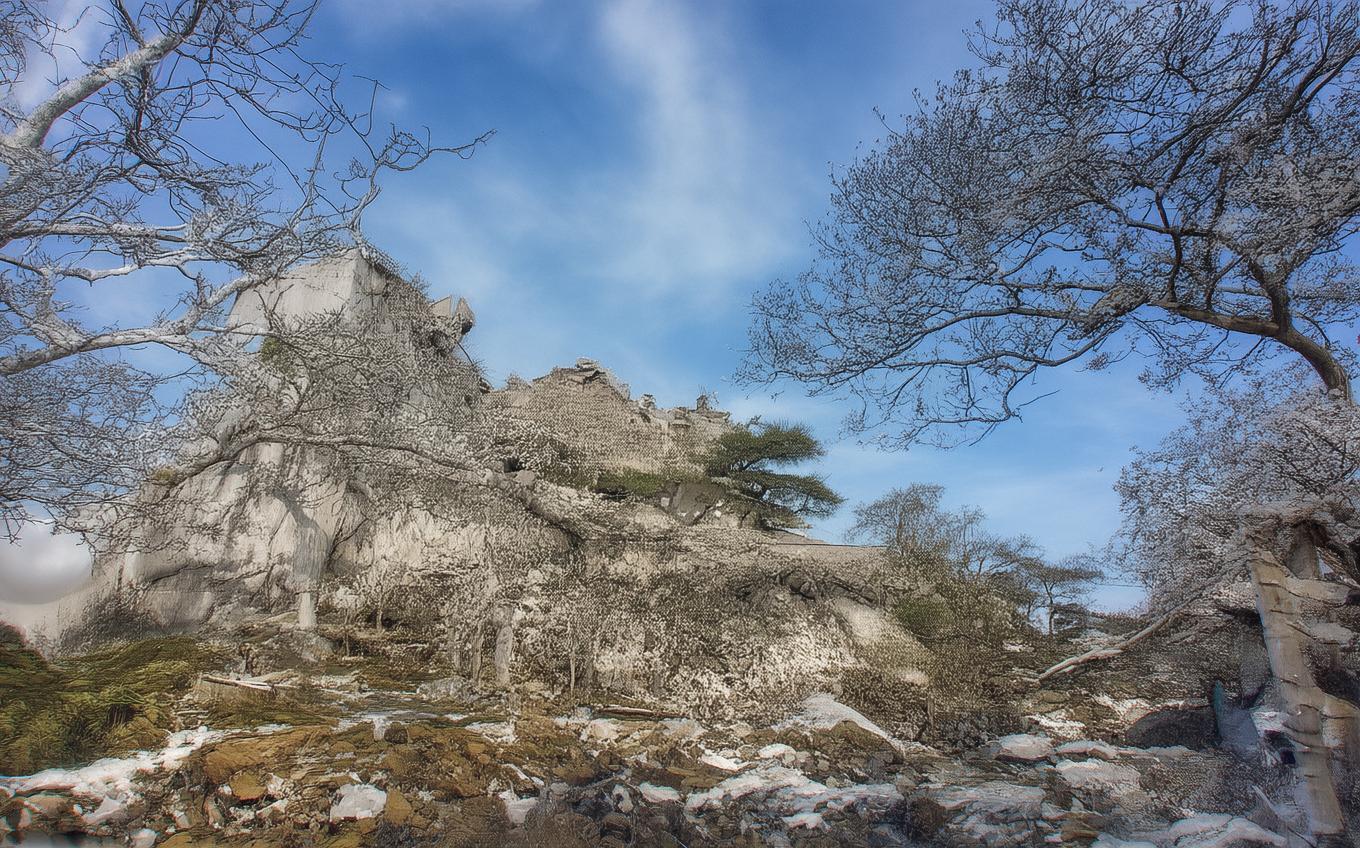
A sudden shift from reverence to neglect. The path leading to the temple has been overgrown: grass has knitted together, erasing all footprints. An unsettling silence falls. Human presence is absent, and only birds leave deep tracks in the thick dust. This desolation is poignant. The temple that should throng with worshippers is almost abandoned, suggesting both the passage of centuries since Laozi’s time and perhaps a decline in certain spiritual observances even under imperial patronage. The detail of “bird tracks deep” (鸟迹深) intensifies the quiet — birds feel at home where people rarely come.
Couplet 3: 流沙丹灶没,关路紫烟沉。
Here the poet draws on two famous legends surrounding Laozi. “Shifting sands” (流沙) evokes the western desert regions into which Laozi was said to have disappeared after writing the Dao De Jing. “Cinnabar furnace” (丹灶) alludes to alchemical practices aimed at achieving immortality, long associated with Taoist adepts; now even the furnace is buried. The “mountain pass” (关路) is almost certainly the Hangu Pass (函谷关), where the keeper Yin Xi, alerted by the auspicious sight of purple vapor rising in the east, beseeched Laozi to leave his teachings. But now that “purple smoke” (紫烟) has sunk — the divine sign is gone, the sage no longer manifests. Nature itself seems to have withdrawn its magical hues.
Couplet 4: 独伤千载后,空复想遗音。
With a direct emotional stroke, the emperor speaks in the first person. “Alone I grieve, a thousand years later” — the vast temporal gulf separates him from his ancestor. To grieve alone underscores the ruler’s solitude, despite his earthly power. The final line gently deflates hope: “Only to vainly recall his lingering voice.” The voice of the sage, once able to transmit the Way, now exists only in memory and imagination. It is a conclusion filled with tender regret, connecting the emperor’s personal loss to the universal human longing to reach across time.
Themes and Symbolism
Reverence for the Sage and the Dao. The poem is a sustained act of veneration. Every image — the heavenly dwelling, the purifying temple, the purple smoke — builds a halo around Laozi. The emperor does not praise his own power but humbles himself before the “sage virtue.”
Time and Oblivion. Grass, dust, buried furnaces, and vanished smoke all represent the inexorable work of time. The temple survives, but the living connection to Laozi has worn thin. The poem’s melancholy arises from the tension between an eternal truth (the Dao) and its fleeting human guardians.
Vestiges of the Immortal. Key symbols — the trace (踪), the bird track (迹), the furnace (灶), the lingering voice (遗音) — all point to something that was once present and is now only a faint trace. The purple smoke, a classic emblem of the Taoist sage’s auspicious qi, has “sunk.” This pattern of erasure invites the reader to appreciate the fragility of spiritual transmission.
Cultural Context
The Tang dynasty (618–907) privileged Taoism as a core ideology, partly because the ruling Li family claimed descent from Laozi. Emperor Xuanzong especially deepened this connection: he ordered the establishment of temples to Laozi throughout the empire, composed commentaries on the Dao De Jing, and elevated Taoist liturgy to state ceremony. His poem “过老子庙” is thus not merely a personal reflection but a political performance in verse — a public demonstration that the Son of Heaven revered his sacred genealogy. At the same time, the poem taps into a broader Chinese aesthetic that treasures ruins and remnants, finding beauty in the passage of time and the pathos of things no longer whole.
Conclusion
The enduring appeal of “过老子庙” lies in its layered solemnity. An emperor enters a quiet, dust-laden shrine and emerges with a quiet, honest lament. The poem does not boast of power; it offers a quiet confession of distance and loss, wrapped in images that feel at once tactile and otherworldly. For English-speaking readers, it illuminates how Chinese poetry often handles spirituality: not through abstract doctrine but through a precise landscape animated by memory and desire. In an age when we, too, struggle to feel connected to ancient wellsprings of wisdom, Xuanzong’s gentle, regretful closing lines remind us that the longing itself can be a form of reverence — a way of keeping the sage’s lingering voice alive.

Comments (0)
No comments yet. Be the first to comment!