Introduction
When the great Tang dynasty poet Li Bai bid farewell to his friend He Zhizhang, who was retiring to his hometown in the Siming Mountains (四明山), he did not write a somber goodbye. Instead, he composed “送贺知章归四明” (“Seeing Off He Zhizhang Returning to Siming”), a quatrain brimming with humor, literary allusion, and genuine affection. He Zhizhang (贺知章, 659–744) was a respected scholar-official and a free-spirited poet in his own right, famous for calling himself “The Mad Guest” (狂客). Li Bai’s poem – also known by its alternate title “送贺宾客归越” – is a gem of parting verse, celebrating the retiree’s return to a life of art, nature, and Daoist transcendence. For English readers, this poem opens a window into Tang dynasty friendship, the cult of the eccentric genius, and the deep cultural memory that Chinese poetry so often invokes.
The Poem: Full Text and Translation
镜湖流水漾清波,
Jìng hú liú shuǐ yàng qīng bō,
Mirror Lake’s flowing waters ripple with clear waves,
狂客归舟逸兴多。
Kuáng kè guī zhōu yì xìng duō.
The Mad Guest in his returning boat, his free-spirited mood abounds.
山阴道士如相见,
Shān yīn dào shì rú xiāng jiàn,
If a Daoist priest of Shanyin meets him on the way,
应写黄庭换白鹅。
Yīng xiě Huáng Tíng huàn bái é.
He’ll surely transcribe the “Yellow Court” scripture in exchange for white geese.
Line-by-Line Analysis
Line 1: “镜湖流水漾清波”
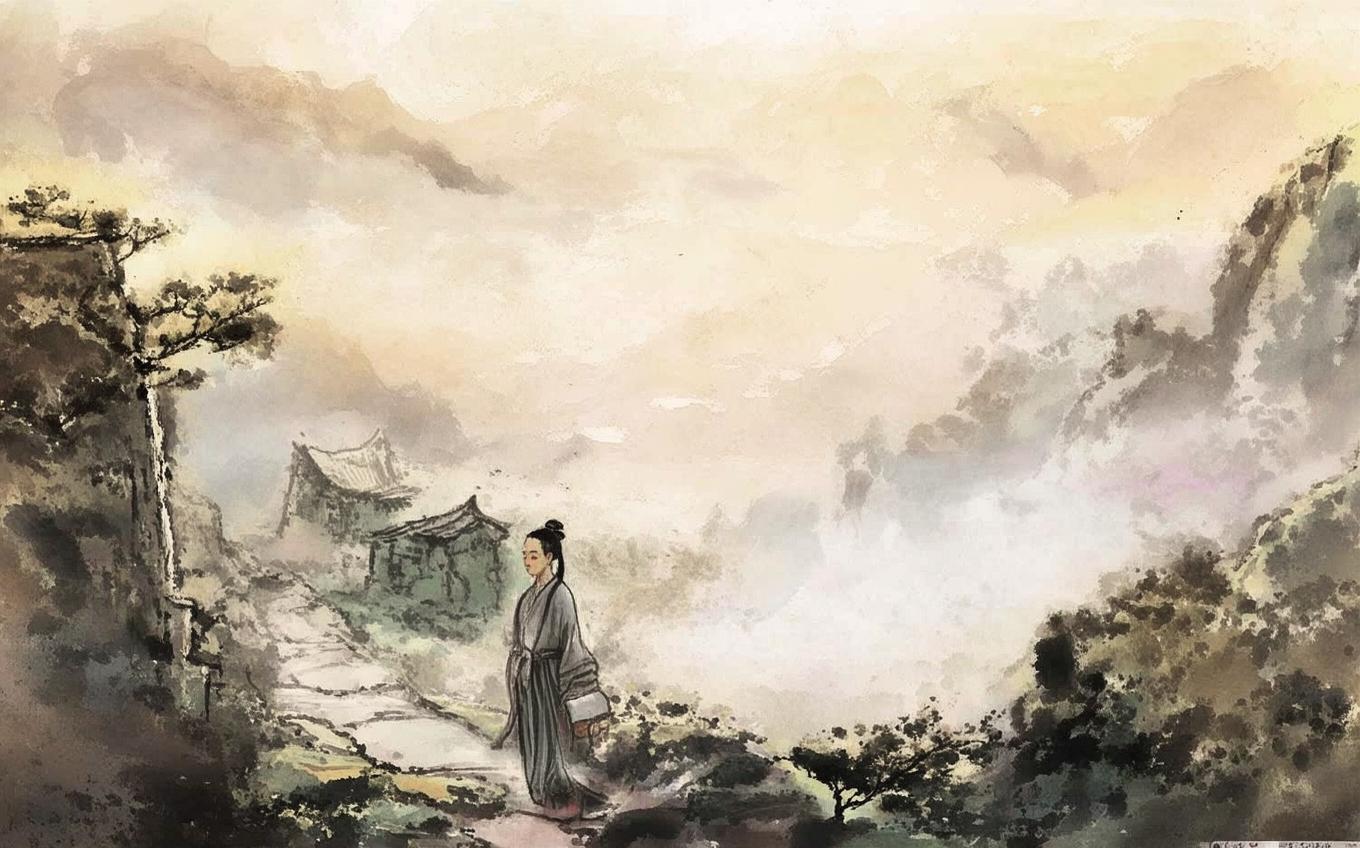
Li Bai sets the scene with Mirror Lake (镜湖), a famous scenic spot near He Zhizhang’s hometown in present-day Zhejiang. The lake, often celebrated in Chinese poetry for its tranquil beauty, is depicted through gentle, rippling water – a visual prelude to the journey. The verb “漾” (yàng, to ripple) conveys movement that is both lively and serene, reflecting the carefree retirement He Zhizhang is about to embrace. In just seven syllables, Li Bai paints a landscape that feels like an ink wash painting, preparing the reader for the joyful departure.
Line 2: “狂客归舟逸兴多”
The “Mad Guest” (狂客) was He Zhizhang’s self-styled nickname, a badge of his eccentric, uninhibited personality. Far from being an insult, “madness” in the Tang literati context signified a noble detachment from worldly affairs, an embrace of wine, poetry, and spontaneous behavior. The phrase “归舟” (returning boat) links the physical journey home with the idea of returning to one’s true self. “逸兴” (yì xìng) – a mood of untrammeled elevation – captures the elation of shedding official duties. Li Bai celebrates not loss but liberation: his friend is sailing toward a life of aesthetic joy.
Line 3: “山阴道士如相见”
Here the poem shifts from scene to playful imagination. Shanyin (山阴) was an ancient county near Shaoxing, a region deeply associated with the great calligrapher Wang Xizhi (王羲之, 303–361). Daoist priests often lived in such scenic retreats, and Wang Xizhi’s most legendary encounter involved one such priest. Li Bai imagines that if He Zhizhang meets a Shanyin Daoist, a delightful exchange will follow. The conditional “如相见” (if they meet) suggests a whimsical, almost inevitable, serendipity on the journey home.
Line 4: “应写黄庭换白鹅”
This line is a direct allusion to a beloved anecdote about Wang Xizhi. According to classical lore, Wang once transcribed the Daoist scripture “Yellow Court Classic” (黄庭经) for a Shanyin priest in return for a flock of prized white geese. Li Bai transplants this story onto He Zhizhang, who was both a devoted Daoist and an accomplished calligrapher. The verb “应写” (should/will transcribe) implies that if the priest recognizes a kindred spirit, the transaction will be as natural as it was centuries before. The white geese (白鹅) symbolize purity, artistic refinement, and the uncorrupted world He Zhizhang returns to. By equating his friend with the revered Wang Xizhi, Li Bai offers the highest praise of the retiring scholar’s talent and character.
Themes and Symbolism
The dominant theme is liberation through retirement – a cherished ideal in Chinese scholar-official culture. Returning home (归) meant leaving the dust of bureaucracy for a life of spiritual and artistic fulfillment. Li Bai reframes parting not as loss but as a homecoming to one’s true nature.
Daoist communion is woven throughout. The Daoist priest, the sacred “Yellow Court” text, and the lush landscape all evoke a world where humans live in harmony with the Dao, unburdened by court intrigue. The poem becomes an invitation to rejoin that world.
The goose is a multivalent symbol: in Wang Xizhi’s story, it represents the purity of artistic passion; in Daoist thought, geese are migratory birds that embody natural rhythms; and as a white bird, it suggests the untarnished soul. He Zhizhang himself becomes a goose-like figure – migrating back to his origin.
Finally, friendship as recognition shines through. Li Bai needs no sentimental tears; instead, he praises his friend’s personality and art, showing the deepest understanding of what the journey means to He Zhizhang.
Cultural Context
He Zhizhang was one of the Eight Immortals of the Wine Cup immortalized by Du Fu, a generation older than Li Bai, and a vital supporter of the younger poet’s career. Their friendship was rooted in a shared love for wine and spontaneous creativity. When He Zhizhang retired in 744 CE, Emperor Xuanzong granted him an honorable departure, and Li Bai’s poem was a personal send-off that outlasted the dynasty.
The story of Wang Xizhi exchanging calligraphy for geese comes from the Jin History and similar anecdotal collections. It encapsulates the ideal of the artist whose work is so valued that it can be traded for living beauty. By invoking this tale, Li Bai not only compliments He Zhizhang but also places him within a lineage of artistic immortals. This device of allusion (典故, diǎngù) is a hallmark of classical Chinese poetry, allowing a short poem to carry immense cultural weight.
The poem also reflects Tang dynasty Daoist enthusiasm. Many officials retired to pursue Daoist alchemy, meditation, or simply a free life in nature’s rhythm. Mirror Lake and Siming Mountain were real places, but in poetry they become an earthly paradise, a motif that appealed deeply to the era’s romantic imagination.
Conclusion
Li Bai’s “送贺知章归四明” is a masterclass in saying goodbye with a smile. In twenty-eight characters, the poet transforms a friend’s retirement into an ascent to legendary status. The clear ripples of Mirror Lake, the madcap joy of the returning boat, and the shining white geese all pulse with vitality, offering English readers a sumptuous taste of Tang poetry’s fusion of friendship, nature, and cultural memory. Today, the poem reminds us that a true farewell is not an end, but a celebration of the journey home – and the stories we will tell when we get there.
Comments (0)
No comments yet. Be the first to comment!