Introduction
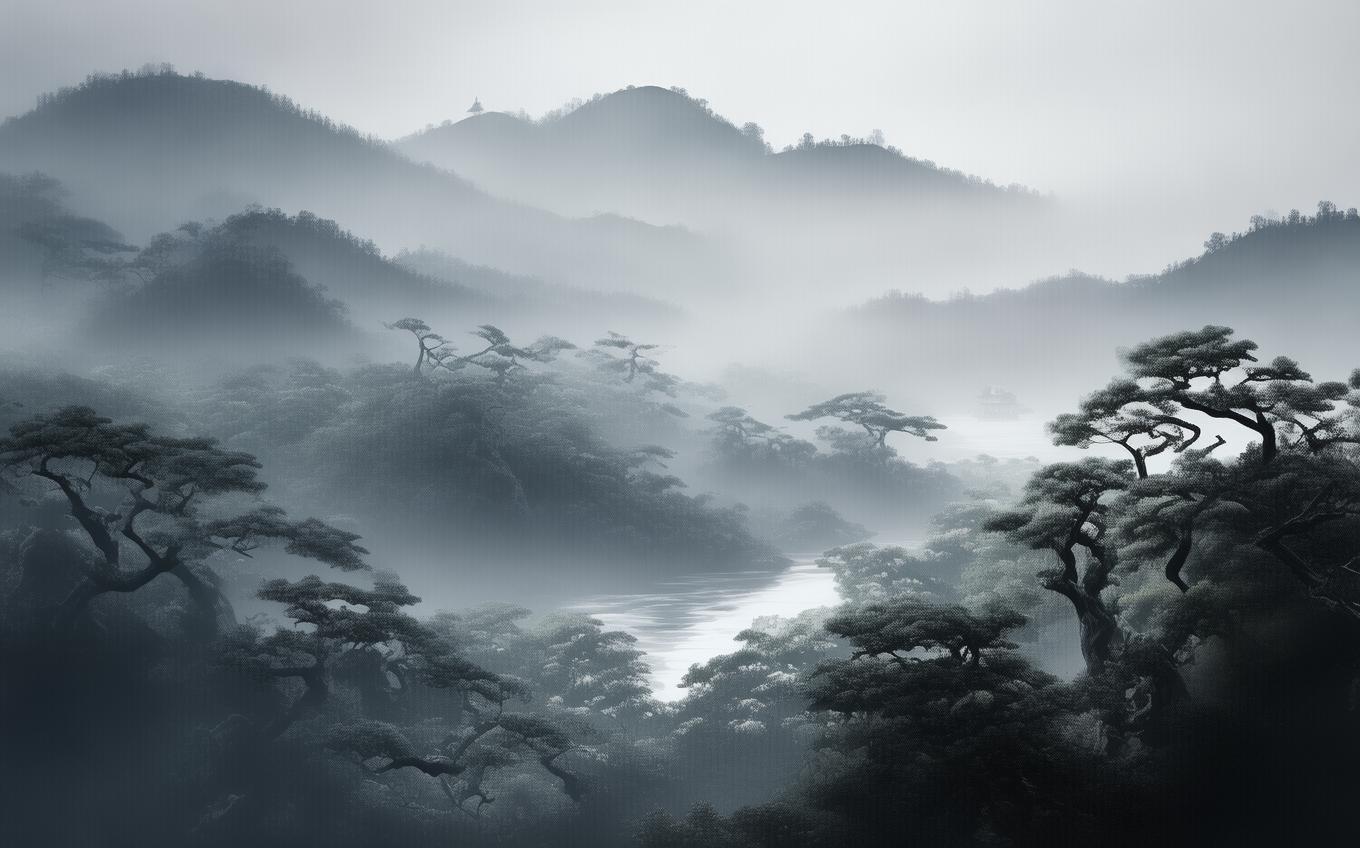
The Tang Dynasty (618–907 CE) is often celebrated as the golden age of Chinese poetry, a period when verse became the heartbeat of the empire. Among the countless poets of this era, one stands apart not only for his literary skill but for his imperial stature: Li Longji (李隆基), better known as Emperor Xuanzong of Tang. While his reign saw both the apex of Tang cultural brilliance and the catastrophic An Lushan Rebellion, his personal poetry often reveals a ruler deeply attuned to the rhythms of nature and the moral responsibilities of kingship.
The poem "同刘晃喜雨" (Tóng Liú Huǎng Xǐ Yǔ, "Sharing Joy with Liu Huang over the Rain") is a exquisite example of occasional verse written at court. Addressed to the official Liu Huang, it captures the shared relief and celebration after a long-awaited rain—a timely blessing in an agricultural society. This poem is not merely a description of weather; it is a delicate expression of imperial virtue, Confucian harmony, and the profound bond between a sovereign and his subjects.
The Poem: Full Text and Translation
Below is the complete poem in Chinese, accompanied by Pinyin transliteration and an English translation that aims to preserve the original’s imagery and restrained joy.
节变寒犹浅,
Jié biàn hán yóu qiǎn,
The season shifts, yet the cold is still mild;
时和气已春。
Shí hé qì yǐ chūn.
The time is gentle, the air already spring.
繁云先合絮,
Fán yún xiān hé xù,
Thick clouds first gather like cotton fluff;
膏雨自依旬。
Gāo yǔ zì yī xún.
The rich rain, as promised, falls within its ten-day cycle.
飒洒林鸦乱,
Sà sǎ lín yā luàn,
Pattering swiftly, it startles the crows in the grove;
低飘野鹊驯。
Dī piāo yě què xùn.
Drifting low, it gentles the wild magpies.
情同欲沾洒,
Qíng tóng yù zhān sǎ,
Our feelings alike, we wish to be drenched by it;
不敢问皇人。
Bù gǎn wèn huáng rén.
Yet I dare not ask whether the imperial one is also soaked.
Line-by-Line Analysis
Opening Couplet: Setting the Scene
The poem opens by marking a subtle transition: the harsh cold of winter is fading, but not entirely gone. The phrase 节变寒犹浅 (“the season shifts, yet the cold is still mild”) captures a liminal moment, where spring’s warmth has begun to whisper but winter’s chill lingers. In this context, the arrival of rain is especially precious—it promises renewal. The second line, 时和气已春, reinforces this sense of harmonious timing. In Chinese thought, shí (时) implies not just “time” but the right time, the natural order. Emperor Xuanzong, like any good Confucian ruler, is attuned to this order, and the rain becomes a sign that Heaven and Earth are in balance.
Second Couplet: The Rain Arrives
The imagery grows more vivid: 繁云先合絮 compares the gathering clouds to tufts of cotton or silk floss, a common metaphor in classical poetry for their soft, dense whiteness. This is no sudden storm but a gradual, gentle congregation—nature in its most benevolent mode. Then 膏雨自依旬 introduces a key cultural concept: gāo yǔ (膏雨), “rich rain” or “fertilizing rain,” an ancient term for a rainfall that nourishes the soil and crops. The phrase zì yī xún means the rain falls exactly within its expected ten-day period (xún is a traditional ten-day cycle). This punctuality reflects the reliability of a well-ordered cosmos under a virtuous king. There is no anxiety here, only quiet gratitude.
Third Couplet: The Sounds and Sights of Rainfall
With the rain now falling in earnest, the poet shifts to its effects on the surrounding wildlife. 飒洒林鸦乱 uses onomatopoeia—sà sǎ suggests the swift, rustling patter of raindrops—to convey the sudden disruption among the crows in the woods. The word luàn (乱), “chaotic” or “disordered,” is playful rather than ominous; even the birds’ startled reaction is part of nature’s lively response to the life-giving rain. The next line, 低飘野鹊驯, offers a contrasting image: as the rain drifts low and gently, the wild magpies become tame or docile. This juxtaposition of agitation and calm mirrors the dual character of rain—it can be both swift and soothing. It also hints at the civilizing power of a good ruler, who transforms the “wild” into the “tame” through moral influence.
Final Couplet: The Emperor’s Humble Distance
The closing lines reveal the poem’s courtly dimension. 情同欲沾洒 expresses a shared human impulse: both the speaker (likely the emperor himself) and Liu Huang feel the desire to stand out in the nourishing rain and be soaked by it. This is a deeply Confucian gesture—the joy is not private but communal. However, 不敢问皇人 introduces a sudden shift in tone. Huáng rén (皇人) refers to the “imperial one,” presumably the speaker in his public role, or perhaps a higher authority. The line can be interpreted in two ways: either the poet (Emperor Xuanzong) modestly says he dares not ask whether the ruler—himself—has been drenched, a self-effacing rhetorical move; or, more likely, he is addressing Liu Huang and saying, “I dare not presume to ask about Your Excellency’s own soaking.” In either reading, the line maintains the hierarchical decorum of the court while softening it with shared emotion. It is a delicate balance of power and intimacy.
Themes and Symbolism
Heaven’s Blessing and Royal Virtue
In traditional Chinese thought, timely rain was considered a direct response to the virtue of the ruler. Droughts were interpreted as Heaven’s displeasure, while nourishing rains signaled harmony. This poem is thus a subtle act of political self-congratulation, but one conducted with elegant restraint. The rain is gāo yǔ, “rich rain,” a term loaded with agricultural and moral meaning—it enriches the earth just as a sage king enriches his people.
The Unity of Human and Nature
The poem weaves together the natural world and the courtly world until they are indistinguishable. The birds’ reactions mirror human emotions: startlement, gentleness, and an impulse to bathe in the blessing. The shared desire to be “drenched” (zhān sǎ) is a powerful symbol of spiritual and communal renewal. Rain cleanses, revives, and unites all beings beneath it.
Ritual Punctuality and the Cosmic Order
The detail that the rain falls zì yī xún (“within its ten-day cycle”) reflects a deep-seated belief in cosmic regularity. The ancient Chinese calendar divided the month into three xún (旬). When rain came as expected, it confirmed that the natural cycles were unimpaired—a reassurance that the emperor’s rule aligned with the Dao itself.
Cultural Context
Emperor Xuanzong (reigned 712–756) was a prolific poet and a great patron of the arts. His court at Chang’an was a dazzling center of culture, attracting talents like Li Bai and Du Fu. The poem 同刘晃喜雨 belongs to a genre known as “occasional poetry” (yìngzhì shī), composed for specific social or political events. During Xuanzong’s early reign, the empire enjoyed peace and prosperity, and his poems often celebrate natural phenomena as emblems of good governance.
The figure of Liu Huang is not widely known today, but he would have been a court official or attendant. The title’s word tóng (同) means “together with” or “sharing,” not “same as.” To “share joy over rain” was both a literary convention and a genuine expression of the collective relief in an agrarian empire where harvests meant survival. The poem also reflects the Confucian ideal of the ruler who feels with his people—a sentiment that would later become poignant when Xuanzong’s reign collapsed in rebellion and famine.
Conclusion
"同刘晃喜雨" is a gem of Tang court poetry: outwardly simple, inwardly layered with meaning. Through its measured lines, Emperor Xuanzong transforms a weather event into a meditation on cosmic order, moral rule, and shared humanity. The poem’s enduring appeal lies in its ability to make us feel the cool patter of spring rain on our own skin, and to glimpse, for a moment, the hope that good governance can truly bring the heavens and earth into harmony.
In our own age of ecological anxiety, this thousand-year-old verse reminds us that joy over rain is not archaic but universal. It whispers that when nature smiles, we smile together—rulers and commoners, birds and poets, all drenched in the same blessing.
Comments (0)
No comments yet. Be the first to comment!