Introduction
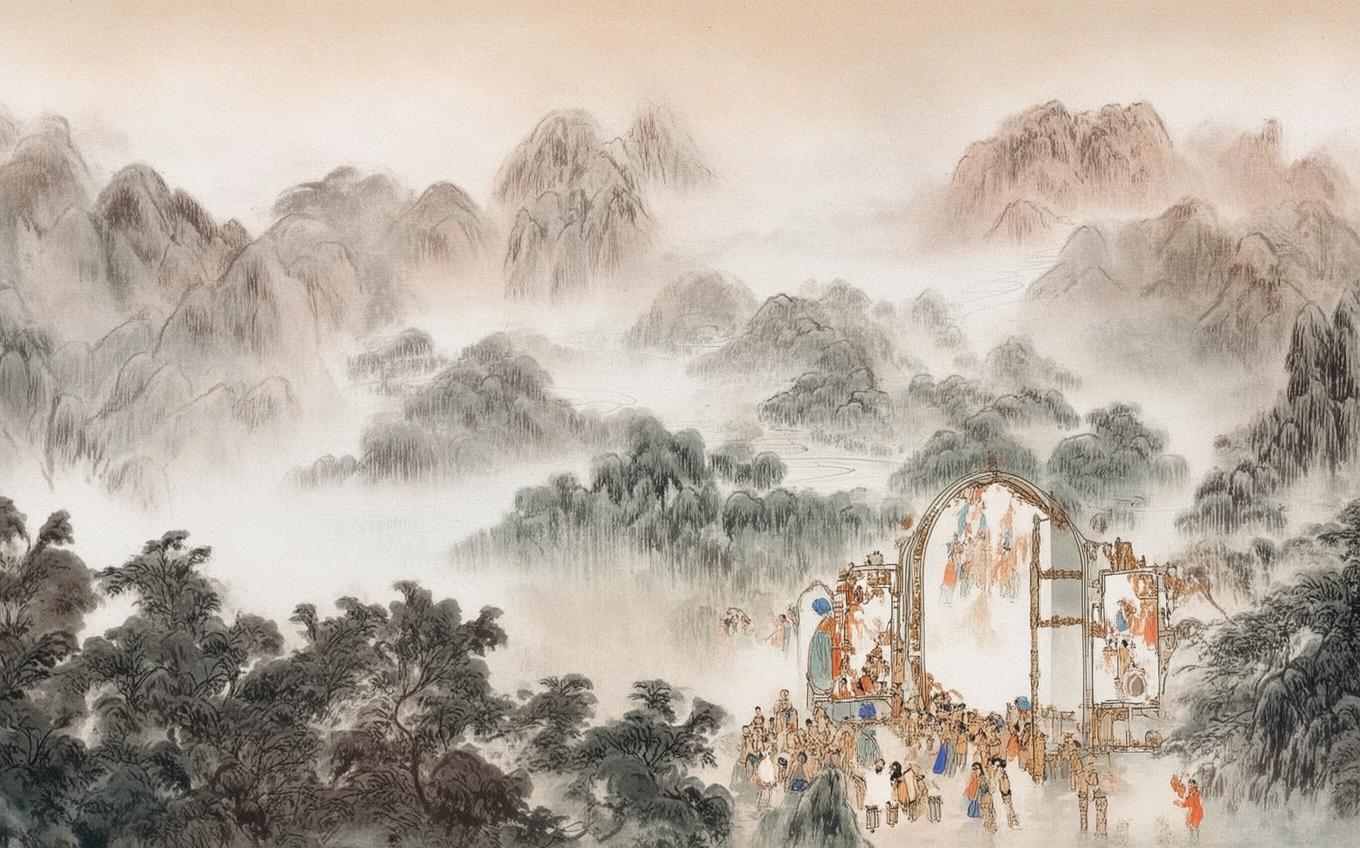
Emperor Xuanzong of Tang (唐玄宗, ruling 712–756) is remembered as a towering figure of China’s golden age, a ruler whose passion for the arts, poetry, and grand court rituals shaped much of what we now cherish as Tang culture. Among his many contributions is a delicate quatrain-turned-octet, "千秋节赐群臣镜" ("Bestowing Mirrors to Officials at the Thousand Autumns Festival"). The poem was composed for the Qianqiu Festival (千秋节) — literally “Thousand Autumns Festival” — which Xuanzong established in 729 to celebrate his own birthday on the fifth day of the eighth lunar month. On this day, it became customary for the emperor to gift exquisitely crafted bronze mirrors to his ministers, a gesture laden with political symbolism and personal sentiment. This poem, written from the emperor’s own brush, transforms a simple act of gift-giving into a meditation on clarity, moral integrity, and the sacred bond between ruler and subject. It remains a luminous piece of imperial poetry, offering both a window into Tang courtly life and a timeless reflection on inner purity.
The Poem: Full Text and Translation
铸得千秋镜,
Zhù dé qiān qiū jìng,
Cast this Mirror of a Thousand Autumns,
光生百炼金。
Guāng shēng bǎi liàn jīn.
Its light born from gold refined a hundred times.
分将赐群后,
Fēn jiāng cì qún hòu,
To distribute and bestow upon all the nobles,
遇象见清心。
Yù xiàng jiàn qīng xīn.
Encountering its image, one sees a clear heart.
台上冰华澈,
Tái shàng bīng huá chè,
On the terrace, icy radiance shines transparently;
窗中月影临。
Chuāng zhōng yuè yǐng lín.
Within the window, the moon’s shadow draws near.
更衔长绶带,
Gèng xián cháng shòu dài,
Moreover, it is adorned with a long silk ribbon,
留意感人深。
Liú yì gǎn rén shēn.
Its lingering significance touches one profoundly.
Line-by-Line Analysis
The poem opens with an act of creation: “鑄得千秋鏡,光生百煉金.” The mirror is not a mere object but a labor of profound intent — “cast” like a sacred vessel, its very name echoing the festival, linking mortal time with the wish for a reign of “a thousand autumns.” The light that springs from “gold refined a hundred times” suggests both material brilliance and moral purification. In Chinese literary tradition, gold refined through repeated smelting symbolizes a character tested and perfected; here the emperor implies that the mirror, and by extension the giver and receiver, should embody this unblemished quality.
The second couplet moves from object to purpose: “分將賜群后,遇象見清心.” The mirror is distributed to “the nobles” — all the high officials — democratizing a token of imperial favor. The pivotal phrase “遇象” (encountering its image) plays on the mirror’s function: when one gazes into it, the physical reflection reveals not just a face but a “clear heart” (qingxin). This echoes the ancient ideal of the mirror as a tool for self-examination, a belief that a truly upright person can look into a mirror without shame. In a political sense, Xuanzong is calling on his ministers to remain transparent and loyal, to let their inner purity shine back at him as the mirror’s light does.
The third couplet shifts to a lyrical, almost cinematic tableau: “臺上冰華澈,窗中月影臨.” The mirror now appears on a high terrace, its surface gleaming with the crystalline quality of ice — a metaphor for absolute clarity. “Icy radiance” (冰華) evokes a penetrating, pure light that dispels all ambiguity. Then the scene shifts to a window, where the moon’s shadow enters. The mirror does not merely reflect; it invites the moon — a timeless symbol of constancy, reunion, and the distant beloved — into the intimate space of the hall. This subtle juxtaposition of celestial moon and man-made mirror suggests that the emperor’s grace, like the moon’s light, reaches everywhere, bridging distance and reinforcing a bond beyond the physical.
The final couplet grounds the ethereal in the tactile: “更銜長綬帶,留意感人深.” The addition of a long silk ribbon, a common ornament for Tang mirrors, is a stroke of humane detail. The ribbon (绶带) is both decorative and functional, allowing the mirror to be held or hung, but it also symbolizes a connection — a “lingering” thread of care. The phrase “留意” can be read as the mindful regard of the giver, a sentiment so deeply ingrained in the gift that it “touches one profoundly.” This closing line personalizes the entire ritual, transforming political theater into a moment of genuine emotional resonance.
Themes and Symbolism
The poem weaves together several central themes. Moral clarity and self-reflection dominate the imagery: the mirror’s light, the refined gold, the transparent ice — all point to the Confucian virtue of rectitude and the Daoist pursuit of a mind as unclouded as a still pool. The mirror becomes a metaphor for the ideal minister’s heart, which should have nothing to hide. The ruler-minister bond is enacted through the ceremonial bestowal; the gift is both an honor and a mild admonition to cultivate inner purity. Timelessness and legacy resonate in the poem’s title and the mirror’s name — “Thousand Autumns” is a wish for the dynasty’s permanence, but also a reminder that wise governance, like a polished mirror, outlasts any single reign.
Key symbols include:
- The mirror (镜): not merely a reflective surface but a ritual object that reveals truth, dispels evil, and embodies cosmic clarity. During the Tang, mirrors were believed to possess apotropaic power and were associated with the full moon.
- Gold refined a hundred times (百炼金): a common literary trope for tested virtue, suggesting that only through rigorous cultivation can one achieve genuine brilliance.
- Ice and moon: both are associated with purity, detachment, and luminosity; their presence here reinforces the ideal of cool, dispassionate wisdom that a ruler hopes to see in his officials.
- The silk ribbon (绶带): symbolizes official rank but also the soft, enduring ties of loyalty and affection.
Cultural Context
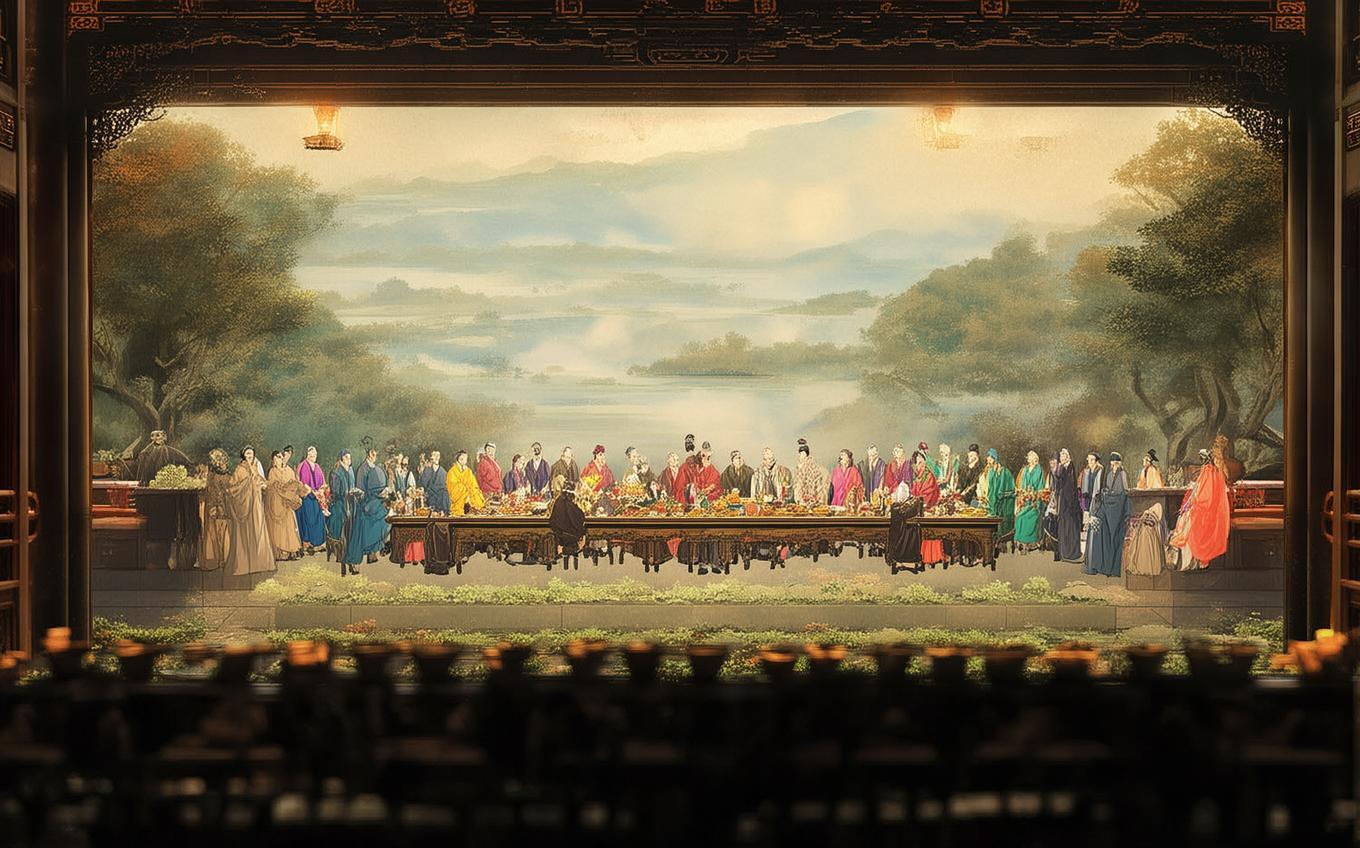
The Thousand Autumns Festival emerged as the grandest annual celebration of Xuanzong’s reign, complete with feasts, music, and the exchange of gifts. Mirrors given on this day were called “qianqiu jing” (千秋镜, “thousand-autumn mirrors”), cast by imperial workshops and often inscribed with poetic couplets. This practice was deeply rooted in Chinese mirror culture — mirrors were not only daily objects but also spiritual talismans used in Daoist rituals and as symbols of matrimonial harmony. By composing this poem personally and attaching it to the gift, Xuanzong performed an idealized version of rulership: he was at once the fountain of grace, the moral exemplar, and a man of deep feeling. The poem reflects the Tang fusion of literary refinement with political philosophy, where even a simple gesture of gift-giving could be elevated to an art form that reinforced Confucian hierarchy and mutual obligation.
Conclusion
“千秋节赐群臣镜” is a jewel of courtly verse — compact, luminous, and emotionally layered. It captures a fleeting moment of imperial largesse and makes it resonate across centuries. The poem’s beauty lies in its ability to blend the physical splendor of a Tang mirror with the intangible light of moral integrity, all while holding a quiet, personal tenderness at its core. For modern readers, it is a reminder that the best gifts carry a message, and that true clarity — whether of a mirror, a heart, or a nation — is the product of continuous refinement and sincere care. In the polished surface of this ancient poem, we still glimpse a ruler’s hope that his reign, like his mirror, might reflect a thousand autumns of light.

Comments (0)
No comments yet. Be the first to comment!