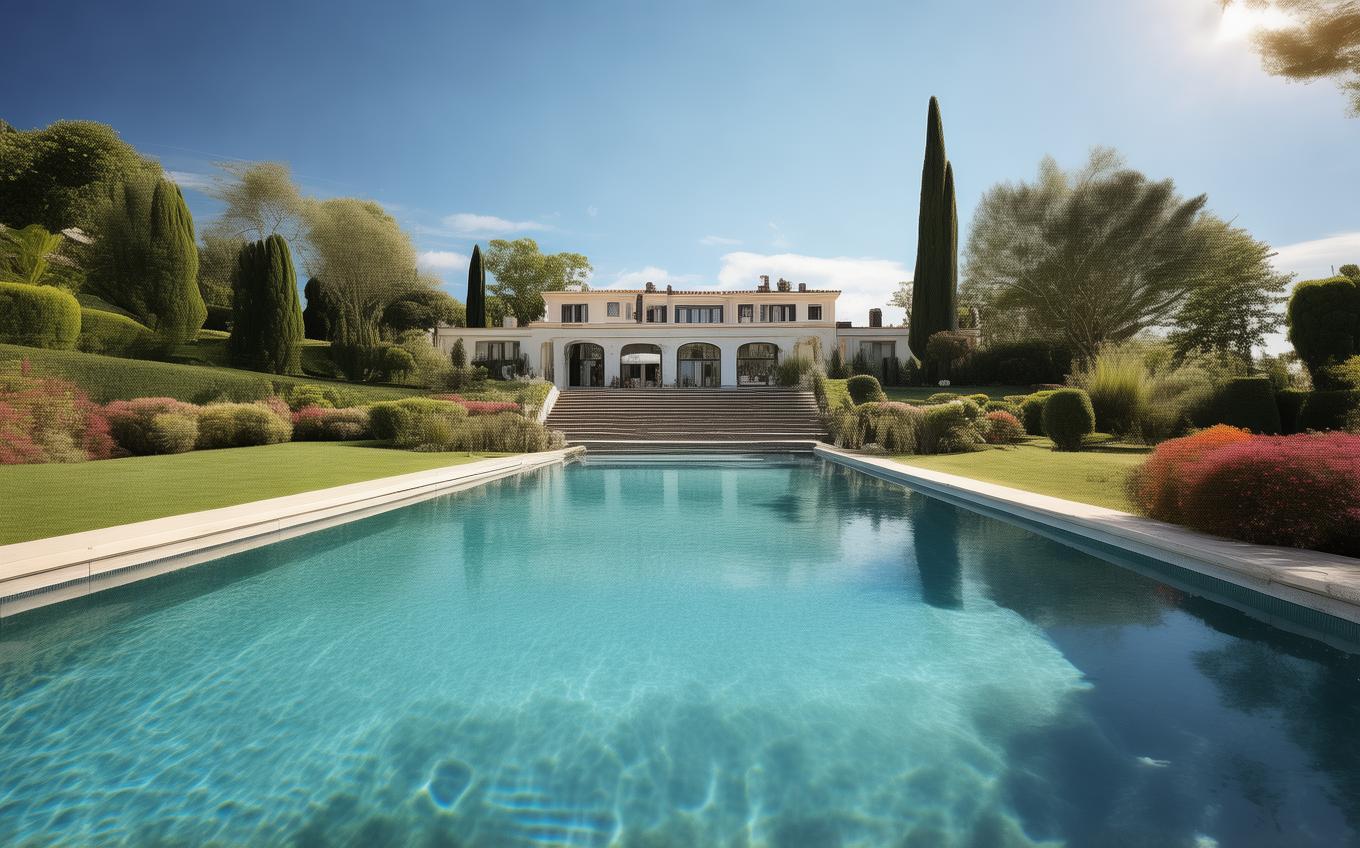
Understanding "别墅" - Chinese Word Explanation
1. Basic Information
- Word: 别墅
- Pinyin: bié shù
- Literal Meaning: "separate residence" or "other dwelling"
- Primary Meaning: villa; a large, often luxurious, detached house, typically in a suburban or countryside setting
2. In-depth Explanation
-
Context and Usage:
别墅 is used to describe a standalone house that is usually spacious and high-end, often surrounded by a garden or yard. It implies a level of affluence and privacy, distinct from an apartment (公寓, gōng yù) or a regular urban house. In modern Chinese, it commonly refers to Western-style villas, holiday homes, or upscale houses in gated communities. You can use it to talk about owning, renting, or visiting such a property. It’s a noun and can be combined with measure words like 栋 (dòng) for buildings or 座 (zuò) for large structures.
Nuance: While the English "villa" might sometimes refer to a holiday home, 别墅 in Chinese can be a primary residence as well – it focuses more on the architectural style and standalone nature than on temporary use. -
Character Breakdown:
- 别 (bié): This character has several meanings, including "other," "separate," "don't," or "to differentiate." Here, it suggests something apart or distinct, hinting at the house being set apart from others.
- 墅 (shù): This character specifically means "villa" or "country house." It is rarely used alone in modern Chinese; it almost always appears in the compound 别墅. The original sense is a dwelling outside the city.
Together, they perfectly capture the idea of an exclusive, detached residence away from dense urban areas.
3. Example Sentences
-
Chinese: 他在郊区买了一栋漂亮的别墅。
Pinyin: Tā zài jiāoqū mǎi le yī dòng piàoliang de biéshù.
English: He bought a beautiful villa in the suburbs. -
Chinese: 周末我们打算去朋友的别墅度假。
Pinyin: Zhōumò wǒmen dǎsuàn qù péngyou de biéshù dùjià.
English: This weekend we plan to go to a friend's villa for a vacation. -
Chinese: 这栋别墅有私人游泳池和花园。
Pinyin: Zhè dòng biéshù yǒu sīrén yóuyǒngchí hé huāyuán.
English: This villa has a private swimming pool and garden.
Cultural Notes
In China, 别墅 evokes images of luxury and status. With rapid urbanization, many wealthy individuals purchase villas in upscale gated communities on city outskirts, often blending Chinese and Western architectural elements. Villas are also popular as rural tourism accommodations (农家乐升级版), where city dwellers escape for a quiet retreat. Interestingly, historic villas in China’s former treaty ports (like Shanghai’s old French Concession) are protected heritage buildings, sometimes called 老洋房 (lǎo yáng fáng, old foreign-style houses), which carry cultural significance beyond just luxury living.
Conclusion
Remember 别墅 as the Chinese equivalent of a posh, detached house – "separate (别) villa (墅)". Whether it's a modern mansion or a cozy countryside getaway, this word captures the idea of space, privacy, and comfort. Use it next time you describe your dream home or a holiday rental.
Sources and Further Reading
Dictionary links are provided for independent reference. Example sentences and learning notes on this page are educational explanations rather than dictionary quotations.



Comments (0)
No comments yet. Be the first to comment!