Introduction
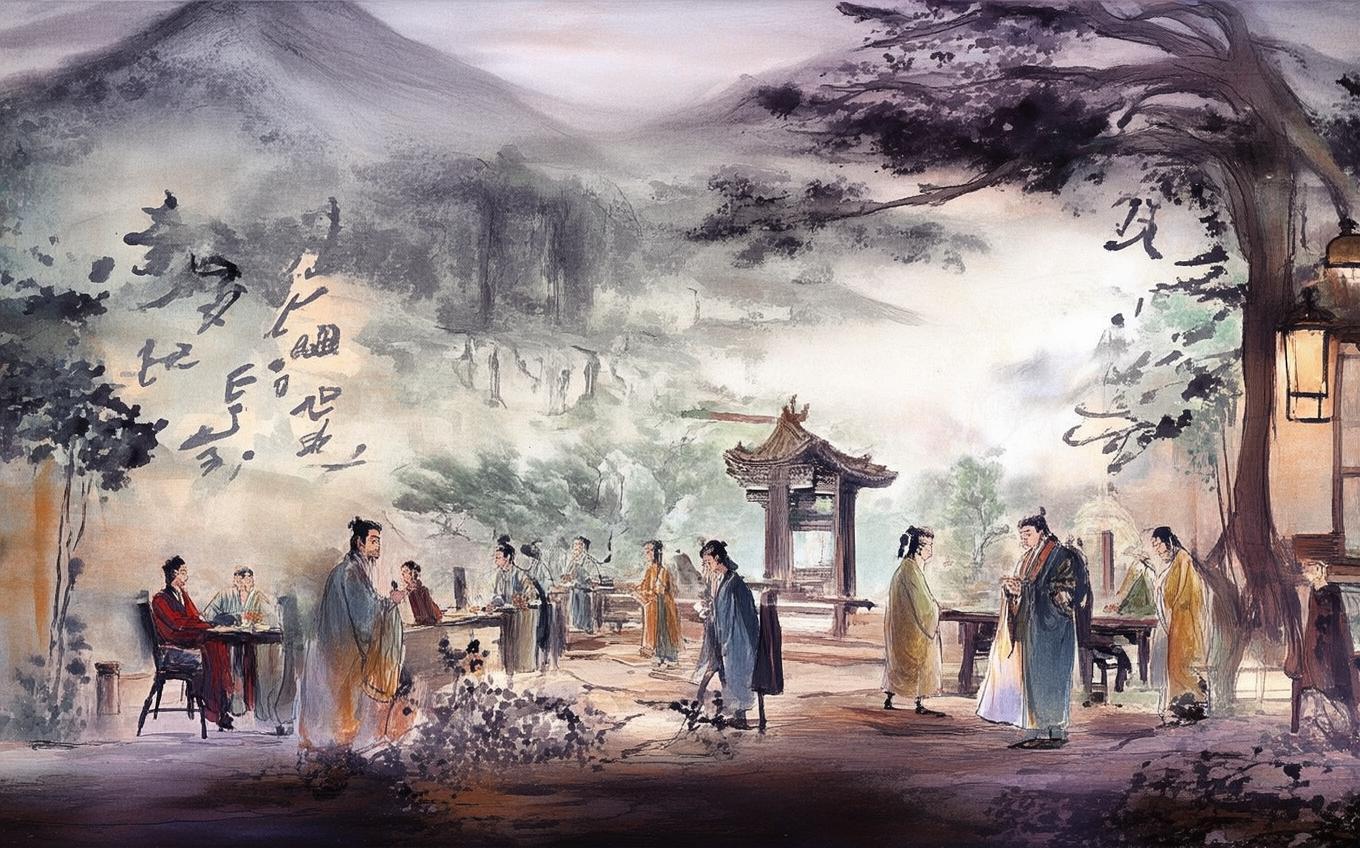
The poem "Zhōng Hé Jié Rì Yàn Bǎi Liáo Cì Shī" (中和节日宴百僚赐诗, "Composed on the Zhonghe Festival Banquet and Bestowed upon the Hundred Officials") is a rare example of imperial poetry written by Emperor Dezong of Tang (Tang Dezong, 唐德宗, personal name Li Shi, 李适, r. 779–805). It was composed for the Zhonghe Festival (中和节), a holiday that Dezong himself formally established in 789 CE on the second day of the second lunar month. Falling in early spring, this festival was intended to celebrate harmony between heaven and earth, encourage agricultural diligence, and strengthen the bond between the ruler and his subjects. The poem, presented during a grand banquet, not only reflects the festive spirit but also reveals the emperor’s self-conscious role as a moral exemplar. For readers of Chinese literature, this work offers a fascinating window into Tang court culture, Confucian statecraft, and the poetic voice of a ruler addressing his ministers.
The Poem: Full Text and Translation
韶年启仲序,初吉谐良辰。
Sháo nián qǐ zhòng xù, chū jí xié liáng chén.
A splendid year opens the mid-season sequence; the first auspicious day harmonizes with the fine morning.
肇兹中和节,式庆天地春。
Zhào zī zhōng hé jié, shì qìng tiān dì chūn.
We initiate this Zhonghe Festival, to celebrate the spring of heaven and earth in due form.
欢酣朝野同,生德区宇均。
Huān hān cháo yě tóng, shēng dé qū yǔ jūn.
Joy and merriment are shared by court and countryside; the life-giving virtue spreads evenly throughout the realm.
云开洒膏露,草疏芳河津。
Yún kāi sǎ gāo lù, cǎo shū fāng hé jīn.
Clouds part and sprinkle nourishing dew; sparse grasses scent the river fords with fragrance.
岁华今载阳,东作方肆勤。
Suì huá jīn zài yáng, dōng zuò fāng sì qín.
The year’s splendor now radiates warmth; the eastern labors of spring just begin their diligent work.
惭非熏风唱,曷用慰吾人。
Cán fēi xūn fēng chàng, hé yòng wèi wú rén.
Ashamed I am no singer of the perfumed breeze; how then may I comfort my people?
Line-by-Line Analysis
Lines 1–2: Opening the Festival Time
The poem begins by marking the calendar: “韶年” (sháo nián, splendid year) signals the arrival of a vibrant spring. “仲序” refers to the middle month of spring — the second month in the lunar calendar — grounding the festival in cosmic time. “初吉” (first auspiciousness) is an archaism from bronze inscriptions used here to emphasize the ritual purity of the day. By pairing “harmony” (xié) with “fine morning” (liáng chén), Dezong links human ceremony to the perfection of the natural world, a classic Confucian gesture.
Lines 3–4: Establishing the Festival’s Meaning
The emperor explicitly names the newly decreed Zhonghe Festival. “肇兹” (zhào zī, we initiate this) carries the authority of the throne; the festival is a deliberate royal creation. “式庆天地春” — “to celebrate in due form the spring of heaven and earth” — reveals the ritual purpose: the banquet is not mere entertainment but a state sacrifice in spirit, honoring the rebirth of tiāndì (heaven and earth) as the source of all life. The symmetrical couplet balances institutional action with cosmic resonance.
Lines 5–6: Harmony Between Ruler and People
“朝野同” — court and countryside share the joy — is a key political statement. A good emperor ensures that happiness is not confined to the palace. “生德区宇均” extends the imagery: the life-nurturing power of the season, and by implication of the sovereign, is distributed equally across the empire. The word “德” (dé, virtue) here conflates natural vitality with moral governance; it is as though spring itself is a manifestation of royal benevolence.
Lines 7–8: Spring Landscape as Royal Grace
These lines shift into pure nature imagery, but still encoded with political metaphor. “膏露” (gāo lù, rich dew) is an ancient phrase for heaven-sent blessings — in the Book of Documents, sweet dew portends a sage ruler. Clouds parting to scatter dew suggest that imperial virtue clears away obstruction and fertilizes the land. “草疏芳河津” paints a scene of tender grasses growing sparsely along river crossings, releasing fragrance. The freshness of early spring mirrors the fresh start the emperor wishes for his reign.
Lines 9–10: The Agricultural Imperative
“岁华今载阳” — the year’s glory is now full of warmth — echoes the Classic of Poetry where “载阳” refers to the sun’s growing strength. Then Dezong turns to human labor: “东作” (dōng zuò, the eastern works) is a classical term for spring plowing, as the east is the direction of spring. “方肆勤” means now they are earnestly applying themselves. The emperor subtly reminds his officials that the real celebration is in the work of the people; the banquet honors their toil.
Lines 11–12: Imperial Humility and Concern
The closing couplet is the most personal. “熏风” (xūn fēng, perfumed breeze) is an allusion to a legendary song of the sage-king Shun, the South Wind Song, whose gentle breeze relieved the people’s sufferings. Dezong confesses, “惭愧 — I am ashamed I am no singer of such a breeze,” meaning he feels unworthy to claim the same sagehood. “曷用慰吾人” — how then can I comfort my people? — ends on a note of anxious responsibility. This rhetorical self-deprecation was a conventional virtue signal for emperors, yet here it feels genuine, colored by Dezong’s well-known struggles with rebellions and fiscal crisis. The poem that began with cosmic harmony closes with a ruler’s lonely awareness of his own insufficiency.
Themes and Symbolism
Harmony (和, Hé)
The very name of the festival — Zhonghe, Central Harmony — encapsulates the poem’s core theme. Harmony between heaven and earth, between court and countryside, between the seasons and human work. The banquet becomes a microcosm of the ideal state, where every element finds its place and contributes to the common good.
Sovereign Virtue and Agricultural Nourishment
Spring dew, sprouting grass, warming sun: all natural images are metaphors for the emperor’s nourishing dé. In Confucian political theology, the ruler is the pivot between heaven and the people. If his virtue is pure, nature responds with timely weather and abundant harvests. This poem enacts that belief, celebrating a year that seems to confirm the emperor’s right to rule.
Imperial Humility
Dezong’s final self-doubt is a topos of classical Chinese poetry: the “recluse’s embarrassment” transposed to the throne. By measuring himself against Shun, the paragon of sage-kings, he displays modesty but also imposes on his officials the duty to help him live up to that model. The poem, while a gift, is also a gentle plea for loyalty and cooperation.
Cultural Context
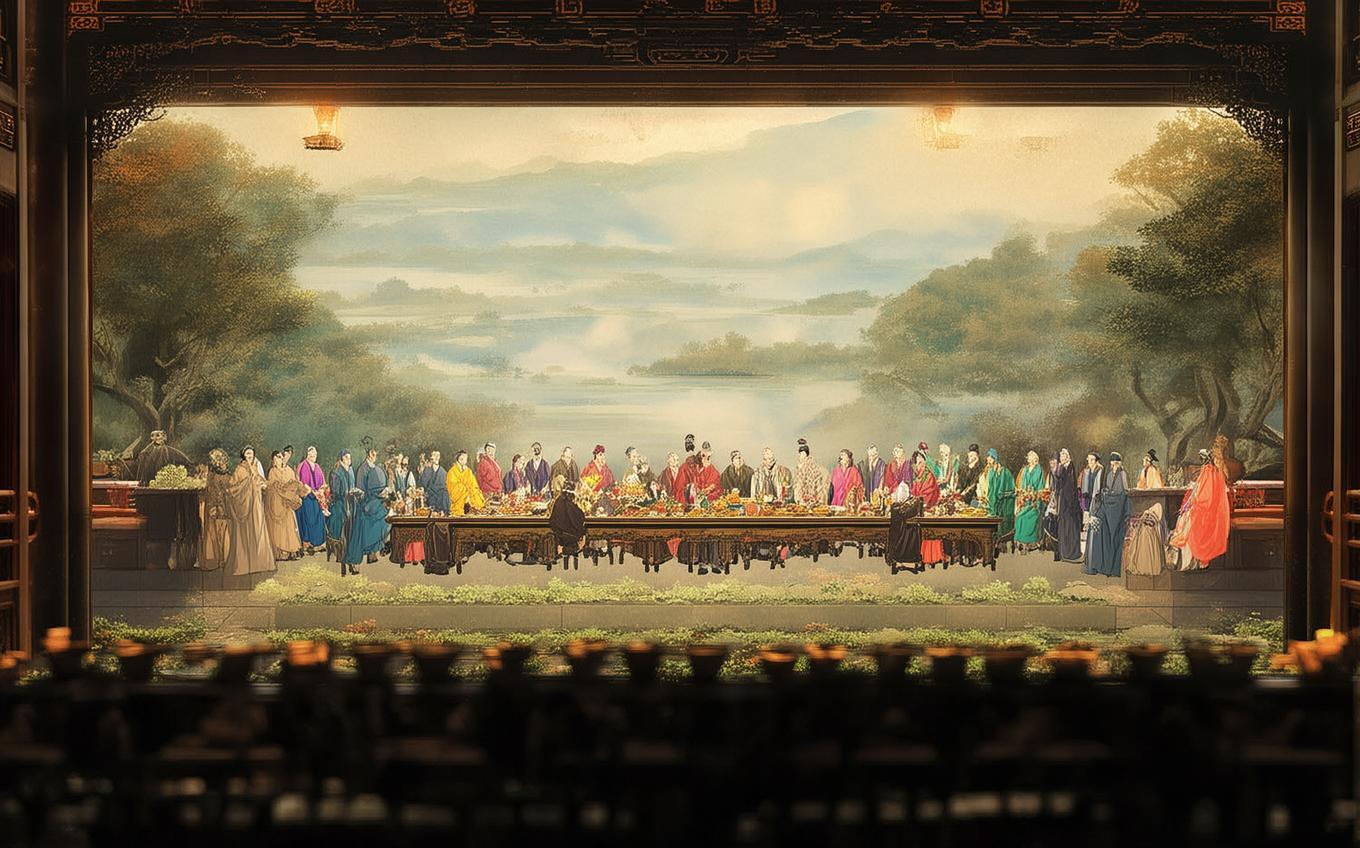
The Zhonghe Festival was one of the “Three Harmonious Festivals” of the Tang, alongside the Shangsi (3rd day of the 3rd month) and Chongyang (9th day of the 9th month). Emperor Dezong established it in 789 after his minister Li Bi proposed a spring holiday to balance the autumnal Chongyang. On this day, officials received gifts of ruler’s measures or seeds, symbolizing the emperor’s trust and the importance of agriculture. The court held banquets, composed poems, and the emperor often bestowed his own verses — a practice that reinforced the image of a cultured, Confucian monarch.
Dezong’s reign was turbulent: the An Lushan Rebellion had shattered Tang power decades earlier, and Dezong himself fled the capital during a military mutiny in 783. By the time he wrote this poem (likely around 790, when the festival was well established), he was eager to project stability, ritual order, and a return to the golden age of sage-kings. The poem’s careful classical allusions — to the Book of Documents, the Classic of Poetry, and the myth of Shun — were meant to place Dezong in an unbroken lineage of virtuous rulers.
For English readers, the poem also shows how deeply poetry was woven into political life in medieval China. A modern head of state might give a speech; a Tang emperor gave a poem. The literate elite would recognize every reference and assess the ruler’s moral fiber by the sincerity of his verses.
Conclusion
“中和节日宴百僚赐诗” is more than a festive occasional poem. It is a compact manifesto of imperial ideology, expressed in the gentle cadences of early spring. Emperor Dezong conjures a world where heaven, earth, and human society move in seamless concert — a world that, as his closing lines admit, requires constant moral effort to sustain. For contemporary readers, the poem’s appeal lies not only in its elegant nature imagery but also in its glimpse of a ruler who, even at the height of power, felt the weight of responsibility toward his people. As we read it today, we might hear in Dezong’s humble question an echo of a timeless truth: that true leadership is less about command than about service, less about celebration than about compassion.
Comments (0)
No comments yet. Be the first to comment!