Introduction
Welcome to a journey into the refined world of Tang dynasty court poetry. Today we explore a poem by Li Shimin (李世民), better known to history as Emperor Taizong of Tang (唐太宗, reigned 626–649). A masterful ruler whose reign ushered in a golden age, Taizong was also an accomplished poet who frequently composed verses for his officials. The title, 九月十八赐百僚追赏因书所怀 (On the Eighteenth Day of the Ninth Month, Bestowing Upon the Hundred Officials a Retrospective Appreciation, Therefore Writing What Is in My Heart), captures a moment of imperial leisure: the emperor, surrounded by his ministers, reflects on the beauty of an autumn day and the transient joys of life. This poem not only showcases the elegance of classical Chinese verse but also offers a rare glimpse into the mind of a monarch who valued culture, nature, and a shared sense of harmony with his court.
The Poem: Full Text and Translation
爽气澄兰沼
shuǎng qì chéng lán zhǎo
The invigorating air clears the orchid-lined pond,
清风动桂林
qīng fēng dòng guì lín
A pure wind stirs the osmanthus grove.
露凝千片玉
lù níng qiān piàn yù
Dewdrops crystallize into a thousand flakes of jade,
菊散一丛金
jú sàn yī cóng jīn
Chrysanthemums scatter a cluster of gold.
日岫高低影
rì xiù gāo dī yǐng
Sunlit mountain peaks cast shadows high and low,
云空点缀阴
yún kōng diǎn zhuì yīn
Clouds in the sky embroider patches of shade.
蓬瀛不可望
péng yíng bù kě wàng
Penglai and Yingzhou cannot be glimpsed,
泉石且娱心
quán shí qiě yú xīn
So let springs and rocks delight the heart for now.
Line-by-Line Analysis
Couplet 1: Refreshing autumn air over water and trees
The opening sets the scene with immediate sensory clarity. “爽气” (shuǎng qì, invigorating air) describes that crisp, clean atmosphere unique to autumn—a breath that seems to purify the landscape. The verb “澄” (chéng, to clear or make limpid) acts upon the “兰沼” (lán zhǎo, orchid-rimmed pond), a classical image of refinement. Orchids symbolize moral integrity and elegance, so the pond becomes a mirror of the emperor’s cultivated court. The second line extends this freshness: “清风” (qīng fēng, pure wind) moves through a grove of osmanthus trees, whose blossoms are celebrated for their subtle fragrance and are often associated with literary achievement and nobility. Together, the couplet evokes a world of orderly, fragrant beauty—a perfect setting for imperial leisure.
Couplet 2: Dew and chrysanthemums as gems and gold
Nature transforms into treasure before our eyes. Dewdrops, touched by the morning sun, solidify into “千片玉” (qiān piàn yù, a thousand flakes of jade). Jade is the stone of emperors, connoting purity, permanence, and virtue; here it makes the ephemeral dew momentarily eternal and precious. Parallel to this, chrysanthemums, the paramount autumn flower, blaze forth in full bloom as “一丛金” (yī cóng jīn, a cluster of gold). Chrysanthemums symbolize longevity and the noble spirit that endures the coming winter. This couplet’s alchemy—dew to jade, flowers to gold—celebrates nature’s bounty while hinting at the fleeting quality of all beauty, a subtle Daoist undercurrent.
Couplet 3: Mountains and clouds in light and shadow
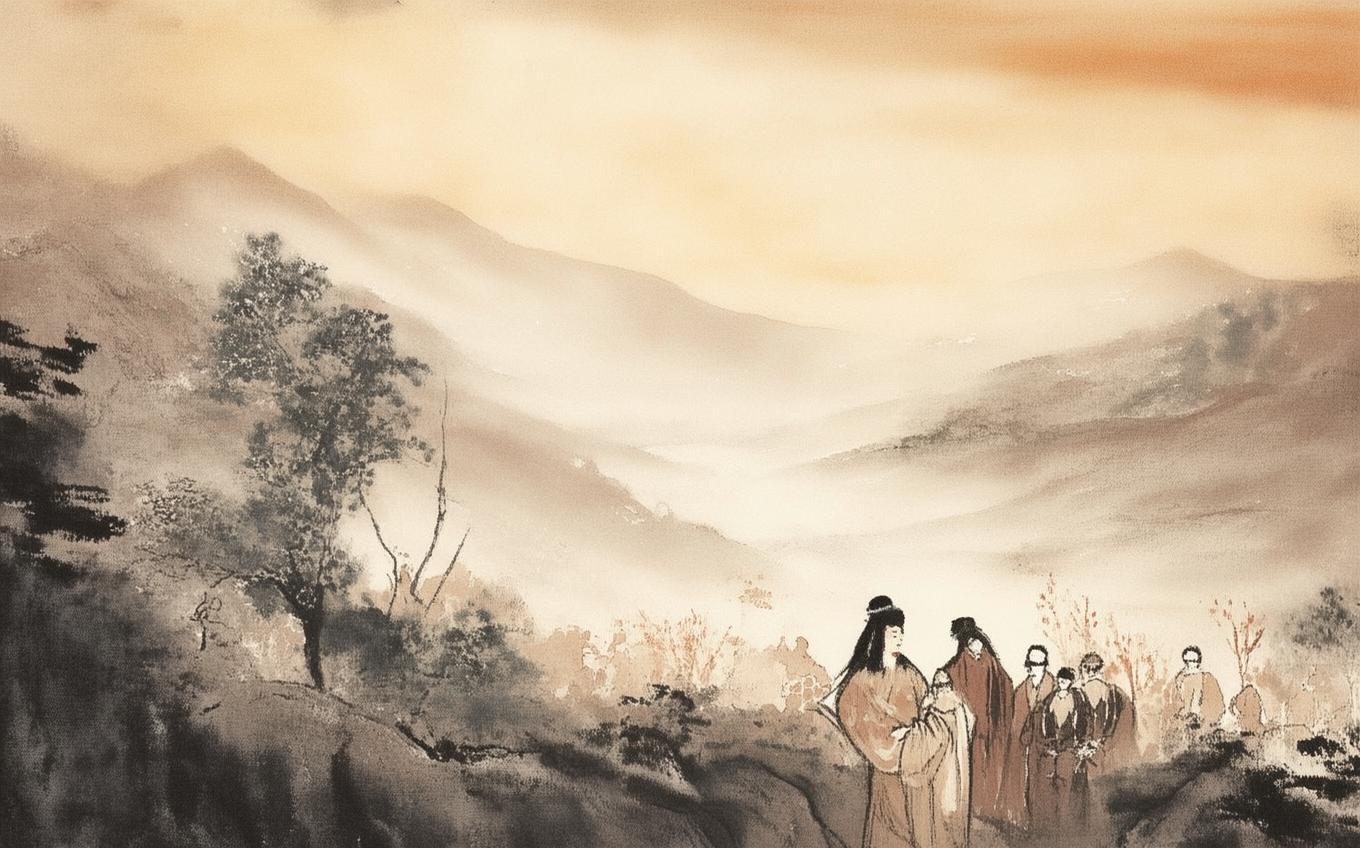
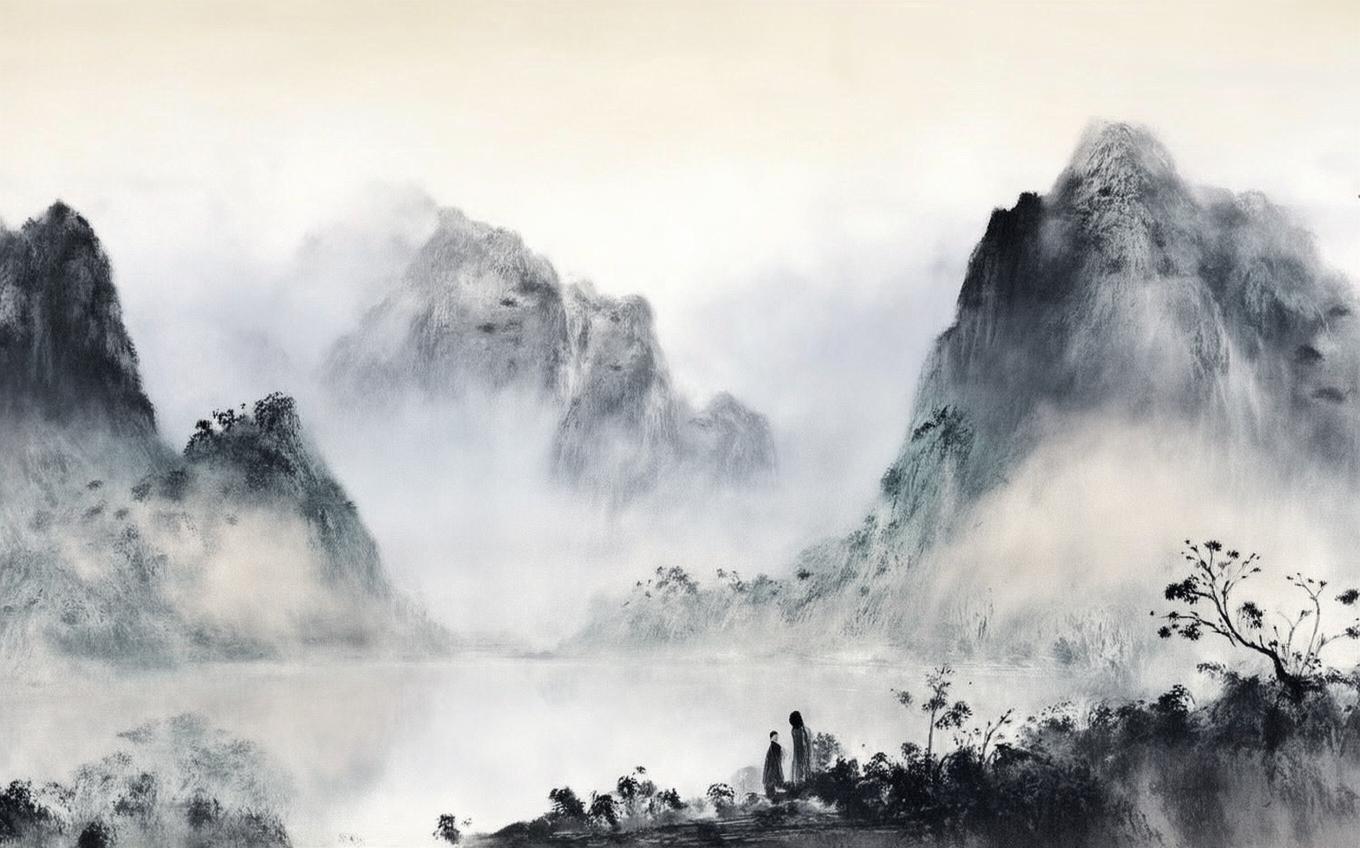
The gaze lifts from garden details to the grander landscape. “日岫” (rì xiù, sunlit mountain crags) generate “高低影” (gāo dī yǐng, shadows high and low), a play of light that gives depth and motion to a static scene. The mountain, a symbol of permanence and the emperor’s own lofty stature, is softened by shifting illumination. The second line introduces the sky: “云空点缀阴” (yún kōng diǎn zhuì yīn, clouds in the sky embroider patches of shade). The verb “点缀” (diǎn zhuì, to embellish or intersperse) is eloquent—clouds become decorations, weaving an ever-changing tapestry. This couplet reveals a keen eye for the aesthetics of yin and yang, light and shadow dancing in harmony.
Couplet 4: Longing for immortality and finding joy in the present
The final couplet pivots from description to reflection. “蓬瀛” (péng yíng) refers to Penglai and Yingzhou, two of the mythical islands where Daoist immortals dwell. For centuries, emperors had sought these fabled lands to obtain the elixir of life. Taizong, however, acknowledges their inaccessibility: “不可望” (bù kě wàng, cannot be hoped for or glimpsed). Instead of yearning for the impossible, he turns to what is at hand: “泉石” (quán shí, springs and rocks), the simple, tangible elements of a natural landscape. “且娱心” (qiě yú xīn, for now delight the heart) is both an acceptance and a gentle command—to find pleasure in the present moment, in the company of ministers amid autumn’s splendor. It is a philosophical nod to Daoist contentment and Buddhist mindfulness, perfectly suited to an emperor who ruled with pragmatic wisdom.
Themes and Symbolism
The Impermanence of Beauty and the Embrace of the Present
The entire poem pulses with a quiet awareness that all loveliness is transient. Dew evaporates, petals fall, light shifts. Even the emperor cannot reach the immortal isles. Taizong’s answer is not despair but a deeper appreciation of the now—this breeze, this gold, this hour with his court. The closing line is the key: true joy comes from the ordinary gifts of nature, not from the unattainable.
Imperial Harmony with Nature and Court
The poem enacts a ritual of shared aesthetic experience. By composing and bestowing it upon his officials (赐百僚), Taizong draws his ministers into a communal moment of refined enjoyment. The landscape becomes a metaphor for a well-ordered empire: clear air suggesting moral clarity, osmanthus and orchids symbolizing virtuous officials, chrysanthemums representing loyal endurance. The emperor’s authority is naturalized, never heavy-handed.
Classical Allusions and Daoist Longing
The mention of Penglai and Yingzhou taps into a deep cultural vein. Since the First Emperor of Qin, monarchs had been captivated by the dream of immortality. Taizong’s renunciation of such vain pursuits marks him as a ruler of rare restraint. The “springs and rocks” (quán shí) echo the Chinese literati tradition of shanshui (山水, mountain-and-water) retreat, where reclusion offers spiritual nourishment. Even an emperor can cultivate a hermit’s heart.
Cultural Context
Li Shimin wrote this poem in the ninth month of the lunar calendar—deep autumn, a season rich with literary resonance. It follows closely after the Double Ninth Festival (九月九日, Chóngyáng Jié), a time for climbing heights, drinking chrysanthemum wine, and commemorating longevity. By gathering his “hundred officials” (bǎi liáo) on the eighteenth, the emperor extends the festive spirit into a more intimate court outing. Such occasions were common in the Tang: the imperial family would compose poetry with their ministers, each taking turns to rhyme or match the emperor’s original. This collaborative creativity reinforced social bonds and displayed the monarch’s cultural refinement.
Taizong’s dual identity as warrior and poet is notable. He secured the empire through military prowess but governed with a deep respect for literature, famously observing that “By using a bronze mirror, you can straighten your attire; by using the past as a mirror, you can know the rise and fall of dynasties.” His own poems, often understated and morally resonant, set a tone for courtly verse during the early Tang. The present poem perfectly embodies the era’s ideal: an outward gaze at nature yielding to inward philosophical calm.
Conclusion
九月十八赐百僚追赏因书所怀 is far more than a royal landscape sketch. It is an invitation—to Taizong’s original audience and to us—to pause, breathe, and find contentment in the world’s transient loveliness. The crispness of the air, the glitter of dew, the mottled shade of clouds: all are moments to be cherished, not because they will last, but precisely because they will not. In a time of global haste and distraction, this poem from the seventh century whispers a calm truth: paradise is not a distant myth, but the springs and rocks at your feet, if only you have the heart to see them.
Comments (0)
No comments yet. Be the first to comment!