Introduction
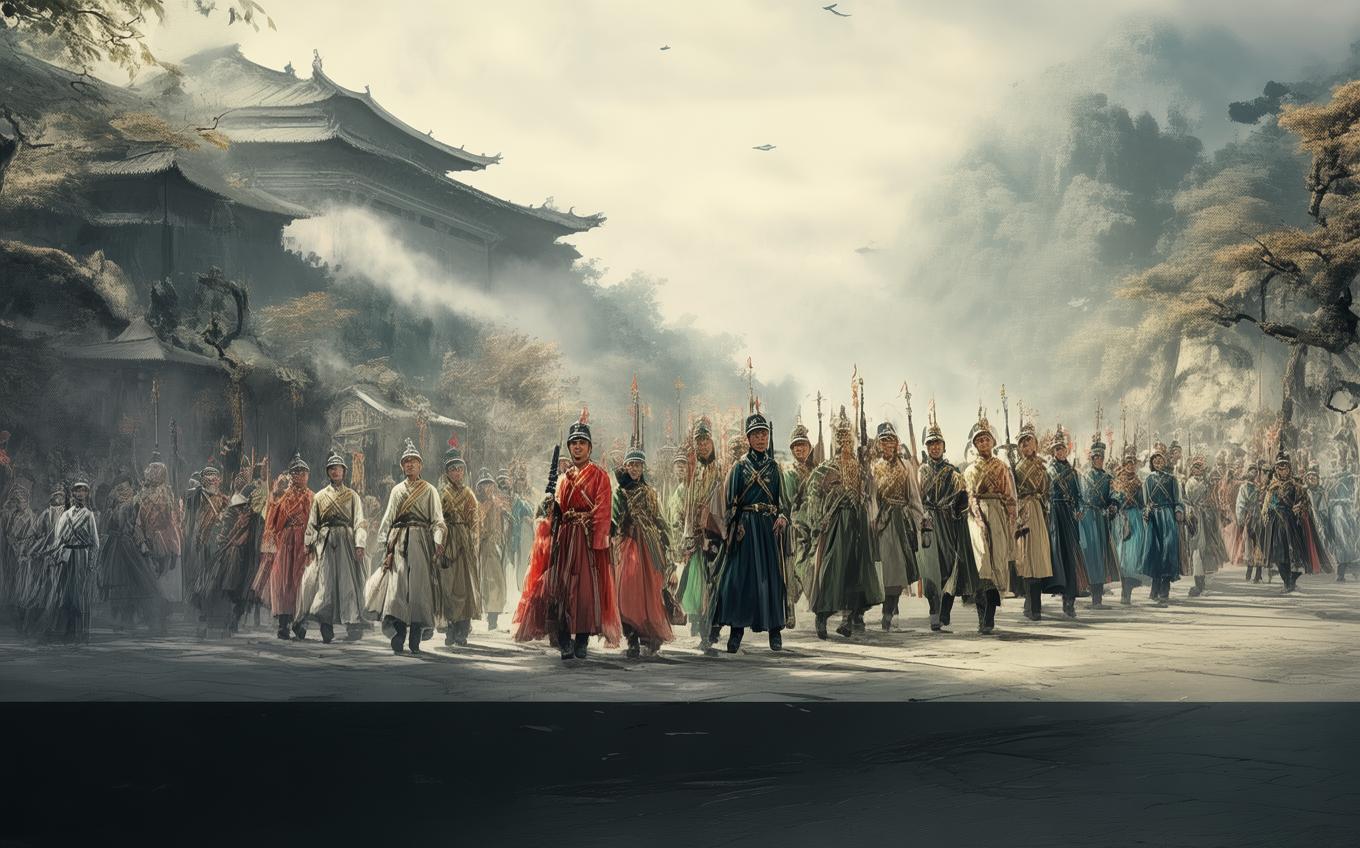
Composed by Li Shimin (李世民), better known as Emperor Taizong of Tang (唐太宗), the poem “元日退朝观军仗归营” (On New Year’s Day, After Court, Watching the Military Procession Return to Camp) offers a rare glimpse into the mind of one of China’s greatest rulers. Taizong reigned from 626 to 649 CE, a period often hailed as a golden age of imperial power, cultural flourishing, and military expansion. Unlike many monarchs who remained aloof from literary pursuits, Taizong was both a skilled warrior and a sensitive poet, and his verses frequently blend the gravity of statecraft with personal reflection. This poem stands as a vivid snapshot of the New Year’s Day court ceremony, where the emperor witnesses the disciplined return of his troops and ponders the weight—and surprising lightness—of ruling a vast empire. For English-speaking readers, it opens a window onto the aesthetics of Tang court poetry, the ritualized blending of civil and martial ideals, and the introspection of a conquering sovereign.
The Poem: Full Text and Translation
献岁视元朔,
xiàn suì shì yuán shuò,
I present the new year and gaze upon the primal dawn;
万方咸在庭。
wàn fāng xián zài tíng.
All the regions of the world are assembled in the court.
端旒揖群后,
duān liú yī qún hòu,
Wearing the ceremonial headdress, I bow to the assembled lords;
回辇阅师贞。
huí niǎn yuè shī zhēn.
I turn the imperial carriage to review the army’s loyalty and discipline.
彩仗列云陛,
cǎi zhàng liè yún bì,
Colorful regalia are arrayed along the cloud-high palace steps;
退朝归禁营。
tuì cháo guī jìn yíng.
Court dismissed, they return to the forbidden camp.
分行左右出,
fēn háng zuǒ yòu chū,
Dividing into columns, they march forth to left and right;
转旆风云生。
zhuǎn pèi fēng yún shēng.
As the banners turn, wind and clouds rise.
历览周王传,
lì lǎn Zhōu wáng zhuàn,
I peruse the biographies of the Zhou kings;
流观汉帝情。
liú guān Hàn dì qíng.
I drift through the sentiments of the Han emperors.
谁知百战胜,
shéi zhī bǎi zhàn shèng,
Who knows that after a hundred battles won,
更觉万方轻。
gèng jué wàn fāng qīng.
I feel even more the lightness of all under heaven.
Line-by-Line Analysis
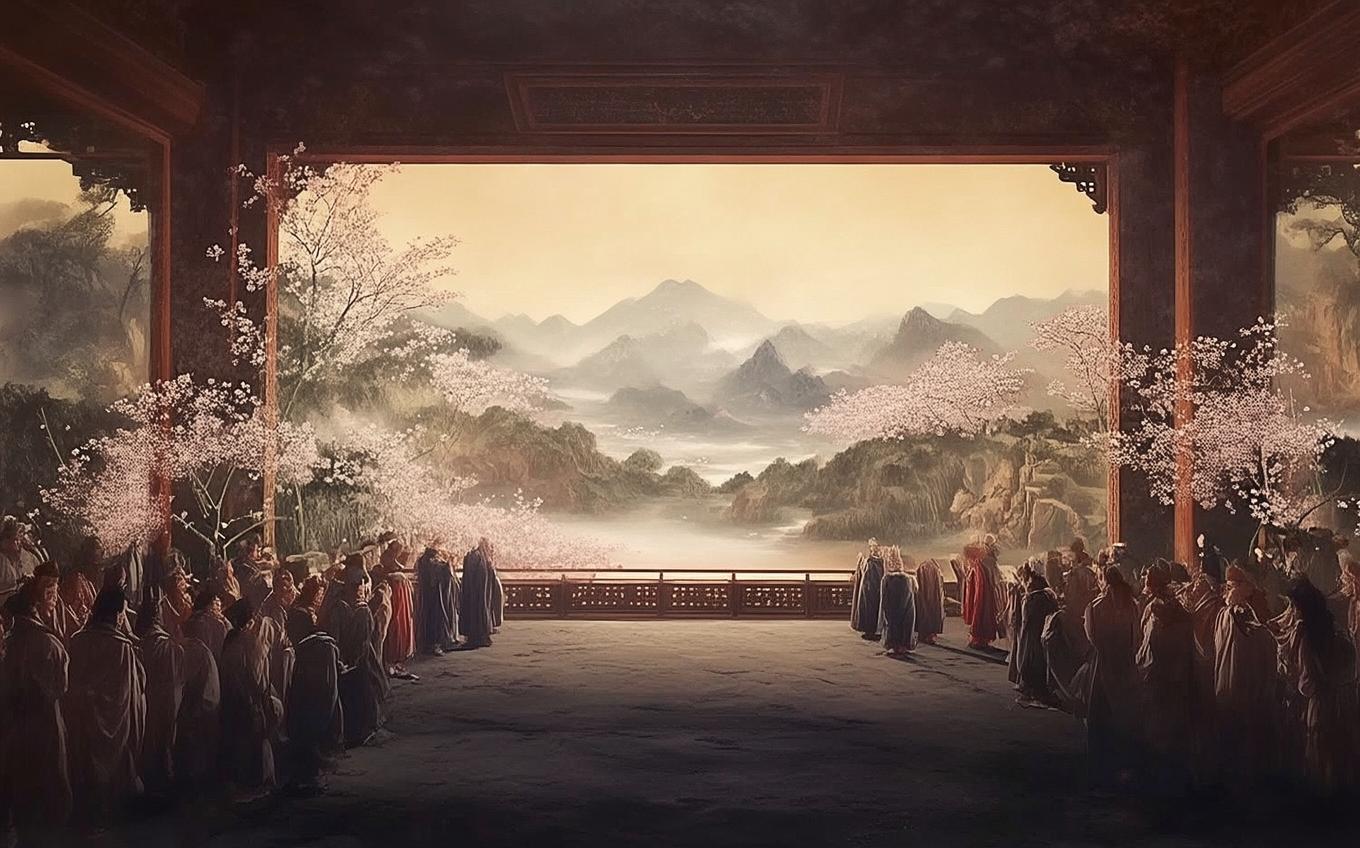
The poem opens with ritual and grandeur. “I present the new year and gaze upon the primal dawn” (xiàn suì shì yuán shuò) sets the poem on the first day of the lunar year, a moment charged with renewal. The phrase “primal dawn” (yuán shuò) suggests not just a morning but the very origin of time, as if the emperor stands at the beginning of a new cosmic cycle. The next line, “All the regions of the world are assembled in the court” (wàn fāng xián zài tíng), immediately expands the scene from personal gaze to universal presence. “All regions” (wàn fāng) implies not merely domestic provinces but foreign envoys and tribute-bearers, projecting Tang power across the
Comments (0)
No comments yet. Be the first to comment!