Analysis of "中和节赐群臣宴赋七韵" - Classical Chinese Poetry
Introduction
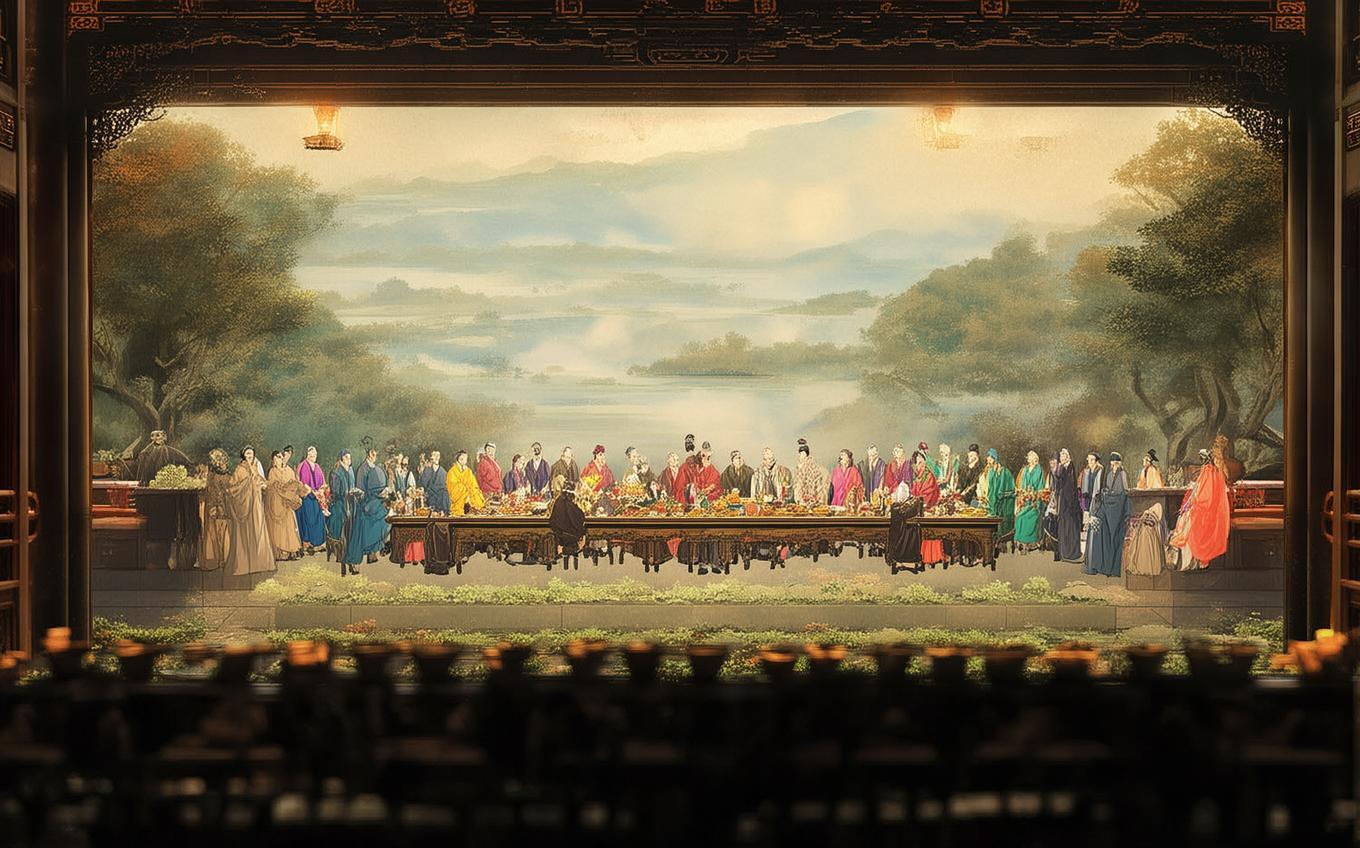
In the vast treasury of Tang Dynasty poetry, few pieces offer a more vivid glimpse into imperial court life than "中和节赐群臣宴赋七韵" (Zhōng Hé Jié Cì Qún Chén Yàn Fù Qī Yùn), composed by Emperor Dezong of Tang (r. 779–805 CE). The title translates to "Composing a Seven-Rhyme Poem at the Imperial Banquet Granted to Ministers on the Zhonghe Festival." Emperor Dezong, whose personal name was Li Shi, was not only a ruler but also a patron of literature and a poet in his own right. This poem was written to celebrate the Zhonghe Festival, a holiday he himself instituted in 789 CE to replace the obscure Cold Food Festival and to emphasize agricultural renewal and cosmic harmony. The work is a rare example of an emperor’s own voice in Chinese poetry, blending regal authority with personal warmth, and it stands as a testament to the Confucian ideal of a benevolent monarch cherishing his ministers.
The Poem: Full Text and Translation
东风变梅柳,万汇生春光。
Dōng fēng biàn méi liǔ, wàn huì shēng chūn guāng.
The east wind transforms plum and willow; all living things bring forth the light of spring.
中和纪月令,方与天地长。
Zhōng hé jì yuè lìng, fāng yǔ tiān dì cháng.
The Zhonghe Festival records the monthly ordinances, just as enduring as heaven and earth.
耽乐岂予尚,贤哉良股肱。
Dān lè qǐ yǔ shàng, xián zāi liáng gǔ gōng.
Indulgence in pleasure is not what I esteem; how worthy are my loyal right-hand men!
臣邻实良辅,弼予理八荒。
Chén lín shí liáng fǔ, bì yǔ lǐ bā huāng.
My close officials are truly excellent aids, assisting me to govern the farthest reaches.
朝野庆新节,欢娱极洋洋。
Cháo yě qìng xīn jié, huān yú jí yáng yáng.
The court and countryside celebrate the new festival, joy and merriment overflow in abundance.
日暮不遑息,为君尽余觞。
Rì mù bù huáng xī, wèi jūn jìn yú shāng.
At sunset there is no time for rest; for all you lords I drain the wine cups left.
庶同昆阳乐,还期永无疆。
Shù tóng kūn yáng lè, hái qī yǒng wú jiāng.
May we share the joy of Kunyang, and hope forever for a boundless reign.
Line-by-Line Analysis
The poem opens with a delicate natural image: 东风变梅柳,万汇生春光. The east wind is a classic harbinger of spring in Chinese poetry, associated with warmth and renewal. By saying it “transforms” plum and willow, the emperor paints a picture of branches sprouting new buds, symbolizing a fresh start. “All living things” (万汇) suggests the entire world coming alive, setting a tone of shared prosperity. This couplet not only describes the season but also hints at the emperor’s role as a life-giver, mirroring nature’s life-giving force.
The second couplet, 中和纪月令,方与天地长, directly references the new festival. “中和” (Zhonghe, meaning “central harmony”) is the festival’s name, chosen to echo the Confucian virtue of moderation. “纪月令” means it marks the monthly ordinances—a nod to ancient almanacs that guided agricultural and ritual activities. By linking the festival to the timeless patterns of heaven and earth, Emperor Dezong elevates this court occasion into a cosmic event, implying that the dynasty’s harmony will be equally eternal.
The tone then shifts from nature to personal sentiment. 耽乐岂予尚,贤哉良股肱 is a statement of imperial self-restraint. The emperor disavows mere pleasure-seeking, instead praising his ministers as “股肱” (legs and arms)—a metaphor for indispensable helpers. This display of humility, even if formulaic, was crucial in Confucian court culture: the ruler should value virtuous officials over personal enjoyment. The exclamation “贤哉” (how worthy!) adds warmth and sincerity.
The next line, 臣邻实良辅,弼予理八荒, reinforces this partnership. “臣邻” refers to the ministers closest to the throne. “八荒” (eight wildernesses) is a hyperbolic term for the entire empire, even the most distant barbarian regions. The emperor acknowledges that his governance depends on these able men, emphasizing a mutual bond of trust. It is a political message embedded in poetry—reassuring the audience of their importance.
The fifth couplet, 朝野庆新节,欢娱极洋洋, zooms out to a pan-imperial celebration. “朝野” (court and fields) unites all sectors of society: from the exalted officials to the common people. The reduplicated word “洋洋” (yáng yáng) vividly conveys an expansive, overflowing joy, like floodwaters of delight. This verse reinforces the image of a harmonious realm where a wise ruler’s innovations bring happiness to all.
In 日暮不遑息,为君尽余觞, the scene focuses on the banquet itself. The day is ending, yet nobody wants to rest; instead, the emperor personally toasts his guests and drains his cup for their sake. This act of drinking together was a powerful symbol of emotional bonding and social equality, at least for that moment. The phrase “为君” (for you, my lords) is intimate, breaking down barriers between ruler and subject.
The final couplet, 庶同昆阳乐,还期永无疆, caps the poem with a historical allusion and a wish. “昆阳乐” refers to the joy after the Battle of Kunyang (23 CE), a famous victory of the Han Dynasty over the usurper Wang Mang, which led to a restored and prosperous empire. Emperor Dezong expresses the hope that his own reign will see similar triumph and lasting peace. “永无疆” (boundless and eternal) is a conventional blessing for the dynasty, but here it feels earned—rooted in the shared happiness of the festival feast.
Themes and Symbolism
The primary theme of the poem is harmonious governance. The Zhonghe Festival itself symbolizes balance—between yin and yang, between ruler and minister, between human society and the cosmos. Nature imagery (east wind, spring light) reinforces renewal and the emperor’s part in it. The metaphor of ministers as “limbs” underscores interdependence, while the communal drinking and rejoicing highlight Confucian ideals of social cohesion.
Kunyang serves as a key symbol. It is more than a historical reference; it evokes the memory of a golden age when a virtuous ruler, with right-minded officials, overcame chaos. By yearning for “Kunyang joy,” Emperor Dezong aligns his Tang Dynasty with the glorious Han, projecting confidence and shared ambition.
The poem also quietly embodies the theme of imperial humility. Though the emperor is the Son of Heaven, he deflects praise toward his officials and frames his own role as one of grateful acknowledgment. This reflects the Confucian teaching that a ruler should rule by virtue, not force.
Cultural Context
The Zhonghe Festival (中和节) was created by Emperor Dezong in response to a memorial from his minister Li Bi. It fell on the first day of the second lunar month and was intended to promote agriculture, encourage harmony, and replace the older Cold Food Festival that had become too somber. The emperor ordered that on this day, officials present agricultural books, farmers receive gifts, and banquets be held to foster camaraderie. This poem was performed at such a banquet, likely accompanied by music and ritual toasts.
The poetic form—a seven-rhyme regulated poem (七韵) with fourteen lines—was typical of courtly compositions. Poetry was a serious social art in Tang times, used to share feelings, demonstrate learning, and cement alliances. That the emperor himself participated shows how deeply poetry was woven into statecraft. Furthermore, the poem’s allusions to ancient sages and Han victories served to legitimize the emperor’s rule and create a sense of continuity with China’s great past.
Conclusion
Emperor Dezong’s “中和节赐群臣宴赋七韵” is more than an occasional verse; it is a delicate piece of political theater cast in lyrical form. Through spring imagery, humble declarations, and joyful toasts, the emperor crafts a vision of a realm united under a benevolent sky. For modern readers, the poem opens a window into the rituals and values of Tang court life—where a shared cup of wine could symbolize the health of an entire empire. It remains a compelling reminder that great leadership, in any age, is often built on shared celebration and sincere respect for those who serve.
Comments (0)
No comments yet. Be the first to comment!