Introduction
Li Shen (李绅, 772–846 CE) was a prominent official and poet of the mid-Tang dynasty, best known to Chinese readers for his deeply empathetic Compassion for the Peasants (悯农) poems. Less familiar, but equally revealing, is his regulated verse “七月十五日题章敬寺” (Written at Zhangjing Temple on the Fifteenth Day of the Seventh Month). Composed during a visit to a famed Buddhist temple in the capital Chang’an, the poem captures a moment of autumnal stillness against the backdrop of the Ghost Festival (Zhongyuan Festival). It weaves together sensory impressions of a mountainside monastery with a subtle longing for reclusion, offering a window into the inner life of a scholar-official navigating the tension between state service and personal retreat. For English-speaking lovers of Chinese poetry, this poem is a gem that illustrates how landscape, sound, and season combine to evoke profound, unspoken feelings.
The Poem: Full Text and Translation
一刹古冈南
yī chà gǔ gāng nán
A temple stands south of an ancient ridge,
孤钟撼夕岚
gū zhōng hàn xī lán
A lonely bell stirs the evening mist.
闭门幽院静
bì mén yōu yuàn jìng
Behind closed gates, the hidden courtyard is still;
零露湿衣寒
líng lù shī yī hán
Scattered dew soaks my robe with a chill.
夜静松溪咽
yè jìng sōng xī yè
In the deep night, the pine-lined stream sobs quietly;
秋深竹径斑
qiū shēn zhú jìng bān
Late autumn mottles the bamboo path with shadows.
圣朝容隐逸
shèng cháo róng yǐn yì
The sagely court permits a life of seclusion—
还拟旧山峦
hái nǐ jiù shān luán
Still I dream of returning to my old mountain slopes.
Line-by-Line Analysis
First couplet: “一刹古冈南,孤钟撼夕岚”
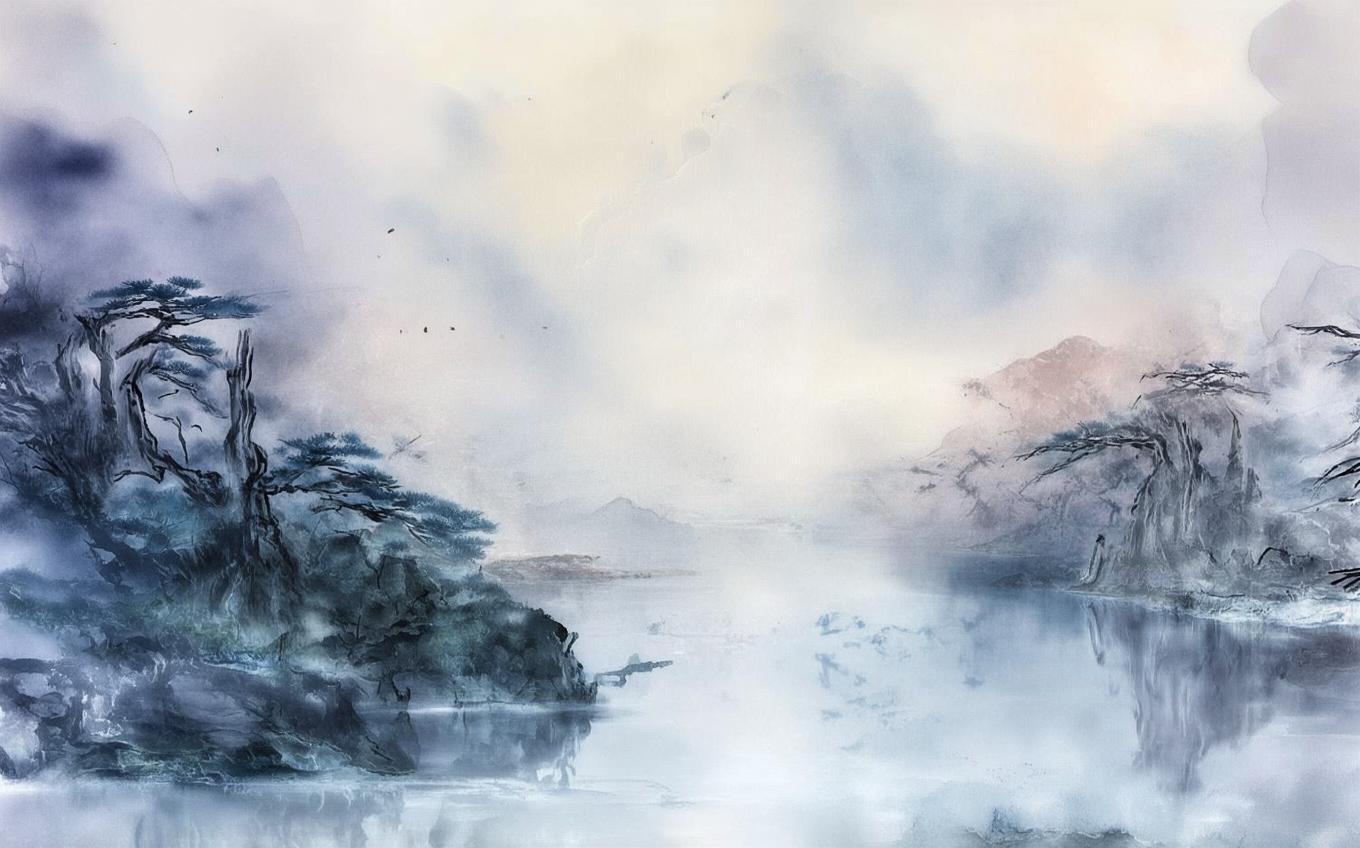
The poem opens with a painterly wide shot: a single Buddhist temple perched south of an ancient, weathered ridge. The word “刹” (chà, from Sanskrit kṣetra) directly signals a sacred Buddhist site. Immediately, scale and solitude are established. Then the focus narrows to sound — a solitary bell that “撼” (hàn, shakes or agitates) the evening haze. This verb is powerful; the bell does not merely ring through the mist but seems to physically rattle the vaporous twilight, blending the auditory with the tactile. The bell’s “loneliness” (孤) foreshadows the poet’s own emotional state, while the “夕岚” (xī lán, sunset mist) grounds the poem in the Ghost Festival evening, a time when the boundary between the mundane and the spiritual world feels thin.
Second couplet: “闭门幽院静,零露湿衣寒”
From the outer landscape we move inside the temple precinct. Closed gates seal off a secluded courtyard, creating an atmosphere of profound quiet. This silence is not emptiness — it is a presence, heavy with monastic solitude. Then a sensory detail intrudes: scattered dew wets the speaker’s clothing, bringing a sharp chill. The dewdrops are likely from the gathering night, but in the context of the 7th month, they also echo the “cold dew” (寒露) that marks the deepening of autumn in Chinese calendrical thinking. The damp cold on the robe is physical, yet it mirrors the poet’s inner coolness — a sobering awareness of his own transient existence away from the things of the world.
Third couplet: “夜静松溪咽,秋深竹径斑”
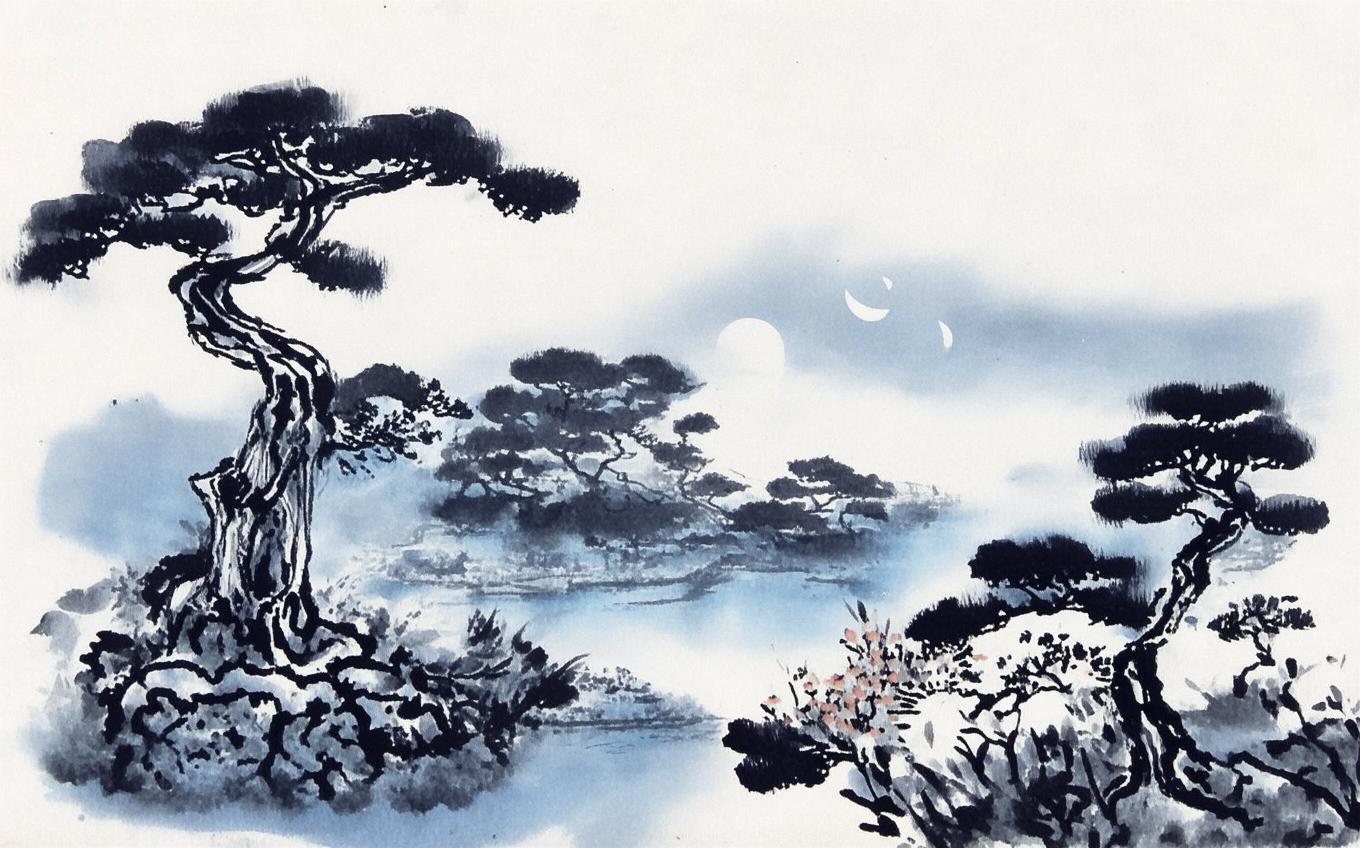
As night thickens, the stillness intensifies, but it is defined by delicate sounds and sights. The pine-fringed stream “咽” (yè) — a verb meaning to choke or sob with restrained grief. This personification gives the mountain creek a voice of quiet lament, infusing the scene with subtle melancholy. The sibilant, whispering quality of “松溪” (pine stream) already suggests softness, and the choked sob deepens the mood. Next, the visual: the bamboo-lined path appears “斑” (bān, mottled, speckled). Late autumn moonlight or the last dappled light through thinning leaves creates a patchwork of shadow and pale light, as if the path itself is aging. Both images — the sobbing stream and the mottled path — bind nature to human emotion, reflecting the poet’s own suppressed weariness and longing.
Fourth couplet: “圣朝容隐逸,还拟旧山峦”
After the immersive landscape, the poet’s mind turns inward. He acknowledges that the current “sagely court” tolerates, even permits, a life of eremitic withdrawal. The phrase “容隐逸” is diplomatically charged: it may be a loyal statement that the emperor’s grace allows officials to retire, but it also hints at the poet’s desire to escape the intrigue of officialdom. The final line reveals his true wish — “I still plan on returning to my old mountain ridges.” Despite the sanctioned possibility, he remains trapped in duty, “still planning,” “still dreaming.” The poem ends on a note of unresolve, the mountain slopes of memory and longing forever just out of reach.
Themes and Symbolism
The central theme is the tension between public service and private reclusion, one of the most enduring motifs in classical Chinese poetry. Li Shen, a high-ranking statesman who experienced political ups and downs, uses the temple visit as a mirror for his own spiritual weariness. The mountains and monastic silence become an antidote to the dust of the court.
Key symbols:
- The lonely bell: A classic Buddhist image of awakening and impermanence, its reverberation shaking the mist suggests that sound can penetrate illusion, stirring the poet’s consciousness.
- Cold dew and autumn chill: Symbols of transience, the passage of time, and the natural aging process. The damp robe brings an intimate, physical reminder of mortality on a day dedicated to ancestral spirits.
- Sobbing stream: Personified nature that weeps, echoing the poet’s unvoiced sadness. It embodies the Chinese aesthetic of “有情” (yǒuqíng, feeling-charged landscape), where the outer world mirrors inner sentiment.
- Bamboo path mottled with shadows: Bamboo represents integrity and resilience for the Confucian gentleman, but its autumnal speckling betrays the marks of time and political life. The path itself becomes a metaphor for a life journey grown dappled with experience and fatigue.
Cultural Context
The 15th day of the 7th lunar month is the Zhongyuan Festival (中元节), the Ghost Festival, when offerings are made to wandering spirits and ancestors. Temples held grand ceremonies to deliver souls from suffering. Zhangjing Temple (章敬寺) in Chang’an was famously constructed by Emperor Daizong in 767 in memory of his mother, the Empress Dowager Zhangjing. By Li Shen’s time (early 9th century), it was a major imperial monastery, a place where politics and piety mingled. Visiting on this spiritually charged day would heighten thoughts of life, death, and the afterlife.
For the Tang scholar-official, Buddhism offered a retreat from the Confucian demands of loyalty and governance. The idea of “hiding in plain sight” — serving at court while nurturing a hermit’s heart — was a cherished ideal. Li Shen’s poem enacts this tension: he physically stands within a temple built by imperial decree, yet his mind flees to “old mountain slopes.” The poem subtly questions whether the “sagely court” truly grants freedom or whether the chains of ambition and duty are self-imposed.
Conclusion
“七月十五日题章敬寺” condenses a moment into eight crystalline lines, each one a marriage of sensory precision and emotional depth. Its beauty lies in what it does not say outright — the reader feels the chill, hears the sobbing stream, and senses the poet’s wordless yearning. Written over a thousand years ago, the poem still speaks to anyone who has stood at a threshold between obligation and inner peace, listening to a distant bell. Li Shen reminds us that sometimes the truest landscapes are the ones we carry inside, the “old mountain ridges” that wait for us in the quiet hours of the night.
Comments (0)
No comments yet. Be the first to comment!