Introduction
The late Tang dynasty poet Pei Shuo (裴说, fl. 9th century) may not be as widely known as Li Bai or Du Fu, but his quatrain “题程修己竹障” (Inscribed on Cheng Xiuji’s Bamboo Screen) captures in just twenty characters the profound harmony between painting, poetry, and the moral symbolism of bamboo. Cheng Xiuji (程修己) was a celebrated court painter of the mid-Tang period, renowned for his bamboo paintings that seemed to breathe with life. Pei Shuo’s poem, inscribed directly onto one of those painted screens, is a brilliant example of Chinese literati culture, where word and image fuse to celebrate both natural beauty and human virtue. For English-speaking readers, this poem offers a window into how classical Chinese poets saw art not as mere decoration, but as a living embodiment of spiritual ideals.
The Poem: Full Text and Translation
数竿苍翠拟龙形
Shù gān cāng cuì nǐ lóng xíng
A few bamboo stalks, deep and darkly green, resemble the sinuous shapes of dragons.峭拔须教此地生
Qiào bá xū jiào cǐ dì shēng
Their steep, upright vigor must have been born and nurtured in this very place.无限野花开不得
Wúxiàn yěhuā kāi bù dé
Countless wildflowers cannot bloom there — they cannot break through.半山寒色与春争
Bàn shān hán sè yǔ chūn zhēng
The cold, pale hues of half a mountainside contend with spring itself.
Line-by-Line Analysis
Line One: 数竿苍翠拟龙形
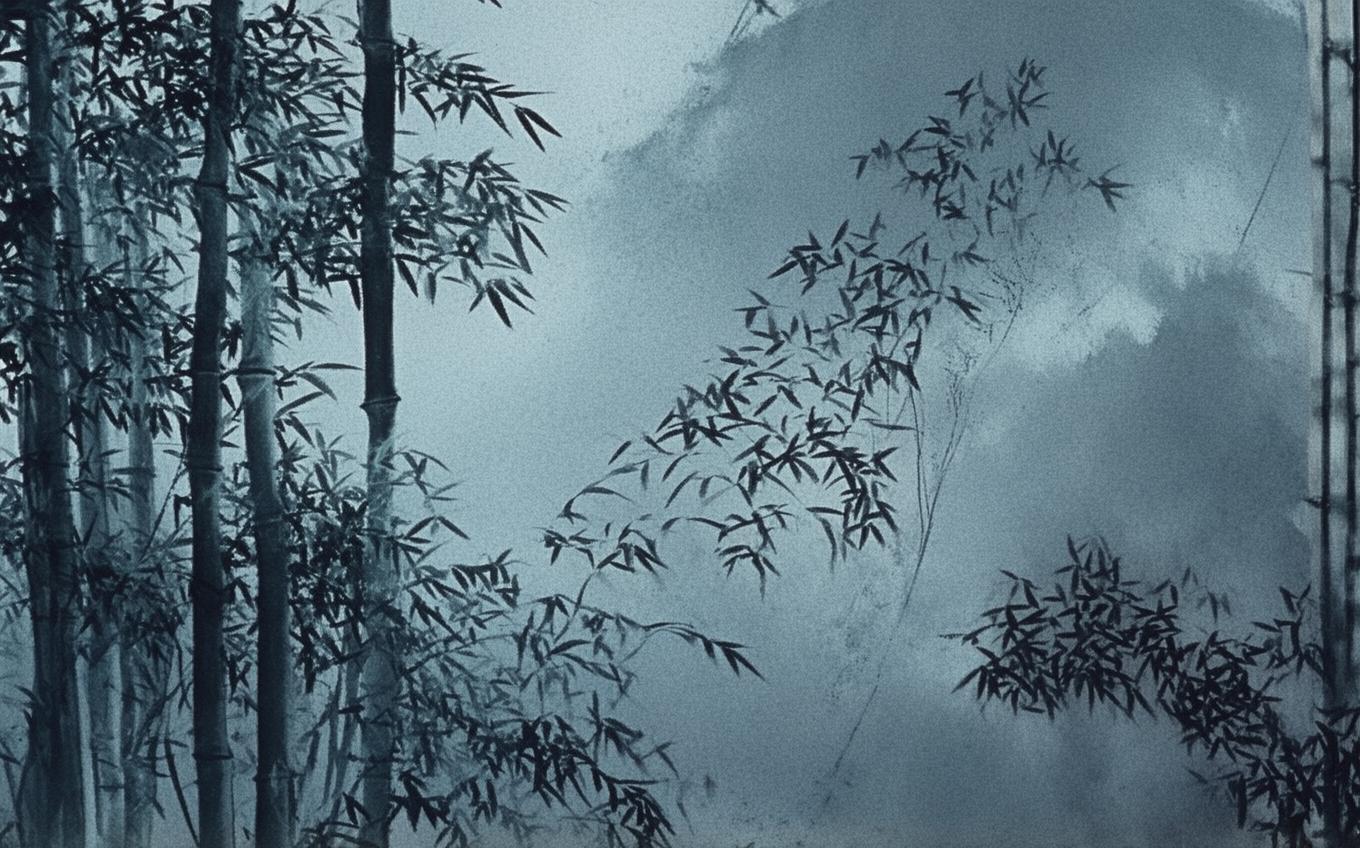
The poem opens with a concrete visual image: several (数竿) bamboo stalks painted in deep blue-green (苍翠) ink. Immediately, the poet elevates the ordinary by comparing them to dragons (拟龙形). In Chinese culture, the dragon is a creature of power, mystery, and transformation. To say bamboo “resembles dragon shapes” is to praise both the painter’s skill — the brushstrokes capture the twisting, soaring spirit of a dragon — and the bamboo’s own noble character. Bamboo is flexible yet unbreakable, modest yet grand, just like the dragon hidden in the clouds. The line invites us to see a static painting as a living, coiled force.
Line Two: 峭拔须教此地生
The poet now moves from appearance to essence. 峭拔 (steep and outstanding) describes the bamboo’s erect, uncompromising stance — a quality cherished by Confucian scholars as a metaphor for moral integrity. The phrase 须教此地生 (must have been born in this place) is ingenious. On the surface, it means the bamboo grows so convincingly on the painted screen that it seems to have rooted itself right there. But it also suggests that such lofty character can only thrive in a carefully cultivated environment — both the artist’s mind and the gentleman’s soul. The line blurs the boundary between real bamboo and painted bamboo, between nature and human artistry.
Line Three: 无限野花开不得
A striking contrast appears. Countless wildflowers (无限野花) are mentioned only to be denied: they “cannot bloom” (开不得). Why? The sheer presence of the bamboo dominates the visual and spiritual space. In the painting, the bamboo’s stark, powerful lines leave no room for frivolous decorative elements. On a symbolic level, the wildflowers represent common, fleeting beauty — charming but shallow — while the bamboo embodies enduring virtue. The line might also hint at the disciplined mind of the gentleman, where base desires (野花) find no soil to grow.
Line Four: 半山寒色与春争
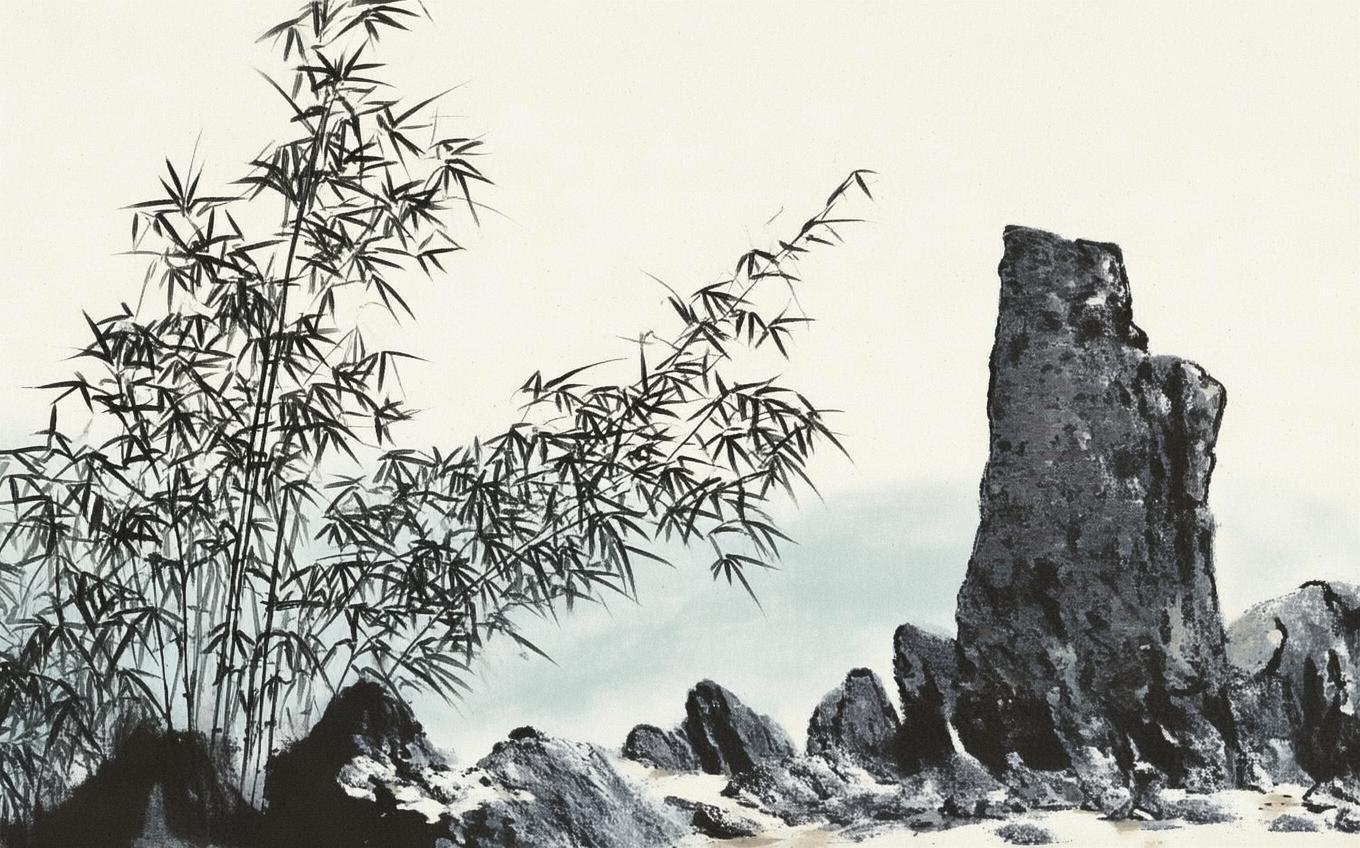
The final line expands the scene to half a mountainside (半山). 寒色 (cold color) refers to the ink wash’s cool, restrained tones, typical of bamboo painting. Instead of simply depicting a season, the poet personifies the painting’s chill hues as actively “vying with spring” (与春争). This is a metaphysical twist: the painted mountain, frozen in perpetual winter-coolness, dares to compete with the warmth and vibrancy of real spring. It celebrates the paradox of art — a still image that captures eternal vitality, a cold color that rivals the life force itself. The poem concludes by proclaiming that the bamboo screen is not a dead object but a dynamic world that challenges reality.
Themes and Symbolism
The Gentleman’s Virtue
Bamboo is one of the “Four Gentlemen” (四君子) in Chinese art, alongside plum, orchid, and chrysanthemum. It bends in the wind but does not break; it stands straight and tall; its hollow stalk suggests humility. Pei Shuo’s poem subtly praises these qualities through words like 峭拔 (upright and distinguished) and by contrasting the bamboo with ephemeral wildflowers. The screen thus becomes a visual manifesto of a scholar’s moral aspirations.
The Life of a Painting
A core theme is the rivalry between art and nature. The phrase “born in this very place” gives the painted bamboo an origin story, while the final line’s “contend with spring” suggests the image is alive enough to challenge the season. This reflects the Chinese aesthetic ideal of qiyun shengdong (spirit resonance and life-movement, 气韵生动) — that a great painting must capture the inner vitality of its subject, not just outward form.
Seclusion and Refinement
In the late Tang, many literati retreated from political turmoil to cultivate personal integrity and artistic pleasures. The bamboo screen represents a refined interior space where the gentleman surrounds himself with emblems of his own principles. The “cold hues” and exclusion of wildflowers evoke a pristine, almost ascetic taste that values the understated over the ostentatious.
Cultural Context
Pei Shuo lived during the late Tang dynasty, a time of political fragmentation but also exceptional artistic achievement. Cheng Xiuji, the screen’s painter, served at the imperial court and was famous for bamboo so realistic that “birds would fly into it.” Inscribing poems on paintings (tí huà shī, 题画诗) was a cultured practice that united the “Three Perfections” — poetry, calligraphy, and painting. The poem would be written directly on the silk, making the screen a multimedia artwork. The dragon comparison also taps into the dragon’s identification with the emperor and cosmic yang energy, subtly elevating the bamboo — and, by extension, the owner of the screen — to a princely status. At the same time, bamboo in Daoist thought symbolized emptiness and resilience, so the poem bridges Confucian ethics and Daoist naturalism, a hallmark of Tang intellectual life.
Conclusion
Pei Shuo’s “题程修己竹障” is a small masterpiece that turns a painted bamboo screen into a philosophical battleground — dragon against wildflower, winter chill against spring warmth, art against nature. In just four lines, it encapsulates the Chinese belief that a true painting is a living thing and that the bamboo is not a mere plant but a gentleman’s soul made visible. For readers today, the poem is a reminder that great art never simply decorates; it challenges us to see the world with renewed eyes and to cultivate a character as upright and resilient as bamboo. Whether viewed in a museum or read in translation, Pei Shuo’s words continue to compete with spring — and they still win.
Comments (0)
No comments yet. Be the first to comment!