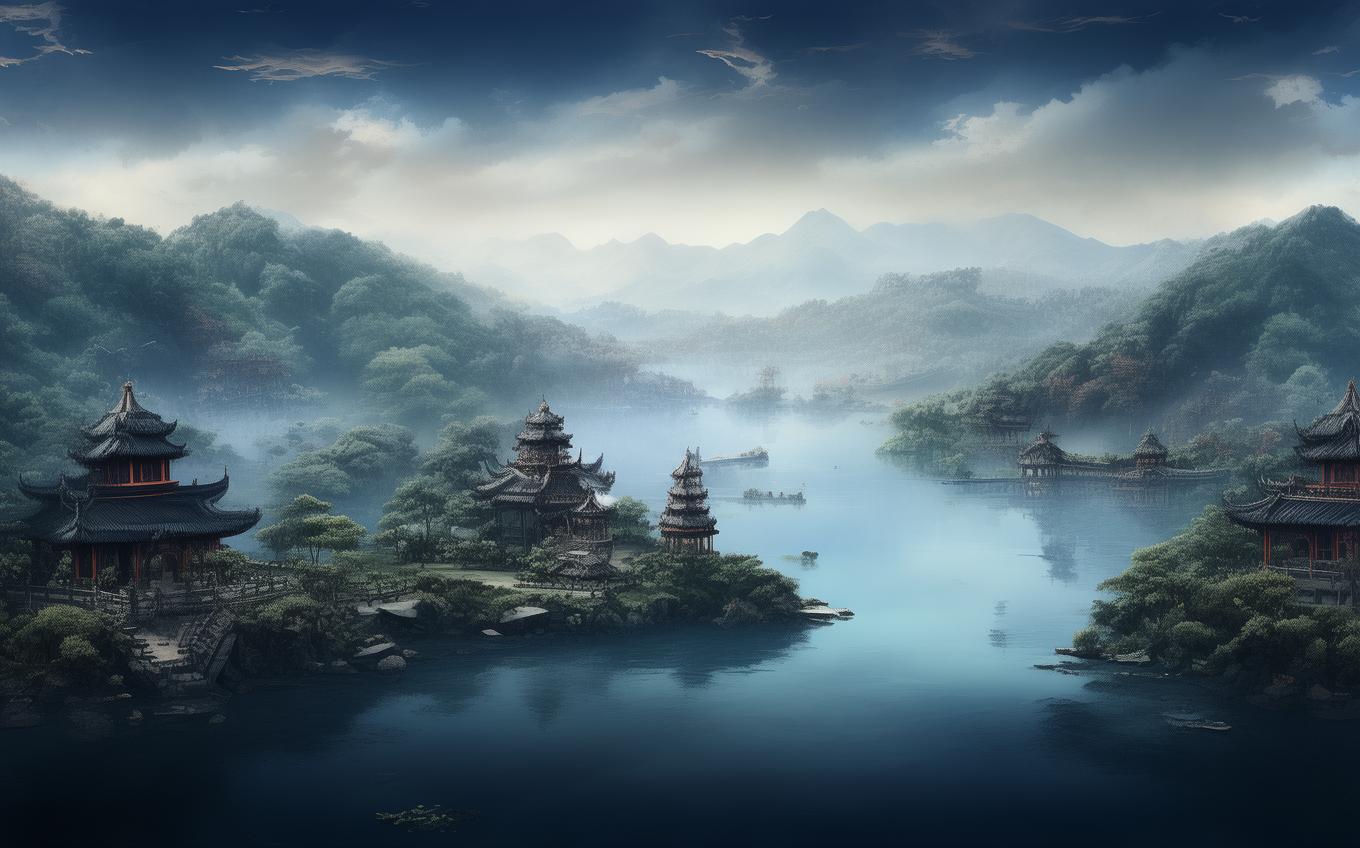
Analysis of "宫中题" - Classical Chinese Poetry
Introduction
Nestled within the golden age of Chinese poetry, "宫中题" (Gōng Zhōng Tí – "Written in the Palace") is a brief yet profoundly moving quatrain attributed to Emperor Xuanzong of Tang (唐玄宗, personal name Li Longji 李隆基, reigned 712–756). One of the most celebrated monarchs in Chinese history, Xuanzong’s early reign saw unprecedented cultural flowering, but his later years were overshadowed by the catastrophic An Lushan Rebellion and the tragic loss of his beloved concubine Yang Guifei. Stripped of real power and living as a retired emperor under house arrest in the imperial palace, he composed this poem, which distills the essence of solitary grandeur into just twenty characters. It stands as a haunting miniature of loneliness at the highest echelon of power, and its succinct elegance has captivated readers for over a millennium.
The Poem: Full Text and Translation
辇路生秋草
Niǎn lù shēng qiū cǎo
On the imperial carriage path, autumn grasses grow.
上林花满枝
Shàng lín huā mǎn zhī
In Shanglin Park, blossoms fill every branch.
凭高何限意
Píng gāo hé xiàn yì
Gazing from a height, how boundless my thoughts,
无复侍臣知
Wú fù shì chén zhī
No longer do attending ministers know them.
Line-by-Line Analysis
Line 1: 辇路生秋草 – The poem opens with an image of neglect. The “辇路” (imperial carriage way) once trodden only by the emperor’s ceremonial procession, now sprouts autumn grasses. The word “秋” (autumn) immediately infuses the scene with decay, fading, and the chill of approaching winter. It is not spring grass, but the coarse growth of a season of endings. This line subtly signals that the emperor no longer travels that road; his active life of power and parade has ceased. The path, like his authority, has been reclaimed by nature.
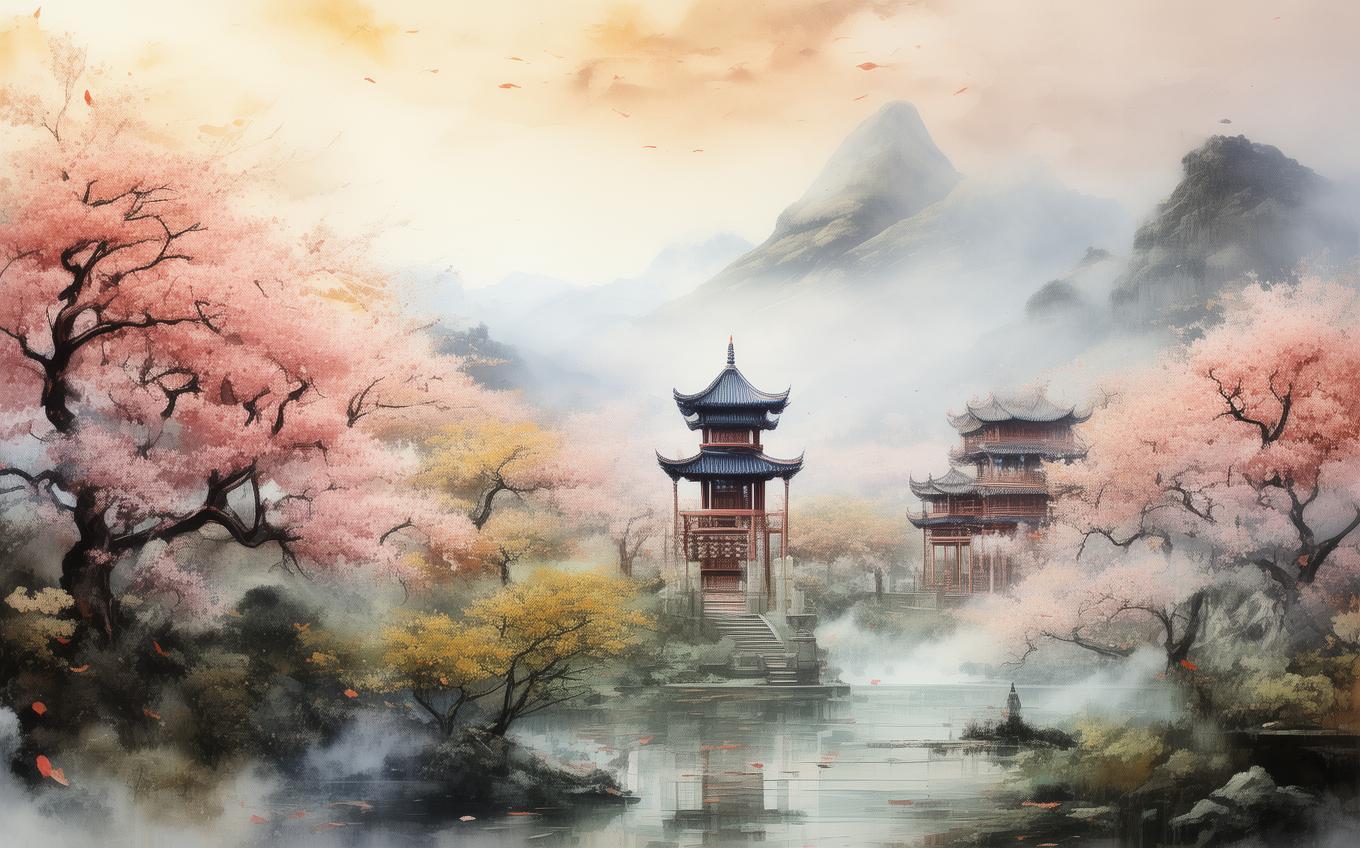
Line 2: 上林花满枝 – In startling contrast, the poet shifts his gaze to Shanglin Park, the vast imperial hunting garden near Chang’an. Here, flowers bloom profusely on the branches. The word “满” (full) conveys saturated, almost excessive beauty – a world brimming with life. But for the emperor, this splendor only deepens his isolation: beauty surrounds him, yet he has no one with whom to appreciate it. The garden’s vitality mocks his personal winter. This juxtaposition of the overgrown path and the flower-laden park crystallizes the tension between inner desolation and outer opulence.
Line 3: 凭高何限意 – The poet climbs to a vantage point, a motif rich in Chinese poetry often associated with longing or contemplation. “凭高” (leaning upon the heights) suggests he gazes out over his domain, perhaps from a palace tower. “何限意” – how boundless or limitless are his emotions. The phrase is deliberately vague, inviting readers to fill in what those emotions might be: regret for lost glory, grief for his lost love, bitterness toward fate, nostalgia for a vibrant past, or simply the crushing weight of solitude. The word “何” (how/what) turns the line into a rhetorical sigh, emphasizing that no measure can contain his inner world.
Line 4: 无复侍臣知 – The concluding line slams the door on any hope of shared feeling. “侍臣” (attending ministers, courtiers) represent the outer world of politics and companionship. “无复” (no longer) marks a definitive rupture. Once, these officials could read his moods and share his burdens; now, his heart is sealed. The line does not indicate anger, but a resigned recognition of existential loneliness – the emperor is surrounded by people, yet utterly alone. This final stroke renders the poem a portrait of a man enclosed by the very majesty that should connect him to the world.
Themes and Symbolism
Loneliness as Crowned Isolation: The poem’s central theme is the profound loneliness of absolute power in its twilight. The grandeur of the palace becomes a gilded cage, and the rituals of court are reduced to empty forms. No one truly knows the inner heart of the Son of Heaven.
Transience of Glory: Autumn grass versus blooming flowers creates a tension between decay and vitality. Yet the flowers, too, will fade. The poem whispers that all splendor – youth, love, empire – is fleeting. Xuanzong’s personal tragedy mirrors the inevitable decline of even the most brilliant reign.
Nature as Indifferent Witness: Natural imagery functions both as a backdrop and a silent commentator. The carriage path reverts to wilderness; the garden bursts with life regardless of human sorrow. This reflects a Daoist-inflected worldview where nature’s cycles dwarf individual human drama.
Key Symbols:
- Autumn grass (秋草): decline, neglect, the end of an era.
- Shanglin Park (上林): imperial power and luxury, now ironic in its beauty.
- Heights (高): the loftiness of the emperor’s position, but also his emotional distance and unbridgeable solitude.
- Attending ministers (侍臣): the machinery of state that can no longer touch the man.
Cultural Context
Xuanzong’s poem must be read against the trauma of the An Lushan Rebellion (755–763), which shattered the Tang Empire’s golden age. Forced to flee the capital and execute his beloved Yang Guifei en route, Xuanzong later returned to Chang’an only as a figurehead Retired Emperor while his son Suzong ruled. Confined in the Ganlu Palace, he lived out his final years in melancholy reminiscence. The poem likely dates from this period of house arrest.
In the Confucian political order, the emperor was the pivot between Heaven and earth, surrounded by ministers who ideally shared his mind. The poem subverts this ideal: the Son of Heaven is now cut off from the Confucian apparatus of governance and mutual moral cultivation. The poem thus resonates with a deep cultural anxiety about the breakdown of the relationship between ruler and minister. Moreover, the sigh “何限意” evokes the Chinese aesthetic of hanxu (含蓄, restrained depth), where the greatest emotion is expressed through understatement and silence. The poem’s power lies in what it does not explicitly say – the whole catastrophe of a fallen emperor is condensed into twenty syllables.
Conclusion
"宫中题" endures because it strips imperial majesty down to a naked human cry. In four lines, we feel the autumn chill of a man who once ruled the world, now possessed only of boundless thoughts that none can hear. The poem’s beauty is in its compression and its refusal to specify the “ideas” – leaving a space for each reader to find their own loneliness. For modern audiences, the poem transcends its historical moment to speak to anyone who has felt isolated in a crowd or trapped by the walls of their own position. It reminds us that even at the summit of power, the deepest need is for genuine connection, and that the most exquisite gardens cannot warm a heart left to its own autumn.
Comments (0)
No comments yet. Be the first to comment!