Introduction
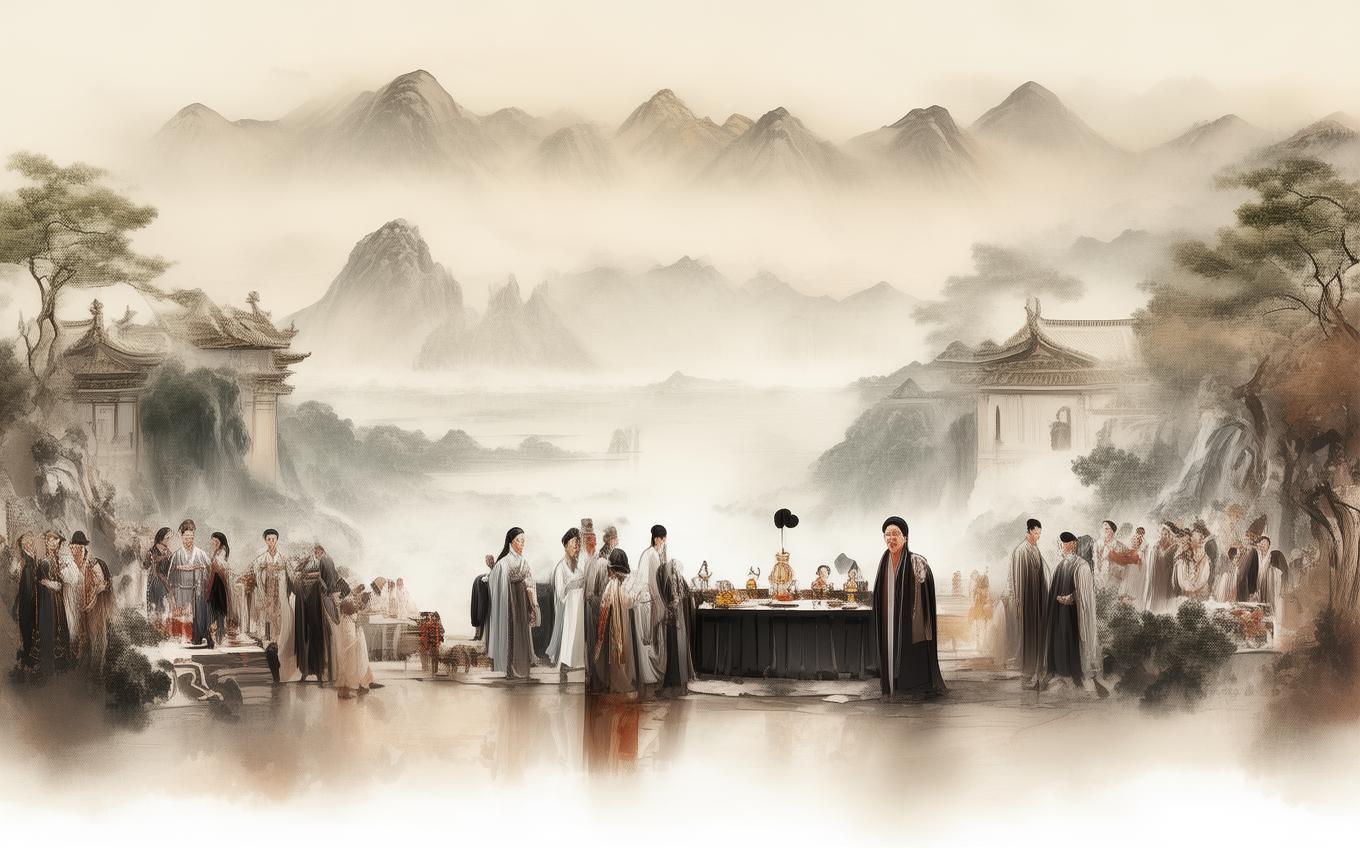
The Double Ninth Festival, or Chongyang Jie (重阳节), has been an occasion for reflection, revelry, and ritual in China for over two millennia. Falling on the ninth day of the ninth lunar month, it invites families to climb mountains, drink chrysanthemum wine, and wear dogwood sprigs to ward off misfortune. In the imperial court, the festival also provided a splendid setting for the emperor to host banquets for his ministers, a gesture that reinforced political harmony and cosmic order.
One remarkable poem crafted for such an occasion is “重阳日赐宴群臣” (Chongyang ri ci yan qun chen, “Bestowing a Banquet on the Ministers on the Double Ninth Day”), written by Emperor Xuanzong of Tang (Li Longji, reigned 712–756). A brilliant patron of the arts and an accomplished poet himself, Xuanzong presided over a golden age of Chinese culture. His poem, sometimes referred to with the variant title “重阳锡宴群臣” (the character 锡 is a literary equivalent of 赐, “to bestow”), is both a courtly celebration and a lyrical snapshot of a perfect autumn day. It reveals the emperor’s delight in nature, his bond with his officials, and the ideal of a ruler whose virtue makes the realm flourish.
The Poem: Full Text and Translation
爽气肃时令,早衣闻朔鸿。
shuǎng qì sù shí lìng, zǎo yī wén shuò hóng.
The crisp air brings solemnity to the season; at dawn I dress and hear the northern wild geese.
重阳有佳节,具物欣年丰。
chóng yáng yǒu jiā jié, jù wù xīn nián fēng.
The Double Yang festival is a fine occasion — all created things rejoice in a bountiful year.
皎洁秋霜净,澄清晓雾空。
jiǎo jié qiū shuāng jìng, chéng qīng xiǎo wù kōng.
Pure and bright, the autumn frost is immaculate; clear and limpid, the morning mist has dissolved into emptiness.
登高余兴逸,赏菊故情同。
dēng gāo yú xìng yì, shǎng jú gù qíng tóng.
Climbing high, my lingering joy is free and unrestrained; admiring chrysanthemums, that old, familiar feeling remains the same.
樽俎先朝列,笙竽发禁中。
zūn zǔ xiān cháo liè, shēng yú fā jìn zhōng.
Goblets and platters are arrayed as they were in courts of old; pipes and mouth-organs sound from within the forbidden palace.
承恩咸已醉,恋赏未还宫。
chéng ēn xián yǐ zuì, liàn shǎng wèi huán gōng.
Receiving the imperial grace, all are already intoxicated; so enchanted by the enjoyment, we have not yet returned to the palace.
Line-by-Line Analysis
Opening Couplet: Setting the Seasonal Tone
爽气肃时令,早衣闻朔鸿。
The poem opens with an immediate sensory invitation. “爽气” (shuǎng qì, “crisp air”) captures the bracing, transparent atmosphere of an autumn morning — cool, clean, and invigorating. The verb “肃” (sù) means to make solemn or to instill awe; the air itself seems to invest the season with a dignified stillness. The emperor rises early, donning his robes (“早衣”), and at once hears the cry of wild geese migrating south. The “朔鸿” (shuò hóng, northern geese) is a classic autumnal motif in Chinese poetry, signaling the turning of the year and stirring feelings of both melancholy and grandeur. By placing this detail right after the act of dressing, the poet subtly links natural rhythm with the ceremonial rhythm of court life.
Expanding the Festive Mood
重阳有佳节,具物欣年丰。
Here Xuanzong names the festival directly — “重阳” (Chongyang, Double Yang), when the yang number nine is doubled, creating an auspicious but potentially dangerous excess of masculine energy that must be harmonized through ritual. The phrase “佳节” (jiā jié, fine occasion) carries a Confucian resonance: a good festival is not merely a day of leisure but a moment when human feelings and cosmic order align. The second line extends this harmony outward: “具物” (jù wù, all things, the myriad creatures) all “欣年丰” (xīn nián fēng, rejoice in the year’s abundance). The emperor sees the bountiful harvest as a sign of heaven’s favor and his own virtuous governance — a key concept in traditional Chinese political philosophy.
Nature Purified: Frost and Mist
皎洁秋霜净,澄清晓雾空。
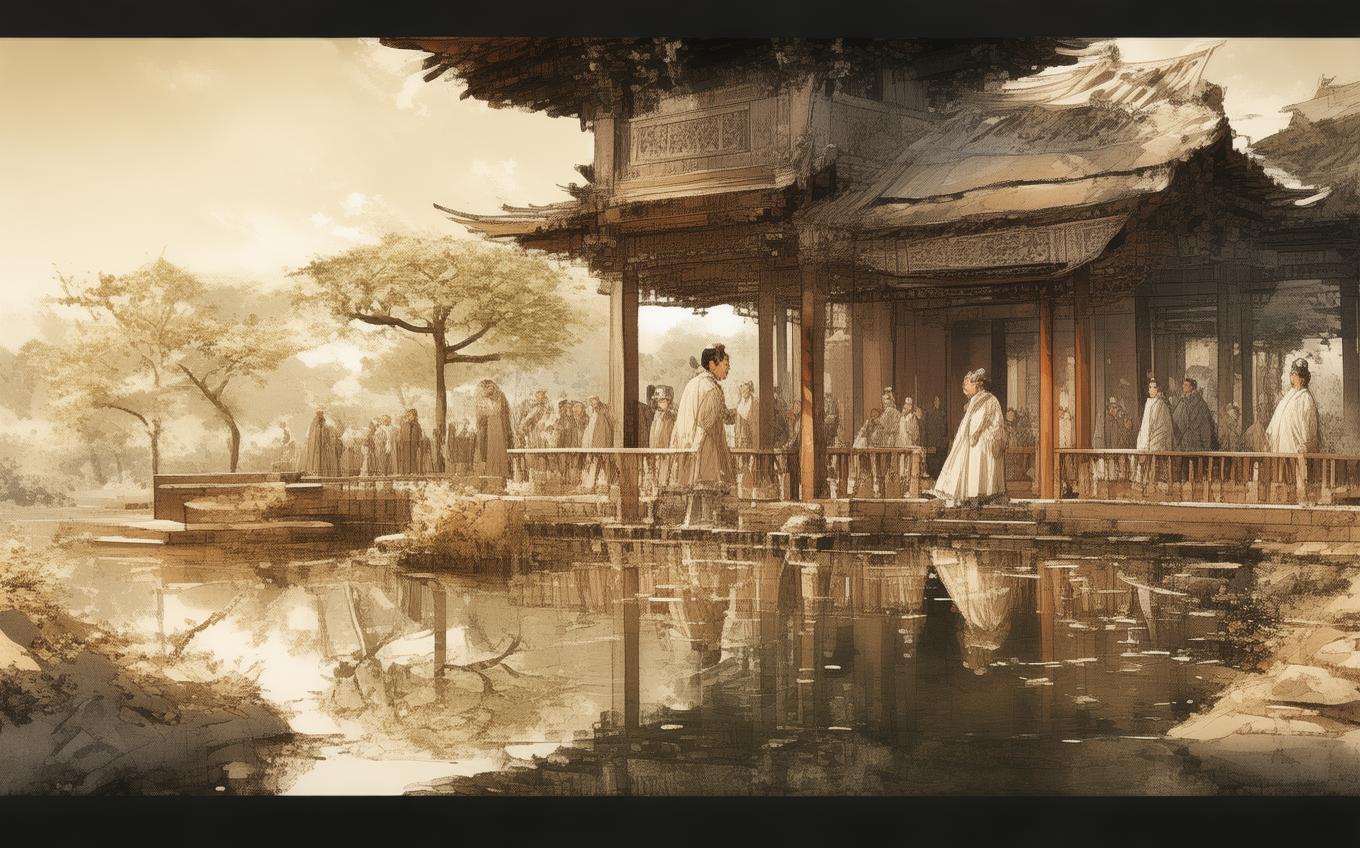
This couplet is a masterful exercise in visual clarity. “皎洁” (jiǎo jié) suggests a luminous, moon-like purity, applied to the autumn frost that blankets the ground. It is not a destructive frost but a cleansing one, making the world sparkle. “澄清” (chéng qīng, clear and pure) describes the morning mist that has entirely vanished, leaving behind an unobstructed vista. The parallel structure — frost on earth, mist in air; one solid, one ethereal — creates a sense of cosmic transparency. The emperor-poet paints the scene as a natural temple, purified for the day’s rites. The emptiness of the mist (“空”) also hints at Daoist and Buddhist notions of a mind cleared of distraction, ready for refined enjoyment.
The Joy of Climbing and Chrysanthemums
登高余兴逸,赏菊故情同。
Climbing heights (deng gao) is the quintessential Double Ninth activity. For the emperor, it is not a forced ritual but an overflow of spontaneous joy: “余兴逸” (yú xìng yì, lingering joy free and unrestrained). The word “逸” suggests a state beyond mere happiness — an easy, natural exuberance. Admiring chrysanthemums (“赏菊”) is another festival custom; chrysanthemums bloom defiantly in late autumn and symbolize integrity and longevity. Yet Xuanzong adds, “故情同” (gù qíng tóng), that old feeling remains the same. This brief line humanizes the Son of Heaven: despite the grandeur, the simple pleasure of looking at a flower reconnects him with memories and a timeless affection — perhaps shared with his ministers, perhaps with his own past.
The Imperial Banquet Unfolds
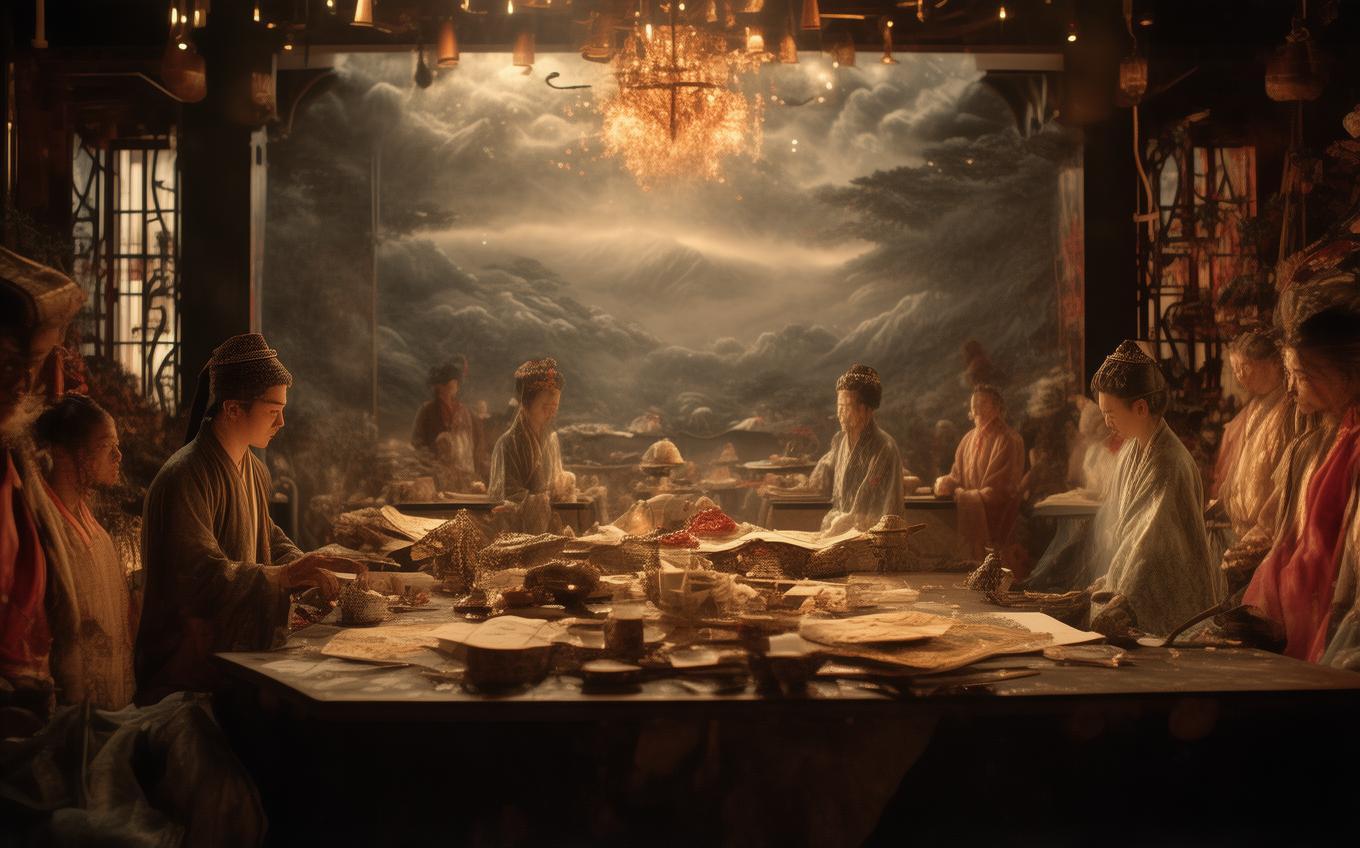
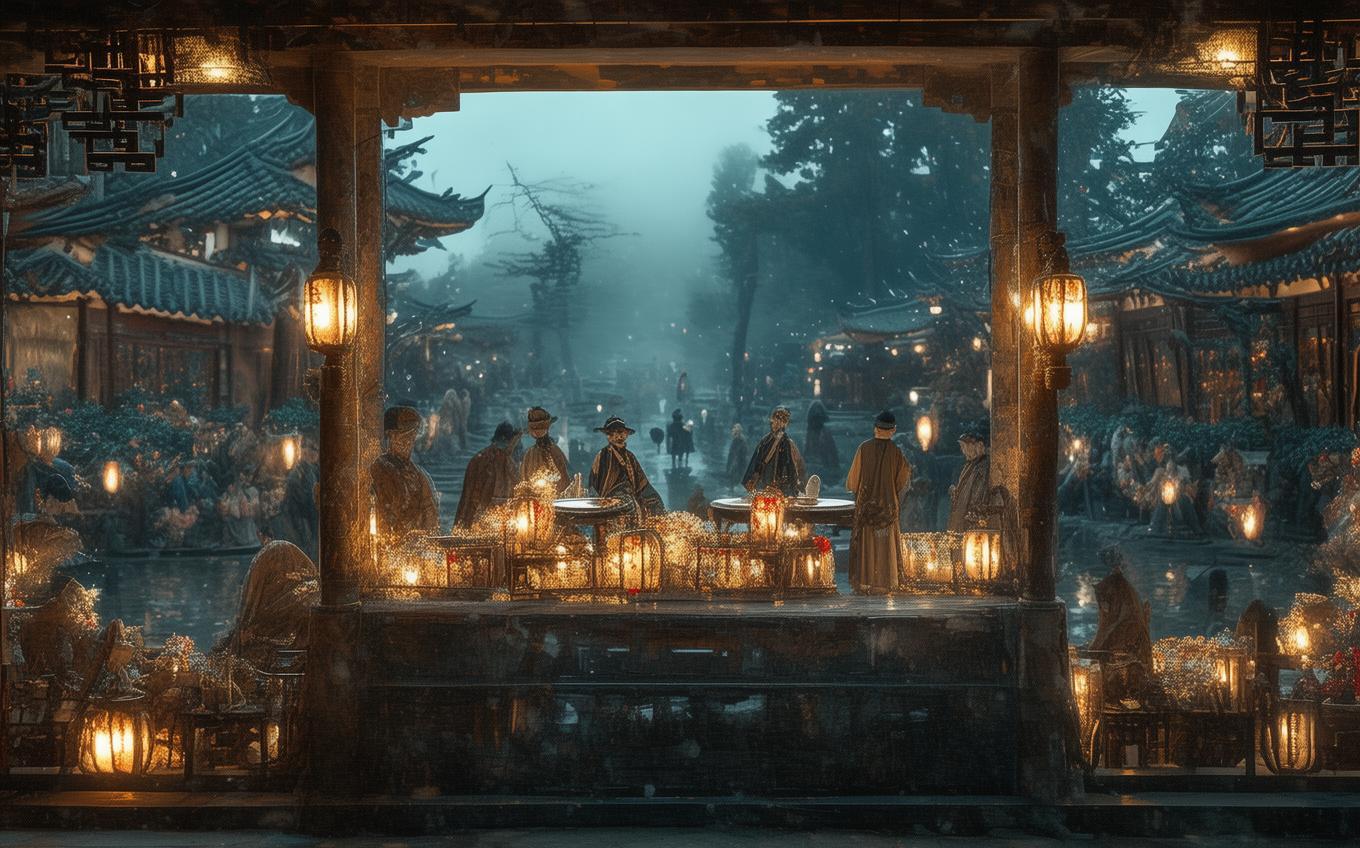
樽俎
Comments (0)
No comments yet. Be the first to comment!