Introduction
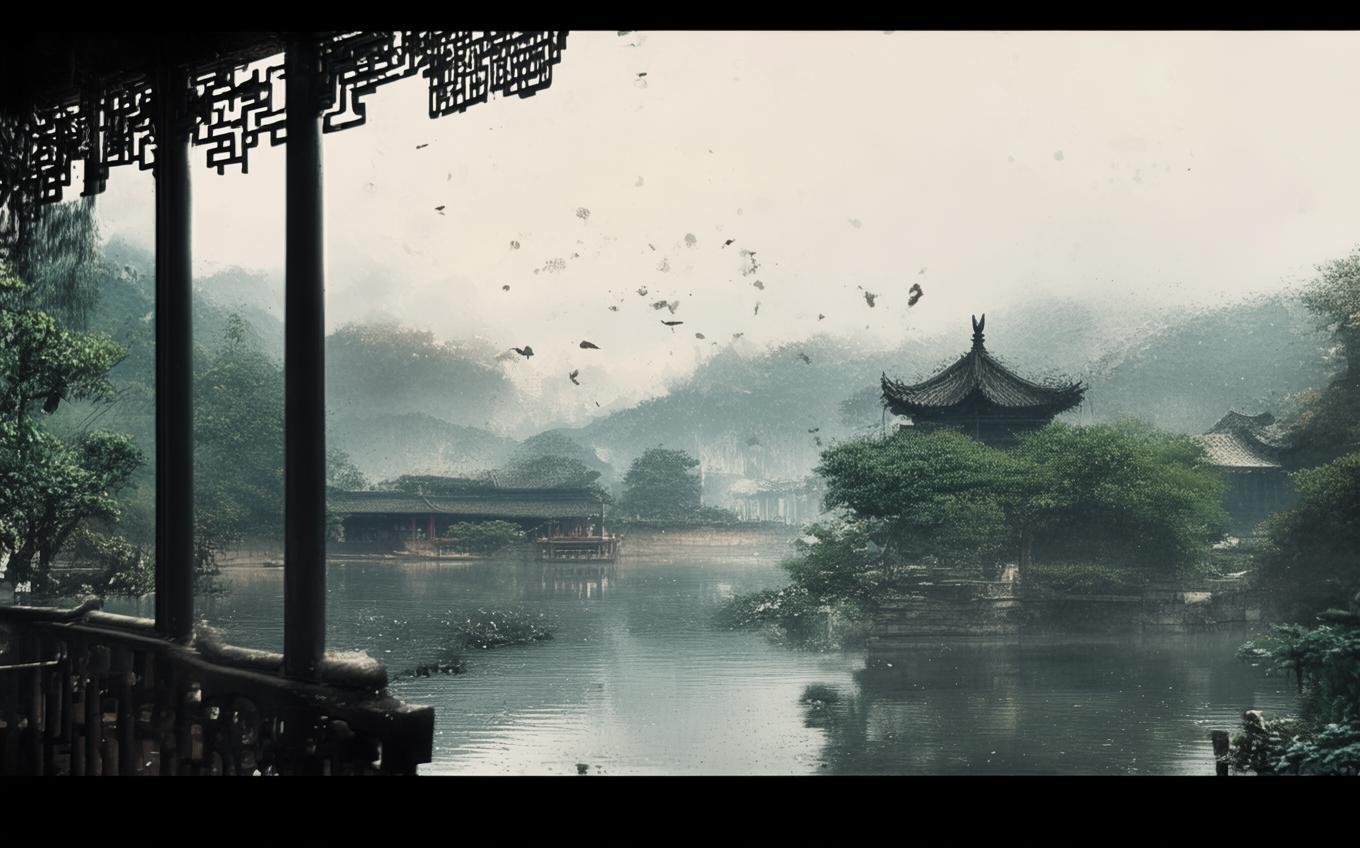
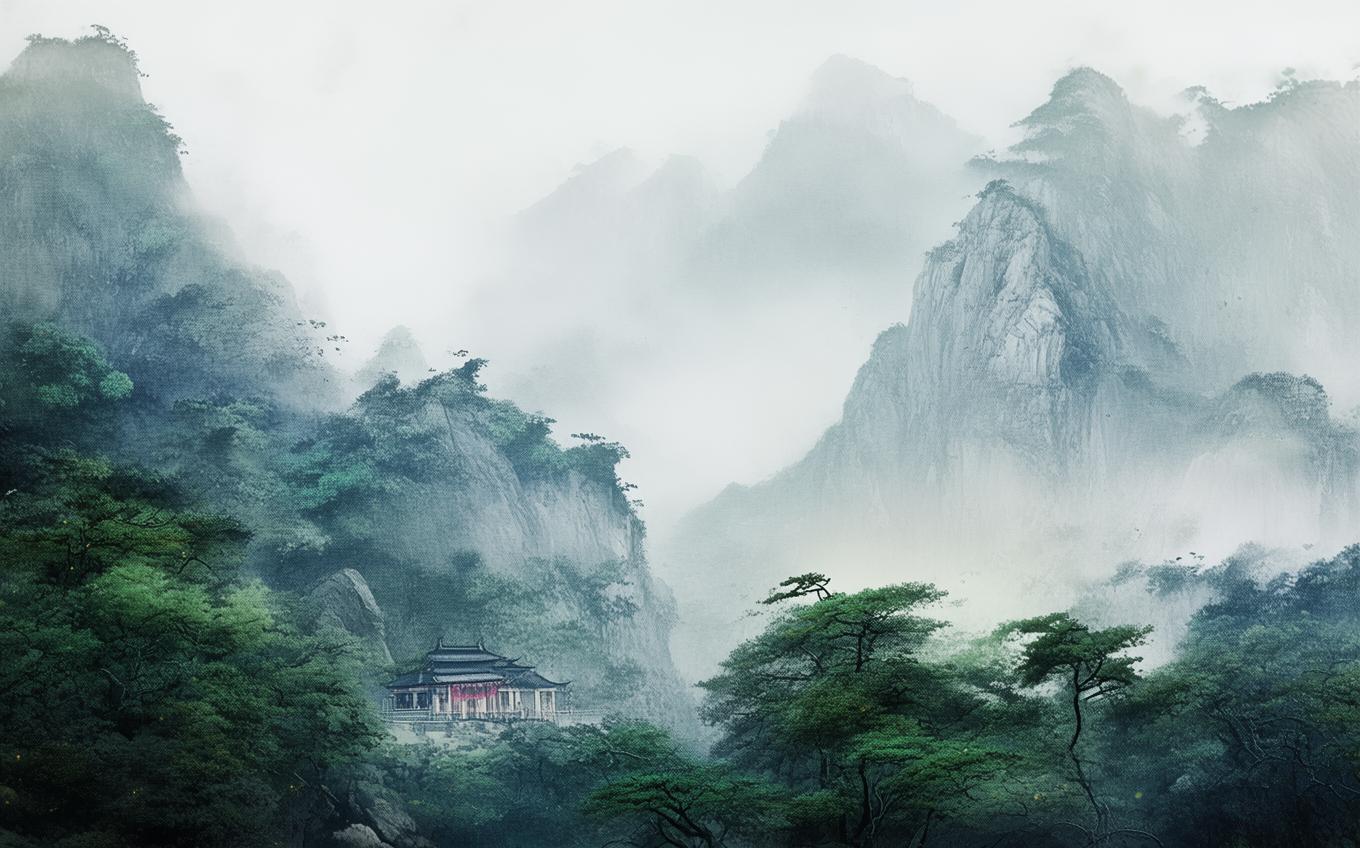
Perched on the banks of a winding river in Jing County, Anhui, the Water West Temple (Shuixi Si) has long been a quiet refuge for wayfarers and poets. During the late Tang dynasty, the celebrated poet Du Mu (803–852) passed this way and left behind a luminous quatrain titled “题泾县水西寺” (Inscribed at the Water West Temple in Jing County). Though brief, the poem gathers into itself the voice of an earlier genius — Li Bai — and mingles it with Du Mu’s own wistful, wine-touched gaze. The result is a small masterpiece that speaks of poetic kinship, the allure of drifting, and the gentle ache of beauty half-glimpsed in mountain rain.
The Poem: Full Text and Translation
李白题诗水西寺
Lǐ Bái tí shī Shuǐxī Sì
Li Bai once wrote a poem at Water West Temple;古木回岩楼阁风
gǔ mù huí yán lóu gé fēng
Ancient trees circle the crags, pavilions catch the wind.半醒半醉游三日
bàn xǐng bàn zuì yóu sān rì
Half awake, half drunk, I roamed here three days;红白花开山雨中
hóng bái huā kāi shān yǔ zhōng
Red and white blossoms open in the mountain rain.
Line-by-Line Analysis
Line 1: 李白题诗水西寺
The poem opens not with the speaker’s own voice, but with an invocation of Li Bai (701–762), the great “Poet Immortal” of the High Tang. Du Mu tells us plainly: Li Bai wrote a poem here. This is both a statement of fact and an act of homage. By calling Li Bai’s name in the very first line, Du Mu plants the present moment in the soil of the past. The temple becomes a charged, literary site — a place where poetry has already happened, and where the current visitor hopes to catch an echo.
Line 2: 古木回岩楼阁风
With one stroke, Du Mu paints the scenery that surrounds him. Ancient trees (古木) suggest age, stillness, and a dense, mossy calm. The phrase 回岩 — “winding crags” or “circling cliffs” — conveys both the rugged terrain and a sense of enclosure, as if the mountains gently hold the temple in their arms. Finally, 楼阁风 — “pavilions in the wind” — introduces motion and height. The wind sweeps through the temple buildings perched among the rocks, lending a cool, airy spaciousness. The landscape is timeless, and the poet stands in it, dwarfed yet exhilarated.
Line 3: 半醒半醉游三日
Now the speaker turns inward, describing his own state. 半醒半醉 (half awake, half drunk) suggests a deliberate blurring of boundaries — between sobriety and intoxication, consciousness and dream, the present and the past. Du Mu was famous for his love of wine and wandering, and here he casts himself as a leisurely drifter who has spent three days roaming the temple grounds in a pleasant haze. The number 三日 (three days) is evocative: it is long enough to sink into a place, yet brief as a sigh. The line vibrates with a Romantic willingness to lose oneself in beauty.
Line 4: 红白花开山雨中
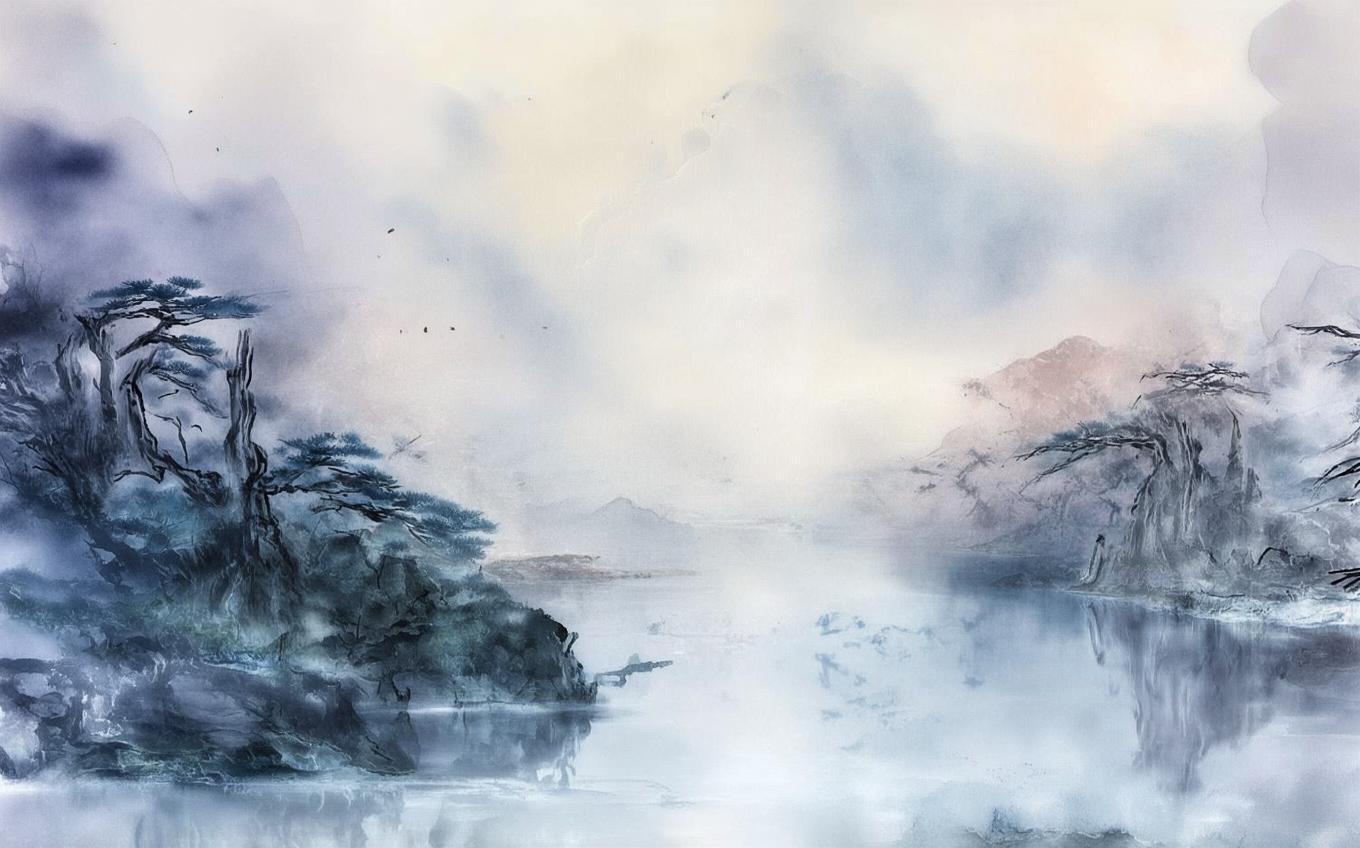
The closing image is purely visual and quietly breathtaking. Red and white flowers — perhaps azaleas or plum blossoms — bloom softly in the mountain rain. There is no explicit emotion, only a delicate juxtaposition of colour and mist. The rain washing over the hillside intensifies the freshness of the petals and the silence of the scene. In Chinese poetics, this kind of ending, where the poet simply presents an image and steps back, is called “以景结情” (closing with scenery to settle emotion). The flowers open without hurry, and so the poem opens into endless reflection.
Themes and Symbolism
Nostalgia and Literary Inheritance
The poem is threaded with the presence of Li Bai. By recalling the older poet’s visit, Du Mu places himself in a chain of wandering literati who sought inspiration in nature. The temple functions as a symbol of continuity — a place where voices from different centuries can meet through the shared act of writing.
Transience and Delight in Impermanence
“Half awake, half drunk” is more than a description; it is a philosophy. In Tang poetry, the tipsy drifter often represents a person who has loosened their grip on worldly ambitions and chosen to float along with the rhythms of mountains and rivers. The three-day visit, the rain, the fleeting blossoms — all foreground the beauty of what is passing and unrepeatable.
Nature as Emotional Mirror
Du Mu does not tell us how he feels; he shows us ancient trees, wind, rain, and flowers. This indirectness is a hallmark of classical Chinese poetry: emotion is dissolved into landscape, and the reader is invited to feel it in the spaces between images. The red and white blossoms shining in the grey rain become a symbol of fragile radiance amid uncertainty.
Cultural Context
Du Mu lived in the decaying decades of the Tang dynasty, a time when many poets looked back with longing to the empire’s golden age. Li Bai, who had died nearly a century earlier, was already a legend — a figure of untamable freedom, genius, and a deep bond with nature. Visiting a site associated with Li Bai was a kind of pilgrimage. By inscribing his own poem at Water West Temple, Du Mu joined a tradition of tí bì shī (poems written on walls of inns, temples, and scenic spots), a widespread literati practice that turned physical places into communal scrolls of memory.
The Water West Temple itself was a Buddhist monastery set in the picturesque landscape of southern Anhui, an area famous for its misty mountains and clear streams. For the Tang scholar-official, such a retreat offered a respite from court politics and a space for spiritual renewal. The poem’s easy mood reflects the Daoist-inflected ideal of zì rán (自然, naturalness) — moving with the grain of the world rather than against it.
Conclusion
Du Mu’s “题泾县水西寺” is a tiny, polished window into the heart of Chinese poetic sensibility. In just twenty-eight syllables, it summons the ghost of Li Bai, sketches a landscape of wind and rock, confesses a tipsy three-day ramble, and ends with flowers blooming in the rain — asking nothing more of the reader than quiet attention. The poem’s enduring appeal lies in this very modesty. It does not lecture or moralise; it simply stands, like the temple itself, open to the weather and to whoever may wander up the mountain path. In our own age of noise and speed, Du Mu’s voice reminds us that sometimes the most profound journey is a slow, half-drunken walk through the rain, watching red and white petals unfold.
Comments (0)
No comments yet. Be the first to comment!