Introduction
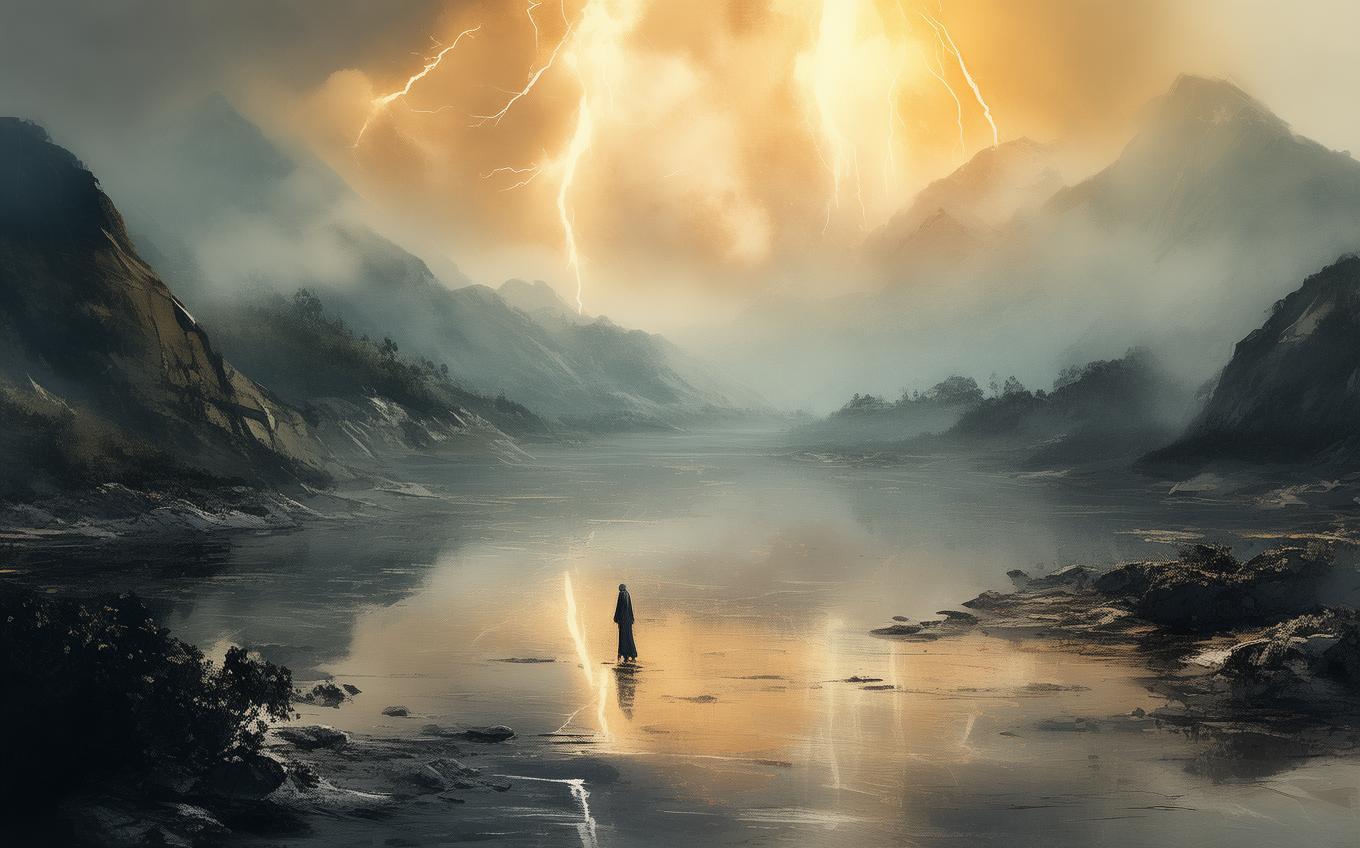
The phrase 咏雷句 (yǒng léi jù) translates literally to “a phrase singing of thunder.” It evokes the tradition in classical Chinese poetry of capturing nature’s most dramatic moments with powerful, condensed imagery. To explore this theme, we turn to one of the most dazzling thunderstorm poems in the canon: “有美堂暴雨” (Yǒuměi Táng Bàoyǔ — “Rainstorm at Youmei Hall”) by the Song dynasty master 苏轼 (Sū Shì), better known in the West as Su Dongpo. Written in 1073 during his tenure as a local official in Hangzhou, this poem transforms a sudden, violent rainstorm into a cosmic spectacle, mixing physical sensation, mythological allusions, and sheer delight in nature’s force. It remains a beloved example of how Chinese poets use natural phenomena to express both the awe of the moment and deeper reflections on creativity and the human spirit.
The Poem: Full Text and Translation
游人脚底一声雷,
Yóurén jiǎodǐ yī shēng léi,
A clap of thunder roars beneath the visitors’ feet,
满座顽云拨不开。
Mǎnzuò wányún bō bù kāi.
Stubborn clouds fill the hall—push them away as we might, they won’t part.
天外黑风吹海立,
Tiānwài hēifēng chuī hǎi lì,
Beyond the sky, a black gale blows the sea upright,
浙东飞雨过江来。
Zhèdōng fēiyǔ guò jiāng lái.
From eastern Zhejiang, flying rain vaults across the river to arrive.
十分潋滟金樽凸,
Shífēn liànyàn jīnzūn tū,
The brimming water splashes like a golden goblet overflowing,
千杖敲铿羯鼓催。
Qiānzhàng qiāokēng jiégǔ cuī.
As if a thousand drumsticks fiercely beat the rhythm of a Jie drum.
唤起谪仙泉洒面,
Huàn qǐ zhéxiān quán sǎ miàn,
It stirs the Banished Immortal—spring water sprayed upon his face,
倒倾鲛室泻琼瑰。
Dào qīng jiāoshì xiè qióngguī.
Overturning the mermaid’s chamber to pour out jade and gems.
Line-by-Line Analysis
Lines 1–2: The Thunder’s Arrival
The poem opens with a sudden, almost physical shock—thunder roars from underfoot. By placing the sound “beneath” the visitors, Su Shi inverts our normal perception and makes the thunder feel immediate and disorienting. The second line reinforces the enveloping density of the storm: the clouds are not distant but seem to have invaded the hall itself, so thick that no one can push them aside. This collapse of distance between human space and the raw elements sets the stage for the cosmic drama that follows.
Lines 3–4: The Cosmic Storm
These lines are the heart of the thunder motif. “Black wind blowing the sea upright” is a startling image—wind so violent it seems to lift the entire ocean vertically. The phrase “天外” (“beyond the sky”) expands the scale to the heavens, suggesting a force beyond ordinary nature. In the fourth line, the rain itself becomes a living entity, “flying” across the landscape and over the river. The geography (eastern Zhejiang) grounds the poem in a real place, while the verbs make the storm a dynamic, almost intentional, invasion.
Lines 5–6: Sensory Splendor
Su Shi turns the torrent into visual and auditory metaphor. The floodwater gleams like wine spilling over the rim of a golden goblet—a luxurious, celebratory image. Then the sound of the rain is compared to the furious beating of a Jie drum, an instrument from Central Asia used in martial music. The “thousand drumsticks” create a feeling of relentless, rhythmic force, turning the storm into a kind of wild performance.
Lines 7–8: Myth and Creativity
The last couplet rises into pure literary fantasy. The “Banished Immortal” is none other than Li Bai (Li Po), the great Tang poet famed for his spontaneous genius. Legend says Li Bai was once revived with spring water splashed on his face when he passed out from drunkenness; here the storm’s spray “awakens” this poetic spirit. The final line imagines a mermaid’s underwater chamber overturned, spilling its treasures of jade and gemstones—a metaphor for the rain’s beauty and the creative abundance the storm releases. Thunder, then, becomes not just a natural event but a muse.
Themes and Symbolism
Nature’s Sublime Power
The chief theme is the overwhelming, even ecstatic force of a thunderstorm. Su Shi does not depict nature as a gentle companion but as something vast, sudden, and capable of bending the rules of reality—the sea stands upright, clouds cannot be pushed away.
Creativity and Inspiration
By invoking Li Bai, the poem ties the storm to poetic creation. Thunder and rain become a catalyst, shaking the poet out of complacency and pouring out beauty. The “jade and gems” spilling from the mermaid’s chamber symbolize the verses and insights the poet gains from such intense experience.
Unity of the Physical and the Mythological
Su Shi moves seamlessly from a real storm observed at a specific hall to legendary figures and mythical creatures. This movement reflects the Chinese literary tradition of blending the immediate with the timeless, the local with the cosmic.
Joy in the Midst of Chaos
Unlike many nature poems that evoke melancholy or awe tinged with fear, “有美堂暴雨” brims with exhilaration. The overflowing goblet, the wild drumming, the awakening of a poetic immortal—all express delight in the storm’s excessive energy.
Cultural Context
Su Shi (1037–1101) was a towering figure of the Northern Song dynasty: statesman, calligrapher, painter, and above all, a poet of extraordinary versatility. The poem was written while he was serving as a vice-prefect in Hangzhou, a period marked by both political frustration and immense creative output. Youmei Hall, where the poem is set, commanded a grand view of the Qiantang River and the Zhejiang coast, landscapes known for dramatic weather.
Thunder in Chinese poetics often carried double meanings. It could signal heavenly displeasure or a disruption in the natural order, but in the hands of Su Shi it becomes a source of vitality. The allusions are telling: Li Bai represents untamed genius; the Jie drum recalls the energetic music of the Silk Road; the mermaid’s chamber (鲛室 jiāoshì) is a folkloric trope of hidden treasure beneath the sea. By weaving these together, Su Shi celebrates the thunderstorm as a moment when the mundane world is invaded by something miraculous—an attitude deeply rooted in the Daoist-inflected sensibility of Song literati culture that saw nature as the ultimate artist.
Conclusion
Su Shi’s “有美堂暴雨” endures because it captures thunder not merely as sound and flash, but as an event that overturns the soul. In eight lines, we are pulled into a scene where clouds choke the hall, the sea stands up, and the rain arrives like a thousand drums awakening legends. For English‑speaking readers drawn to Chinese culture, this poem offers a perfect entry point: it demands no prior knowledge to feel its energy, yet its layers of myth and metaphor reward endless rereading. Ultimately, the poem whispers that a thunderstorm—like a great poem—should leave us a little drenched, a little dazzled, and very much alive.


Comments (0)
No comments yet. Be the first to comment!