Introduction
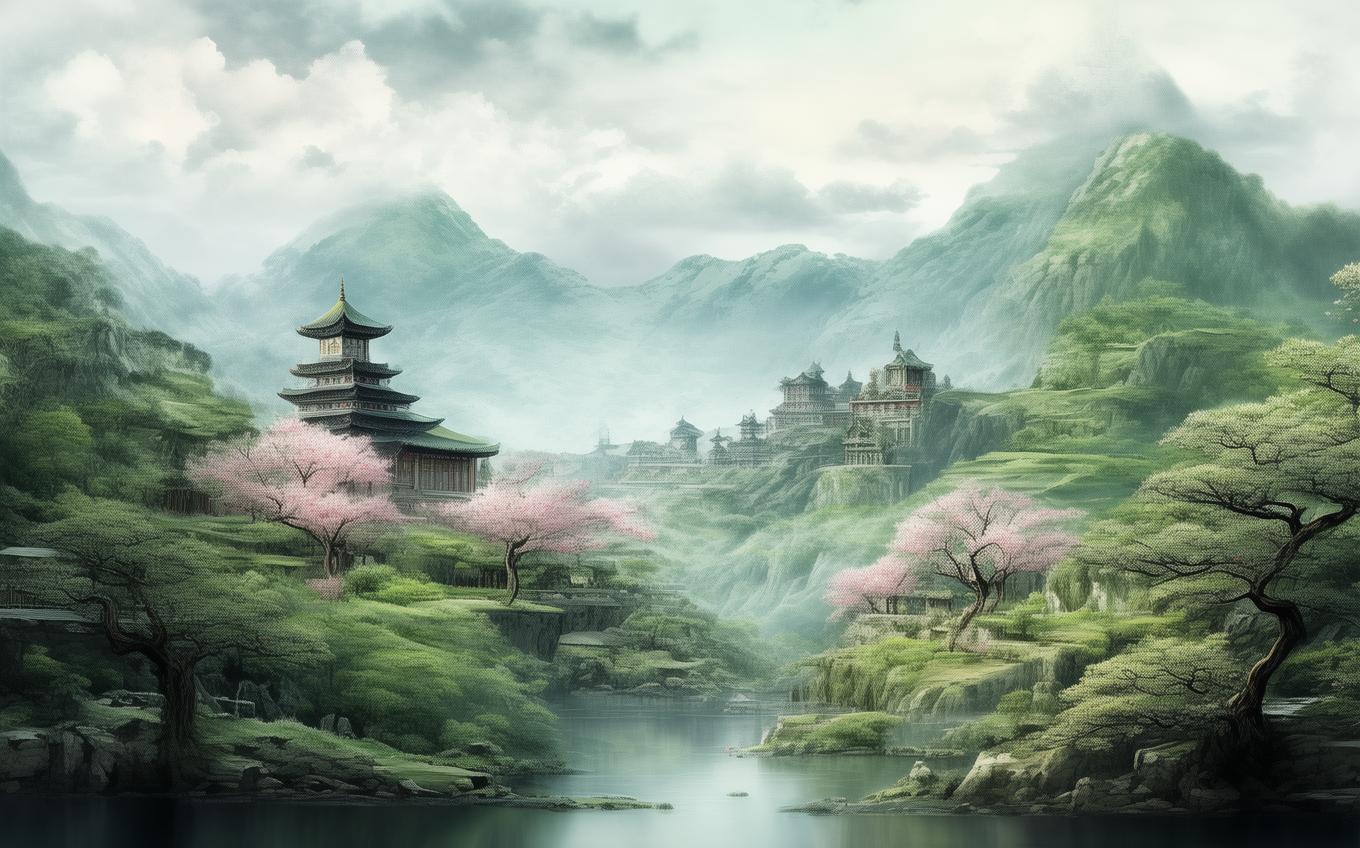
Wang Ya (王涯, 764–835) was a statesman and poet of the Tang dynasty, a golden age of Chinese poetry. Although his political career ended tragically in the Sweet Dew Incident, his poetry often captures moments of serene natural beauty. This short poem, "春游曲" (Chūn Yóu Qǔ, "Song of a Spring Outing"), is a perfect example of Tang jueju (绝句) — a quatrain that distills a vivid scene into just twenty characters. It invites the reader to join a riverside stroll and witness the fresh awakening of spring. Simple in language yet rich in imagery, the poem has been cherished for over a thousand years as an embodiment of the season’s quiet joy.
The Poem: Full Text and Translation
万树江边杏,
Wàn shù jiāng biān xìng,
Ten thousand apricot trees along the river,
新开一夜风。
Xīn kāi yī yè fēng.
newly opened by a single night of wind.
满园深浅色,
Mǎn yuán shēn qiǎn sè,
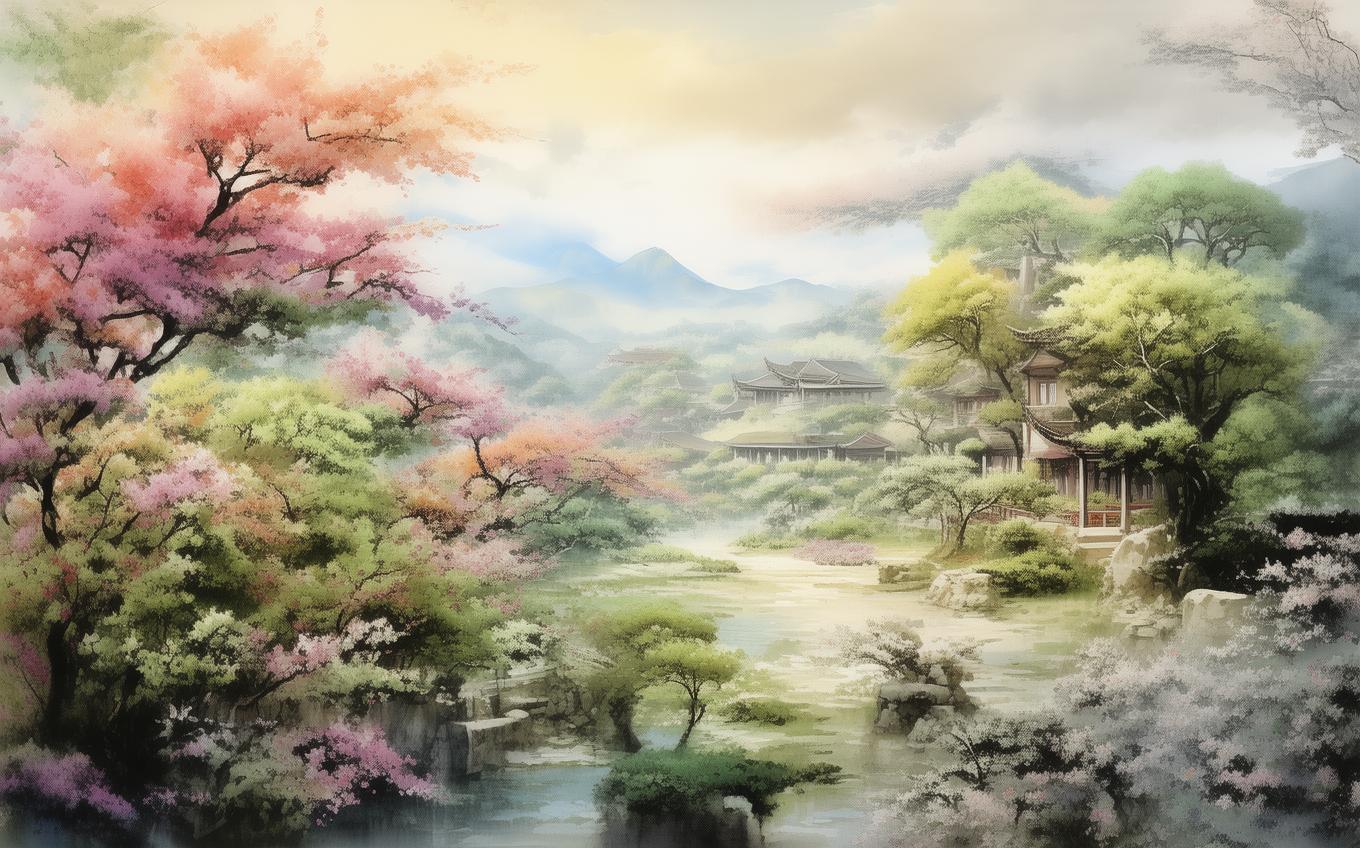
The garden brims with shades deep and light,
照在绿波中。
Zhào zài lǜ bō zhōng.
reflected in the green ripples.
Line-by-Line Analysis
Line 1: 万树江边杏 (Wàn shù jiāng biān xìng)
The opening line paints a sweeping picture with hyperbole. “Ten thousand trees” does not demand a literal count; it conveys the overwhelming abundance of apricot blossoms stretching along the riverbank. The river (jiāng) adds a sense of coolness and constant renewal, while the apricot (xìng) is one of the earliest blooming trees in spring, a herald of warmer days. By placing the trees at the water’s edge, the poet already hints at the reflection that will close the poem.
Line 2: 新开一夜风 (Xīn kāi yī yè fēng)
The second line introduces time and motion. “Newly opened” suggests the blossoms were still buds yesterday. The catalyst is “one night of wind” — a gentle, warm spring breeze that worked overnight like an invisible artist. The phrase evokes a quiet transformation; nature does not need grand gestures to display its power. There is also a subtle romanticism: the wind seems to have courted the flowers into bloom while the world slept.
Line 3: 满园深浅色 (Mǎn yuán shēn qiǎn sè)
Shifting the view, the poet now looks across the whole “garden” (yuán), which is as much the natural riverside orchard as a cultivated space. “Deep and light colors” refers to the varying shades of pink and white on the apricot petals, and possibly the play of light and shadow under the morning sun. The word “brims” (mǎn) suggests a feeling of saturation — the viewer’s eye can take in no more, so rich is the scene.
Line 4: 照在绿波中 (Zhào zài lǜ bō zhōng)
The final line completes the picture with a mirror. The blossoms and their delicate hues are “reflected” on the surface of the green water. This doppelgänger effect doubles the beauty: the real trees above and their trembling images below merge into a single continuous tapestry. “Green ripples” (lǜ bō) reveals that the water is alive, stirred perhaps by the same breeze that opened the flowers. It also lends a serene, liquid quality to the whole composition — a spring outing that moves with the rhythm of water.
Themes and Symbolism
The central theme is the quiet vitality of spring. The poem celebrates a moment of rebirth, not through bustling human activity but through nature’s own effortless renewal. The wind, the blossoms, and the water collaborate silently; the human observer is a witness, not a participant.
Key symbols:
- Apricot blossoms (xìng): In Chinese culture, apricot flowers represent beauty, the fleeting nature of life, and the arrival of spring. They bloom early and fade quickly, reminding viewers to cherish the present.
- Wind (fēng): Often a symbol of change and the intangible forces of nature. Here, the spring wind is both gentle and transformative, an agent of creation.
- Water and reflection: The green ripples serve as a mirror, suggesting harmony between the earthly and the reflected worlds. Water in Tang poetry frequently symbolizes clarity of mind or the passage of time, but here its main role is to enhance and preserve the image of fleeting blossoms, even if only for a brief, shimmering moment.
The interplay of “deep” (shēn) and “light” (qiǎn) colors can be read as a metaphor for the subtle gradations of emotion or experience — spring is not one monotonous hue but a spectrum of feelings.
Cultural Context
During the Tang dynasty, spring outings (chūn yóu) were a beloved social custom. Men and women of all classes would venture into the countryside to admire flowers, compose poems, and picnic. Poetry was an essential part of the outing — it was a way to fix the fleeting beauty in words. Wang Ya’s quatrain fits perfectly into this tradition, capturing a spontaneous, direct response to the landscape.
The poem also reflects core Daoist and Chan (Zen) Buddhist values: a deep appreciation for the natural world, the acceptance of change, and the idea that profound truths can be expressed in the simplest of observations. Wang Ya himself lived a turbulent life as a high official, yet in this poem, he removes himself entirely to let nature speak. That ability to find peace amid chaos is one reason the poem still resonates.
Conclusion
Despite its brevity, “春游曲” achieves a cinematic clarity. In just four lines, Wang Ya leads the reader from a grand riverside panorama to a single, exquisite reflection. The poem’s endurance comes from that universal moment: stepping outside on a spring morning, seeing the world suddenly remade by a warm wind, and feeling a quiet, grateful joy. It asks nothing of us but to look — and to see the deep and light colors of our own fleeting days reflected back in shimmering green water.
Comments (0)
No comments yet. Be the first to comment!