Introduction
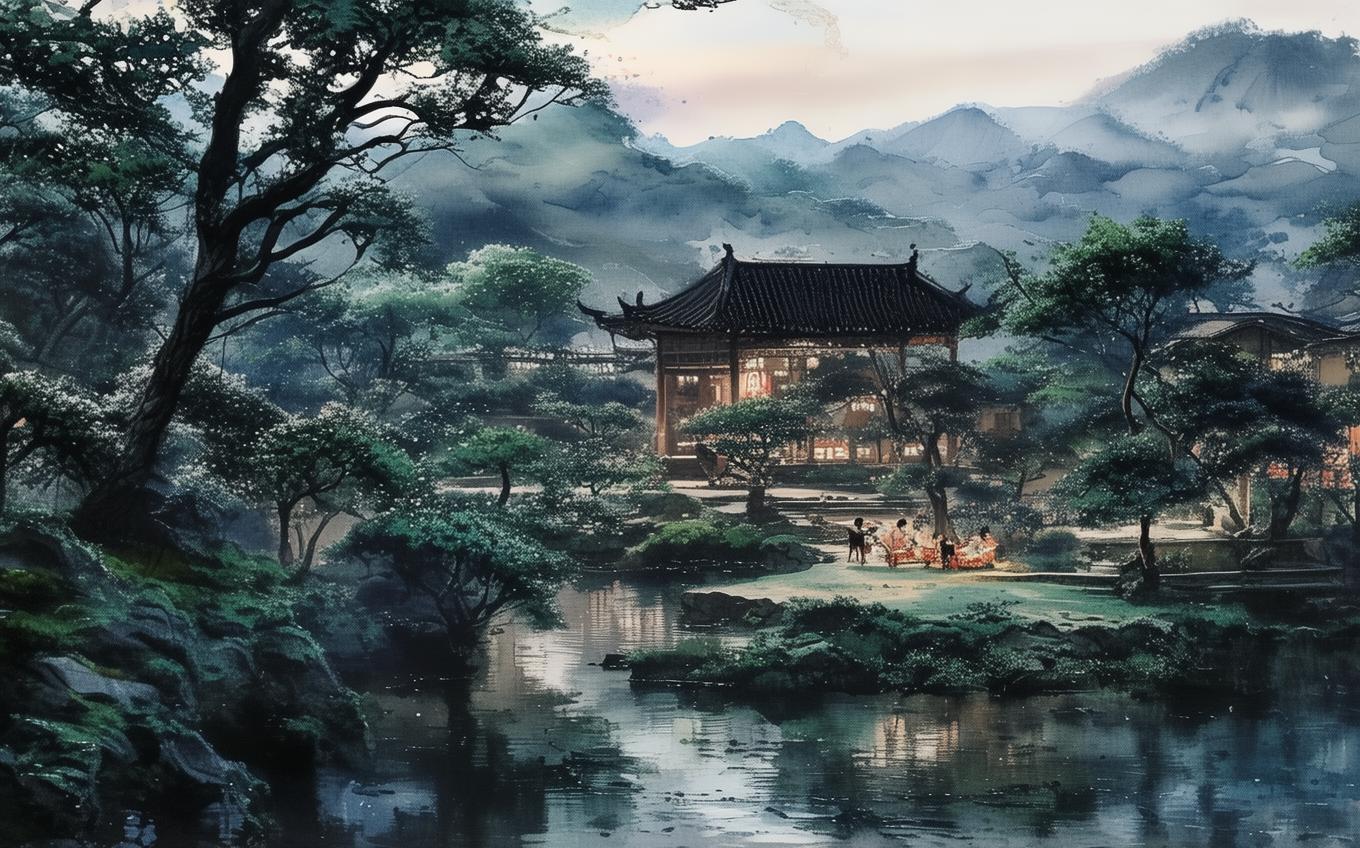
The poem "早春夜宴" (Zǎo Chūn Yè Yàn, “Early Spring Night Banquet”) is a luminous five-character regulated verse attributed to Emperor Taizong of Tang (Tang Taizong, personal name Li Shimin, 598–649 CE). Renowned not only as one of China’s greatest sovereigns—architect of the glorious “Reign of Zhenguan”—but also as a cultivated poet, Li Shimin frequently combined imperial majesty with delicate literary sensibility. This particular piece captures a moment of refined festivity: a spring night banquet held in the imperial palace, brimming with lantern light, moonlight, and the free flow of wine. It stands as an elegant specimen of early Tang court poetry, reflecting both the prosperity of the era and the emperor’s personal delight in seasonal beauty.
The Poem: Full Text and Translation
九春开上节,
Jiǔ chūn kāi shàng jié,
The ninety days of spring usher in the festival grand,
千门敞夜扉。
Qiān mén chǎng yè fēi.
A thousand palace gates open their doors to the night.
兰灯吐新焰,
Lán dēng tǔ xīn yàn,
Orchid-shaped lanterns breathe newborn flames,
桂魄朗圆辉。
Guì pò lǎng yuán huī.
The cassia moon shines clear, a round radiant glow.
送酒惟须满,
Sòng jiǔ wéi xū mǎn,
When toasting, the cups need only be filled to the brim,
流杯不用稀。
Liú bēi bù yòng xī.
And floating-goblets—let them never be too few.
务使霞浆兴,
Wù shǐ xiá jiāng xìng,
Be sure the cloudy nectar stirs a lively mood,
方乘泛洛归。
Fāng chéng fàn Luò guī.
Then, riding the boat of good cheer, we return like floating on the Luo.
Line-by-Line Analysis
Couplet 1: “九春开上节,千门敞夜扉。”
The poem opens with a sweeping temporal image. “九春” (jiǔ chūn) literally means “nine springs,” a classical trope for the full ninety days of spring (three months of thirty days each). To say it “opens” the “上节” (shàng jié, an elevated or premier festival) frames early spring itself as a sacred, celebratory threshold. The second line instantly scales the scene: “千门” (qiān mén, a thousand gates) evokes the vast Forbidden City-like palace complex, and the act of opening its night doors (“敞夜扉”) suggests an unusual, exclusive openness—an imperial invitation where the boundary between inside and outside, day and night, dissolves for this feast. The couplet thus sets a tone of ceremonial grandeur softened by seasonal warmth.
Couplet 2: “兰灯吐新焰,桂魄朗圆辉。”
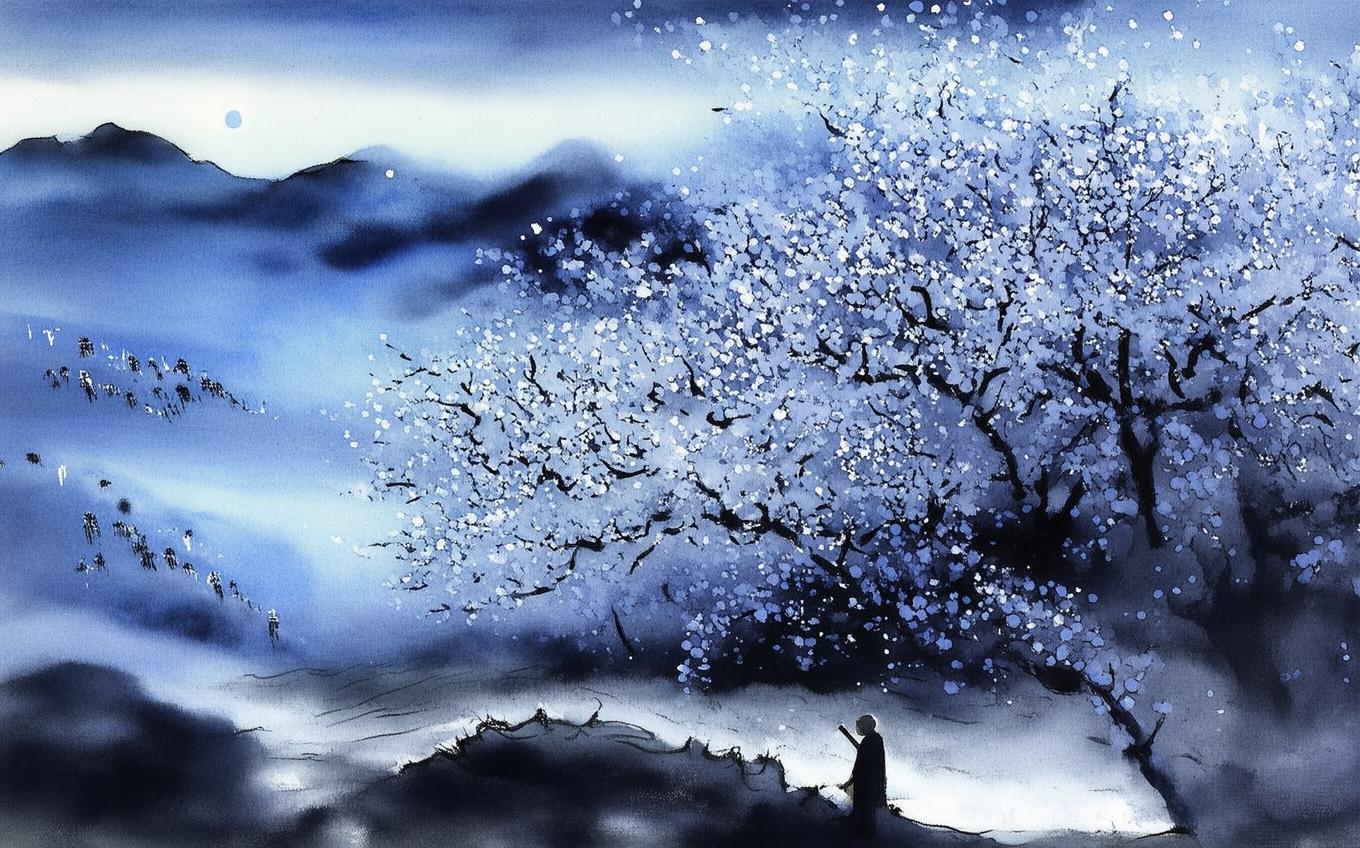
Now the poem zooms in on the twin sources of light at the banquet. “兰灯” (lán dēng) refers to lanterns crafted in the shape of orchids—flowers emblematic of refinement and noble character. The verb “吐” (tǔ, to spit out, to exhale) anthropomorphizes the lanterns, making the fresh flames seem like living blossoms opening in the dark. In parallel, “桂魄” (guì pò, the cassia soul) is a poetic kenning for the moon, rooted in the myth of the cassia tree on the lunar surface. The moon’s clarity (“朗”) and its perfect round shape (“圆辉”) cast a calm, unifying glow over the earthly lights. Fire and moon, artifice and nature, mirror each other in silent dialogue, creating a visually rich, almost sacred atmosphere for the revelry.
Couplet 3: “送酒惟须满,流杯不用稀。”
Moving from sight to action, the third couplet describes the banquet’s gentle etiquette of abundance. “送酒” (sòng jiǔ) means to offer wine in toasting; the instruction “惟须满” (need only be full) emphasizes generosity and wholeheartedness, with no half-measures. The second line introduces “流杯” (liú bēi), the ancient literati game of floating wine cups down a winding water channel (a custom known as qushui liushang). To say “不用稀” (must not be sparse) means cups should be set afloat frequently, urging constant participation and poetic inspiration. This couplet fuses imperial formality with the carefree spontaneity of scholar-gentleman gatherings, showing how the emperor blends authority with cultured leisure.
Couplet 4: “务使霞浆兴,方乘泛洛归。”
The concluding couplet elevates wine to a mythical plane. “霞浆” (xiá jiāng), “rosy-cloud liquor,” is a Daoist-inflected term for divine, celestial wine that glows like sunset clouds. “务使…兴” (be sure it stirs excitement) underscores the evening’s purpose: not mere intoxication but an awakening of high spirits. The final line closes with an elegant allusion: “泛洛归” (fàn Luò guī) evokes the Luo River, storied in Chinese literature since the ancient “Rhapsody on the Luo River Goddess.” To “ride and return” on this imagined tide suggests a return to a state of harmony with nature and myth—the banquet becomes a joyful passage into a timeless, enchanted realm. Thus the feast transcends its physical setting, floating into historical memory.
Themes and Symbolism
Harmony between humankind and nature: The poem orchestrates a seamless interplay between artificial light (orchid lanterns) and celestial light (the moon), human festivities and the season’s renewal. This reflects a deep-seated Chinese philosophical ideal—human action in accordance with the rhythms of the cosmos (tianren heyi, unity of heaven and humanity).
Imperial benevolence and abundance: The open palace gates, overflowing cups, and insistence on plenty symbolize not merely material wealth but the emperor’s magnanimity. In Tang court culture, such banquets were expressions of communal joy under a wise ruler, reinforcing social cohesion.
Transience and joyful presence: Spring’s ninety days, moon’s perfection, and a single night’s feast all carry the subtle awareness of passing time. The poem counters this by urging wholehearted immersion in the present moment—fill the cup, float the goblet, savor the glow—an attitude redolent of carpe diem, though grounded in Chinese conviviality rather than Roman melancholy.
The cassia moon and orchid lantern: The moon (桂魄) symbolizes purity, constancy, and distant longing, while the orchid (兰) represents moral integrity. Together they frame the banquet as both a sensory and spiritual experience, where external beauty mirrors inner virtue.
Wine as poetic and spiritual catalyst: “霞浆” elevates wine from a worldly pleasure to a vehicle of transcendence. The floating goblet game connects the participants with the tradition of literary giants like Wang Xizhi’s “Preface to the Orchid Pavilion,” making the banquet a site of cultural continuity.
Cultural Context
Li Shimin reigned from 626 to 649 CE, consolidating the Tang dynasty after the turbulence of the Sui collapse. His court actively promoted poetry as a mark of civilization, and the emperor himself composed over a hundred extant poems. “早春夜宴” belongs to a period when the imperial palace served as the epicenter of literary, political, and ritual life. Spring festivals—whether the Beginning of Spring (Lichun) or the Shangsi Festival—were occasions for cleansing rituals, outdoor feasts, and poetic composition.
The “floating goblet” custom dates back to the Zhou dynasty and reached its peak during the Eastern Jin, when the calligrapher Wang Xizhi gathered with friends along a winding stream, composing the famous “Lantingji Xu.” By invoking this practice, Li Shimin positions his imperial banquet within a lineage of literati refinement, yet scales it to imperial grandeur. The Luo River mentioned in the last line carries layers of meaning: it was the setting for the legendary beauty of the goddess Luoshen in Cao Zhi’s rhapsody, as well as a symbol of the cultural heartland around the capital Chang’an and Luoyang. This blending of myth and geography situates the poem in an imaginative realm where past and present, earth and heaven, meet.
Tang poetry often extolled the glories of the empire, and this poem subtly celebrates the Pax Sinica of the early Tang—a time of political stability, economic flourishing, and artistic refinement. The emperor’s voice is at once authoritative and intimate, a model of the Confucian ruler who governs through ritual and shared joy.
Conclusion
“早春夜宴” encapsulates a night when an emperor opened his gates, his lanterns, and his heart to the arrival of spring. In eight tightly woven lines, Li Shimin creates a world where moonlight rivals firelight, wine becomes a cloudy celestial draught, and the floating of a simple cup links an empire’s court to centuries of poetic tradition. The poem’s enduring appeal lies in its perfect balance: it is stately yet warm, lavish yet mindful, earthly yet mythic. For modern readers, it offers a glimpse into a golden age of Chinese civilization and a timeless invitation—to welcome the seasons with open doors, to raise a full cup, and to let joy float just a little longer before returning home.
Comments (0)
No comments yet. Be the first to comment!