Introduction
Few figures in Chinese history command as much fascination—and controversy—as Wu Zetian (武则天), the only woman ever to rule China in her own name as Emperor. Her reign during the Tang Dynasty (690–705 AD) overturned centuries of Confucian patriarchal norms, and she wielded power with a blend of political cunning, ruthless ambition, and cultural patronage. One of her most famous poems, “腊日宣诏幸上苑” (Proclamation on the La Festival to Visit the Shang Park), is a tiny masterpiece of assertiveness cloaked in the guise of a seasonal excursion. Written as an imperial edict in verse, it encapsulates her extraordinary self-perception and her desire to bend even nature to her will. For English readers, this poem offers a rare, vivid window into the mind of a ruler who saw herself as the pivot of the cosmos.
The Poem: Full Text and Translation
明朝游上苑,
Míngzhāo yóu shàng yuàn,
Tomorrow I will visit the Shang Park;
火急报春知。
Huǒjí bào chūn zhī.
Urgently announce this to the spirit of spring.
花须连夜发,
Huā xū liányè fā,
The flowers must blossom overnight,
莫待晓风吹。
Mò dài xiǎofēng chuī.
Do not wait for the morning breeze to stir them.
Line-by-Line Analysis
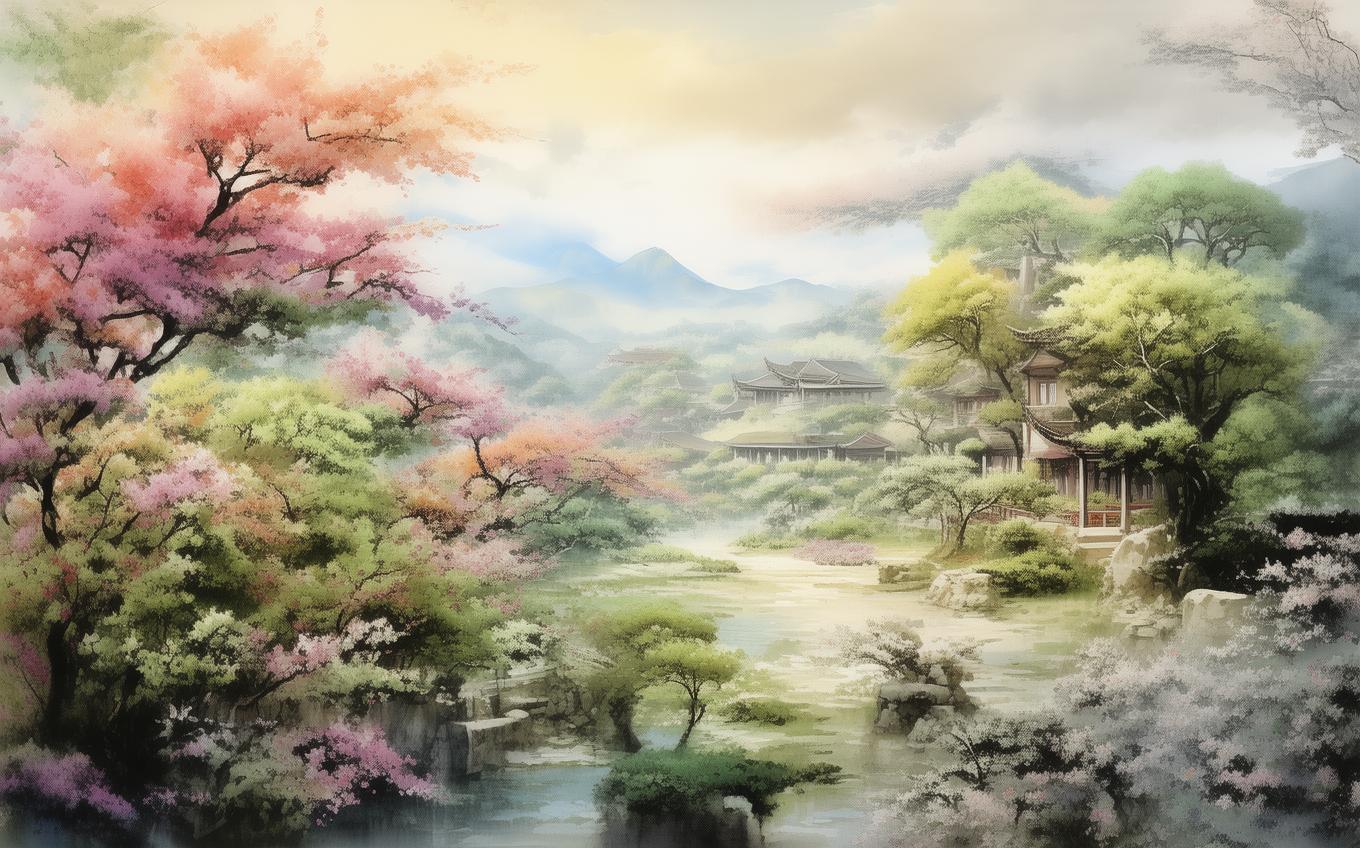
“明朝游上苑” – The poem opens with a simple, almost mundane statement: the speaker declares her intention to visit the imperial garden tomorrow. Yet the imperial “I” is implicit; this is no personal whim but a decree. The “Shang Park” (Shangyuan) was an actual royal garden north of the Tang capital, Chang’an, a place of cultivated beauty and sensual pleasure. By choosing the precise time “tomorrow morning,” the speaker asserts control over the future.
“火急报春知” – The second line amps up the drama. The adverb “火急” (urgently, like fire) injects a sense of divine impatience. The message is to be relayed to “春,” the personified spirit of spring. In Chinese cosmology, seasons were governed by directional deities and cosmic rhythms, not by human whim. For a mortal to command the spring spirit so peremptorily is an act of staggering hubris—or supreme authority. The verb “报” (report, announce) is typically used for inferiors informing superiors; here, the direction is inverted.
“花须连夜发” – This is the core command: flowers must bloom overnight, defying their natural cycle. “连夜” (through the night) emphasizes the compressed timeframe, a supernatural acceleration of nature. The word “须” (must) leaves no room for negotiation. It transforms the garden from a passive landscape into an active servant of the imperial will.
“莫待晓风吹” – The final line reinforces the urgency. The flowers are not to wait for the “morning breeze” (晓风) that would normally coax them open. “莫待” (do not wait for) dismisses the very agent of spring as an unnecessary intermediary. The natural world is stripped of its autonomy and rendered immediate, obedient solely to the empress’s schedule. The line also carries a subtle poetic flourish: the morning breeze is gentle and pleasant, yet the speaker rejects even this agreeable delay, underscoring her absolute command.
Themes and Symbolism
Power over nature – The poem’s central theme is the reordering of the cosmos around the imperial persona. By commanding flowers to bloom out of season, Wu Zetian positions herself not just as a human ruler but as a divine force capable of overriding the rhythms of the universe.
Legitimacy and spectacle – The poem functions as political theater. According to legend, Wu Zetian issued this edict after some courtiers doubted her authority; when she visited the garden the next day, all flowers except the peony had bloomed, proving her mandate. The peony’s defiance became a story of its own, but the poem’s intent was to manifest cosmic approval of her rule.
Human will and time – The unnatural acceleration (“overnight”) hints at the desire to control time itself. Emperors, after all, styled themselves as masters of the calendar, and Wu Zetian, who even created her own characters and era names, took this to an extreme.
Cultural Context
The poem is set during the “腊日” (La Festival), an ancient winter sacrificial rite held on the eighth day of the twelfth lunar month, a time of cold and dormancy. The demand for flowers to bloom in midwinter defies the season’s barrenness. In Chinese literary tradition, flowers are strongly correlated with specific months—plum blossoms for winter, peonies for spring—so the command shatters these conventions. The audacity resonates with Wu Zetian’s own biography: she was a woman who seized the throne in a rigidly patriarchal society, forcing an entire civilization to bloom against its customary order.
Moreover, the poem echoes the Confucian ideal that a virtuous ruler’s moral power (德, dé) could harmonize nature, causing gentle winds and timely rains. Wu Zetian, steeped in Buddhist and Daoist ideology as well, weaponized this trope to perform sovereignty. She famously sponsored the construction of massive Buddhist grottoes and claimed she was a bodhisattva incarnate; this poem is a literary extension of that self-fashioning.
Conclusion
“腊日宣诏幸上苑” is deceptively simple—four lines, twenty characters, no rare allusions—yet it packs the explosive force of an empress’s absolute conviction. Its beauty lies in the tension between natural grace and imperial will, between the delicate imagery of flowers and the steel of command. For modern readers, the poem is more than a historical curiosity; it is a testament to how language can be wielded as an instrument of power, reshaping reality through sheer audacity. As a literary artifact, it remains a brilliant example of how Chinese poetry can compress an entire worldview into a fleeting, fragrant moment of imagined blossoms against the winter chill.
Comments (0)
No comments yet. Be the first to comment!