
Introduction
The poem "如意娘" (Rúyì Niáng), or "The Lady Ruyi," is attributed to Wu Zetian (武则天, Wǔ Zétiān), one of the most extraordinary figures in Chinese history. Born in 624 CE, Wu rose from a concubine to become the only female emperor in China's long imperial era, ruling the Tang Dynasty with formidable intelligence and political acumen. This poem, however, reveals a different side of her—a woman consumed by longing and emotional vulnerability. Believed to have been written during her time as a Buddhist nun after the death of Emperor Taizong, before she returned to court to become Empress Consort, "如意娘" stands as a rare window into the private heart of a public titan. Its raw emotional power and masterful use of imagery have secured its place in the canon of classical Chinese poetry, offering a timeless exploration of love and separation.
The Poem: Full Text and Translation
看朱成碧思纷纷,
Kàn zhū chéng bì sī fēnfēn,
Seeing red as green, my thoughts are tangled and wild.
憔悴支离为忆君。
Qiáocuì zhīlí wèi yì jūn.
Haggard and broken, all because I long for you.
不信比来长下泪,
Bùxìn bǐlái cháng xià lèi,
If you don't believe that lately I've been constantly shedding tears,
开箱验取石榴裙。
Kāi xiāng yàn qǔ shíliú qún.
Open my chest and check the pomegranate-red skirt.
Line-by-Line Analysis
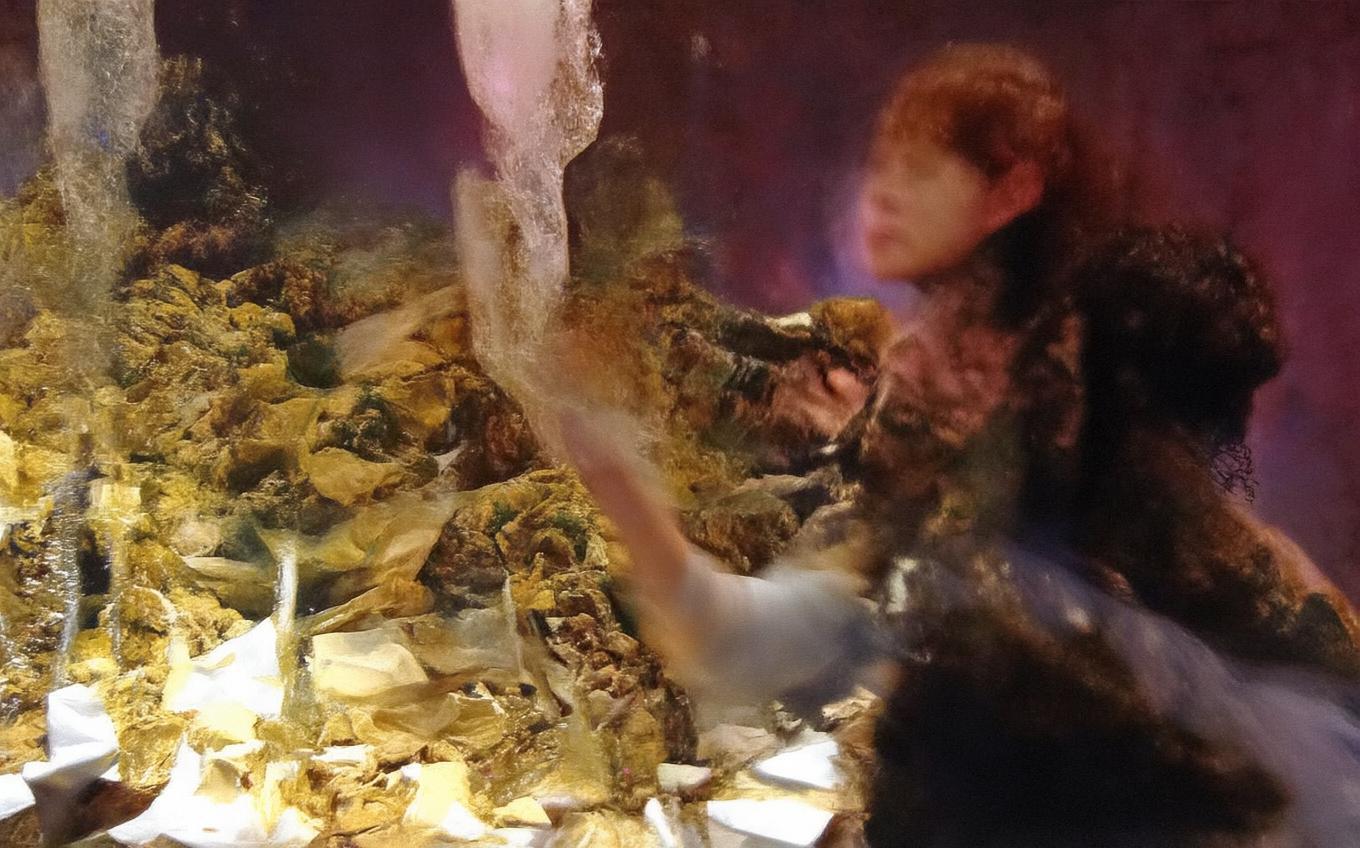
The poem opens with a striking visual distortion: "Seeing red as green" (看朱成碧). This is not a simple mistake but a profound metaphor for psychological disarray. Red (朱, zhū) and green (碧, bì) are distinct, vibrant colors, and confusing them signals a mind so overwhelmed by "tangled thoughts" (思纷纷, sī fēnfēn) that perception itself fractures. The poet's inner turmoil is so intense it bleeds into her sensory experience, painting a world as disordered as her emotions. This line immediately establishes the speaker's state of extreme mental distress, setting a tone of passionate instability.
The second line, "Haggard and broken, all because I long for you" (憔悴支离为忆君), shifts from mental to physical decay. The words "haggard" (憔悴, qiáocuì) and "broken" (支离, zhīlí) depict a body wasting away, directly linking physical deterioration to the act of remembering (忆, yì) the beloved. This is a classic theme in Chinese love poetry, where longing is not just an emotion but a corporeal affliction that consumes the lover. The direct address to "you" (君, jūn) makes the accusation intimate and personal—her suffering has a specific, undeniable cause.
The third line introduces a defiant, almost desperate tone: "If you don't believe that lately I've been constantly shedding tears" (不信比来长下泪). The poet anticipates skepticism from her distant lover, challenging his potential disbelief. The phrase "constantly shedding tears" (长下泪, cháng xià lèi) emphasizes the duration and frequency of her weeping, not a fleeting moment of sadness but a sustained state of grief. This line functions as a rhetorical bridge, setting up the dramatic, material proof offered in the final line.
The poem culminates in a breathtaking image: "Open my chest and check the pomegranate-red skirt" (开箱验取石榴裙). The "pomegranate-red skirt" (石榴裙, shíliú qún) is a garment dyed a brilliant, fiery red, a color of passion, youth, and vitality. The poet demands her lover examine this skirt, which is presumably stained and faded from her countless tears. The proof of her love is not in words but in the physical evidence left on her clothing. This is a brilliant poetic maneuver—transforming an abstract emotion into a tangible, visual object that can be "verified" (验, yàn). The locked chest (箱, xiāng) suggests a treasured, private relic of her devotion, hidden away but now offered as incontrovertible testimony.
Themes and Symbolism
The central theme of "如意娘" is the devastating physical and psychological toll of love and separation. The poem explores how intense longing can distort reality, erode health, and become an all-consuming force. It is a study in emotional extremity, where the speaker's identity seems to dissolve into her suffering.
The symbolism is densely packed. The color confusion of red and green symbolizes a world out of joint, where even basic perception fails under emotional duress. Red, the color of joy, celebration, and life, is "seen as green," a color often associated with spring but here suggesting a sickly, unnatural inversion. The pomegranate-red skirt is the poem's master symbol. Pomegranates, with their many seeds, traditionally represent fertility and abundance, but here the skirt's color is a testament to sterility and loss—its vibrancy is being washed away by tears. The skirt is also a synecdoche for the woman herself: once beautiful and whole, now faded and kept in darkness, awaiting inspection as proof of her fidelity and pain.
Cultural Context
This poem emerges from a pivotal moment in Tang Dynasty history and Wu Zetian's personal biography. After Emperor Taizong's death in 649 CE, his childless concubines, including the young Wu, were sent to Ganye Temple to become Buddhist nuns, effectively ending their secular lives. "如意娘" is traditionally read as a poem from this period of exile, addressed to the new Emperor Gaozong, with whom she had already formed a bond. It was a desperate gamble—a poem that could be seen as a declaration of love or a dangerous impropriety. Its emotional intensity likely served a dual purpose: genuine expression and strategic persuasion to remind the emperor of her devotion and engineer her return to court.
The poem reflects the Tang Dynasty's sophisticated literary culture, where poetry was a primary mode of emotional and even political communication. It also embodies the Confucian virtue of female fidelity (节, jié), but with a twist—here, the woman is not passively waiting but actively demanding recognition of her sacrifice. The "tear-stained skirt" motif became a lasting trope in Chinese literature, influencing later poets who used clothing as a canvas for emotional history. Wu Zetian's authorship adds layers of irony, given her later image as a ruthless ruler, making this vulnerable self-portrayal all the more fascinating and humanizing.
Conclusion
"如意娘" endures because it distills the agony of love into a few perfectly chosen, visceral images. In just twenty-eight characters, Wu Zetian moves from psychological fragmentation to physical decay, and finally to a dramatic demand for empirical validation of her sorrow. The poem's power lies in its transformation of the intangible—memory, tears, longing—into the shockingly tangible: a faded red skirt locked in a chest. It is a poem that argues for the material reality of emotion, insisting that love leaves marks as real as any wound. For modern readers, it offers a timeless, deeply human portrait of vulnerability from a woman history remembers as invulnerable. It reminds us that behind the masks of power or piety, the experience of longing remains achingly the same across centuries, a red skirt fading slowly in the dark.
Comments (0)
No comments yet. Be the first to comment!