Introduction
In the rich tapestry of Tang dynasty poetry, few works capture the elegant tension between eremitic ideals and worldly longing quite as poignantly as "拟小山篇" (Nǐ Xiǎoshān Piān – "Imitating the Xiaoshan Piece"). Attributed to Xu Hui (徐惠, 627–650), an exceptionally gifted poet and imperial consort, the poem was reportedly composed when she was just eight years old. The title itself signals a deliberate homage: "Xiaoshan" (Little Mountain) is a pen name associated with the "Zhao Yin Shi" (招隐士, "Summoning the Recluse"), a celebrated poem from the ancient Chu Ci (Songs of Chu) anthology. By imitating its archaic style and symbolic landscape, Xu Hui reanimates a millennium-old dialogue between the solitary sage and the seeker who calls him back to the human world. Though brief, this jewel-like quatrain has endured for centuries, celebrated as a precocious fusion of childlike wonder, erudite literary allusion, and profound emotional depth.
The Poem: Full Text and Translation
仰幽岩而流盼
Yǎng yōu yán ér liú pàn
Gazing up at the secluded cliff, I let my glances wander.抚桂枝以凝想
Fǔ guì zhī yǐ níng xiǎng
Stroking a cassia branch, I concentrate my thoughts in reverie.将千龄兮此遇
Jiāng qiān líng xī cǐ yù
If a thousand years could bring this meeting about,荃何为兮独往
Quán hé wéi xī dú wǎng
Fragrant one, why do you go off alone?
Line-by-Line Analysis
Line 1: “仰幽岩而流盼”
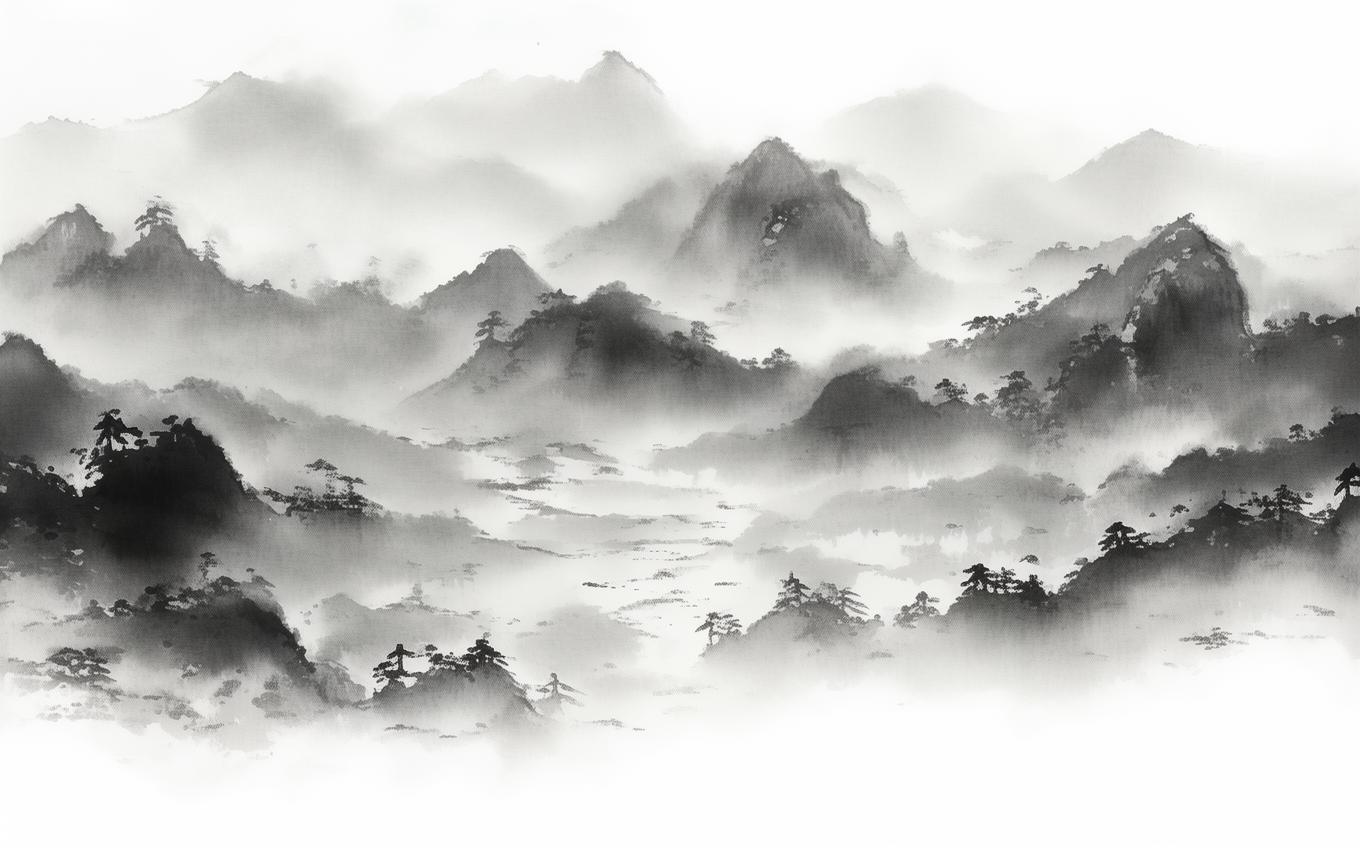
The poem opens with an upward gaze toward a yōu yán (幽岩) – a mysterious, shadowy cliff hidden deep within the mountains. This image immediately transplants the reader into the ancient world of the Chu Ci, where remote crags and misty peaks are the natural dwellings of recluses and immortals. The verb liú pàn (流盼) – literally "flowing glances" – suggests not a casual look but a sustained, yearning scrutiny. The speaker is searching for someone, her eyes moving slowly across the cliff face as if hoping to catch a glimpse of the hermit who has sequestered himself from society. In just six characters, Xu Hui establishes the poem's central dynamic: a human presence on the outside, full of longing, peering into a realm of sublime isolation.
Line 2: “抚桂枝以凝想”
Here, the speaker lowers her gaze and reaches out to touch a branch of the cassia tree (桂, guì), a plant saturated with symbolic weight in classical Chinese poetry. In Qu Yuan’s Li Sao and the "Zhao Yin Shi," cassia symbolizes moral purity, otherworldly fragrance, and the autonomy of the noble soul. By stroking the branch and níng xiǎng (凝想) – "freezing her thoughts" into deep contemplation – she physically connects with the hermit’s spiritual emblem. The gesture is both gentle and wistful; it is as if, by caressing what the recluse has left behind, she might telepathically bridge the distance between them. The cassia becomes a token of an absent beloved, a natural relic that keeps his memory alive.
Lines 3–4: “将千龄兮此遇,荃何为兮独往”
The final couplet marks a direct turn to apostrophe, introduced by the archaic exclamatory particle xī (兮), which punctuates the rhythm with a sigh. Jiāng qiān líng xī cǐ yù – "Would that a thousand years could yield this encounter" – expresses a wish so vast that it collapses mortal time. The speaker imagines a fated meeting across ages, elevating her personal longing to cosmic proportions. Then comes the climactic question: Quán hé wéi xī dú wǎng – "Fragrant one, why do you go off alone?" Quán (荃) is an aromatic herb frequently used in the Chu Ci as a metaphor for a virtuous ruler or a noble spirit; here, it addresses the recluse with tender intimacy. By asking why he departs alone, the speaker does more than mourn his absence – she subtly offers to accompany him, or to call him back, entwining devotion with a gentle reproof. The loneliness of the hermit is met with the loneliness of the one left behind, and the question hangs unanswered, resonant with all the ache of unfulfilled connection.
Themes and Symbolism
Longing and the Recluse Ideal
The poem’s core subject is zhāo yǐn (招隐) – "summoning the recluse" – a theme with deep roots in Chinese literature. The tension between eremitic withdrawal and worldly duty, or between spiritual purity and human attachment, animates every line. Xu Hui positions her speaker not as a mere observer but as an active summoner, using the lyrical "I" to voice a personal, almost intimate yearning for the hermit’s return.
The Cliff and the Cassia
The secluded cliff (幽岩) functions as a threshold: it is both the physical barrier


Comments (0)
No comments yet. Be the first to comment!