Analysis of "秋风函谷应诏" - Classical Chinese Poetry
Introduction
The phrase 秋风函谷应诏 (Qiūfēng Hángǔ Yìngzhào) – “Autumn Wind at Hangu Pass: Answering an Imperial Summons” – captures a quintessential moment in the life of a Tang dynasty scholar-official: traveling through rugged frontier passes in response to the emperor’s call. While this exact title does not survive as a standalone poem, the imagery it evokes finds its most perfect expression in the celebrated work 《秋日赴阙题潼关驿楼》 (Qiūrì Fù Què Tí Tóngguān Yì Lóu) – “On an Autumn Day Going to the Capital, Inscribed at Tong Pass Post Station” – by the late Tang poet 许浑 (Xǔ Hún, c. 791–858). Xu Hun was a master of regulated verse, known for his melancholy tone and deep engagement with landscape. This poem, written as he journeyed to the capital Chang’an after receiving a summons, distills the tension between public duty and private longing, all set against the majestic backdrop of a fading autumn day. For English-speaking lovers of Chinese literature, this poem is a luminous entry point into the Tang poetic world.
The Poem: Full Text and Translation
秋日赴阙题潼关驿楼
Qiūrì fù què tí Tóngguān yì lóu
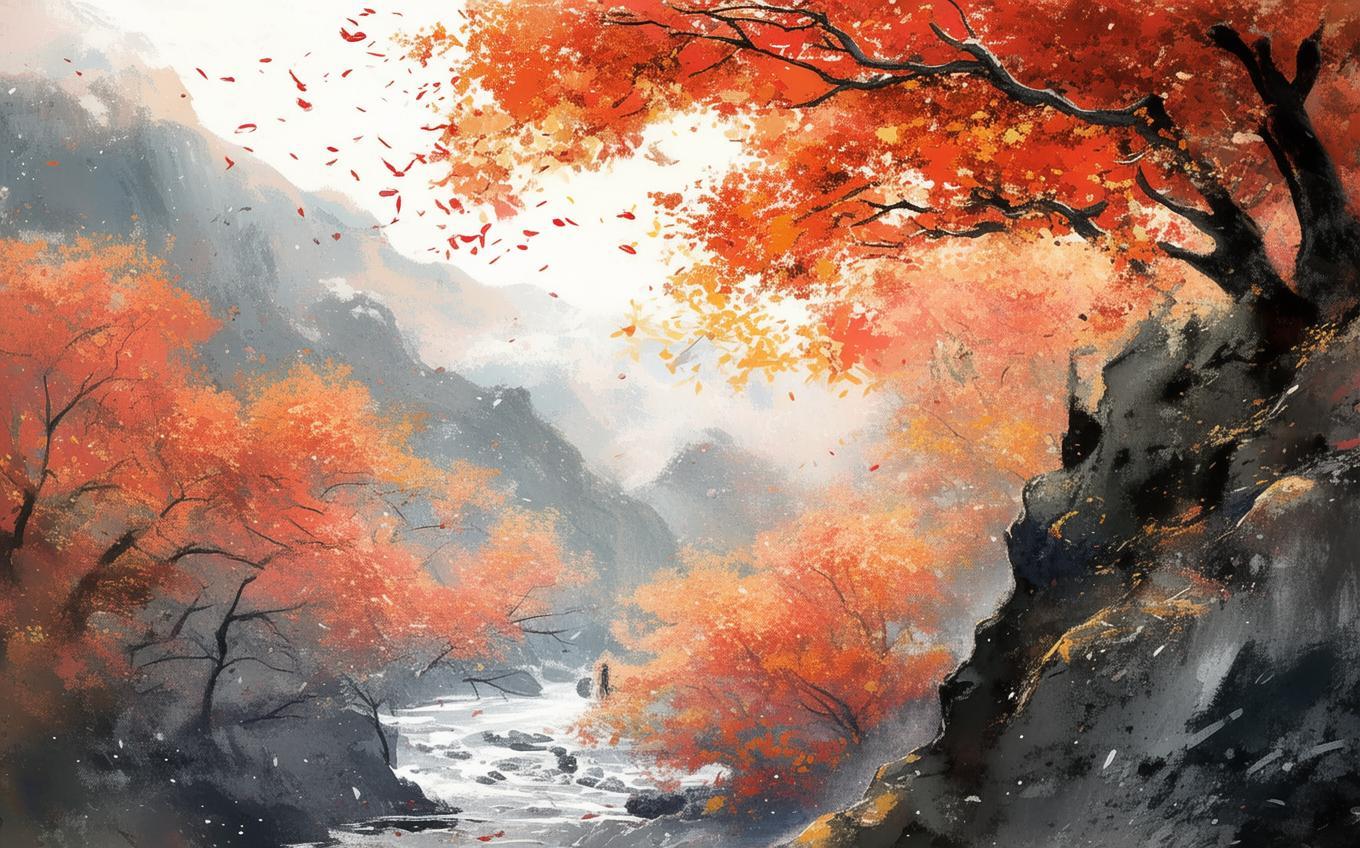
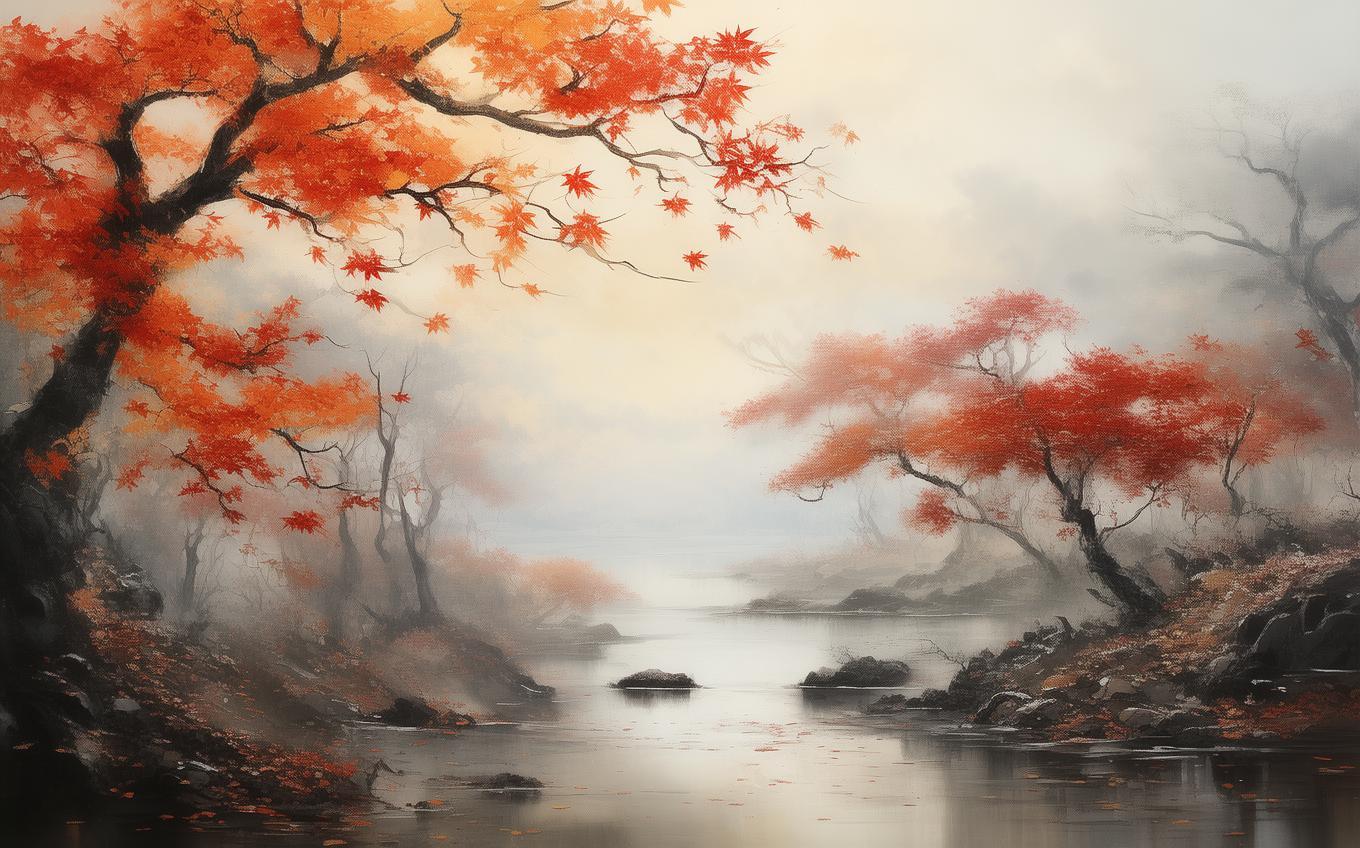
On an autumn day, going to the imperial palace, inscribed at Tong Pass post station红叶晚萧萧,
Hóng yè wǎn xiāo xiāo,
Red leaves in the evening rustle and sigh,长亭酒一瓢。
Cháng tíng jiǔ yī piáo,
At the long pavilion, a gourdful of wine.残云归太华,
Cán yún guī Tài Huà,
Leftover clouds drift back to Mount Taihua,疏雨过中条。
Shū yǔ guò Zhōng Tiáo,
Sparse rain sweeps past the Zhongtiao Range.树色随山迥,
Shù sè suí shān jiǒng,
Tree hues stretch far where mountains grow distant,河声入海遥。
Hé shēng rù hǎi yáo,
The river’s voice enters the far-off sea.帝乡明日到,
Dì xiāng míng rì dào,
Tomorrow I shall reach the imperial city,犹自梦渔樵。
Yóu zì mèng yú qiáo.
Yet still I dream of fishing and woodcutting.
Line-by-Line Analysis
Couplet 1: 红叶晚萧萧,长亭酒一瓢。
The poem opens with an intense sensory snapshot. “Red leaves” (红叶) immediately announce autumn, but xiāo xiāo (萧萧) does more than describe a sound – it carries a deep literary weight, evoking the rustle of falling foliage and the sigh of chill winds. This onomatopoeic binome is fused with a mood of desolation. The “long pavilion” (长亭) was a traditional way station where travelers rested or bade farewell; here the poet pauses with only a single ladle of wine. The brevity of the line and the humble “one gourd” hint at loneliness and introspection. In just ten characters, Xu Hun establishes a twilight scene of transience.
Couplet 2: 残云归太华,疏雨过中条。
The poet raises his gaze to the surrounding terrain. Mount Taihua (太华, the sacred Western Peak) and the Zhongtiao Mountains (中条) are real geographical landmarks defining the Tong Pass corridor. “Leftover clouds” (残云) drift homeward to the peaks, while “sparse rain” (疏雨) passes over the ridges. The verbs guī (归, return) and guò (过, pass across) suggest movement and impermanence – the clouds have a destination, the rain merely a path. This couplet is praised for its grandeur and economy; the landscape becomes a metaphor for the poet’s own journey toward the capital and, perhaps, for the fleeting nature of official life.
Comments (0)
No comments yet. Be the first to comment!