Introduction
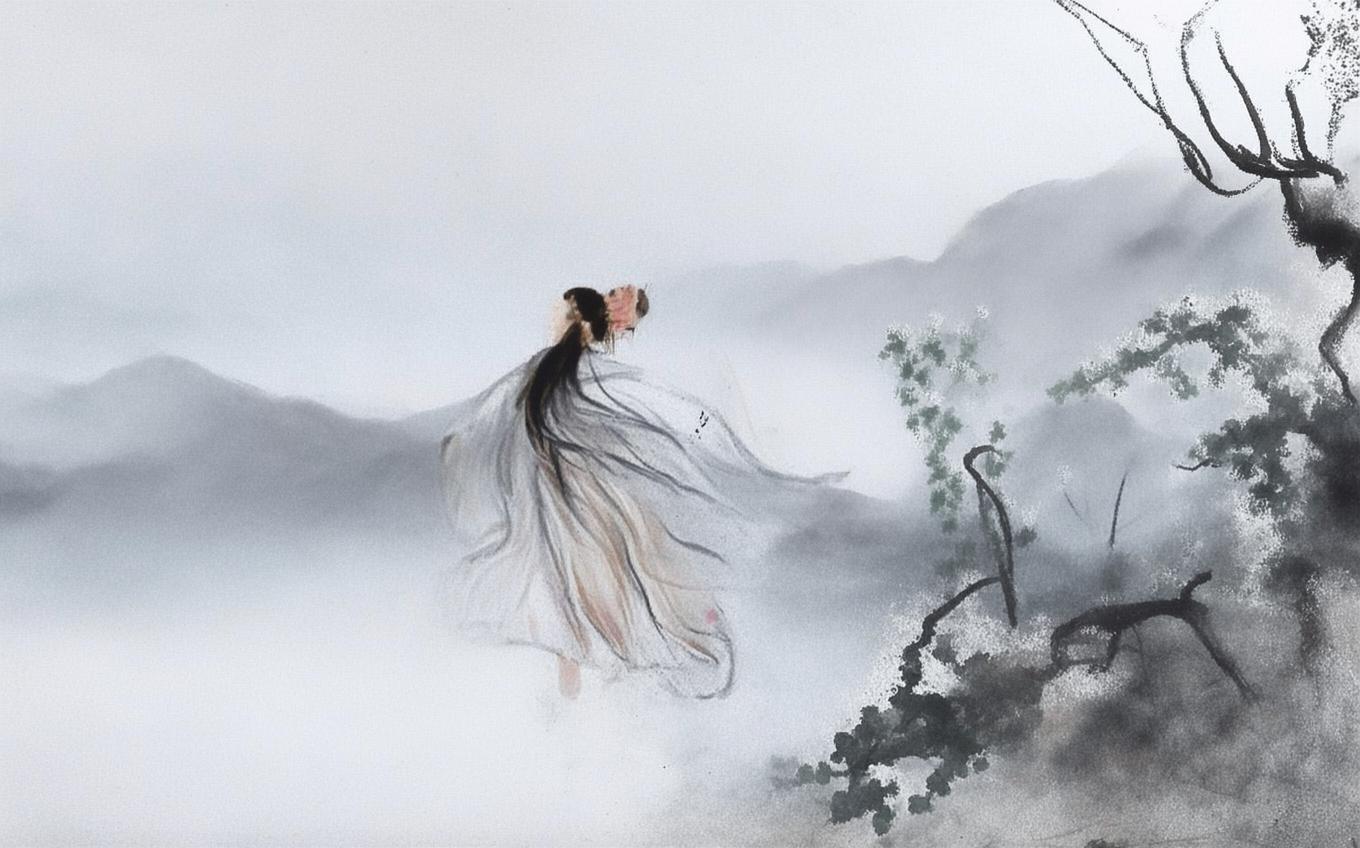
Picture the splendid Tang Dynasty court, where poetry, music, and dance wove together into an exquisite cultural tapestry. In this thriving world of art, a poem was born that captures the very soul of dance—"赠张云容舞" (Gifting a Poem to Zhang Yunrong’s Dance). The poem is attributed to Yang Yuhuan, known to history as Yang Guifei, the beloved consort of Emperor Xuanzong. She herself was a celebrated dancer, and her only surviving poem is a tribute to another artist: the dancer Zhang Yunrong. This short quatrain uses nature imagery to freeze a dancer’s movements into words, offering English readers a timeless window into how classical Chinese poetry transformed physical grace into literary beauty.
The Poem: Full Text and Translation
罗袖动香香不已
Luó xiù dòng xiāng xiāng bù yǐ
Silk sleeves stir fragrance, fragrance unceasing,
红蕖袅袅秋烟里
Hóng qú niǎo niǎo qiū yān lǐ
Red lotus swaying in autumn mist.
轻云岭上乍摇风
Qīng yún lǐng shàng zhà yáo fēng
Like a light cloud over the ridge suddenly shaken by wind,
嫩柳池塘初拂水
Nèn liǔ chí táng chū fú shuǐ
Or tender willows by the pond first brushing the water.
Line-by-Line Analysis
Line 1: 罗袖动香香不已
The poem opens not with the dancer’s whole body, but with her silk sleeves, which are steeped in perfume. As she moves, the fragrance swells and spreads without end. In Tang Dynasty court culture, both men and women of high status perfumed their garments, and dance movements were often designed to accentuate flowing sleeves. The repetition of “香” (fragrance) echoes the lingering scent, suggesting that the beauty of the dance extends beyond what the eye can see. It is an olfactory image—the dance is so enchanting that even the air remembers it.
Line 2: 红蕖袅袅秋烟里
Here the dancer is directly compared to a red lotus (红蕖) gently swaying in autumn mist. The lotus is a classic symbol of purity and beauty in Chinese literature, yet by setting it in autumn mist, the poet introduces a delicate, ephemeral mood. The word “袅袅” (niǎo niǎo) describes a slender, graceful, wavering motion—like curling smoke or a tender plant trembling in the breeze. The dancer’s figure becomes soft and elusive, as if half-hidden in a dreamy haze. This line blends visual delicacy with a hint of melancholy, for autumn is also a season of transience.
Line 3: 轻云岭上乍摇风
The metaphor shifts upward: the dancer is now like a light cloud resting on a mountain ridge that is suddenly shaken by the wind. “乍” (zhà) is crucial here—it means “suddenly” or “abruptly,” capturing a sharp, spirited movement in the dance. After the soft, misty lotus image, this sudden gust gives the performance dynamic energy. The cloud imagery suggests weightlessness, as if the dancer could drift away at any moment. In Chinese aesthetics, clouds often represent freedom and the ethereal, linking human grace with the natural world’s most fleeting forms.
Line 4: 嫩柳池塘初拂水
The final line brings us back to gentleness, completing the cycle of movement. The dancer is now a tender willow branch newly brushing the surface of a pond. Willows are the ultimate symbol of suppleness and feminine grace in Chinese poetry—their slender branches bend gracefully without breaking. The word “初” (chū, “first” or “just beginning”) adds an innocence and freshness, as if this is the very first touch of spring. The image is quiet and liquid, leaving the reader with a sense of flowing, unhurried elegance. The dancer’s motion is now soft, barely skimming reality like a reflected image on water.
Themes and Symbolism
The central theme is the transient beauty of dance—an art that vanishes in the moment of its creation. All four lines reach for images from nature that are themselves impermanent: rising fragrance, misty lotus, wind-shaken cloud, and willow tips touching water. By equating dance with these fleeting phenomena, the poet suggests that true beauty can never be fixed, only felt and remembered.
The poem also explores the relationship between human artistry and the natural world. Instead of describing the dancer in literal terms, it layers one natural simile upon another, revealing a philosophy deeply rooted in Chinese aesthetics: humanity finds its highest expression in harmony with nature, not in domination over it.
Key symbols include:
- Silk sleeves and fragrance: luxury, allure, the lingering presence of beauty
- Red lotus: purity, elegance, and the melancholy of autumn transience
- Cloud and wind: spontaneity, lightness, spirited energy
- Willow and water: suppleness, quiet grace, renewal
Cultural Context
Composed during the golden age of the Tang Dynasty (618–907), the poem reflects a court culture obsessed with the performing arts. Emperor Xuanzong maintained academies such as the Pear Garden, where hundreds of musicians and dancers trained. Zhang Yunrong was likely one of these palace dancers, and Yang Yuhuan’s gift of a poem was both a personal tribute and a mark of high recognition.
Yang Yuhuan (719–756) herself was famously beautiful and an accomplished dancer, particularly known for the “Rainbow Skirt and Feathered Coat Dance.” Her only surviving poem reveals that she saw dance not just as entertainment but as an art form worthy of the most refined poetic craft. The poem also encapsulates a Daoist-influenced aesthetic: the highest skill is one that appears effortless, blending completely with the rhythms of nature. Zhuangzi’s idea of “the Dao of the dance”—where the dancer becomes one with the cosmos—finds vivid expression in these four lines.
Conclusion
“赠张云容舞” is a small masterpiece that transforms dance into a series of natural paintings. In just 28 Chinese characters, it moves from scent to sight, from misty stillness to sudden wind, and back to the gentlest touch of water. For English-speaking readers, the poem offers more than a portrait of a Tang Dynasty dancer—it reveals a way of seeing art as inseparable from nature, where even the most refined human movements echo the grace of lotus, cloud, and willow. More than a millennium later, the fragrance still lingers; the willow still bends toward the pond. And in the space of a few breaths, we can still glimpse that dancer, floating between the lines, suspended in the autumn mist.
Comments (0)
No comments yet. Be the first to comment!