Introduction
Wang Wei (王维, 701–761) is one of the most celebrated poets of the Tang Dynasty, often hailed as the "Poet of Buddha" for his serene, nature-infused verse and deep Buddhist sensibility. While his most famous works depict quiet mountain retreats and moonlit bamboo groves, Wang Wei also served as a court official and occasionally composed poems for imperial occasions. "奉和圣制过温汤" (Fèng hé shèng zhì guò wēn tāng), or “Respectfully Harmonizing with His Majesty’s Poem ‘Passing the Hot Springs,’” is such a piece—a polished, courtly response to an emperor’s original composition.
The poem belongs to a genre called “poetic exchange” (和诗), in which a poet echoes the rhyme, meter, or theme of another’s work as a gesture of deference or friendship. Here, Wang Wei matches the emperor’s tone and topic, transforming a royal excursion to the hot springs near Chang’an into a vision of natural beauty and political harmony. This poem offers a window into the elegant world of Tang court culture, where art, nature, and imperial power were seamlessly woven together.
The Poem: Full Text and Translation
温谷媚新丰,
Wēn gǔ mèi xīn fēng,
The Warm Valley charms the land of Xinfeng;骊山横半空。
Lí shān héng bàn kōng.
Mount Li stretches across the middle air.汤池薰水殿,
Tāng chí xūn shuǐ diàn,
The hot spring pool scents the waterside hall;翠木暖珠宫。
Cuì mù nuǎn zhū gōng.
Emerald trees warm the jewel-bright palace.地胜宜居跸,
Dì shèng yí jū bì,
This splendid site is fit for an imperial sojourn;山虚尽舞风。
Shān xū jìn wǔ fēng.
The open mountains wholly dance with the wind.宸游逢圣代,
Chén yóu féng shèng dài,
The royal excursion meets a truly sagely age;长此奉皇情。
Cháng cǐ fèng huáng qíng.
Forever thus we attend His Majesty’s heart.
Line-by-Line Analysis
温谷媚新丰,骊山横半空。
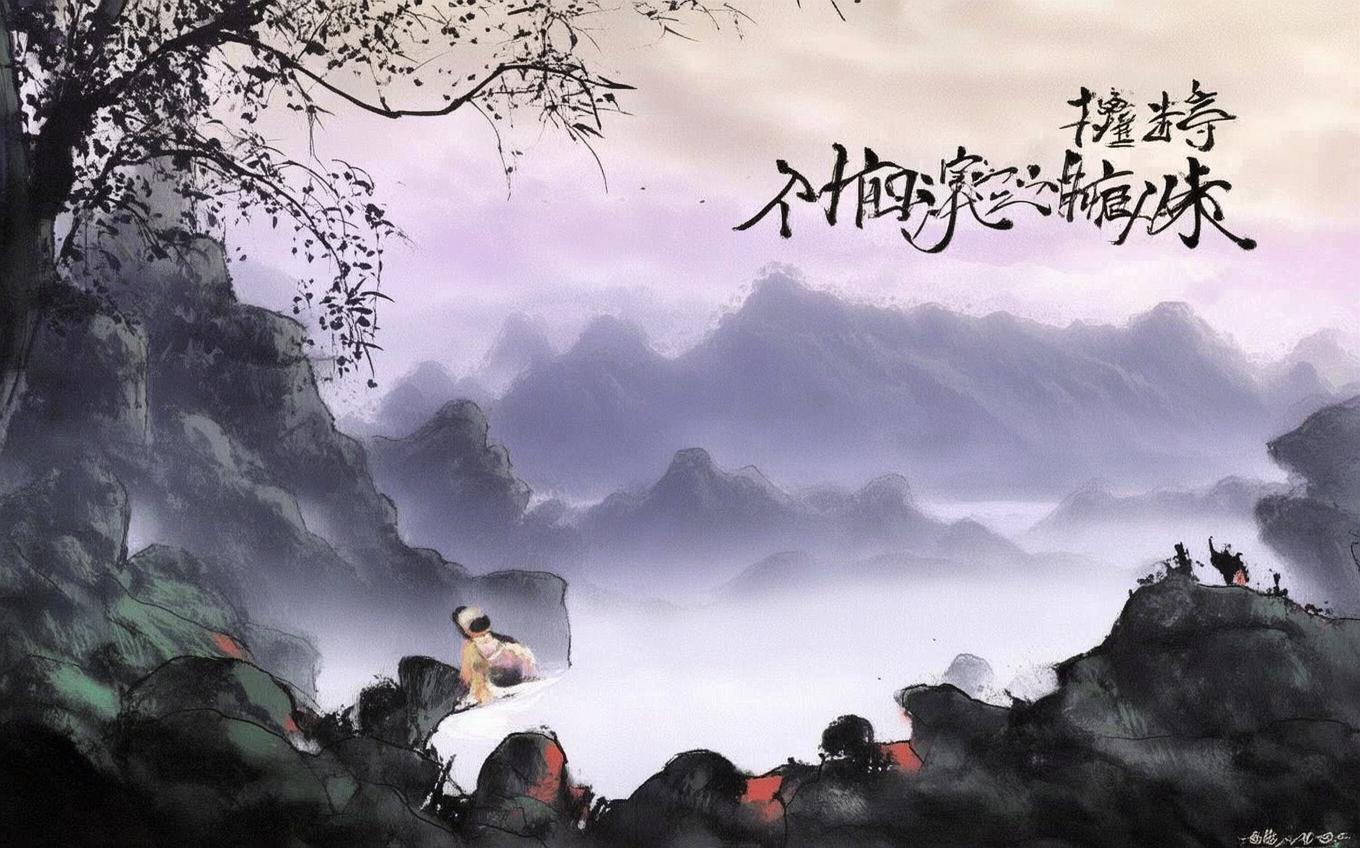
The poem opens with a grand, cinematic sweep. “Warm Valley” (温谷) immediately evokes the geothermal spring that gives the place its name and allure, while the verb “charms” (媚) personifies the landscape as a graceful host welcoming the emperor’s arrival. “Xinfeng” is a historical region near Chang’an, grounding the scene in a specific, storied geography. The second line lifts the gaze upward: Mount Li, the mountain that dominates the horizon, appears to “lie across half the sky” (横半空). The character 横 (héng) suggests a powerful horizontal sweep, as if the mountain itself forms a majestic screen between earth and heaven. Together, these lines create a sense of a landscape both alluring and sublime—a natural palace waiting to receive its royal guest.
汤池薰水殿,翠木暖珠宫。
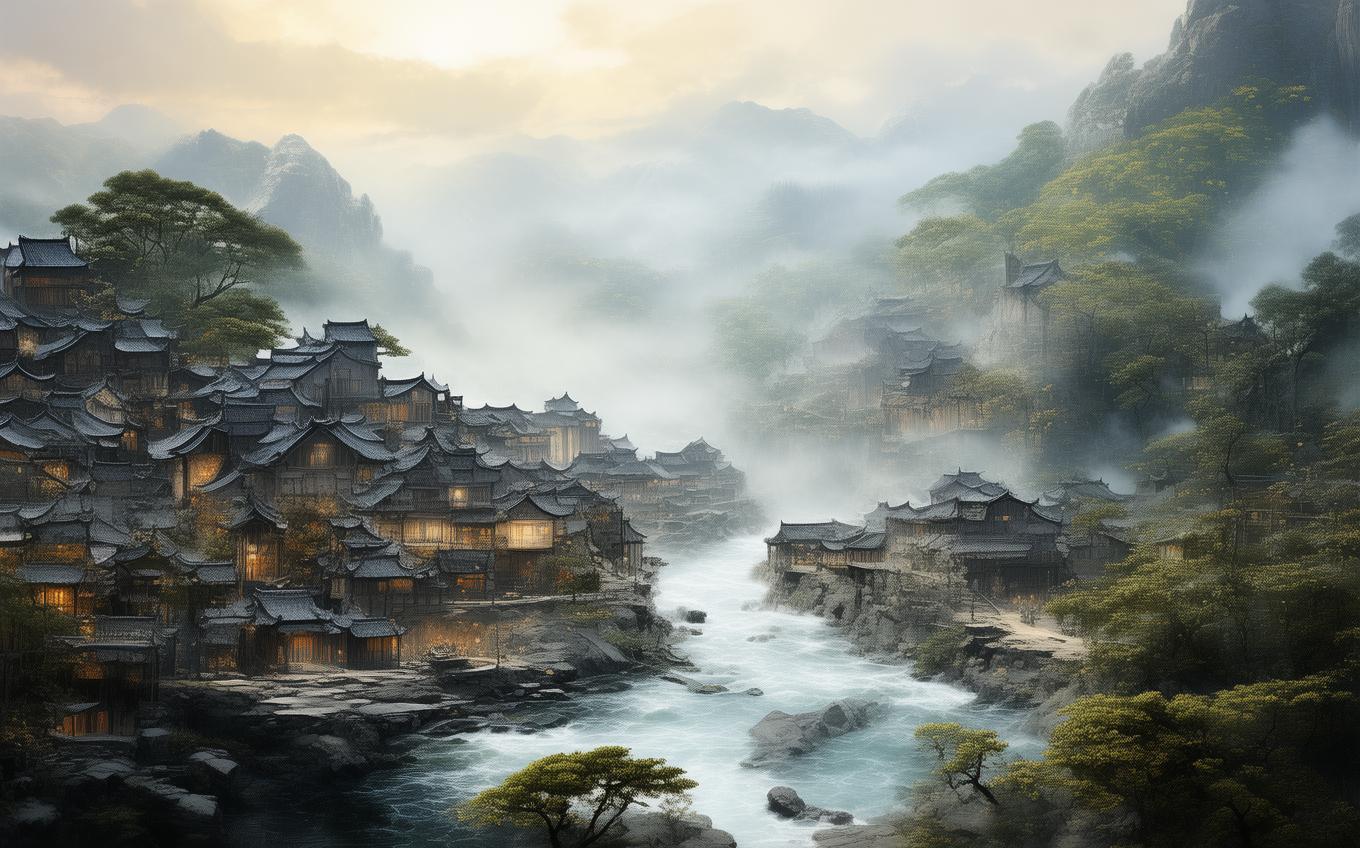
Here, Wang Wei zeroes in on the hot spring buildings. The “waterside hall” (水殿) is literally perfumed by the rising steam—薰 (xūn) conveys both fragrance and the gentle infusion of warmth. The palace seems alive, breathing warmth and scent. In the second half, “emerald trees” (翠木) surround the “jewel palace” (珠宫), which is not just ornamented but “warmed” (暖) by the lush greenery. The interplay of sensory adjectives—fragrant, warm, jeweled—constructs a microcosm of refined luxury, where nature and architecture merge into a single harmonious dwelling. This idealization of a man-made paradise reflects the Tang aesthetic of integrating the built environment with the natural world.
地胜宜居跸,山虚尽舞风。
The third couplet shifts from description to judgment. “This splendid site is fit for an imperial sojourn” (地胜宜居跸) reads as a formal declaration of approval. The word 跸 (bì) specifically denotes the stopping place of an emperor, lending a ceremonial solemnity. Then the poet broadens the view again: the mountains are “empty” or “open” (虚), a Daoist-inflected term suggesting receptivity and spiritual resonance. In that openness, the mountains “wholly dance with the wind” (尽舞风). The image is dynamic and joyful—nature itself seems to celebrate the royal presence. It is a tactful, indirect way of saying: even the landscape recognizes the virtue of the ruler, and so it performs a dance of welcome.
宸游逢圣代,长此奉皇情。
The closing couplet is pure courtly convention elevated by sincerity of expression. “The royal excursion meets a sagely age” (宸游逢圣代) links the physical journey to a moral and cosmic order: the fact that an emperor can travel so gracefully is proof that the times are peaceful and well-governed. The final line— “forever thus we attend His Majesty’s heart” (长此奉皇情)—is a pledge of endless service. The word “heart” (情) is crucial; it implies that the attendants, and by extension the empire, are attuned to the emperor’s deepest sentiments, not merely his commands. The poem ends on a note of perfect, eternal harmony between ruler, court, and nature.
Themes and Symbolism
The poem explores several interwoven themes: the idealization of imperial rule, the harmony between humanity and nature, and the art of courtly performance. The hot spring is not just a geological curiosity but a symbol of natural abundance placed at the service of a virtuous monarch. The steaming waters, emerald trees, and dancing mountains all become active participants in affirming the emperor’s legitimacy.
Symbolically, the “Warm Valley” represents a place where natural forces (heat, water, life) converge, mirroring the emperor’s role as the concentrator of benevolent power. Mount Li itself had long been associated with imperial pleasure and spiritual transcendence—it was here that the First Emperor of Qin built his tomb and where later Tang emperors constructed their Hot Spring Palace (Huaqing Palace). By invoking this landscape, Wang Wei taps into a deep cultural memory of royal grandeur and cosmic order. The “dancing wind” (舞风) is a particularly poignant image; it transforms the invisible movement of air into a visible gesture of homage, as if the entire world were a court performing for its lord.
Cultural Context
This poem was written during the high Tang period, an era of unprecedented prosperity, cultural confidence, and imperial stability. The “hot spring” in question is almost certainly the one at Huaqing Palace on Mount Li, a legendary site where Emperor Xuanzong (reigned 712–756) would later enjoy his famous idyll with consort Yang Guifei—though Wang Wei’s poem predates the more decadent phase of that romance. At the time, such poems were expected from court officials when the emperor composed a poem during an outing; responding in harmony (奉和) was a social duty and a mark of literary skill.
The genre demanded elegance, tact, and the ability to praise without appearing obsequious. Wang Wei achieves this by aestheticizing the political: the emperor’s presence makes the land beautiful, and this beauty in turn proves the virtue of the age. This circular logic is central to Tang court poetry, where art and power reinforce each other. Moreover, the poem reflects the Chinese philosophical concept of “天人合一” (tiān rén hé yī), the unity of heaven and humanity. A sagely ruler brings the natural world into alignment, and the poet’s role is to bear witness to this cosmic harmony in exquisite language.
Conclusion
At first glance, “奉和圣制过温汤” may seem a mere occasional verse, a formulaic tribute to imperial pleasure. Yet within its tight structure, Wang Wei infuses sensory richness and philosophical depth. The steaming pools, fragrant halls, and wind-danced mountains are not just pretty decorations—they are evidence of a world working as it should, under a ruler whose very movement through the landscape completes a pattern of universal grace. For English-speaking readers, the poem offers a glimpse into the refined world of Tang courtly culture, where poetry was not a private confession but a public art of harmony, praise, and the delicate balance between the human and the natural. Its enduring appeal lies in that serene vision of a world where power and beauty, ruler and landscape, exist in perfect, graceful accord.
Comments (0)
No comments yet. Be the first to comment!