
Introduction
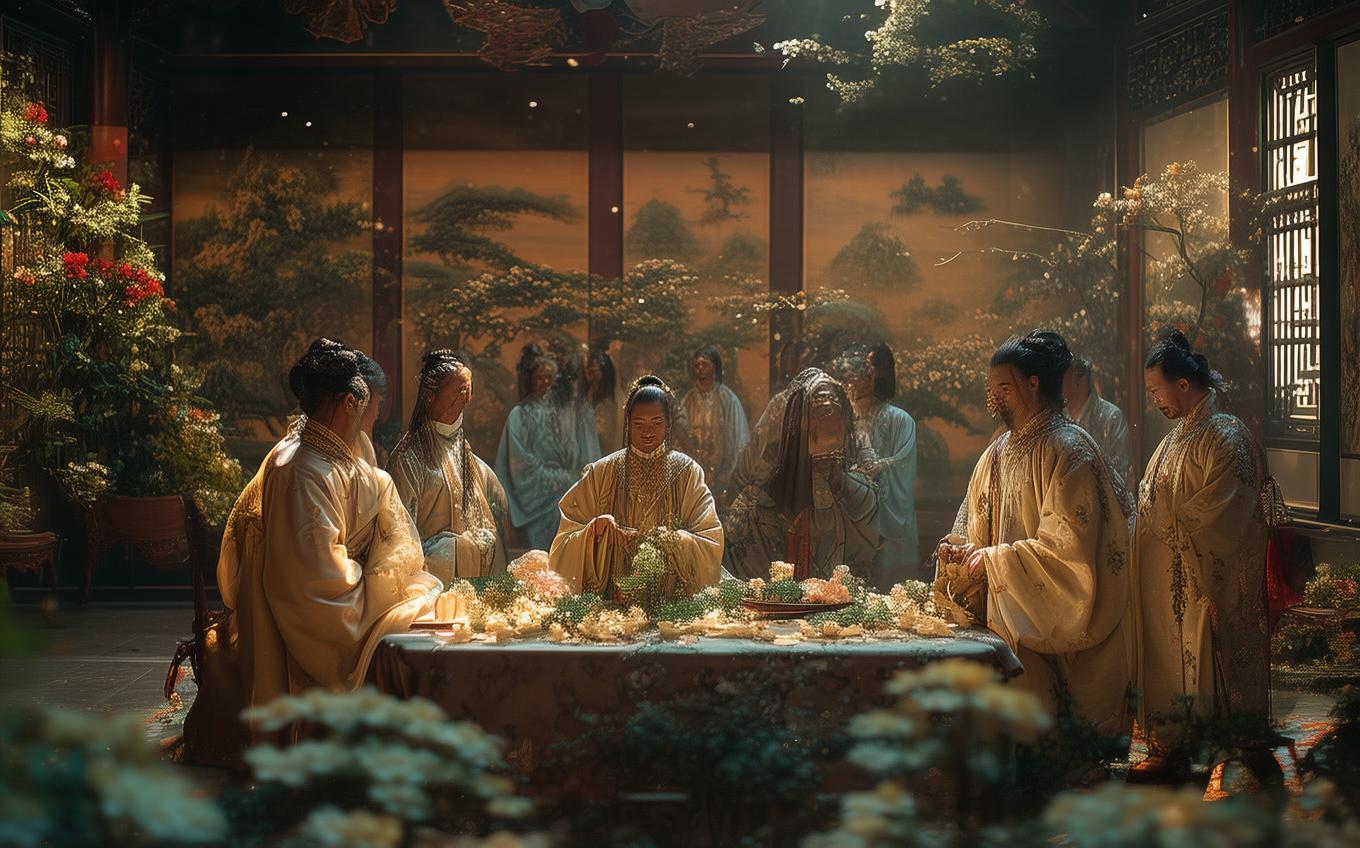
The poem “奉和御制麟德殿宴百官” (Fèng Hé Yù Zhì Lín Dé Diàn Yàn Bǎi Guān) is a remarkable piece of Tang dynasty court verse, composed by the female scholar-official Song Ruozhao (宋若昭, 775–825). This title translates to “In Response to His Majesty’s Poem: Banquet for All Officials in Linde Hall,” and it belongs to a genre called yingzhi shi (应制诗), or “poems composed on imperial command.” During a grand feast hosted by Emperor Dezong in the magnificent Linde Hall, the emperor himself composed a poem and commanded his attending officials to match it. Song Ruozhao, one of the famed Five Song Sisters renowned for their learning, stepped forward with this response and was praised above all others. Her poem not only fulfills the ceremonial expectations but also quietly embodies Confucian ideals of benevolent rule and the humble sincerity of a loyal subject. For English readers of Chinese literature, this poem offers a window into the splendor, ritual, and political philosophy of the Tang golden age.
The Poem: Full Text and Translation
端拱承休命,
duān gǒng chéng xiū mìng,
With hands folded in solemn stillness, I receive your auspicious mandate;
时清荷圣明。
shí qīng hè shèng míng,
In this peaceful age, I am blessed by Your Majesty’s sagacious brilliance.
四郊无兵气,
sì jiāo wú bīng qì,
The four borders are free from the fumes of war;
万井有欢声。
wàn jǐng yǒu huān shēng,
From ten thousand villages rise sounds of rejoicing.
皇泽均寰海,
huáng zé jūn huán hǎi,
The imperial grace spreads evenly over the four seas;
崇勋冠百城。
chóng xūn guān bǎi chéng,
His lofty achievements surpass all the hundred cities.
大君推至理,
dà jūn tuī zhì lǐ,
The great sovereign promotes the highest principles of governance;
微臣寄微诚。
wēi chén jì wēi chéng,
His insignificant servant offers up her insignificant sincerity.
式燕歌抃舞,
shì yàn gē biàn wǔ,
Let us feast as prescribed – singing, clapping hands, and dancing;
赓歌乐岁康。
gēng gē lè suì kāng,
We continue the song, delighting in a year of peace and plenty.
Line-by-Line Analysis
Opening Couplet: Humble Reverence and Imperial Virtue
“端拱承休命,时清荷圣明。”
The poem begins with the speaker’s posture – duā gǒng, hands folded in a gesture of formal respect – signaling the ritualistic nature of the occasion. Rather than simply saying “I obey,” the phrase conveys an almost ceremonial stillness, a readiness to receive the emperor’s “auspicious mandate.” In the second line, the speaker directly credits the era’s peace (shí qīng) to the emperor’s sagacity (shèng míng). This is not flattery alone; it echoes the Confucian belief that a wise ruler’s moral power naturally brings order to the world. The word “荷” (hè, to bear or be laden with) suggests that the speaker personally feels this blessing, making the gratitude intimate.
Parallel Couplet One: A Kingdom Without War, a People Happy
“四郊无兵气,万井有欢声。”
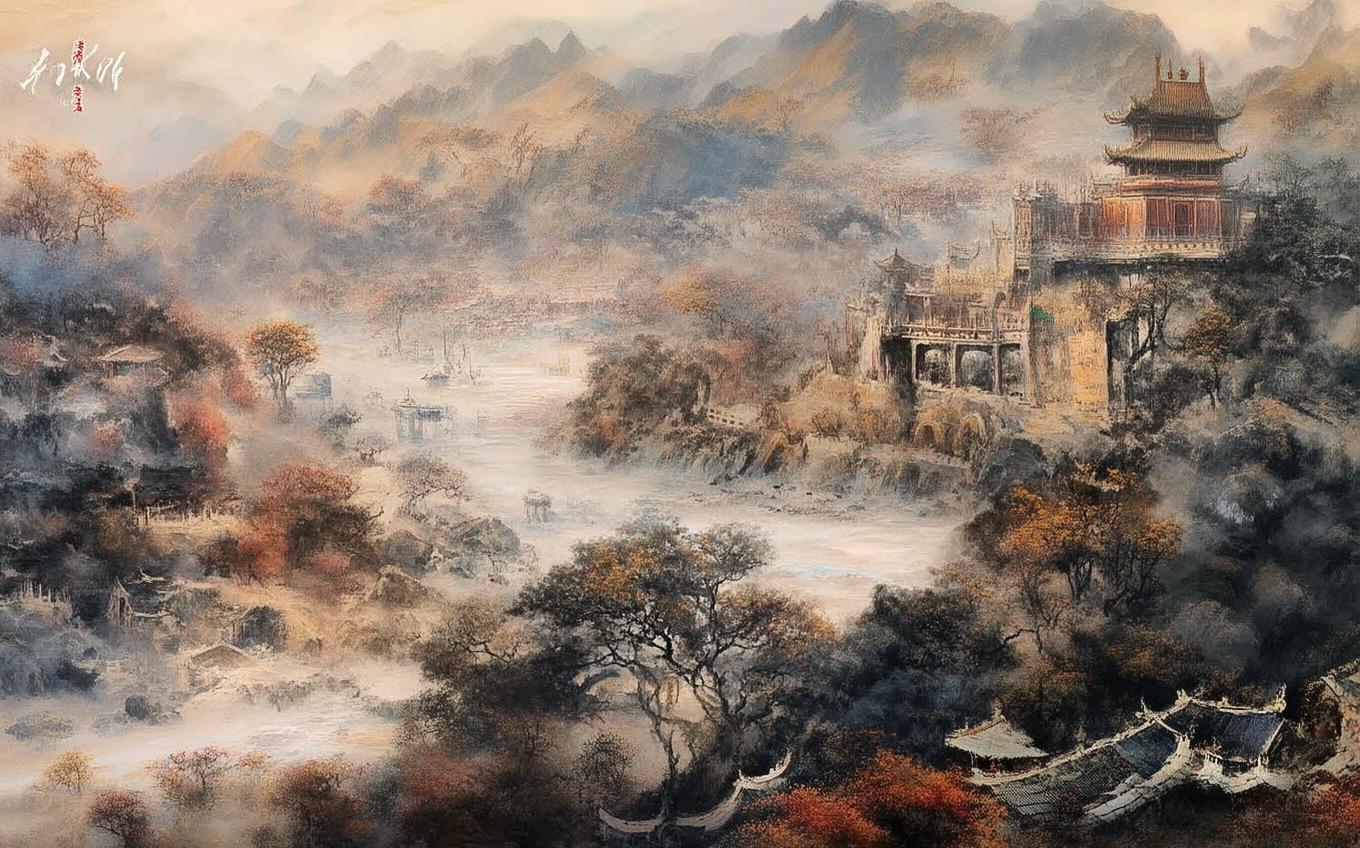
Here, Song Ruozhao employs a stark contrast: the absence of martial energy on the frontiers and the presence of joyful voices in the countless homesteads. “四郊” (four suburbs) refers to the land in all directions; “万井” (ten thousand wells) metaphorically stands for every village (since wells were the centers of community life). This couplet paints a picture of pax sinica – the peace achieved under a strong, virtuous central government. For Tang courtiers who had lived through earlier rebellions like the An Lushan catastrophe, this imagery would have been deeply resonant, making the peace feel hard-won and precious.
Parallel Couplet Two: Universal Grace and Surpassing Fame
“皇泽均寰海,崇勋冠百城。”
The third couplet expands the scale. The emperor’s favor (huáng zé) is not confined to the capital but reaches “寰海” (the four seas, i.e., the entire known world). The word “均” (evenly) is key: it implies fairness and universality, core Confucian ideals of just government. Meanwhile, the meritorious accomplishments (chóng xūn) are said to crown all the hundred cities, an acknowledgment that the court’s refined rule surpasses mere local power. The parallel structure – grace / achievements, sea / land – reflects the regulated verse’s aesthetic perfection, balancing the abstract (grace) with the concrete (cities).
Turn at the Seventh Line: The Voice of the Servant
“大君推至理,微臣寄微诚。”
In regulated verse, the seventh line often marks a shift in focus, and here Song Ruozhao turns from praising the emperor to presenting herself. The “great sovereign” (dà jūn) promotes the ultimate principles (zhì lǐ), a reference to the Dao or the Confucian Way. The speaker then humbly reduces herself to a “微臣” (tiny servant) offering only “微诚” (tiny sincerity). The repetition of “微” is deliberate modesty, yet it is also a claim of authenticity: what she brings is not grand words but genuine loyalty. This line transforms the poem from a panegyric into an act of personal devotion.
Closing Couplet: Communal Celebration
“式燕歌抃舞,赓歌乐岁康。”
The final couplet returns to the scene at hand – the banquet. “式” carries the sense of “according to ritual”; thus, the feast and its songs and dances are not mere entertainment but performative acts that reinforce social harmony. “赓歌” (continuing the song) directly echoes the act of matching the emperor’s poem: everyone in the hall joins in, creating a shared melody. The closing words “岁康” (a year of peace and plenty) express the common wish the celebration hopes to secure, rounding the poem off with optimism.
Themes and Symbolism
Peace and Prosperity as Imperial Virtue
The poem revolves around the idea that a realm free of war and filled with celebration is the direct result of the ruler’s moral excellence. This reflects the Confucian political philosophy of wang dao (王道, the Kingly Way), in which governance by virtue attracts loyalty naturally, without coercion.
Ritual and Social Harmony
From the speaker’s formal posture (duān gǒng) to the ceremonial feasting (shì yàn), the poem is steeped in ritual. In Tang culture, properly performed rites were believed to align human society with cosmic order, and the banquet itself becomes a microcosm of the harmonious state.
Humility and Loyalty
Despite being an accomplished scholar, Song Ruozhao adopts the voice of a “微臣” – a minor subject. This humility is not weakness but a strategic and sincere posture that reinforces the hierarchy while also allowing a woman in a male-dominated court to speak with grace and authority. Her sincerity (wēi chéng) is the coin of true loyalty.
Symbols:
- Four suburbs / ten thousand wells: the totality of the realm.
- Four seas: the civilized world under the Son of Heaven.
- Clapping and dancing: spontaneous joy arising from good government.
Cultural Context
The occasion took place during Emperor Dezong’s reign (779–805), a period of Tang history marked by efforts to restore central authority after the shattering An Lushan Rebellion. Linde Hall (麟德殿) was an enormous banquet hall in the Daming Palace complex, capable of hosting hundreds of guests. When the emperor composed a poem and commanded officials to match it, he was performing a cultural ritual that demonstrated both his scholarly refinement and the court’s unity. Such yingzhi poetry was a highly formulaic but socially significant act.
Song Ruozhao’s participation is extraordinary because she was a woman. Along with her sister Song Ruoxin, she was recruited by the court for her erudition in the Confucian classics and history. She later became a teacher to the palace ladies and was granted titles usually reserved for male officials. Her success at the Linde Hall banquet cemented her reputation. The story reminds us that, while Tang society was patriarchal, it offered some space for exceptional women to gain respect through literary talent. Her poem, therefore, is not merely a courtly exercise; it is a quiet assertion of intellectual equality delivered in the faultlessly humble tone expected of any loyal servant.
Conclusion
Song Ruozhao’s “奉和御制麟德殿宴百官” is a gem of occasional verse that transcends its ceremonial origins through its graceful balance of public praise and personal sincerity. It paints an idealized picture of a benevolent sovereign ruling over a grateful, harmonious world, a vision that has enchanted Chinese readers for centuries. For modern English speakers, the poem offers more than a glimpse of Tang pageantry; it reveals how poetry functioned as both political performance and emotional expression. In its elegant five-character lines, we hear the voice of a remarkable woman who, by mastering the strict codes of her culture, found a way to sing her own “tiny sincerity” and join the great song of her age.
Comments (0)
No comments yet. Be the first to comment!