Introduction
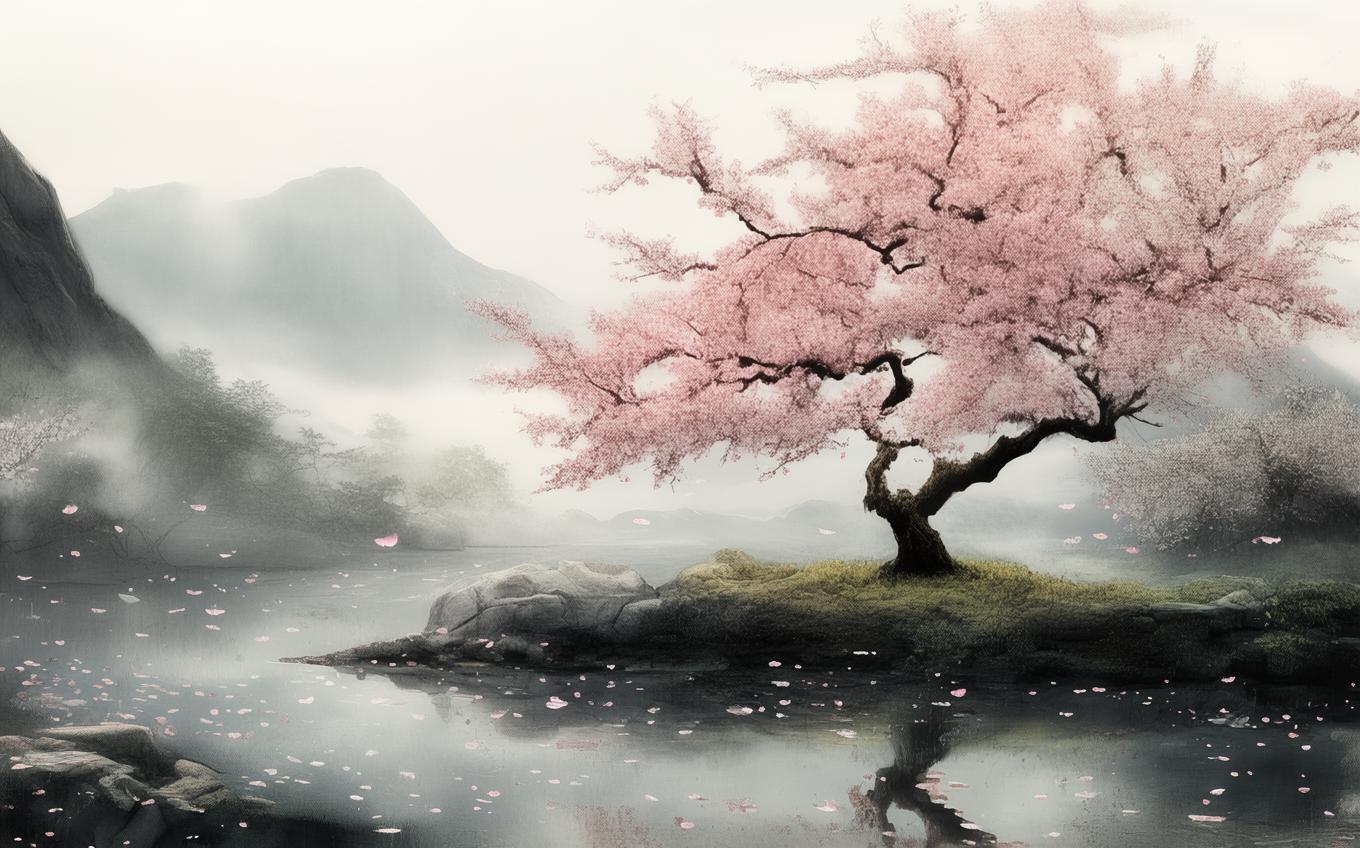
In the golden age of Tang dynasty poetry, when verses bloomed like spring gardens, a rare feminine voice quietly inscribed her name among the immortals of Chinese literature. Bao Junhui (鲍君徽), an 8th‑century woman poet of the Tang court, left behind only a handful of poems, yet her “惜花吟” (Pitying the Flowers) stands as a perfect miniature of grace, sensuousness, and philosophical depth. The poem treats one of Chinese poetry’s most beloved subjects—flowers—not merely as decorative background, but as mirrors held up to human existence. Written in the regulated verse and free‑flowing style characteristic of the era, it captures the fleeting brilliance of spring blossoms and, by unbreakable analogy, the ephemeral beauty of youth. For readers who know Chinese culture only through its painted petals and porcelain, this poem offers a visceral encounter with the inner language of feeling that made Tang poetry a civilization’s heartbeat.
The Poem: Full Text and Translation
枝上花,花下人,可怜颜色俱青春。
Zhī shàng huā, huā xià rén, kělián yánsè jù qīngchūn.
Blossoms on the branch, the one beneath the blossoms— tender‐hued, both in their springtime prime.
昨日看花花灼灼,今朝看花花欲落。
Zuórì kàn huā huā zhuózhuó, jīnzhāo kàn huā huā yù luò.
Yesterday I gazed on flowers, flowers gleaming bright; this morning I gaze, and petals are ready to fall.
不如尽此花下欢,莫待春风总吹却。
Bùrú jìn cǐ huā xià huān, mò dài chūnfēng zǒng chuī què.
Better to drink all the joy beneath these flowers, not waiting until the spring wind blows them all away.
莺歌蝶舞韶光长,红炉煮茗松花香。
Yīng gē dié wǔ sháoguāng cháng, hóng lú zhǔ míng sōnghuā xiāng.
Orioles sing, butterflies dance, the splendid light stretches long; over a red stove I brew tea, fragrant with pine‑flower.
妆成罢吟恣游后,独把芳枝归洞房。
Zhuāng chéng bà yín zì yóu hòu, dú bǎ fāng zhī guī dòngfáng.
My toilette finished, chanting ceased, after unrestrained play, alone I carry a fragrant spray back to the inner chamber.
Line‑by‑Line Analysis
The opening couplet sets the stage with a pair of mirrors: “枝上花,花下人,可怜颜色俱青春” — blossoms above, a person below, both sharing the youthful flush of tender colors. The Chinese word “可怜” (kělián) is exquisite here; in Tang poetry it often means “beloved,” “precious,” or “worthy of tender pity,” not the modern sense of pitiful. The “color” (颜色, yánsè) links the bloom’s complexion with the woman’s beauty, making the equivalence explicit: she is a flower among flowers, and their shared springtime is simultaneously a gift and a fleeting loan. The grammar is breathless, dropping verbs, as if the poet gasps at the sight.
Then time accelerates. “昨日看花花灼灼,今朝看花花欲落” — yesterday’s flowers were “fiercely bright” (灼灼, zhuózhuó, a classic descriptor for lush blossoms, echoing the Book of Songs). Today they are “about to fall.” The repetition of “看花” (looking at flowers) over two lines dramatizes the speed of change: a single night’s gap transforms radiance into precarious decline. This is more than botanical observation; it is a realization that the very act of cherishing something already contains the knowledge of its loss.
The poet’s response, in the third couplet, is a kind of gentle hedonism: “不如尽此花下欢,莫待春风总吹却.” She advocates drinking joy to the full now “beneath the flowers”—not in a reckless, carnal feast, but as an attentive homage to the present. The admonition “莫待” (mò dài, do not wait) is both warning and wisdom, closely akin to the carpe diem of the West, yet flavored by Chinese resignation to the cycles of nature. The spring wind, which brought the blossoms, will also be the agent that sweeps them away; it is impartial, irresistible, and thus not to be defied but accepted with grace.
The fourth couplet enlarges the scene into a multisensory celebration: “莺歌蝶舞韶光长,红炉煮茗松花香.” Warblers sing, butterflies dance—the air vibrates with life. “韶光” (sháoguāng, glorious spring light) is stretched by the word “长” (long), as if the poet willfully expands the moment. The red stove (红炉, hóng lú) and pine‑flower‑scented tea (松花香, sōnghuā xiāng) root the scene in refined domestic pleasure, a detail that is distinctly feminine in its intimacy. Tea‑brewing, a meditative art, becomes an act of savoring impermanence, the fragrance a final gift of the season.
The closing couplet, “妆成罢吟恣游后,独把芳枝归洞房,” moves from outward revelry to inward solitude. After finishing her makeup, after chanting to her heart’s content, after abandonment to the day’s play, the speaker carries a single fragrant branch back to her “洞房” (dòngfáng, a private chamber, often the part of a woman’s residence). The gesture is both triumphant and lonely—the branch is a trophy of presence, a fragment she salvages from the inevitable drift. “独” (dú, alone) pierces the earlier gaiety; the joy is real, but it cannot be shared forever. The poem ends with a woman taking the transient beauty into her most intimate space, as if to preserve it in memory, knowing that tomorrow it will wilt like the rest.
Themes and Symbolism
The central theme is impermanence and the beauty of the ephemeral. Flowers in Chinese poetry have for millennia served as the supreme metaphor for the transient nature of all loveliness—youth, life, love, even dynasties. Bao Junhui pushes this trope into personal territory by directly equating the woman with the blossoms: their shared “springtime” is not only a season but the brief apex of a woman’s life, particularly poignant in a society where female beauty is admired but its window is cruelly narrow.
A secondary theme is carpe diem in a Chinese key. Unlike the aggressive seize‑the‑day of Roman odes, the poet’s response is to steep herself in the sensory richness of the present—sight, sound, scent, taste—and then withdraw into private remembrance. The joy is not abandoned; it is transformed into a solitary act of preservation. This mirrors the Chinese aesthetic ideal of wabi‑sabi‑like appreciation (before that term existed), where the awareness of ending deepens beauty rather than cheapening it.
Key symbols:
- Blossoms (花): youth, feminine beauty, spring, the ephemeral peak of existence.
- Spring wind (春风): time’s irresistible flow, simultaneously generative and destructive.
- Brewing tea (煮茗): ritual attentiveness, the art of living deliberately, a pause within transience.
- Fragrant branch (芳枝): a metonym for the entire experience, a souvenir of the perfect moment, taken into the self.
- Inner chamber (洞房): the woman’s private world, a space of inwardness and often a symbol for her heart.
Cultural Context
Tang China (7th–10th centuries) was an era of unprecedented poetic flowering, and its cosmopolitan culture allowed a few elite women, like Bao Junhui, to gain recognition. Still, the female voice remained marginal; a poem about flowers by a woman poet carries a double layer of self‑reflection, because she writes not merely about nature but about her own condition as a “flower” in a world that values her surface and forgets her subjectivity. The language of “惜花” (pitying, cherishing the flowers) becomes an act of self‑compassion.
The poem also participates in the philosophical currents of the time. Buddhism’s concept of anitya (impermanence) and Daoist acceptance of natural cycles permeate Tang letters. However, rather than counsel detachment, Bao Junhui’s poem seems to recommend a whole‑hearted, almost aesthetic embrace of the moment, followed by a quiet integration of its memory—a solution that feels remarkably modern in its balance of engagement and consolation.
Moreover, the detail of tea preparation (“红炉煮茗”) places the poem in the orbit of China’s emerging tea culture, which would later culminate in Lu Yu’s Classic of Tea. Tea here is not just a beverage; it is a medium of refined awareness, perfectly suited to a poem about savoring the now. The poem thus offers a glimpse into the daily elegance of a Tang woman’s life, far removed from the grand themes of frontier and exile that dominate the male canon.
Conclusion
“惜花吟” is a tender psalm to the impermanent, sung by a voice that itself almost vanished from history. Its appeal endures because it captures a universal paradox: we know that all joy will fade, yet we are still drawn to embrace it fully while it lasts. Bao Junhui’s poem teaches no lofty lesson, only the gentle discipline of paying attention—to blossoms, to birdsong, to the scent of pine flowers steaming from a red clay stove. In a world where we are constantly distracted, her quiet insistence on presence, and her final image of taking a piece of fragile beauty home to the inner chamber of the heart, reminds us that the most profound way to deal with transience is not to mourn it but to transform it into an act of intimate witness. After more than twelve centuries, the flowers she cherished still bloom—if only in the time‑defying space of a poem.

Comments (0)
No comments yet. Be the first to comment!