Introduction
Nestled in the golden age of Chinese poetry, the Tang Dynasty (618–907 CE) produced a wealth of verse celebrating nature, friendship, and the refined arts of daily life. Among these treasures is “东亭茶宴” (Dōng Tíng Chá Yàn, “Tea Banquet at the East Pavilion”), a poem by the remarkable female poet Bao Junhui (鲍君徽). A court lady during the reign of Emperor Dezong, Bao Junhui was celebrated for her literary talent in an era when women’s voices rarely reached the public ear. Her works, preserved in the Complete Tang Poems (Quan Tang Shi), often capture the elegance and quiet joys of palace life, blending sensuous imagery with profound tranquility. “东亭茶宴” stands as a luminous example—a vivid depiction of a tea gathering that transcends simple description to become a meditation on harmony, nature, and the fleeting perfection of a moment. This poem invites us not only to a party but into a state of mind, offering a window into the cultural heart of classical China.
The Poem: Full Text and Translation
闲朝向晓出帘栊,茗宴东亭四望通。
Xián cháo xiàng xiǎo chū lián lóng, míng yàn dōng tíng sì wàng tōng.
At leisure at dawn, I step through the curtained window; the tea feast at East Pavilion opens views in all directions.
远眺城池山色里,俯聆弦管水声中。
Yuǎn tiào chéng chí shān sè lǐ, fǔ líng xián guǎn shuǐ shēng zhōng.
Gazing far, city walls and moats merge into mountain hues; bending an ear, strings and pipes mingle with the sound of water.
幽篁引沼新抽翠,芳槿低檐欲吐红。
Yōu huáng yǐn zhǎo xīn chōu cuì, fāng jǐn dī yán yù tǔ hóng.
Secluded bamboos draw the pond, freshly sprouting emerald; fragrant hibiscus beneath low eaves about to burst into red.
坐久此中无限兴,更怜团扇起清风。
Zuò jiǔ cǐ zhōng wú xiàn xìng, gèng lián tuán shàn qǐ qīng fēng.
Sitting long, endless delight arises within; I cherish even more the round fan stirring a pure breeze.
Line-by-Line Analysis
The poem opens with a delicate image of time and space. “闲朝向晓出帘栊”—the speaker, unburdened by official duties, rises at the border of night and day. The phrase “帘栊” (curtained window or lattice) suggests an intimate, sheltered world being left behind, creating a threshold between inner repose and outer splendor. The next clause, “茗宴东亭四望通”, immediately establishes the occasion: a tea banquet (míng yàn) held in the East Pavilion, an airy structure that offers unobstructed views in all four directions. The word “通” (open, connected) is crucial—it signals not only physical openness but a spiritual expansiveness, a freedom from confinement. Together, these lines set the tone: a serene self emerging into a world brimming with possibility.
The second couplet expands the vista. “远眺城池山色里” guides the eye outward—city walls and protective moats dissolve into the distant mountains, a gentle erosion of the boundary between human construction and nature. Then the perspective drops: “俯聆弦管水声中”, the listener looks down and hears music blending with the sound of flowing water. “弦管” (strings and pipes) evokes a refined musical performance, likely lute and flute, while “水声” (water sound) might refer to a garden stream or a fountain. The interplay of sight and sound, high and low, creates a multi-sensory tapestry where art and nature become indistinguishable. Here, the tea banquet is not merely a social event but a symphony of the senses.
The third couplet draws close to the garden’s quiet vitality. “幽篁引沼新抽翠” presents a hidden grove of bamboo (“幽篁”) that seems to lead a pond, with tender new shoots of vivid green emerging. Bamboo in Chinese culture symbolizes resilience, humility, and flexibility—a plant of profound moral resonance. The fresh “翠” (emerald/blue-green) suggests spring and renewal. The following line, “芳槿低檐欲吐红”, focuses on hibiscus (“槿”), its blossoms hanging low near the eaves, on the verge of blooming red. The phrase “欲吐红” (about to spit out red) throbs with restrained energy—a bloom just before opening, a beauty suspended in anticipation. This couplet captures the garden in a state of becoming, mirroring the guest’s own awakening sensibility.
The closing couplet turns explicitly inward. “坐久此中无限兴” declares that after sitting long in such surroundings, a boundless sense of delight (“无限兴”) wells up. “兴” is a term rich in Chinese aesthetics—it can mean inspiration, exhilaration, or the profound stirring of the heart when encountering beauty. Finally, “更怜团扇起清风” adds a tender gesture: the speaker cherishes a round fan (“团扇”) that creates a light breeze. The round fan is a symbol often associated with grace, femininity, and fleeting seasons; here, it becomes an instrument of simple, mindful pleasure. The breeze it generates is pure (“清风”)—a natural coolness that mirrors the tea’s refreshing taste and the poetic clarity of the moment.
Themes and Symbolism
Harmony between humans and nature is the poem’s central theme. The East Pavilion, placed where mountain hues can be seen and water music heard, erases divisions between inside and outside. The tea banquet is not an intrusion into nature but a seamless part of it. Every image—bamboo, hibiscus, distant peaks, the fan’s breeze—participates in a unified, tranquil whole.
The aesthetics of tea culture are subtly woven throughout. Tea is never directly described, yet the entire poem is steeped in its spirit: leisure, alert tranquility, a cleansing of the palate and mind. The phrase “茗宴” (tea feast) elevates tea drinking from a mere beverage break to a ritualized celebration of taste, art, and companionship.
The fleeting perfection of a moment surfaces in the imagery of buds about to bloom and the fresh bamboo shoots. The Chinese aesthetic of wuwei (effortless action) and ziran (spontaneity) glows here—delight comes not from striving but from quiet presence, from “sitting long” and allowing the scene to unfurl. The round fan, a traditional motif of autumn and change, introduces a gentle awareness of time’s passing, yet the poet turns it into a source of cool, soothing comfort.
Key symbols include the bamboo (moral integrity and resilience), the hibiscus (ephemeral beauty), the round fan (grace, transience, and feminine elegance), and the pavilion itself—a structure open on all sides, embodying the Confucian and Daoist ideal of a heart receptive to the world.
Cultural Context
The Tang Dynasty represents a peak of cosmopolitan culture, where poetry, music, painting, and the art of tea often intertwined. Tea drinking, which had spread from Buddhist monasteries, became highly ritualized in elite circles. Poems like Bao Junhui’s “东亭茶宴” reflect a growing literati practice of composing verse during tea gatherings, where the stimulation of tea was thought to sharpen the mind and elevate the spirit.
As a female poet at court, Bao Junhui occupied a rare position. Tang imperial women could exert considerable cultural influence, though their literary works were often neglected in later anthologies. Her perspective is notable for its quiet authority—she does not claim a grand masculine voice but instead cultivates a refined, observant intimacy. The poem’s emphasis on sensory immersion and gentle joy resonates with Buddhist and Daoist ideals of living in the present, while the precise, dignified language bears the mark of a thoroughly classical education.
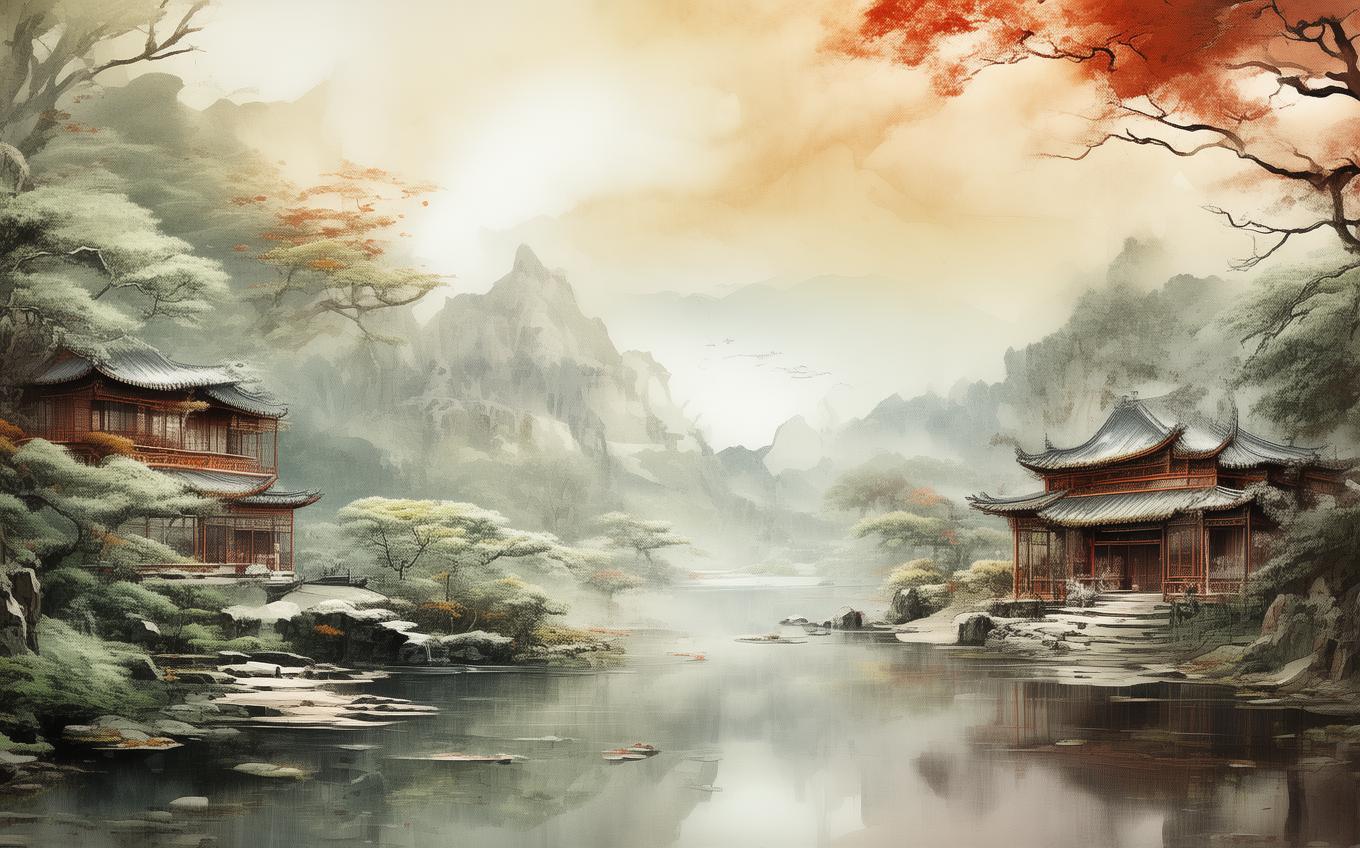
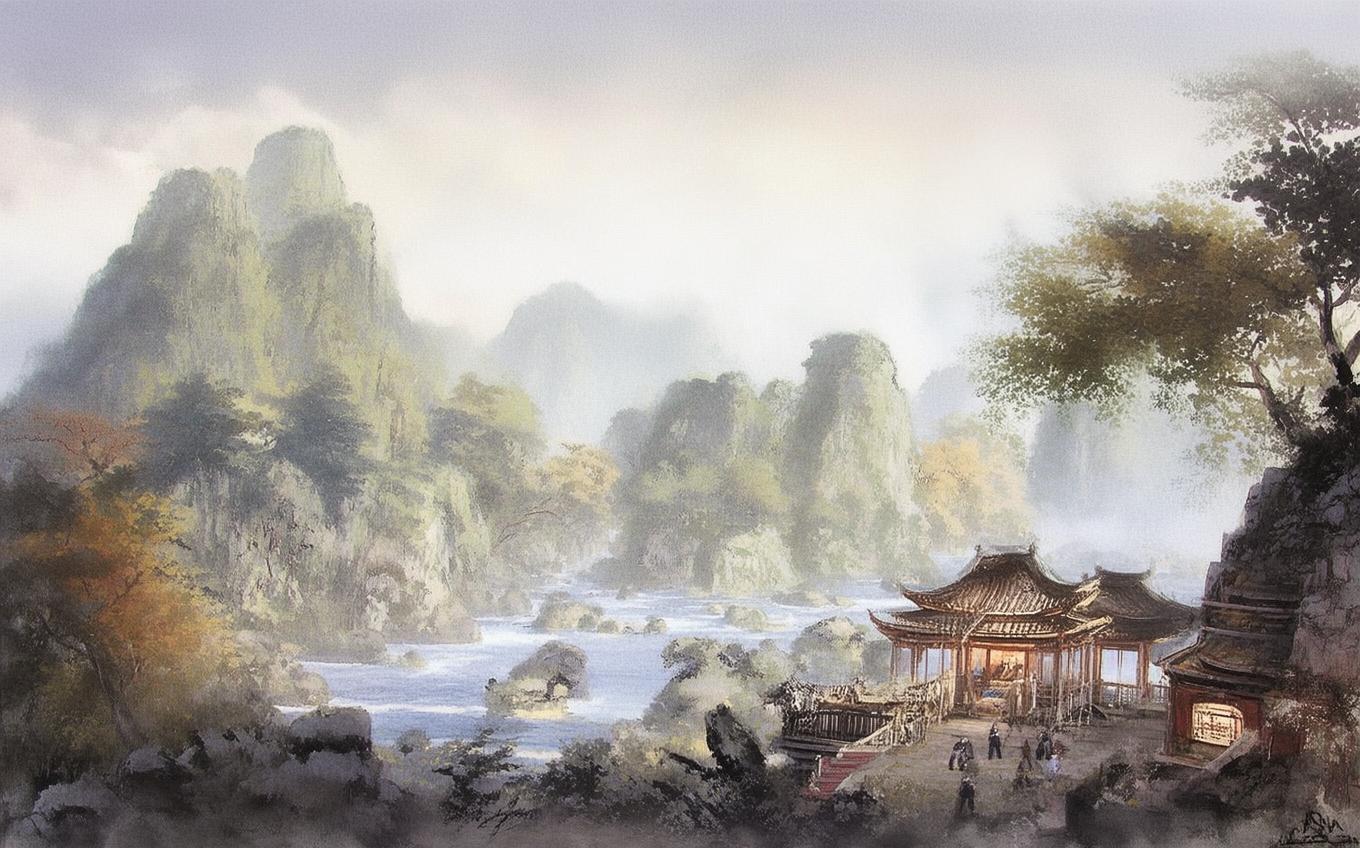
The East Pavilion itself might have been a real location within the palace grounds—a place designed for leisure, with open views to artificial mountains, ponds, and flowering shrubs. Such an environment was deliberately crafted to blur the line between the artificial and the natural, embodying the Chinese garden philosophy of “borrowed scenery” (jiè jǐng), where distant landscapes are incorporated into the composition of the immediate view.
Conclusion
“东亭茶宴” is a small masterpiece that captures a world in a teardrop. Through its elegant progression—from dawn awakening to panoramic vistas, to intimate garden details, and finally to inward repose—the poem enacts the very experience it describes. For modern readers, it offers a timeless reminder: that true luxury lies not in material excess but in the acute awareness of beauty, a good cup of tea, and the whisper of a breeze. Bao Junhui’s voice, quiet yet luminous, continues to stir a pure wind across the centuries, inviting us to sit a while longer and discover the infinite within the ordinary. In a hurried world, “东亭茶宴” rekindles the art of slowing down, tasting, and listening—a gift from a Tang dynasty pavilion that remains ever open in the mind.
Comments (0)
No comments yet. Be the first to comment!