Analysis of "夜梦" - Classical Chinese Poetry
Introduction
Few themes in Chinese poetry are as haunting as the dream of a lost loved one at night. The great Song Dynasty poet Su Shi (1037–1101), also known as Su Dongpo, gave the world one of the most heart‑wrenching elegies ever written: Jiang Cheng Zi · Yi Mao Zheng Yue Er Shi Ri Ye Ji Meng (江城子·乙卯正月二十日夜记梦), or “Song of Riverside City: Recording a Dream on the Night of the 20th Day of the First Month in the Year of Yimao.” Composed in 1075, exactly ten years after the death of his beloved wife Wang Fu, the poem captures the sudden, vivid experience of meeting her in a night dream. This lyric has been cherished for nearly a millennium not only for its exquisite artistry but also for its raw, universal expression of grief and enduring love. In this article, we will explore the poem line by line, unravel its imagery, and reflect on how a single “night dream” can bridge the gap between life and death.
The Poem: Full Text and Translation
The poem is written in the ci form to the tune Jiang Cheng Zi. I have divided it into two stanzas, following the original structure.
十年生死两茫茫。
shí nián shēng sǐ liǎng máng máng
Ten years, dead and living – dim and far apart.
不思量,自难忘。
bù sī liáng, zì nán wàng
I don’t try to remember, yet forgetting is harder still.
千里孤坟,无处话凄凉。
qiān lǐ gū fén, wú chù huà qī liáng
A lonely grave a thousand miles away; nowhere to speak of this desolation.
纵使相逢应不识,尘满面,鬓如霜。
zòng shǐ xiāng féng yīng bù shí, chén mǎn miàn, bìn rú shuāng
Even if we met, you would not know me – my face covered with dust, my hair like frost.
夜来幽梦忽还乡。
yè lái yōu mèng hū huán xiāng
Last night in a dream I suddenly returned home.
小轩窗,正梳妆。
xiǎo xuān chuāng, zhèng shū zhuāng
By the little window, you were combing your hair.
相顾无言,惟有泪千行。
xiāng gù wú yán, wéi yǒu lèi qiān háng
We looked at each other without a word, only a thousand lines of tears.
料得年年肠断处,明月夜,短松冈。
liào dé nián nián cháng duàn chù, míng yuè yè, duǎn sōng gāng
I know year after year the place that will break my heart – that moonlit night, the low pines on the hill.
Line-by-Line Analysis
十年生死两茫茫 (Ten years, dead and living – dim and far apart)
The poem opens with a paradox that sets the emotional tone. “Ten years” is a concrete measure of time since Wang Fu’s death, while “dim and far apart” (máng máng) suggests a vast, foggy distance where the living and the dead can no longer touch. The word máng implies both spatial and emotional haziness – Su Shi is not only separated by death but also by the blur of memory and the relentless passage of time.
不思量,自难忘 (I don’t try to remember, yet forgetting is harder still)
Here the poet reveals the involuntary nature of grief. He claims he makes no conscious effort to recall her, yet her presence refuses to fade. The line captures the depth of their bond: true love does not fade through deliberate suppression; it lingers just beneath the surface, ready to resurface in a quiet moment or a dream.
千里孤坟,无处话凄凉 (A lonely grave a thousand miles away; nowhere to speak of this desolation)
At the time of writing, Su Shi was serving in Mizhou (modern Shandong), while Wang Fu was buried in their hometown in Sichuan – a thousand li (about 500 kilometers) away. The “lonely grave” (孤坟) underscores her isolation in death, and the poet’s inability to visit and pour out his sorrow intensifies the “desolation” (qī liáng). There is no tomb to sweep, no place to share his pain, only a silent, far-off memorial in his heart.
纵使相逢应不识,尘满面,鬓如霜 (Even if we met, you would not know me – my face covered with dust, my hair like frost)
This stanza reaches a crescendo of self‑pity. Su Shi imagines a hypothetical reunion: his beloved would not recognize him. “Dust‑covered face” is both literal – the grime of travel and political exile – and metaphorical, representing the weariness of life’s battles. “Hair like frost” paints a picture of premature aging, a body worn down by sorrow and hardship. The lines also hint at a tragic anxiety: even in the world beyond, the gap between them may have grown too wide.
夜来幽梦忽还乡 (Last night in a dream I suddenly returned home)
A turning point. The “night dream” (yè mèng) finally arrives, abrupt and unbidden. The adverb hū (suddenly) mirrors the dream’s surreal quality – no journey, no warning, just an instantaneous return “home.” That home is not a physical place but the space of memory, the idealized setting of their young marriage.
小轩窗,正梳妆 (By the little window, you were combing your hair)
This is one of the most intimate images in Chinese love poetry. The “little window” suggests the quiet, domestic corner of their former house, and the act of combing hair is a daily, feminine ritual. Su Shi sees her exactly as she was in life – young, preparing herself for the day, unaware of the decade that has passed. The ordinariness of the scene makes it devastating: in the dream, everything is as it used to be, untouched by grief.
相顾无言,惟有泪千行 (We looked at each other without a word, only a thousand lines of tears)
Silence speaks louder than speech. The reunion is so overwhelming that language fails. The hyperbole “a thousand lines of tears” conveys an uncontainable flood of emotion. It is not a conversation; it is a mutual recognition of loss, a shared, silent weeping that transcends the boundary of the living and the dead. The dream has allowed a cathartic moment of pure feeling that waking life denies.
料得年年肠断处,明月夜,短松冈 (I know year after year the place that will break my heart – that moonlit night, the low pines on the hill)
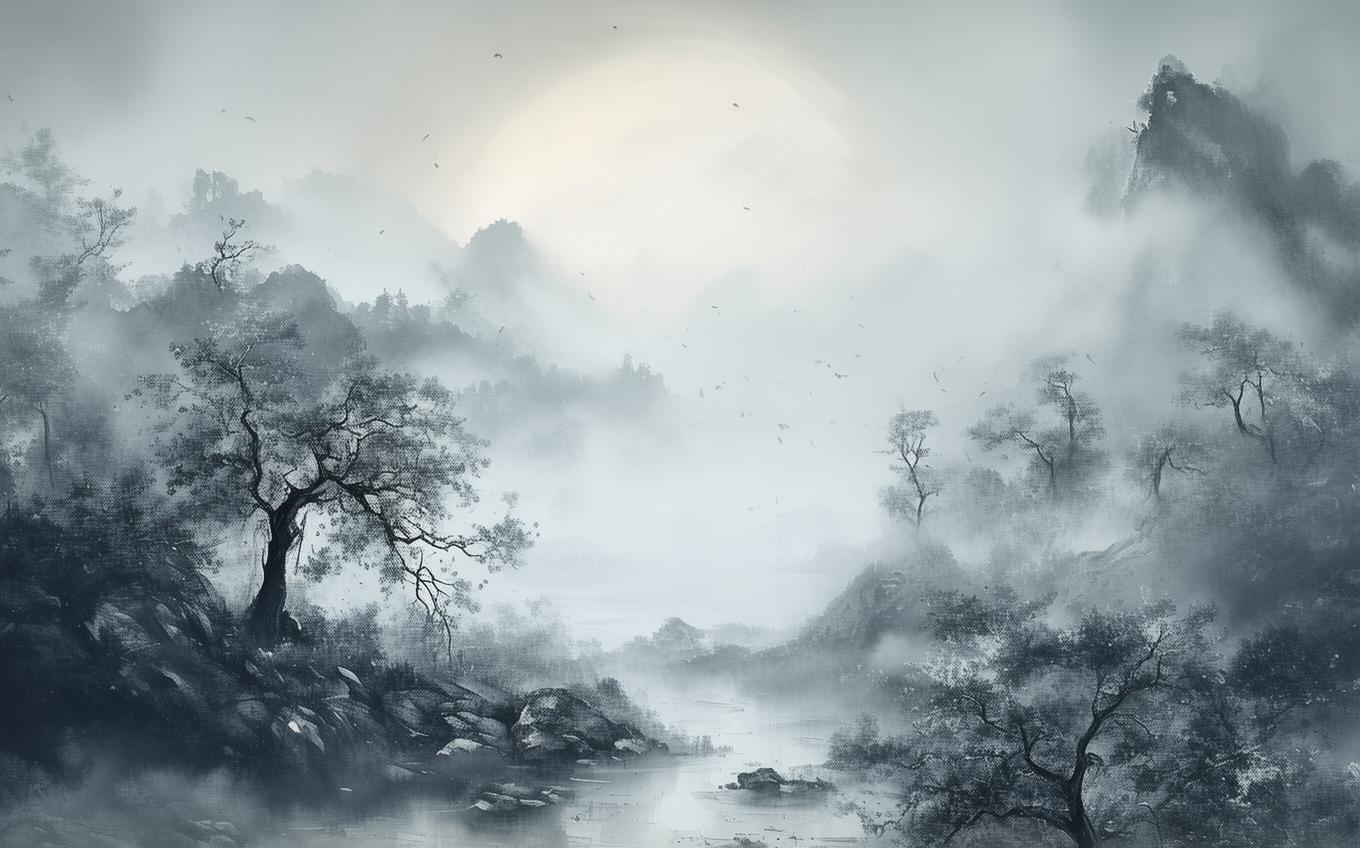
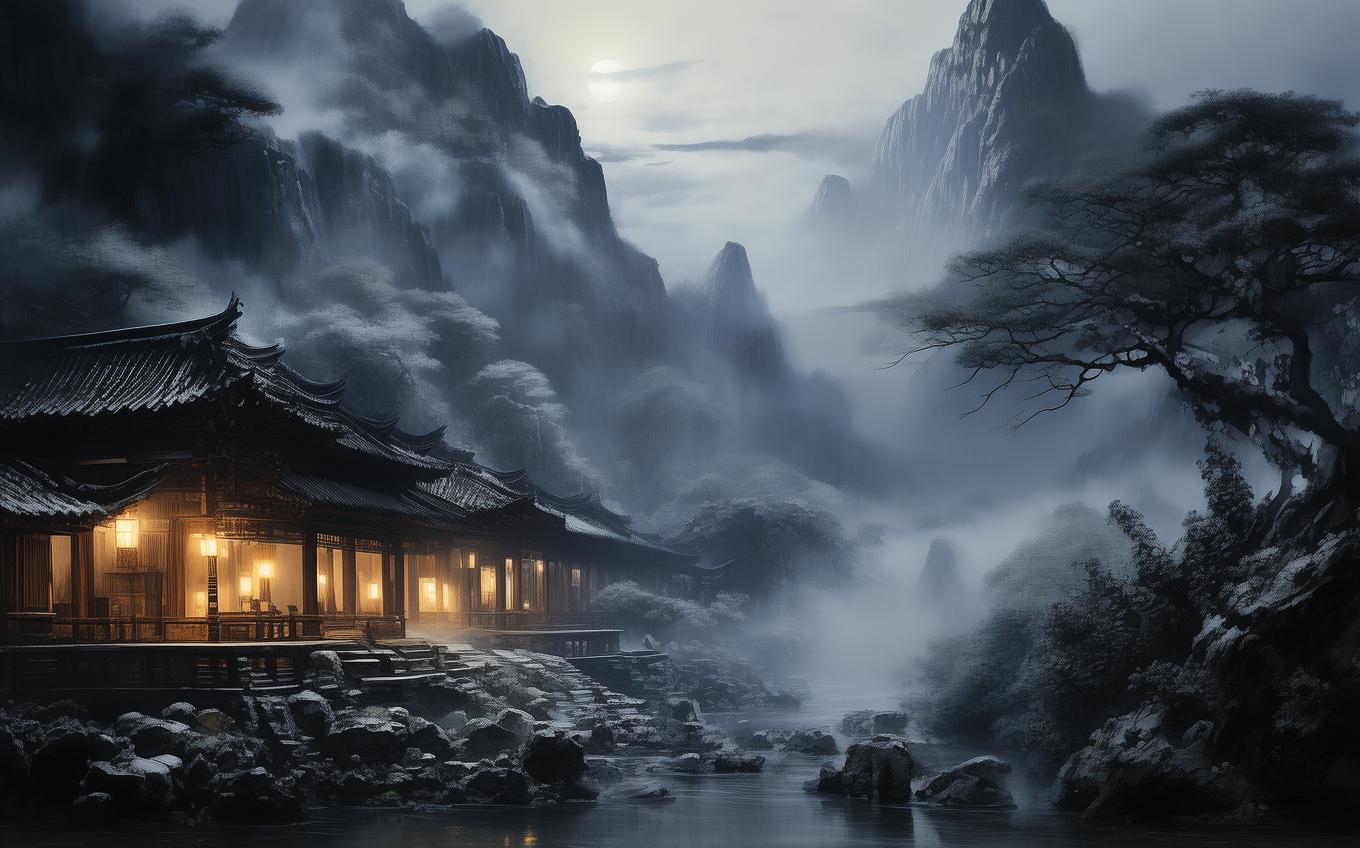
The poem closes by returning to the waking world. The poet predicts that every year, on this same moonlit night, his “guts will break” – a Chinese idiom for extreme heartache. The “low pines on the hill” is an elegiac symbol: in traditional burial customs, young pines are planted around a grave. The moon, often an emblem of reunion and melancholy in Chinese poetry, now illuminates only the grave site. Thus the poem ends with the eternal, repetitive pain of remembrance, anchored to that distant, lonely hill.
Themes and Symbolism
Love Beyond Death
The central theme is the endurance of conjugal love after death. The dream functions as a bridge, momentarily restoring what time has stolen. Yet the poem never over‑sentimentalizes; instead, it faces the raw reality that reunion is fleeting and that life leaves its marks.
The Permanence of Grief
Su Shi’s grief is not a passing storm but a permanent landscape. The image of the “lonely grave” and the “low pines” turns personal sorrow into an almost geographical feature – it will be there year after year, immovable.
Key Symbols:
- Dust and frost: symbols of worldly toil, aging, and the distance between the living and the dead.
- The combing of hair: domestic intimacy frozen in time, representing the ideal past.
- Tears: the only language left between soul mates.
- The moon: a classic Chinese symbol of separation and reunion, here cruel in its beauty, highlighting the solitude of the grave.
- The short pines: funereal plants that remind us of burial, mourning, and the permanence of loss.
Cultural Context
Su Shi wrote this poem in 1075, during the Northern Song Dynasty, when he was around 38 years old. He had married Wang Fu when they were both young; she died at only 27, leaving behind a young son. Socially, a scholar‑official like Su Shi was expected to remarry (which he did), but Confucian values also placed deep importance on ancestral veneration and remembrance of the deceased. Writing a memorial poem – especially one that records a dream – was an acceptable way to express personal grief publicly, blending the private with the cultural duty of honoring the dead.
The dream motif itself is rooted in Daoist and folk beliefs that the spirit of the deceased can travel to the living while asleep. In Chinese literature, dreams often reveal truths that waking consciousness suppresses. Su Shi’s poem thus participates in a larger tradition of ji meng (recording dreams) poetry, but its raw sincerity sets it apart as the gold standard for the genre.
Conclusion
Su Shi’s “Song of Riverside City” remains one of the most beloved poems in the Chinese speaking world because it turns a single night dream into an eternal lament for love cut short. The poem moves from the abstract haze of loss to the concrete, heart‑stopping image of a wife combing her hair, and finally to the silent moonlight on a grave – a progression that mirrors the way grief itself oscillates between memory, hallucinatory reunion, and crushing reality. More than nine centuries later, its power is undiminished. As long as human beings dream, love, and remember, the night dream of Su Shi will continue to speak across time, reminding us that some bonds are not broken even by the “dim and far apart” void of death.
Comments (0)
No comments yet. Be the first to comment!