
Introduction
Tang Yin (唐寅, 1470–1524), better known by his courtesy name Bohu (伯虎), is one of the most legendary figures of the Ming dynasty. A brilliant painter, calligrapher, and poet, his life took a dramatic turn when a false accusation of exam cheating ruined his prospects for an official career. Instead of succumbing to despair, Tang Yin embraced a life of artistic freedom and defiant individuality. His poem “感怀” (Gǎn Huái — “Emotional Reflections” or “Reflections of the Heart”) is a crisp, four-line declaration of his chosen path. Celebrated for its wit, self-deprecating humor, and moral clarity, it remains one of the most quoted quatrains in Chinese culture, embodying the self-sufficient integrity of the true literati artist.
The Poem: Full Text and Translation
不炼金丹不坐禅
Bù liàn jīn dān bù zuò chán
I do not refine the golden elixir, nor sit in Zen meditation
不为商贾不耕田
Bù wéi shāng gǔ bù gēng tián
I am no merchant, nor do I till the land
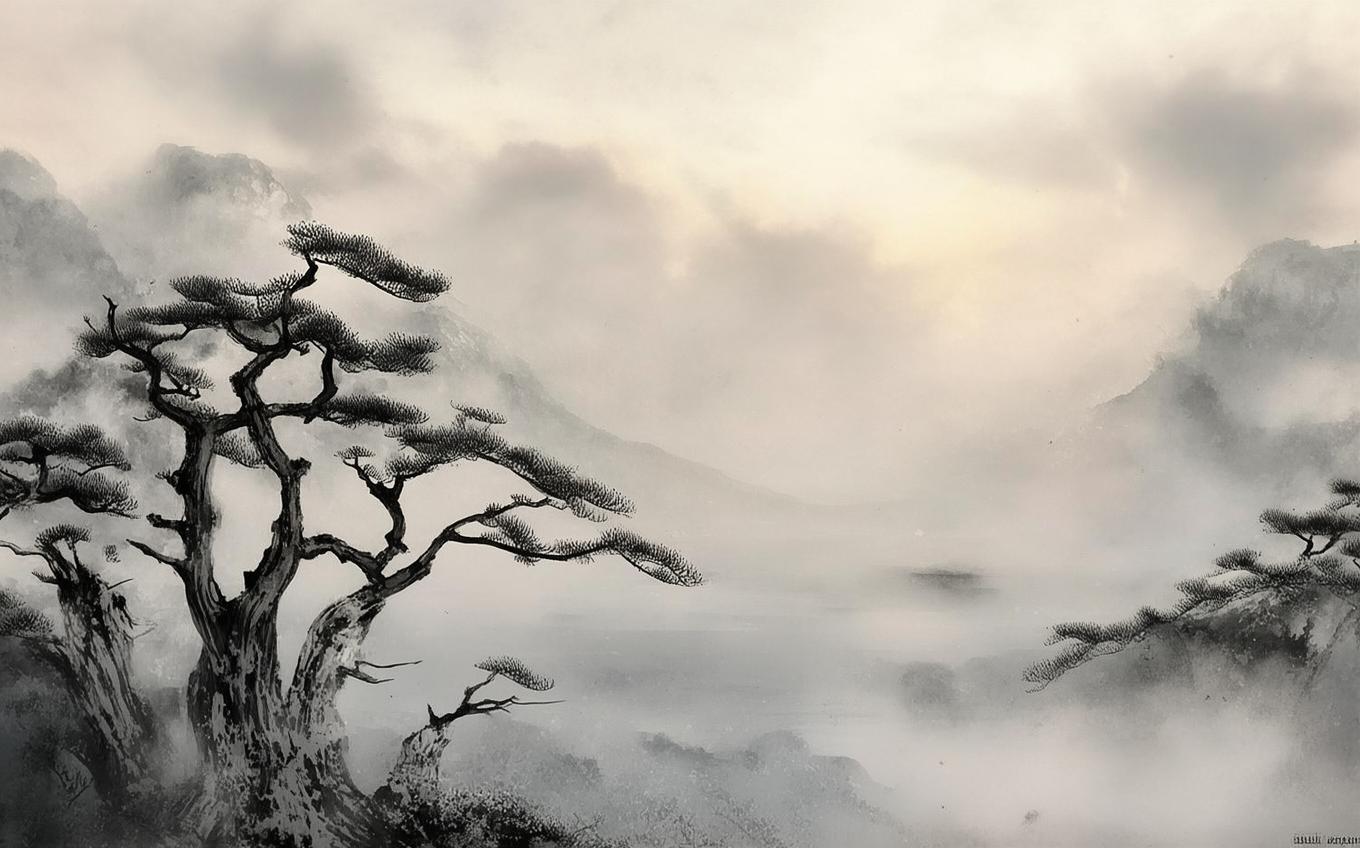
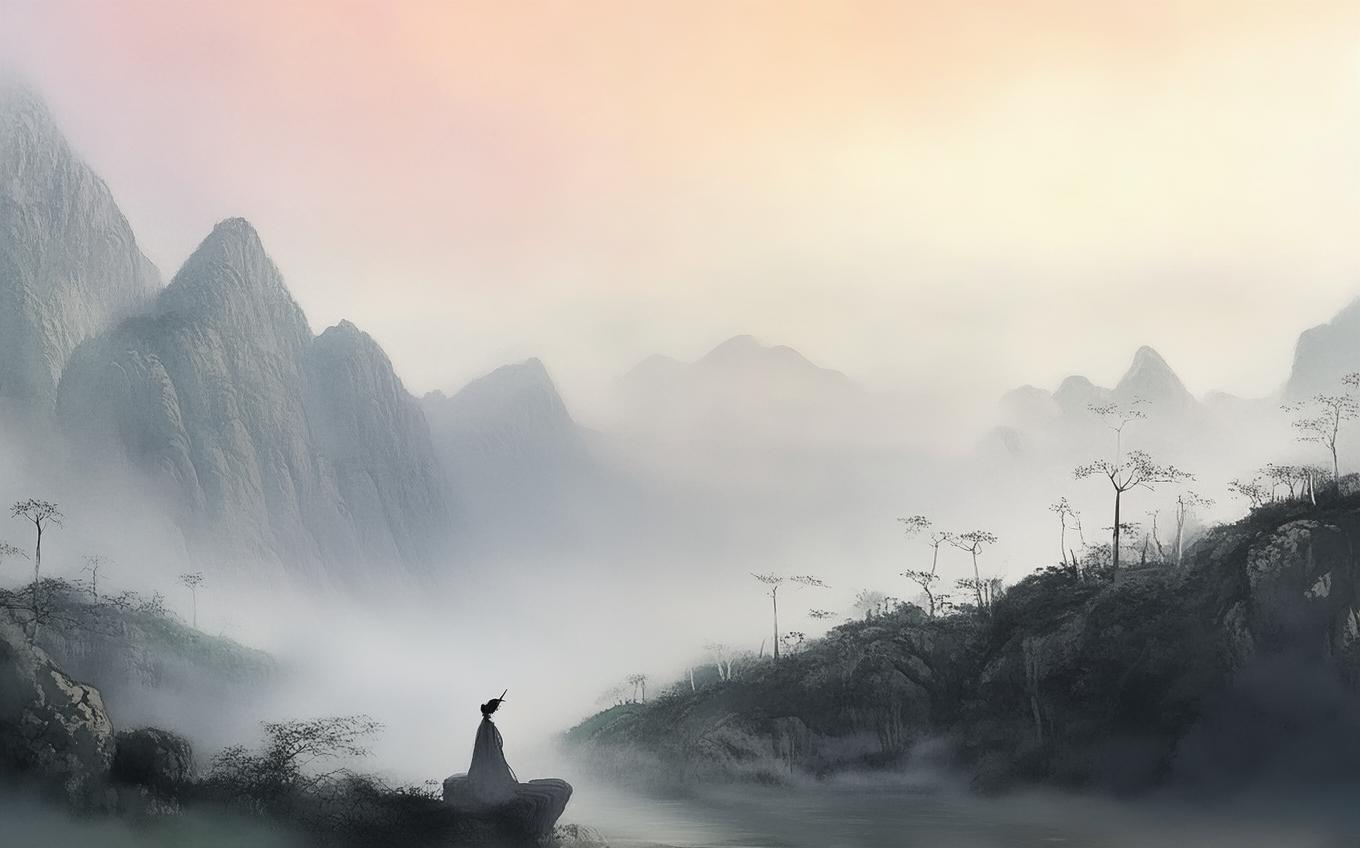
闲来写幅青山卖
Xián lái xiě fú qīng shān mài
When idle, I paint a scroll of blue-green hills and sell it
不使人间造孽钱
Bù shǐ rén jiān zào niè qián
And will not touch any coin that brings sin into this world
Line-by-Line Analysis
Line 1: The poem opens with a double negation: not refining elixir, not sitting in meditation. These are shorthand for the two dominant spiritual retreats in traditional China — Daoist alchemy (seeking physical immortality) and Chan (Zen) Buddhist monastic practice. By rejecting both, Tang Yin distances himself from the easy solace of religion. He is not a hermit detached from the world, but a man who will stay engaged on his own terms.
Line 2: The negation expands to secular livelihoods. Merchant (商贾) and farmer (耕田) represent the two “respectable” economic pillars outside the scholar-official class. In the Confucian hierarchy, scholars ranked highest, farmers second, merchants last. To say he is neither is to place himself outside all conventional social roles. Together with line one, he erases the four archetypal identities available to an educated man — the holy man, the trader, the cultivator, the bureaucrat — leaving himself entirely unclassified.
Line 3: The pivot comes with idly painting a scroll of green hills. “Idle” (闲) here does not mean lazy; it carries the aesthetic ideal of xian — unhurried, free-spirited leisure that allows the mind to roam. “Green hills” (青山) are not just a landscape motif; they symbolize retreat, purity, and the timeless beauty of nature. Selling that painting transforms art from a lofty hobby into a means of survival. The act is both proud and wryly self-mocking: a man of genius must peddle his own vision to get by.
Line 4: The final line strikes the moral core. 造孽钱 — literally “sin-making money” — is money earned through exploitation, corruption, or deceit. In refusing it, Tang Yin draws a sharp line between honest livelihood and the tainted wealth of the powerful. His painted landscapes are pure; the coins he accepts in exchange must be equally clean. It is a declaration of artistic and ethical autonomy: poverty is preferable to complicity.
Themes and Symbolism
- Integrity over Security: The poem’s driving force is a refusal to compromise one’s principles for material gain or social acceptance. Every rejected path — religion, trade, farming — offered safety; the speaker chooses freedom, even if it means precariousness.
- Art as Vocation: Painting is presented not merely as a pastime but as a legitimate, even noble, way to sustain oneself. The “green hills” become a metaphor for the creative spirit’s ability to transform inner vision into exchangeable value, without moral contamination.
- The Unconfined Self: By systematically negating fixed identities, Tang Yin celebrates the unfixed, bohemian self — a personality defined by what it refuses as much as by what it creates. The poem radiates the ideal of xingling (性灵), or innate sensibility, a core value in late-Ming aesthetics.
- Symbol of “Zao Nie Qian”: The phrase “造孽钱” (sin-breeding coin) resonates across Chinese literature as a warning against ill-gotten wealth. It ties this personal manifesto to a universal ethical concern, giving the poem a moral weight that lifts it above mere lifestyle bravado.
Cultural Context
Tang Yin lived during the culturally effervescent but politically treacherous era of the Zhengde Emperor (early 16th century). After being falsely implicated in an examination scandal, he was permanently barred from government service — a catastrophic dishonor for an ambitious scholar. Instead of retreating into obscurity, he became a professional painter in Suzhou, the sophisticated heart of Ming literati culture. His life came to embody the archetype of the kuangshi (狂士), the “wild scholar” who defies convention with style and moral purpose.
This poem directly reflects that biographical rupture. It dismisses the established routes to respectability — Daoist reclusion, Buddhist asceticism, commerce, agriculture — and reframes the artist’s brush as both a spiritual act and an honest trade. The poem’s popularity grew alongside the late Ming endorsement of qing (情), authentic emotion, over rigid ritual, making Tang Yin a hero to generations who felt trapped by social expectations. Even today, the phrase “不使人间造孽钱” is a colloquial idiom for refusing dirty money.
Conclusion
“感怀” is a small masterpiece of defiant grace. In just twenty-eight syllables, Tang Yin sketches a self-portrait of the artist as a moral free spirit — irreligious, unmercenary, yet deeply principled. Its charm lies in the seamless blend of wit and seriousness: the same brush that paints ethereal mountains also earns an honest meal, while the conscience remains spotless. For modern readers, East and West, the poem offers a timeless challenge: What are you willing to give up to remain uncorrupted? Tang Yin’s green hills still beckon, as fresh and untouchable as the day he first sold them.
Comments (0)
No comments yet. Be the first to comment!