Introduction
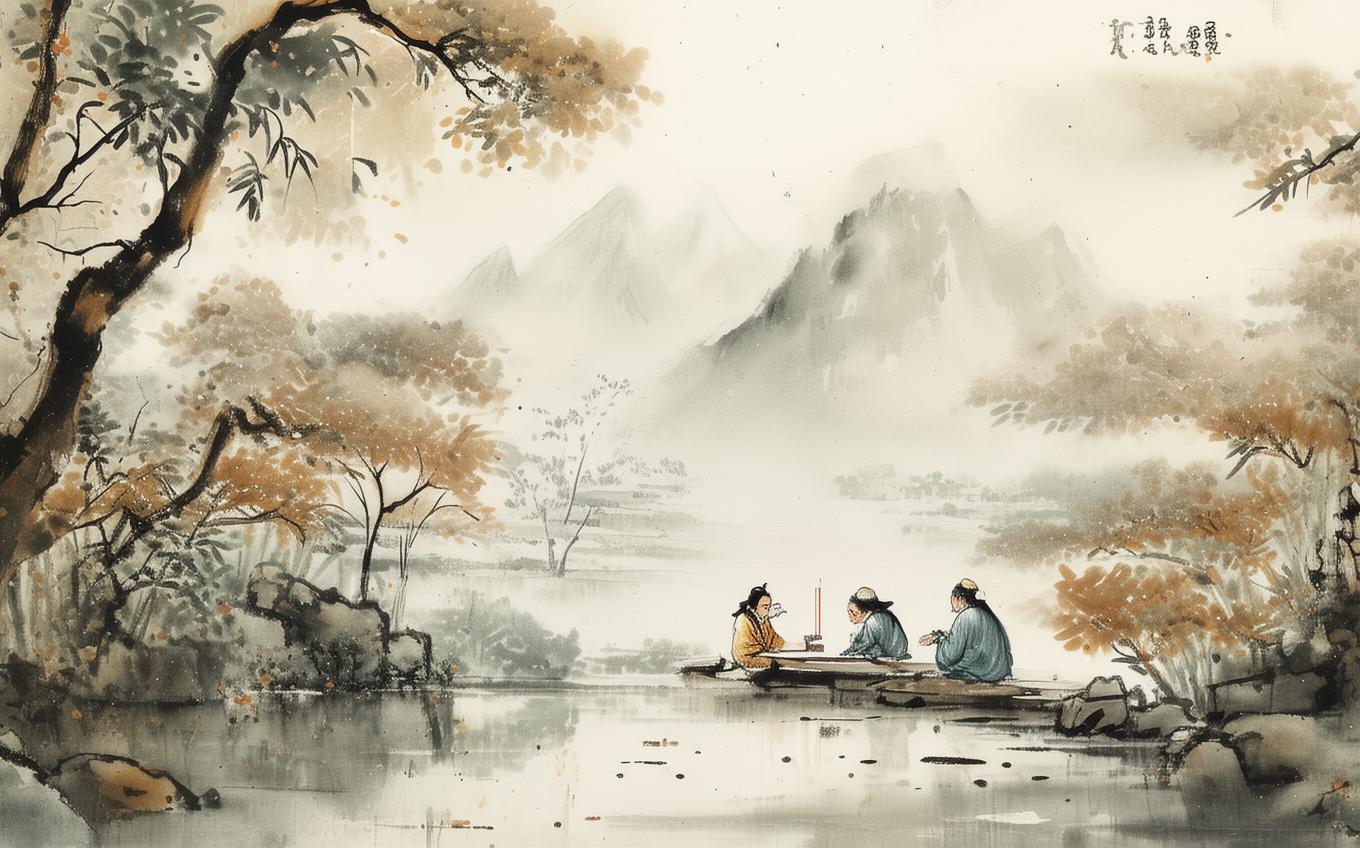
- The poem 《观棋》 Guān qí, “Watching a Game of Chess,” is traditionally attributed to 杜荀鹤 Dù Xúnhè (846–904), a poet of the late Tang dynasty.
- The late Tang was a time of political instability, military conflict, and social anxiety. Against this background, a simple scene—watching people play 棋 qí, often understood as 围棋 wéiqí or Chinese chess-like strategic board play—becomes a reflection on human rivalry and survival.
- The poem is significant because it turns an everyday pastime into a miniature battlefield. Through the act of “watching chess,” the poet reveals deeper truths about strategy, ambition, caution, and conflict in human life.
The Poem: Full Text and Translation
对面不相见
Duì miàn bù xiāng jiàn
Face to face, yet they do not truly see each other.
用心同用兵
Yòng xīn tóng yòng bīng
Their use of the mind is like the use of troops.
算人常欲杀
Suàn rén cháng yù shā
In calculating against the other, each often seeks to kill.
顾己自贪生
Gù jǐ zì tān shēng
In protecting himself, each naturally clings to life.
得势侵吞远
Dé shì qīn tūn yuǎn
Gaining advantage, one invades and swallows distant ground.
乘危打劫赢
Chéng wēi dǎ jié yíng
Seizing danger, one fights a ko battle to win.
有时逢敌手
Yǒu shí féng dí shǒu
Sometimes one meets a worthy opponent.
当局到深更
Dāng jú dào shēn gēng
Then those within the game play on until deep into the night.
Line-by-Line Analysis
-
“对面不相见” — “Face to face, yet they do not truly see each other.”
The players sit directly across from one another, but their attention is not on the human face before them. Their real focus lies on the board, on plans, traps, and possibilities. This line suggests a kind of emotional distance: competition can make people forget the person in front of them. -
“用心同用兵” — “Their use of the mind is like the use of troops.”
The poem immediately compares chess strategy to warfare. In Chinese literary culture, board games such as 围棋 wéiqí were often associated with military thinking, patience, and intellectual discipline. The board becomes a battlefield; stones become soldiers; thought becomes command. -
“算人常欲杀” — “In calculating against the other, each often seeks to kill.”
The word 算 suàn, “to calculate,” is important. The players are not merely reacting; they are predicting and manipulating. The phrase 欲杀 yù shā, “wanting to kill,” refers to capturing pieces or destroying formations, but it also hints at the ruthless side of competition. -
“顾己自贪生” — “In protecting himself, each naturally clings to life.”
This line balances the previous one. Each player attacks the opponent while also protecting himself. The poem reveals a basic human instinct: we are aggressive when seeking advantage, but defensive when threatened. The board game becomes a mirror of survival. -
“得势侵吞远” — “Gaining advantage, one invades and swallows distant ground.”
势 shì means power, momentum, or strategic advantage. Once a player has momentum, he expands his territory. The phrase 侵吞 qīn tūn, “to invade and swallow,” carries a strong political and military tone, suggesting conquest rather than casual play. -
“乘危打劫赢” — “Seizing danger, one fights a ko battle to win.”
打劫 dǎ jié is a technical term in 围棋 wéiqí, referring to a “ko fight,” a repeated capture situation that can decide the fate of large territories. The phrase also sounds dramatic in ordinary Chinese, since 劫 jié can mean calamity or robbery. The line captures the tension of high-risk strategy: danger itself becomes an opportunity. -
“有时逢敌手” — “Sometimes one meets a worthy opponent.”
The poem recognizes the special excitement of encountering an equal. 敌手 dí shǒu means opponent, but not necessarily an enemy in a hateful sense. It can suggest someone skilled enough to challenge you fully. -
“当局到深更” — “Then those within the game play on until deep into the night.”
当局 dāng jú means those directly involved in the game. This line evokes total absorption. A serious contest can make players forget time. More broadly, people caught inside struggles—political, personal, or emotional—often cannot easily step away.
Themes and Symbolism
- Chess as warfare: The poem repeatedly uses military language: troops, killing, invasion, advantage, and danger. The board becomes a symbolic battlefield.
- Human competition: The players’ behavior reflects ambition, caution, aggression, and self-preservation.
- Strategy and calculation: The poem admires mental skill, but it also shows how calculation can harden human relations.
- Absorption and blindness: The players are “face to face,” yet they do not truly see each other. Competition narrows their world.
- Life as a game: The poem suggests that social and political life often resembles a strategic contest, where each person seeks survival and advantage.
Cultural Context
- In traditional Chinese culture, games like 围棋 wéiqí were not seen merely as entertainment. They were associated with refinement, intelligence, patience, and strategic vision.
- The comparison between board games and warfare has deep roots in Chinese thought. Classical military philosophy, especially texts like 《孙子兵法》 Sūnzǐ Bīngfǎ, “The Art of War,” emphasizes indirect strategy, timing, terrain, and psychological advantage—all qualities also found in 围棋.
- In the late Tang dynasty, when 杜荀鹤 lived, political order was weakening, warlords were powerful, and official life was full of danger. A poem about watching chess could therefore carry social and political meaning. The game reflects the world outside the game.
- The poem also resonates with a Chinese philosophical idea: those inside a situation may be too absorbed to see clearly. This is close to the later saying 当局者迷,旁观者清 dāng jú zhě mí, páng guān zhě qīng—“Those involved are confused; bystanders see clearly.”
Conclusion
- 《观棋》 Guān qí is short, sharp, and memorable. In only eight lines, it transforms a quiet scene of watching a game into a meditation on conflict, calculation, and human nature.
- Its beauty lies in its compression: every phrase works both literally, as a description of board play, and symbolically, as a comment on life.
- For modern readers, the poem remains relevant because it asks us to consider how competition changes perception. When we become too absorbed in winning, do we still see the person sitting across from us?


Comments (0)
No comments yet. Be the first to comment!