Introduction
- “题劒门” (Tí Jiànmén, “Written at Jianmen Pass”) is traditionally associated with poetry about Jianmen Pass, a dramatic mountain gateway in present-day Sichuan. The character 劒 is an older variant of 剑, meaning “sword.”
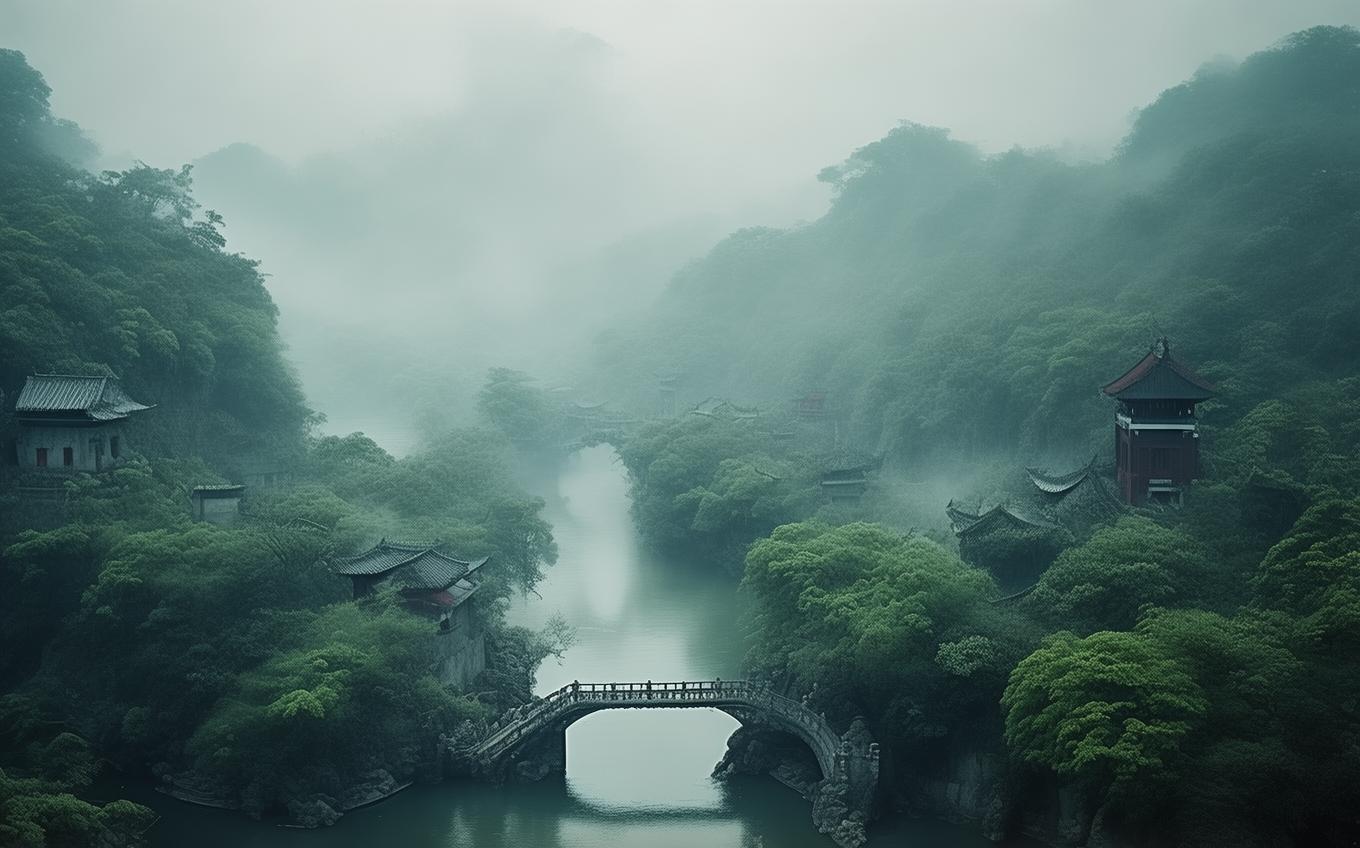
- Jianmen Pass was famous in Chinese history as a place of military danger, steep cliffs, and strategic importance. It guarded the road into Sichuan and was often described as a natural fortress.
- In Chinese literature, poems about Jianmen Pass usually combine landscape description, historical memory, and political emotion. The pass is not only a physical location but also a symbol of difficulty, defense, exile, and the vastness of empire.
The Poem: Full Text and Translation
缓辔逾双剑
Huǎn pèi yú shuāng jiàn
Slowly drawing the reins, I cross the Twin Swords.
行行蹑石棱
Xíng xíng niè shí léng
Step by step, I tread upon sharp ridges of stone.
悬崖抱奇险
Xuán yá bào qí xiǎn
Hanging cliffs embrace a strange and marvelous danger.
绝壁驾崚嶒
Jué bì jià líng céng
Sheer walls rise in jagged, towering layers.
云栈连空阔
Yún zhàn lián kōng kuò
Cloud-high plank roads join the vast open sky.
风关入杳冥
Fēng guān rù yǎo míng
Windy passes lead into dim and distant depths.
何当凭此险
Hé dāng píng cǐ xiǎn
When shall one rely upon such perilous terrain?
长使蜀山宁
Cháng shǐ Shǔ shān níng
To keep the mountains of Shu forever at peace.
Line-by-Line Analysis
-
“缓辔逾双剑” — “Slowly drawing the reins, I cross the Twin Swords.”
The opening line places us on horseback, moving carefully through dangerous terrain. “双剑” literally means “Twin Swords,” referring to the sword-like cliffs of Jianmen. The image immediately suggests sharpness, danger, and military strength. The slow reins show caution and awe. -
“行行蹑石棱” — “Step by step, I tread upon sharp ridges of stone.”
The repeated feeling of movement, “行行”, creates a sense of difficulty and persistence. The traveler does not simply pass through the landscape; he must negotiate it carefully. The stone ridges are not smooth roads but harsh natural obstacles. -
“悬崖抱奇险” — “Hanging cliffs embrace a strange and marvelous danger.”
The cliffs are described almost as living beings that “embrace” danger. In classical Chinese poetry, nature is rarely just scenery. It carries emotional and moral weight. Here the landscape is both beautiful and threatening. -
“绝壁驾崚嶒” — “Sheer walls rise in jagged, towering layers.”
The words “绝壁” and “崚嶒” emphasize height, steepness, and irregularity. The mountain seems to rise beyond ordinary human scale. This evokes the traditional Chinese aesthetic of the sublime: beauty mixed with fear. -
“云栈连空阔” — “Cloud-high plank roads join the vast open sky.”
Ancient roads in Sichuan often included wooden plank paths built along cliffs. The phrase “云栈” suggests a road so high that it touches the clouds. For English readers, this image may recall a narrow mountain path suspended between earth and heaven. -
“风关入杳冥” — “Windy passes lead into dim and distant depths.”
The pass is not merely a route; it feels like an entrance into mystery. “杳冥” suggests darkness, distance, and the unknown. The poem shifts from visible cliffs to an almost spiritual atmosphere. -
“何当凭此险” — “When shall one rely upon such perilous terrain?”
The poem now turns from landscape to politics and history. The speaker considers the strategic power of Jianmen Pass. In Chinese historical imagination, mountains and passes could protect a kingdom, but they could also isolate it. -
“长使蜀山宁” — “To keep the mountains of Shu forever at peace.”
The final line expresses a wish for lasting peace in Shu, the ancient name for Sichuan. After describing danger and military strength, the poem ends not with conquest but with stability. The highest purpose of defense is peace.
Themes and Symbolism
-
Nature as Fortress
Jianmen Pass is presented as a natural military barrier. The cliffs, ridges, and plank roads symbolize the defensive strength of Sichuan. -
The Sublime Landscape
The poem emphasizes height, danger, and vastness. Its mountains are beautiful because they are powerful and intimidating. -
Travel and Difficulty
The speaker’s slow movement through the pass reflects the hardships of travel in ancient China, especially through mountainous western regions. -
War and Peace
Although the imagery is martial, the poem’s emotional direction moves toward peace. The dangerous pass becomes meaningful because it may protect ordinary life. -
The Sword Image
The word 剑 / 劒 means “sword.” Jianmen Pass itself is imagined as a pair of swords cutting upward into the sky. This symbol connects geography with warfare, courage, and authority.
Cultural Context
- Jianmen Pass lies in northern Sichuan and has long been one of China’s most famous strategic gateways. It controlled access between the Central Plains and the Sichuan Basin.
- In Chinese history, Sichuan was often seen as both remote and secure. Its mountains made it difficult to conquer, but also difficult to govern and communicate with.
- Classical Chinese poets often used mountain passes to reflect on political order. A pass could represent the border between safety and danger, civilization and wilderness, loyalty and exile.
- The poem reflects a key Chinese cultural idea: true strength should serve peace. The landscape is dangerous, but the poet’s hope is not endless war. It is that the natural barrier may help keep the region calm and protected.
Conclusion
- “题劒门” captures the majesty of Jianmen Pass through images of swords, cliffs, clouds, wind, and stone. Its power lies in the way it turns a real mountain landscape into a symbol of historical destiny.
- For English-speaking readers, the poem offers a window into how classical Chinese poetry fuses geography, politics, and emotion. A mountain pass is not only a place on a map; it is a memory of war, a test of travel, and a hope for peace.
- The poem remains meaningful today because it reminds us that the most impressive forms of strength are not those that destroy, but those that protect.
Comments (0)
No comments yet. Be the first to comment!