Introduction
- “过白卫岭和韩昭” (Guò Báiwèi Lǐng hè Hán Zhāo) is attributed to Wang Yan (王衍, Wáng Yǎn), the last ruler of the Former Shu kingdom during the Five Dynasties and Ten Kingdoms period.
- This was an age of political fragmentation after the Tang dynasty, when regional courts tried to imitate Tang elegance while facing military pressure and instability.
- The poem is significant because it combines landscape description, imperial memory, frontier anxiety, and literary refinement. It shows how Chinese poetry often turns a journey through mountains into a meditation on history, power, and fate.
The Poem: Full Text and Translation
先朝神武力开边
Xiān cháo shén wǔ lì kāi biān
The former dynasty, with divine martial power, opened the frontiers.
画断封疆四五千
Huà duàn fēng jiāng sì wǔ qiān
It marked out borders stretching four or five thousand li.
前望陇山屯剑戟
Qián wàng Lǒngshān tún jiàn jǐ
Ahead, Long Mountain seems garrisoned with swords and halberds.
后凭巫峡锁烽烟
Hòu píng Wūxiá suǒ fēng yān
Behind, Wu Gorge holds fast the beacon-smoke of war.
轩皇尚自亲平寇
Xuān Huáng shàng zì qīn píng kòu
Even the Yellow Emperor himself once went in person to pacify rebels.
嬴政徒劳爱学仙
Yíng Zhèng tú láo ài xué xiān
Ying Zheng, the First Emperor of Qin, labored in vain in his love of seeking immortals.
想到隗宫寻胜处
Xiǎng dào Wěi gōng xún shèng chù
I imagine reaching Kui Palace to search for scenes of beauty.
正应莺语暮春天
Zhèng yīng yīng yǔ mù chūn tiān
There, orioles should be singing in the late-spring air.
Line-by-Line Analysis
- The opening couplet looks backward to an earlier, more powerful age. The phrase 先朝 means “the former dynasty” or “the previous court,” while 神武 suggests almost supernatural military strength. The poet imagines political order as something created by force, borders, and conquest.
- “四五千” refers to a vast distance, likely measured in li (里), a traditional Chinese unit. The number is not merely geographical; it creates a feeling of imperial grandeur.
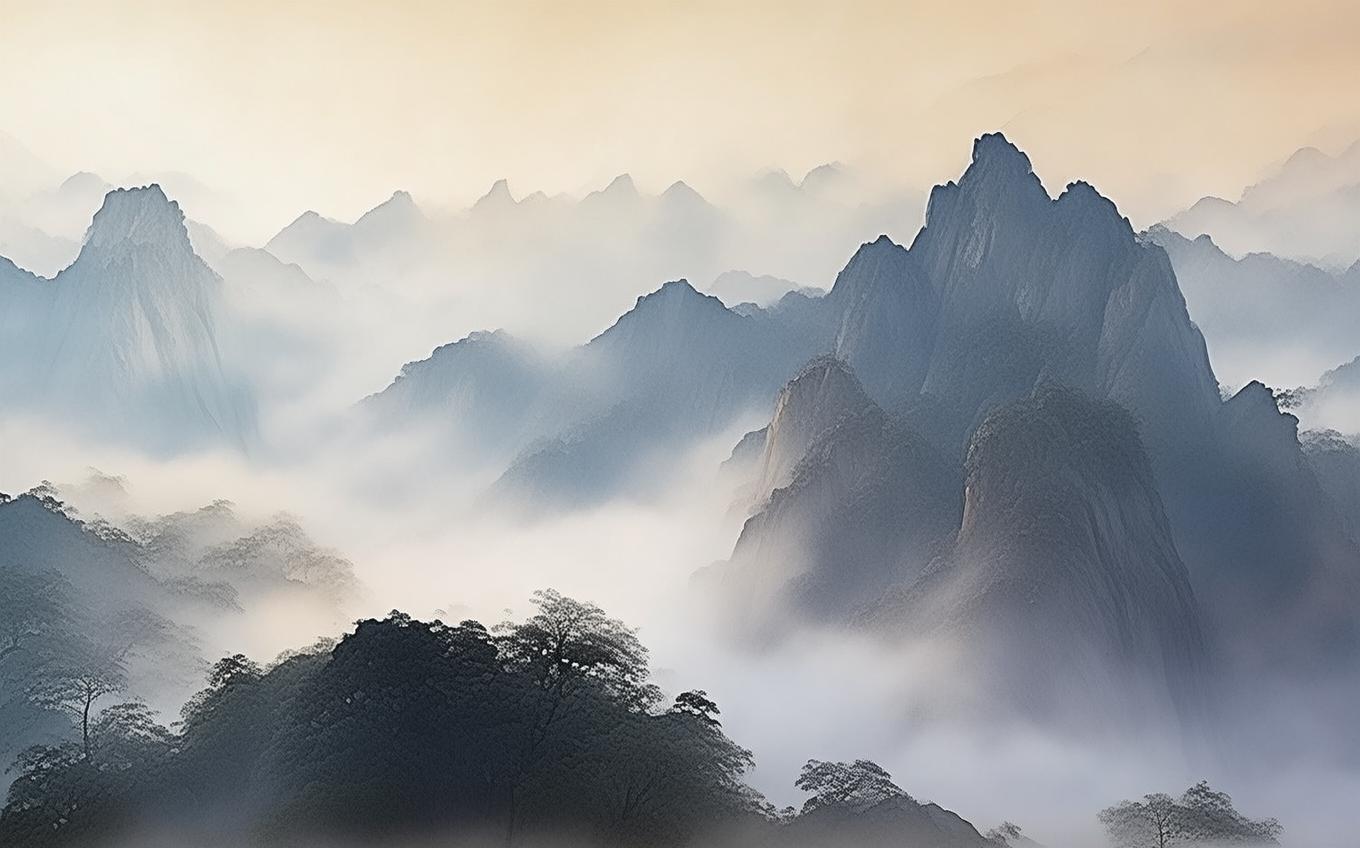
- In the third line, 陇山 (Lǒngshān) evokes the northwestern frontier. The image of mountains “garrisoned with swords and halberds” turns the landscape into a military formation. Nature and war become inseparable.
- The fourth line shifts to 巫峡 (Wūxiá), one of the famous Three Gorges region. The gorge “locks” the beacon smoke, suggesting both defense and danger. 烽烟 refers to smoke from warning beacons, a classic symbol of war and frontier alarm.
- The fifth line invokes 轩皇, another name for the Yellow Emperor, a legendary culture hero of ancient China. By saying even he personally fought to pacify disorder, the poem suggests that rulership requires action, not merely ceremony.
- The sixth line contrasts this with 嬴政 (Yíng Zhèng), Qin Shi Huang, the First Emperor of Qin. He unified China but famously sought immortality. The poet calls this pursuit 徒劳, “in vain,” implying that even absolute power cannot escape mortality.
- The final couplet softens the tone. After images of borders, weapons, emperors, and war, the poet imagines 隗宫 and the gentle sound of orioles in late spring. The poem moves from historical severity to lyrical beauty.
- This ending is delicate but also ironic: against the background of empire and conflict, spring continues, birds sing, and beautiful places remain.
Themes and Symbolism
- Power and impermanence: The poem reflects on dynastic power, conquest, and the limits of human ambition.
- Landscape as history: Mountains and gorges are not neutral scenery; they carry memories of military defense and political struggle.
- The futility of immortality: Qin Shi Huang’s search for immortals becomes a warning that worldly power cannot overcome time.
- War and beauty: The poem balances martial imagery with the graceful image of orioles in spring, showing the tension between history’s violence and nature’s renewal.
- Journey as reflection: Passing over White Guard Ridge becomes more than travel; it becomes an occasion to think about rulers, borders, and the human desire for permanence.
Cultural Context
- Wang Yan lived during the Five Dynasties and Ten Kingdoms period, a time when China was divided among competing regimes. Former Shu, located in today’s Sichuan region, was culturally refined but politically vulnerable.
- Chinese rulers and literati often used poetry to express political ideals indirectly. A poem about mountains and ancient emperors could also comment on contemporary anxieties about rule, legitimacy, and survival.
- The references to the Yellow Emperor and Qin Shi Huang place the poem within a long Chinese tradition of comparing present rulers with legendary and historical models.
- The poem reflects a Confucian concern with active responsibility: a ruler should defend the realm and pacify disorder. At the same time, it carries a Daoist awareness of the futility of chasing immortality or absolute control.
- The final spring imagery reflects a deeply Chinese poetic value: even amid political uncertainty, the natural world offers beauty, continuity, and emotional release.
Conclusion
- “过白卫岭和韩昭” is a compact but rich poem that turns a mountain crossing into a meditation on history, empire, and human limitation.
- Its beauty lies in contrast: military frontiers against spring birdsong, legendary rulers against mortal failure, vast borders against a single traveler’s imagination.
- For modern readers, the poem remains relevant because it asks a timeless question: after power, conquest, and ambition fade, what endures? The answer may be found in memory, landscape, and the quiet voice of nature.
Comments (0)
No comments yet. Be the first to comment!