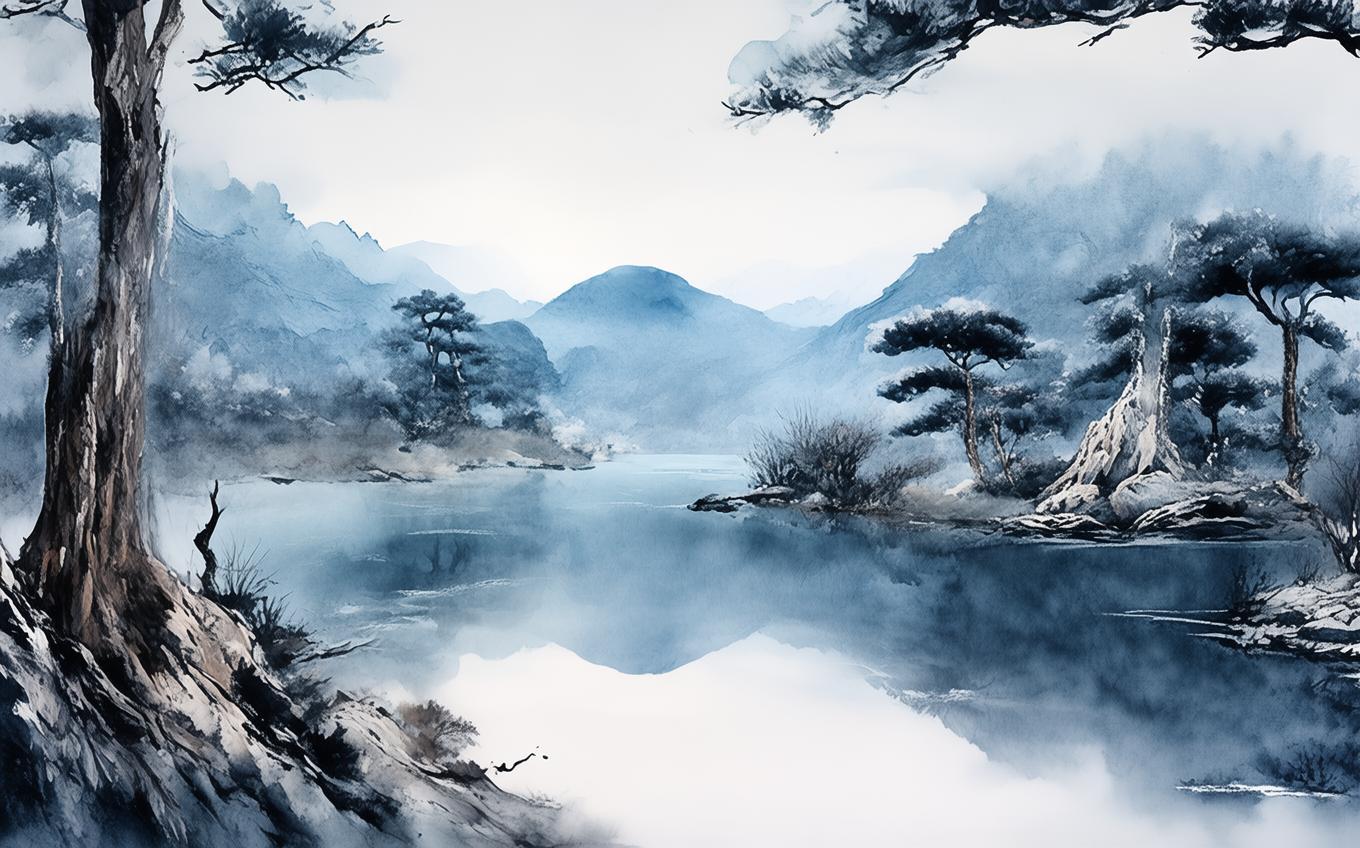
Title: Analysis of "避暑摩诃池上作" - Classical Chinese Poetry
Introduction
Meng Chang 孟昶 (Mèng Chǎng, 919–965) was the last ruler of Later Shu 后蜀, a kingdom in Sichuan during the Five Dynasties and Ten Kingdoms period. Although remembered as a monarch, he is also associated with refined courtly poetry, especially works describing the beauty, luxury, and fragility of palace life.
“避暑摩诃池上作” (Bì shǔ Móhē chí shàng zuò, “Written While Escaping the Summer Heat by Mohe Pool”) is traditionally linked to Meng Chang and his beloved consort, Lady Huarui 花蕊夫人. The poem became famous partly because Su Shi 苏轼 later echoed and preserved its atmosphere in his own lyric tradition. It is significant in Chinese literature because it captures a moment of exquisite sensual beauty while quietly hinting at the passage of time and the instability of worldly pleasure.
The Poem: Full Text and Translation
冰肌玉骨清无汗
Bīng jī yù gǔ qīng wú hàn
Ice-like skin and jade-like bones, pure and without sweat.
水殿风来暗香满
Shuǐ diàn fēng lái àn xiāng mǎn
A breeze enters the waterside palace, filling it with hidden fragrance.
绣帘一点月窥人
Xiù lián yì diǎn yuè kuī rén
Through the embroidered curtain, a little moonlight peeps at her.
欹枕钗横云鬓乱
Qī zhěn chāi héng yún bìn luàn
Leaning on the pillow, her hairpin lies sideways, her cloud-like hair disheveled.
起来琼户启无声
Qǐ lái qióng hù qǐ wú shēng
She rises and opens the jade-like door without a sound.
时见疏星渡河汉
Shí jiàn shū xīng dù Hé Hàn
From time to time, sparse stars are seen crossing the Milky Way.
屈指西风几时来
Qū zhǐ xī fēng jǐ shí lái
Counting on her fingers, she wonders when the west wind will come.
只恐流年暗中换
Zhǐ kǒng liú nián àn zhōng huàn
She only fears that the passing years are secretly changing.
Line-by-Line Analysis
The opening line, “冰肌玉骨清无汗,” presents an idealized image of feminine beauty. “Ice” and “jade” are traditional Chinese symbols of purity, coolness, and refinement. In the context of escaping summer heat, the phrase suggests not only physical beauty but also an almost supernatural elegance. The woman appears untouched by heat, discomfort, or ordinary human weakness.
“水殿风来暗香满” moves the scene into a luxurious palace by the water. A “waterside palace” evokes coolness, leisure, and imperial pleasure. The “hidden fragrance” may come from flowers, incense, or the woman herself. The word “暗” (àn, hidden or subtle) is important: the poem does not describe things directly but allows beauty to emerge through suggestion.
In “绣帘一点月窥人,” the moon is personified as if it were secretly looking at the woman. This creates a delicate, intimate atmosphere. The embroidered curtain separates inside from outside, privacy from nature, human beauty from cosmic beauty. Yet the moonlight crosses that boundary, making the private scene feel dreamlike.
“欹枕钗横云鬓乱” gives us a more human and sensual image. The woman is reclining, her hairpin askew, her hair loosened like clouds. In classical Chinese poetry, “cloud-like hair” is a conventional image for a beautiful woman’s dark, soft hair. The slight disorder here is not vulgar; it suggests naturalness, intimacy, and the languor of a summer night.
“起来琼户启无声” shifts from stillness to quiet movement. The woman rises and opens the door silently. “琼” (qióng, fine jade) gives the door a precious, palace-like quality. The silence intensifies the atmosphere: everything is soft, slow, and suspended.
“时见疏星渡河汉” expands the poem from the chamber to the heavens. “河汉” (Hé Hàn) refers to the Milky Way. Sparse stars crossing the sky suggest late night, distance, and the passage of time. The poem’s mood begins to deepen: what seemed like a scene of beauty and comfort now opens into cosmic vastness.
“屈指西风几时来” introduces anxiety. The west wind in Chinese poetry often signals autumn. The woman counts on her fingers, wondering when the season will change. This small gesture transforms the poem from a sensual summer scene into a meditation on time.
The final line, “只恐流年暗中换,” gives the poem its emotional weight. “流年” means flowing years, the passage of time. The fear is not dramatic or loudly expressed; it is quiet and inward. The phrase “暗中换” suggests that change happens secretly, almost without being noticed. Beauty fades, seasons turn, dynasties fall, and human happiness cannot be held forever.
Themes and Symbolism
One major theme is the fragility of beauty. The woman’s elegance is described in luminous, precious images—ice, jade, moonlight, fragrance—but these images are also delicate and temporary. The poem invites readers to admire beauty while recognizing that it cannot last.
Another theme is the passage of time. The movement from summer heat to the expected west wind suggests the movement from youth to age, pleasure to loss, prosperity to decline. In Chinese poetry, seasonal change often carries emotional and philosophical meaning.
The moon and stars symbolize both beauty and distance. They illuminate the human scene but also remind us of the vastness of the universe. Against the night sky, palace luxury becomes small and fleeting.
The west wind is a key symbol. It represents autumn, but also change, decline, and the approach of endings. The poem’s emotional turn depends on this image: the woman is not merely cooling herself in summer; she is sensing the coming of impermanence.
Cultural Context
The poem belongs to the refined world of courtly Chinese literature, where beauty, music, architecture, and seasonal feeling were closely connected. Later Shu, located in Sichuan, was known for its rich culture and luxurious court life. Yet it existed during a politically unstable era, and Meng Chang’s kingdom was eventually conquered by the Song dynasty.
This historical background gives the poem a deeper resonance. A palace scene of leisure becomes, in hindsight, an image of a world about to disappear. The fear that “the passing years are secretly changing” can be read not only as personal anxiety about aging but also as an unconscious awareness of political and historical impermanence.
The poem also reflects important Chinese aesthetic values: subtlety, restraint, and the blending of emotion with landscape. Rather than directly saying “I am sad because beauty fades,” the poem shows moonlight, loosened hair, sparse stars, and the coming west wind. Emotion is embedded in images.
Philosophically, the poem resonates with Buddhist and Daoist awareness of transience. Pleasure is real, but it is not permanent. The wise reader appreciates the moment while recognizing that all things are subject to change.
Conclusion
“避暑摩诃池上作” is beautiful because it begins with sensual elegance and ends with quiet existential fear. Its palace setting, moonlit imagery, and delicate portrayal of feminine beauty create a scene of extraordinary refinement. Yet beneath the softness lies a profound awareness: time moves silently, and even the most perfect moment is already passing.
For modern readers, the poem remains moving because its message is universal. We still experience moments of beauty that feel almost timeless, yet we know they cannot last. The poem teaches us to look closely, feel deeply, and recognize the hidden movement of time within even the most graceful human joys.
Comments (0)
No comments yet. Be the first to comment!