Title: Analysis of "丈人观" - Classical Chinese Poetry
Introduction
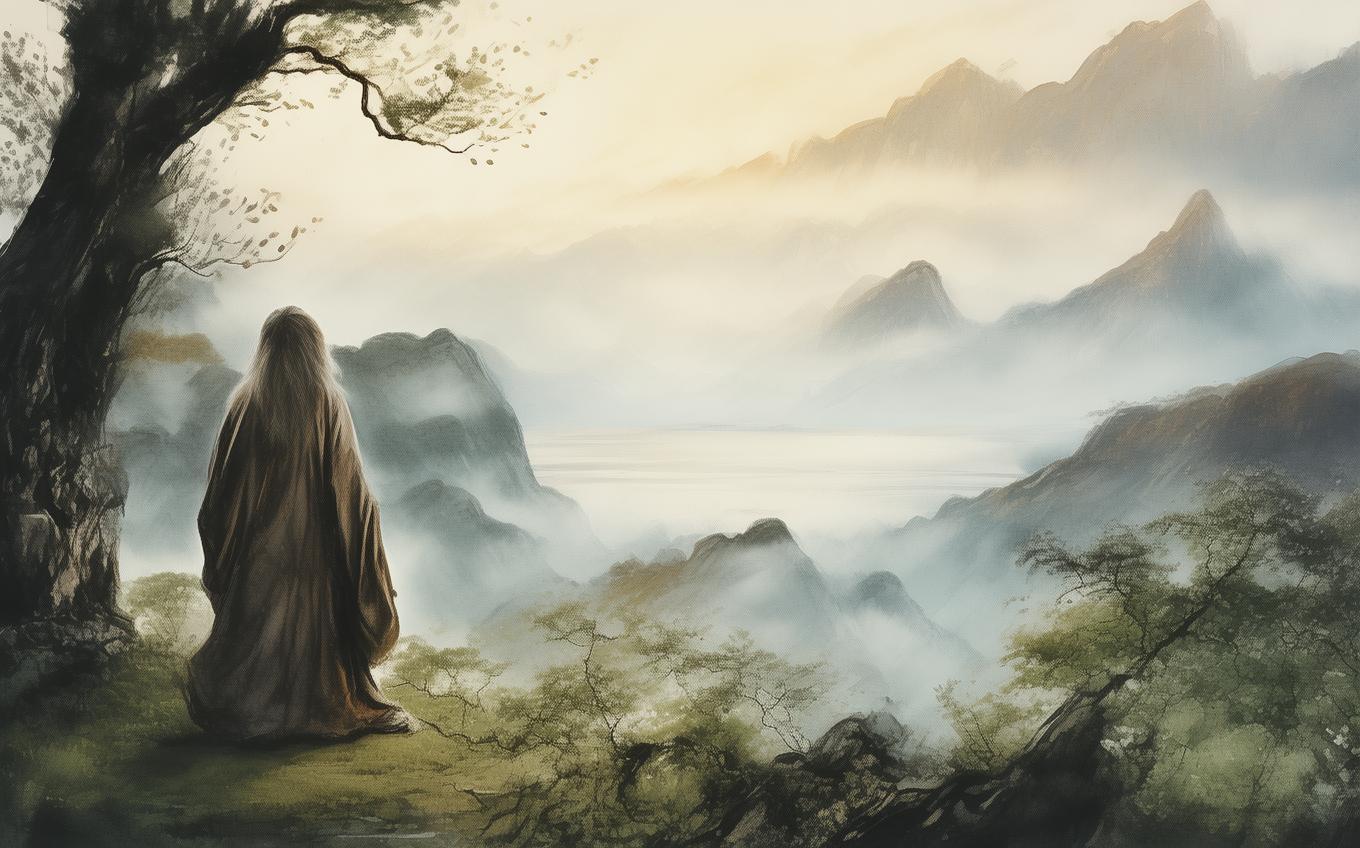
- The poem most closely associated with 丈人观 (Zhàngrén Guān) is Du Fu’s 《丈人山》 (Zhàngrén Shān, “Mount Zhangren”). 丈人观 was a Daoist site near Mount Qingcheng in Sichuan, a region famous for its misty mountains, sacred landscapes, and Daoist traditions.
- Du Fu (杜甫, Dù Fǔ, 712–770) is one of the greatest poets in Chinese history, often called the “Poet-Historian” because his poems record both personal suffering and the turmoil of the Tang dynasty.
- This poem is significant because it shows another side of Du Fu: not only the poet of war, poverty, and moral concern, but also a seeker of spiritual quietness. Through the imagery of Mount Qingcheng and 丈人观, Du Fu imagines retreat, purification, and transcendence.
The Poem: Full Text and Translation
自为青城客
Zì wéi Qīngchéng kè
Since becoming a guest at Qingcheng,
不唾青城地
Bú tuò Qīngchéng dì
I would not spit upon Qingcheng’s ground.
为爱丈人山
Wèi ài Zhàngrén shān
Because I love Mount Zhangren,
丹梯近幽意
Dān tī jìn yōu yì
Its red stairway draws near to hidden, quiet meaning.
丈人祠西佳气浓
Zhàngrén cí xī jiā qì nóng
West of the Shrine of Zhangren, auspicious vapors gather thickly.
缘云拟住最高峰
Yuán yún nǐ zhù zuì gāo fēng
Following the clouds, I wish to dwell on the highest peak.
扫除白发黄精在
Sǎo chú bái fà huáng jīng zài
Sweep away white hair—there is still huángjīng, the herb of longevity.
君看他时冰雪容
Jūn kàn tā shí bīng xuě róng
You shall see me one day with a face pure as ice and snow.
Line-by-Line Analysis
-
“自为青城客 / 不唾青城地”
Du Fu begins by saying that once he has become a “guest” of Qingcheng, he treats the land with reverence. The phrase “not spit upon the ground” may sound unusual to modern readers, but it expresses deep respect. Qingcheng is not ordinary soil; it is sacred terrain. The poet’s body and behavior must become purified in response to the holiness of the place. -
“为爱丈人山 / 丹梯近幽意”
Mount Zhangren is loved not merely for its beauty, but for its spiritual atmosphere. The “red stairway” may refer to a mountain path, temple steps, or an imagined Daoist ascent. In Chinese religious imagination, climbing a mountain often symbolizes moving away from worldly dust and toward hidden truth. The phrase “幽意” suggests quietness, depth, and mystery—qualities associated with Daoist retreat. -
“丈人祠西佳气浓”
The “Shrine of Zhangren” connects the poem directly to the sacred site of 丈人观. “佳气” means auspicious or beautiful vapors. In classical Chinese writing, mist and cloud are not just weather; they often indicate spiritual energy, divine presence, or the atmosphere of immortals. The thick gathering of this vapor makes the mountain feel alive with sacred power. -
“缘云拟住最高峰”
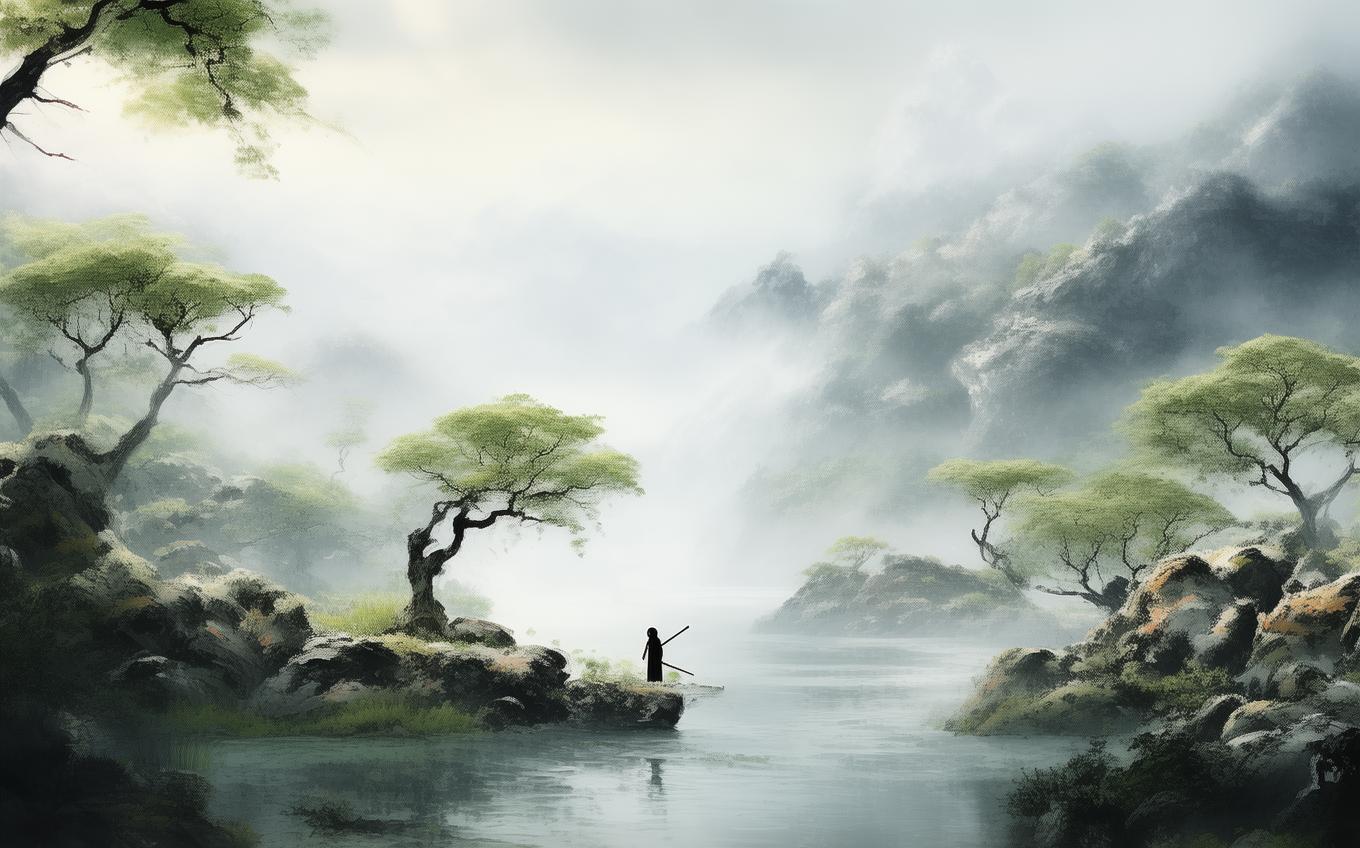
The poet imagines following the clouds upward and living on the highest peak. This is a powerful Daoist image. Clouds are free, unbound, and close to heaven. To follow them is to leave behind the restrictions of official life, political disappointment, illness, and aging. Du Fu is not simply sightseeing; he is dreaming of transformation. -
“扫除白发黄精在”
“White hair” symbolizes age and human decline. “黄精 (huángjīng)” is a medicinal herb traditionally associated with nourishment and longevity, especially in Daoist practices. The line suggests a wish to overcome aging through mountain herbs and spiritual cultivation. Yet there is also tenderness here: Du Fu knows he is aging, but he still hopes for renewal. -
“君看他时冰雪容”
The poem ends with an imagined future self: pure, clear, and radiant like ice and snow. “Ice and snow” in Chinese poetry often symbolize purity, detachment, and moral cleanliness. Du Fu imagines that if he can remain in this sacred mountain world, he may become spiritually refined, almost immortal.
Themes and Symbolism
- Sacred Nature: The mountain is not just scenery; it is a holy landscape filled with spiritual meaning.
- Daoist Retreat: The poem expresses a desire to escape worldly suffering and live in harmony with the Dao.
- Aging and Renewal: White hair represents mortality, while huángjīng symbolizes the hope of longevity and transformation.
- Purity: The final image of an “ice-and-snow face” suggests moral and spiritual purification.
- Ascent: The stairway, clouds, and highest peak all symbolize a movement upward—from the human world toward transcendence.
Cultural Context
- Mount Qingcheng, located in Sichuan, is one of the most important Daoist mountains in China. It has long been associated with immortals, sacred caves, temples, and practices of inner cultivation.
- During the Tang dynasty, Daoism held strong cultural influence. Many poets visited mountains and temples not only for inspiration but also as a way to imagine alternative lives beyond politics and social duty.
- Du Fu lived through the An Lushan Rebellion, one of the most devastating events in Chinese history. His later years were marked by displacement, poverty, and illness. In this context, his longing for Mount Zhangren becomes more than a love of nature—it becomes a search for healing.
- The poem reflects a central Chinese cultural idea: mountains are places where the human and the divine meet. To enter the mountain is to step away from worldly noise and approach a deeper order of existence.
Conclusion
Du Fu’s 《丈人山》 transforms the landscape around 丈人观 into a vision of spiritual refuge. Through sacred ground, red stairways, clouds, medicinal herbs, and snow-like purity, the poem presents a dream of release from aging and worldly suffering.
Its enduring appeal lies in its quiet hope. Even a poet burdened by history and hardship can look toward the mountains and imagine renewal. For modern readers, the poem reminds us that nature can be more than beauty—it can be a place of reverence, healing, and inner transformation.
Comments (0)
No comments yet. Be the first to comment!